

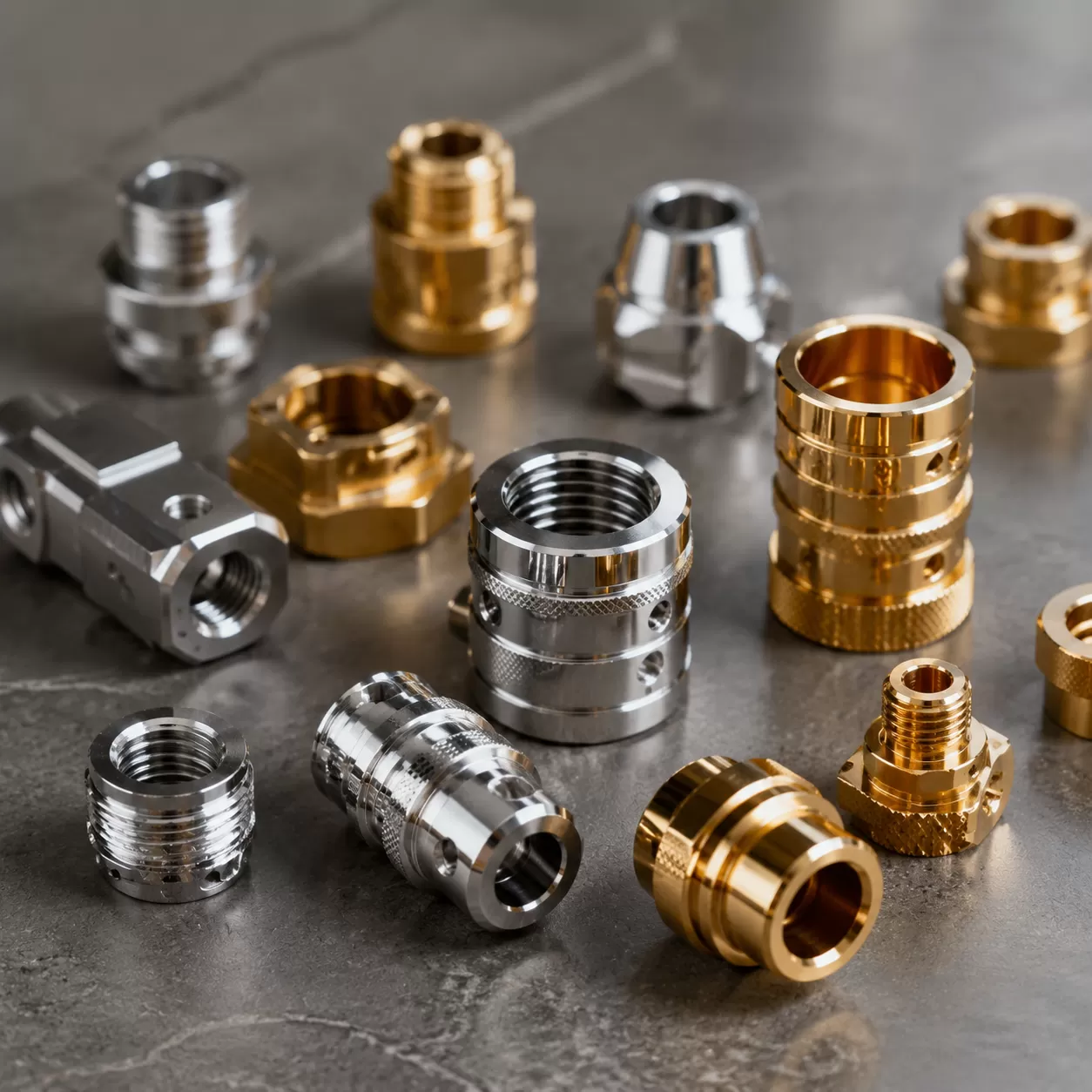
Introduction to Plating Brass CNC Parts
What is Metal Plating for CNC Machining?
Metal plating is a sophisticated surface treatment where a thin layer of a specific metal is deposited onto the surface of a brass CNC part. In the realm of custom manufacturing, this is typically achieved through electroplating—using an ionic metal solution and an electric current—to create a permanent, molecular bond. For high-precision components, plating acts as the final \"skin\" that defines how the part interacts with its environment.
[Image of electroplating process diagram]
Why Plating is Essential for Brass Components
While brass is valued for its machinability and natural corrosion resistance, it is an alloy of copper and zinc, making it susceptible to tarnishing and oxidation over time. Plating is essential to:
- Prevent Oxidation: Stops the formation of \"green\" patina or dark tarnish.
- Increase Hardness: Enhances the surface durability of relatively soft brass.
- Improve Conductivity: Critical for electronics where gold or silver layers optimize signal flow.
- Ensure Chemical Stability: Protects the substrate from reactive industrial environments.
Balancing Function and Aesthetic Appeal
Selecting the right finish is a strategic decision between industrial functionality and aesthetic quality. A high-performance chromium layer might be chosen for its low friction in mechanical valves, while gold finishes are preferred for luxury consumer goods or high-end audio connectors.
| Finish Type | Primary Benefit | Common Use Case |
|---|---|---|
| Nickel | Wear Resistance | Mechanical fasteners, base layers |
| Chrome | Extreme Hardness | Automotive trim, hydraulic rods |
| Gold | Conductivity/Luxury | PCB connectors, high-end jewelry |
By integrating plating into the CNC milling workflow, we transform standard brass fittings into high-durability, premium assets that meet the rigorous standards of the global market.
The Electroplating Process for Brass Components
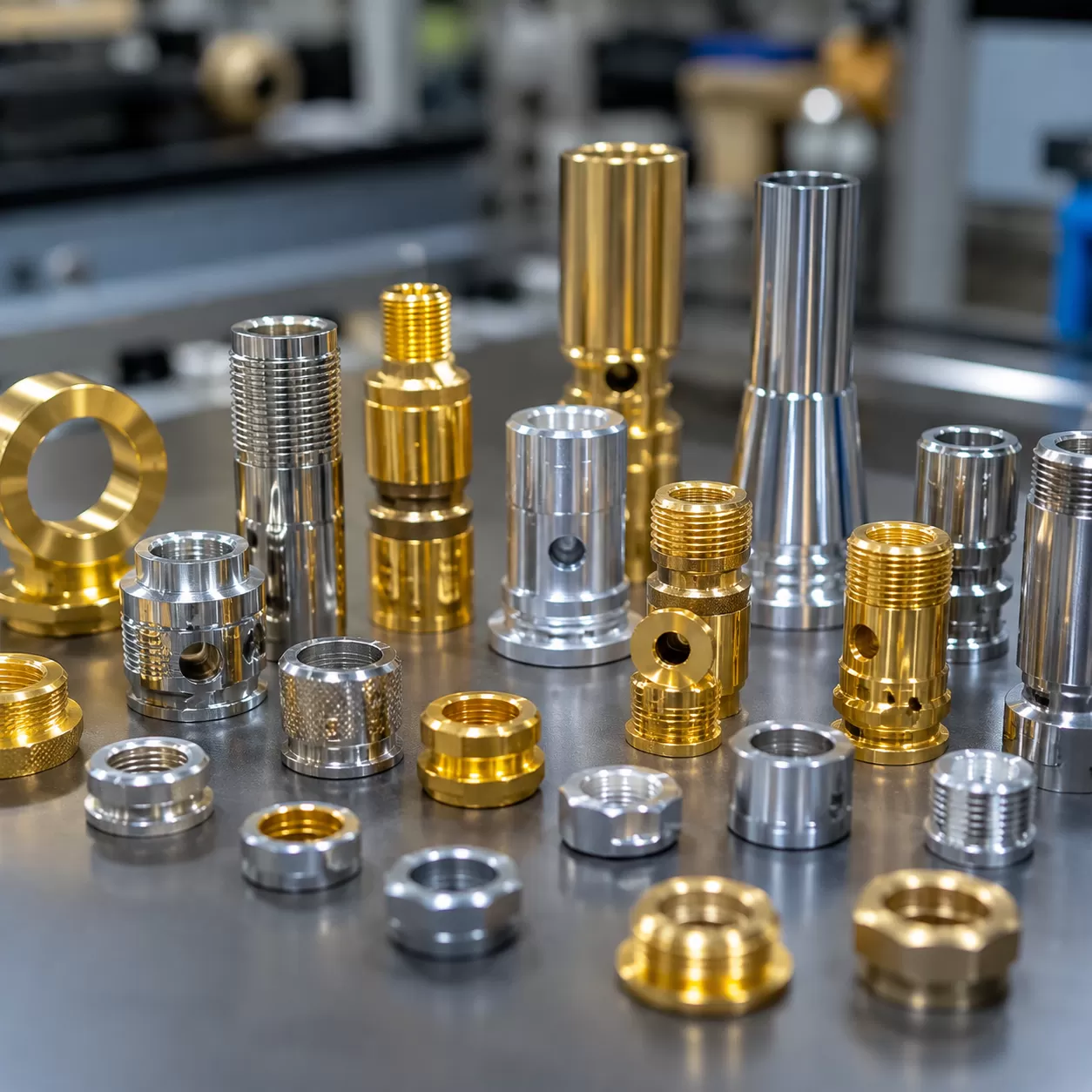
Fundamental Principles of Brass Electroplating
Electroplating relies on a simple scientific principle: using an electrical current to deposit a thin layer of metal onto a conductive surface. When we finish brass CNC parts, the brass component acts as the cathode (negative electrode) in an electrolyte chemical bath. The plating metal—whether it is nickel, chrome, or gold—acts as the anode (positive electrode).
As DC electricity flows through the system, metal ions migrate from the anode and bond uniformly to the brass surface. This metal finishing technique alters the surface properties of the workpiece without changing the core characteristics of the underlying brass material.
[Image of electroplating process diagram]
Key Steps in the Metal Plating Process
Achieving a flawless, durable finish requires a rigorous, multi-stage production line. Skipping even a single step can lead to peeling, blistering, or uneven thickness.
- Ultrasonic Degreasing: Removing all cutting fluids, oils, and fingerprints left over from the cnc milling stage.
- Acid Pickling (Activation): A brief micro-etching bath that strips away natural copper oxides, leaving a chemically clean surface for maximum adhesion.
- The Strike Layer: Applying a thin electrolytic nickel or copper \"flash\" layer. This acts as a bonding primer between the brass and the final finish.
- Electroplating Bath: Submerging the parts in the specific chemical matrix to build up the final chromium layer, nickel barrier, or gold coating.
- Rinsing and Post-Treatment: Thorough washing and baking to prevent hydrogen embrittlement and ensure long-term durability.
| Process Step | Primary Objective | Critical Control Factor |
|---|---|---|
| Pre-cleaning | Eliminate surface contaminants | Bath temperature & chemical concentration |
| Activation | Strip oxide films | Immersion time to prevent over-etching |
| Plating | Deposit finish metal | Current density and precise timing |
| Baking | Relieve hydrogen stress | Temperature control based on geometry |
How to Optimize CNC Design for Plating
Smart plating starts on the CAD screen. Designing with the plating process in mind saves production costs and eliminates quality bottlenecks.
- Avoid Sharp Internal Corners: Electrical current naturally concentrates on sharp edges and shies away from deep recesses. Use generous radiuses to ensure an even surface treatment.
- Account for Coating Thickness: Plating adds physical material. You must design tight-tolerance threads and press-fits with enough clearance to accommodate the extra layer.
- Include Escape and Drain Holes: Blind holes trap plating chemicals, leading to internal corrosion. Design through-holes wherever possible to allow fluids to drain freely.
- Incorporate Dedicated Tie Points: Parts need to be held by racks or wires to receive current. Design non-critical internal surfaces where rack marks won\'t impact the aesthetic quality or function.
For high-precision applications, like creating prototypes or complex components, optimizing these geometries early prevents costly out-of-tolerance scrap. Many advanced sectors, such as medical device development, prioritize these exact design rules when they choose CNC machining for prototypes to guarantee that post-processing steps like plating match their strict specifications.
Nickel Plating Finishes for Brass Parts
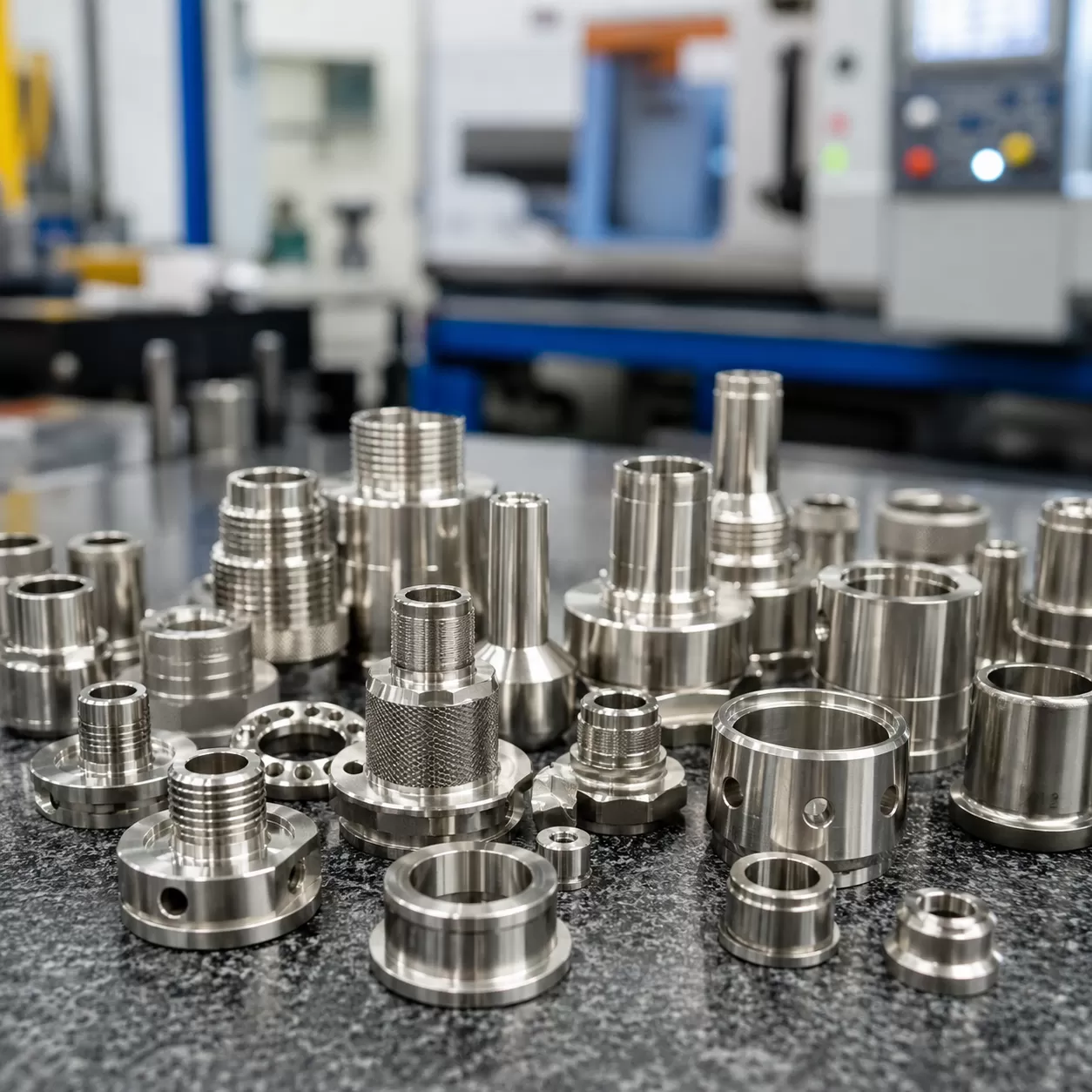
Nickel plating is a true workhorse finish for brass CNC parts. It bridges the gap between raw functionality and a clean, professional look. When we process brass components, we typically rely on two distinct nickel plating methods depending on what the part needs to achieve in the field.
Electrolytic vs. Electroless Nickel Plating
Choosing the right nickel plating method comes down to your part\'s geometry and performance requirements.
- Electrolytic Nickel Plating: Uses an electrical current to deposit the nickel layer. It delivers a high-gloss, decorative finish and is highly cost-effective. However, it can suffer from uneven thickness on complex parts with deep recesses or sharp corners.
- Electroless Nickel Plating: Uses a chemical reaction instead of electricity. This guarantees a perfectly uniform coating thickness across every single surface, including internal threads and complex internal channels. It also offers superior hardness and wear resistance.
| Feature | Electrolytic Nickel | Electroless Nickel |
|---|---|---|
| Uniformity | Varied (thicker on edges) | Extremely uniform |
| Hardness | Medium | High (can be heat-treated) |
| Primary Benefit | Bright aesthetic & lower cost | Perfect precision & wear defense |
| Best For | Decorative & simple geometries | Complex CNC milling parts |
Corrosion Resistance and Wear Protection Benefits
Raw brass naturally tarnishes and oxidizes over time when exposed to air and moisture. A nickel layer acts as a durable barrier that completely seals the underlying brass substrate.
- Prevents Tarnish: Stops the formation of copper oxides (green crust) on the brass surface.
- Friction Reduction: Provides a smooth, low-friction surface that prevents galling in moving assemblies.
- Scratch Resistance: Increases the surface hardness of the brass component, protecting it from daily handling and abrasive environments.
Common Industrial Applications for Nickeled Brass
Because of this balance of durability and clean appearance, nickel-plated brass is widely adopted across multiple global industries.
- Electrical Connectors: Enhances wear life on plug terminals while maintaining good conductivity.
- Plumbing & Fluid Control: Utilized in valves, fittings, and manifolds to prevent corrosion from water and chemicals.
- Marine Hardware: Provides crucial saltwater corrosion resistance for exposed brass components.
- Automotive Sensors: Protects critical sensor housings from harsh under-hood environments.
Chrome Plating Finishes for Enhanced Performance
Industrial Hard Chrome vs. Decorative Chrome
When plating brass CNC parts, choosing between hard chrome and decorative chrome depends entirely on the application. Industrial hard chrome is applied as a thicker chromium layer directly to the brass or over a nickel base. It focuses strictly on performance, wear resistance, and extending part lifespan.
Decorative chrome, on the other hand, utilizes a much thinner chromium layer over an initial electrolytic nickel coating. This combination provides a brilliant, mirror-like aesthetic while still offering basic environmental protection for commercial components.
Improving Hardness, Friction, and Surface Longevity
Integrating a chrome metal finishing layer significantly alters the physical properties of brass components. This surface treatment delivers major mechanical advantages:
- Extreme Surface Hardness: Boosts the scratch and abrasion resistance of naturally soft brass.
- Low Coefficient of Friction: Creates a slick, smooth surface that reduces wear in moving mechanical assemblies.
- Corrosion Resistance: Shields the underlying brass from harsh industrial chemicals, moisture, and oxidation.
- Enhanced Longevity: Prevents premature part failure, making it ideal for heavy-use applications requiring strict quality standards.
Visual Characteristics of Chrome Finishes
Chrome plating gives custom manufacturing parts a distinct, sleek appearance. Unlike the warmer hue of nickel, a chrome finish delivers a cool, blue-white metallic luster. It provides a flawless, high-end reflection that remains bright over time without dulling. For components that require an ultra-clean, modern look alongside rugged durability, chrome remains the industry standard.
If you are currently optimizing your production runs, you can explore our high-volume CNC machining services to see how we integrate high-performance plating finishes into scaled manufacturing.
Gold Plating Finishes for High-End Applications
The Unique Advantages of Gold Finishes on Brass
When we plate gold onto custom brass components, we unlock a level of performance that other metals simply cannot match. While brass itself is a reliable alloy, adding a gold layer elevates the base material by preventing surface degradation over time.
Gold does not react with oxygen, meaning it will never rust, tarnish, or scale. For high-precision applications—especially those utilizing our precision CNC turning parts—this ultra-thin precious metal layer provides a flawless, low-friction surface treatment that maintains its integrity under extreme environmental stress.
Electrical Conductivity and Oxidation Prevention
Gold is the industry standard for critical electronic and aerospace components due to its superior electrical conductivity and total oxidation prevention. While silver and copper conduct well, they tarnish rapidly when exposed to air. Gold stays completely clean, ensuring stable, low-resistance electrical contact over millions of cycles.
- Zero Tarnish: Eliminates the risk of insulating oxide films forming on contact points.
- Low Contact Resistance: Ensures weak electrical signals pass through without loss or distortion.
- Excellent Solderability: Makes delicate wire bonding and component assembly straightforward and reliable.
Luxury Aesthetic and Premium Appearance Uses
Beyond its industrial functionality, gold metal finishing delivers an unmistakable luxury aesthetic. It provides a rich, deep warmth that artificial coatings cannot replicate, making it the top choice for high-end consumer goods, premium architectural hardware, and luxury automotive trim.
| Feature | Industrial Gold Plating | Decorative Gold Plating |
|---|---|---|
| Primary Focus | Conductivity & Corrosion Resistance | Uniform Color & Premium Appearance |
| Typical Thickness | 1.27 to 2.54 microns (heavy wear) | 0.25 to 0.50 microns (flash layer) |
| Common Uses | Sensors, PCB Connectors, Medical Devices | Luxury Watches, High-End Fittings, Jewelry |
Our custom manufacturing processes ensure that whether you need gold for its high-tech conductivity or its premium visual quality, the final coating adheres perfectly to your brass CNC parts without sacrificing tight dimensional tolerances.
Comparing Finishes: Nickel vs. Chrome vs. Gold
Choosing the right plating for your custom brass CNC parts comes down to balancing how the part needs to perform with how you want it to look. Each finish brings a distinct set of properties to the table, making material selection a critical step in the manufacturing process. To get the best results, it helps to understand how to select precise CNC machining materials and finishes based on your specific application requirements.
Performance Comparison for Industrial Functionality
When it comes to raw industrial performance, these three finishes serve entirely different purposes:
- Nickel Plating: Offers exceptional corrosion resistance and wear protection. Electroless nickel provides a highly uniform thickness over complex geometries, making it the go-to choice for internal valving and chemical processing components.
- Chrome Plating: Hard chrome delivers unmatched surface hardness and a low coefficient of friction. It thrives in high-friction environments, heavy machinery, and hydraulic systems where wear resistance is paramount.
- Gold Plating: While softer than nickel and chrome, gold offers unmatched electrical conductivity and absolute oxidation prevention. It will not tarnish, making it the industry standard for critical electronic contacts and aerospace terminals.
Aesthetic Differences and Visual Quality Standards
The visual impact of your metal finishing defines the premium feel of the final product:
| Finish Type | Visual Appearance | Common Quality Standard |
|---|---|---|
| Nickel | Warm, yellowish-silver metallic hue; classic industrial look. | Smooth, mirror-like or satin finish; free of pitting. |
| Chrome | Cool, brilliant blue-white mirror sheen; highly reflective. | High reflectivity; scratch-free, uniform chromium layer. |
| Gold | Rich, deep metallic yellow; unmistakable luxury aesthetic. | Even coloration; free of burning, blistering, or dull spots. |
Cost-Effectiveness and Lifecycle Analysis
The total cost of ownership involves balancing initial electroplating surface treatment costs against the part\'s operational lifespan:
- Nickel: The most cost-effective option for general industrial use. It delivers long-term durability and corrosion resistance at a highly competitive price point.
- Chrome: Moderate to high cost due to the strict environmental regulations and multi-step processing required for high-quality chromium layers. However, the extended service life in high-wear applications justifies the investment.
- Gold: The highest initial material cost. Because gold is a precious metal, it is typically applied as a thin flash or restricted to low-volume, high-end applications where its conductivity and luxury aesthetic are non-negotiable.
Key Design Considerations and Quality Control
Managing Dimensional Tolerances and Thread Clearance
Plating brass CNC parts adds real material thickness to every exposed surface. When working with tight tolerances or precise thread fits, failing to account for this extra layer will cause assembly failures. Designers must calculate the plating thickness and adjust the pre-machined dimensions accordingly.
For high-precision components, standard tolerances must be planned ahead of time. Reviewing CNC machining basics and guides helps clarify how to offset part dimensions before sending them to the plating bath.
| Plating Type | Typical Thickness Per Side | Thread Allowance Required |
|---|---|---|
| Nickel (Electroless) | 5 to 25 microns | Undersize external / Oversize internal |
| Decorative Chrome | 0.3 to 0.5 microns (over nickel) | Minimal adjustment needed |
| Hard Chrome | 10 to 500 microns | Heavy post-plate grinding required |
| Gold | 0.5 to 5 microns | Minimal to moderate adjustment |
Post-Processing Sealing and Surface Prep Requirements
A flawless metal finishing job relies entirely on the quality of the raw surface. Brass parts must be completely free of machining oils, tarnish, and burrs before entering the electrolyte solution.
- Mechanical Polishing: Removes CNC tool marks to ensure a smooth, mirror-like final chromium layer or gold finish.
- Acid Activation: Cleans the brass substrate to guarantee strong molecular bonding and prevent peeling.
- Anti-Tarnish Sealing: Essential for gold and silver plating to lock out moisture and prevent the underlying copper in brass from migrating to the surface.
Common Defect Prevention in Plating Finishes
Controlling the electroplating surface treatment process requires strict quality checks to avoid costly rework. Below are the primary defects encountered when plating brass CNC parts and how we prevent them:
- Blistering and Peeling: Caused by poor surface cleaning. We use multi-stage ultrasonic degreasing to ensure perfect adhesion.
- Burned Edges: Occurs when the electrical current density is too high during the electrolytic nickel or chrome process. Properly designed racks and auxiliary anodes distribute the current evenly.
- Pinholes and Pitting: Triggered by trapped gas bubbles or dust particles in the bath. Continuous filtration and agitation of the electrolyte solution keep the finish pristine and uniform.
Frequently Asked Questions About Plating Brass CNC Parts
Which Plating Finish Best Prevents Brass Tarnish?
Chrome plating provides the absolute best protection against tarnish, corrosion, and surface oxidation. While nickel offers excellent day-to-day resistance, decorative or hard chrome creates an impenetrable barrier that keeps plating brass CNC parts looking pristine in harsh environments. Gold also entirely prevents tarnish due to its noble metal properties, but chrome remains the most cost-effective choice for heavy industrial durability.
How Does Plating Affect the Precision of CNC Parts?
Electroplating adds physical thickness to the surface of your components, directly impacting dimensional tolerances and thread clearances. Depending on the metal finishing process used, the coating layer can change part dimensions significantly.
| Plating Type | Typical Thickness Per Side | Impact on Tight Tolerances |
|---|---|---|
| Electroless Nickel | 10 to 25 microns | Extremely uniform; minimal impact on precision |
| Decorative Chrome | 0.3 to 0.5 microns | Negligible; relies on the underlying nickel layer |
| Hard Chrome | 10 to 500 microns | Significant; requires post-plating grinding |
| Gold Plating | 0.5 to 2.5 microns | Low; ideal for precise electrical contacts |
To maintain strict compliance with your design specifications, engineers must factor in these coating thicknesses during the initial cnc machining for medical devices or industrial components phase, adjusting CAD models to allow for the added material.
How Do You Choose the Right Plating for Your Application?
Selecting the ideal surface treatment depends on balancing your budget with the primary environment the component will face.
- Choose Nickel if: You need a balance of corrosion resistance, uniform thickness on complex geometries, and affordable wear protection.
- Choose Chrome if: Your application demands extreme surface hardness, low friction, scratch resistance, and a bright, reflective aesthetic.
- Choose Gold if: High electrical conductivity, reliable oxidation prevention, and a luxury appearance are mandatory for your high-end electronics or premium consumer goods.
 English
  German
  Dutch
Dutch  Russian
  Czech
Czech  French
  Japanese
  Spanish
  Portuguese
  Korean