

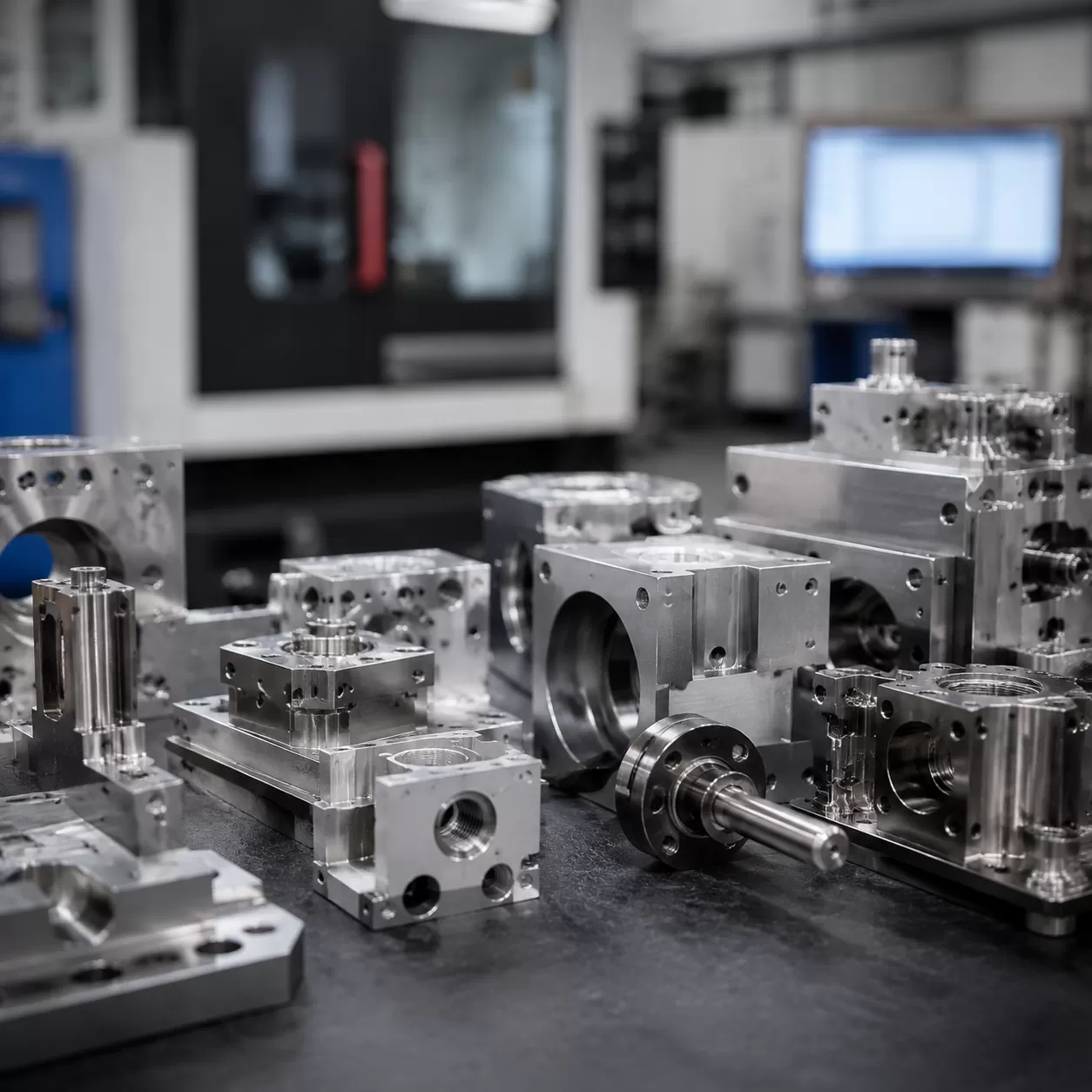
Understanding the Role of High-Precision CNC Machining in Packaging
End-of-line packaging systems—including palletizers, case sealers, and labeling machines—operate at high speeds where even a 0.01mm deviation can cause catastrophic line failure. High-precision CNC machining ensures that every component integrates seamlessly into these complex assemblies.
The Importance of Precision in End-of-Line Packaging Equipment
In modern packaging, synchronization is everything. High-precision parts are the backbone of machine reliability, ensuring that timing, placement, and force remain consistent over millions of cycles.
- Minimizing Downtime: Accurate dimensions prevent mechanical jams and premature wear.
- High-Speed Stability: CNC-machined parts maintain structural integrity under intense vibration.
- Interchangeability: Precise tolerances allow for "drop-in" replacements without manual shimming or onsite adjustments.
Key Benefits of Custom CNC Machining for Packaging Components
| Benefit | Impact on Production |
|---|---|
| Material Versatility | Use of food-grade stainless steel or high-wear plastics. |
| Tight Tolerances | Ensures perfect alignment for sensors and actuators. |
| Rapid Prototyping | Quickly iterate custom grippers or changeover parts. |
| Repeatability | Identical parts across multiple global facilities. |
Standard vs. Complex Geometries for Industrial Machinery
While standard blocks and plates are common, end-of-line packaging often requires complex geometries to handle unique product shapes.
- Standard Parts: Frames, mounting brackets, and simple shafts. These focus on cost-efficiency and strength.
- Complex Geometries: Custom cam profiles, vacuum manifolds, and specialized robotic end-effectors.
- Optimization: CNC machining allows for weight reduction in moving parts (lowering inertia) without sacrificing the rigidity required for high-speed industrial environments.
Step 1: Preparing Your CAD Files and Technical Drawings
Getting your high precision CNC parts right starts with clean data. If your files are messy, your parts will be too. We need a digital roadmap that translates perfectly to our machines to ensure your end-of-line packaging machine runs without a hitch.
File Format Requirements for Online CNC Quoting
For an instant quote, the quality of your upload matters. While we can work with various formats, 3D models are the gold standard for calculating geometry, tool paths, and material volume.
| File Type | Extension | Best Use Case |
|---|---|---|
| STEP/STP | .step, .stp | Industry Standard. Best for 3D CNC machining. |
| IGES | .igs, .iges | Good fallback for older CAD software. |
| DXF/DWG | .dxf, .dwg | Essential for 2D profiles, laser cutting, or hole patterns. |
| SolidWorks | .sldprt | Native files are great, but STEP is more universal. |
Specifying Tolerances and Critical Dimensions
A 3D model tells us the shape, but it doesn't tell us how "tight" a fit needs to be. For packaging machinery where high-speed motion is constant, tight tolerances are non-negotiable.
- Standard Tolerance: Typically $\pm 0.1mm$, sufficient for brackets or frames.
- Precision Tolerance: Down to $\pm 0.01mm$ for bearing seats, shafts, and gears.
- Callouts: Always highlight critical dimensions in a secondary 2D PDF drawing. If a dimension isn't specified, we default to standard shop tolerances.
Reconciling Drawings for Clarity During the Quoting Process
Confusion during the quote phase leads to delays. We look for "reconciled" documentation where the 3D model and the 2D technical drawing match perfectly.
- Remove Ambiguity: Ensure all thread sizes (metric or imperial) are clearly labeled.
- Surface Requirements: Note any specific surface finish needs directly on the drawing to prevent friction issues in your assembly.
- DFM Feedback: We provide a DFM analysis to spot "unmachinable" features—like deep internal square corners—before we cut a single piece of metal.
By keeping your technical drawings sharp and your CAD files clean, you guarantee a faster turnaround and a component that fits the first time.
Step 2: Material Selection for Packaging Machine Environments
Choosing the right material is the difference between a machine that runs 24/7 and one that faces constant downtime. In end-of-line packaging, parts must balance weight, strength, and environmental resistance. We focus on materials that handle high-speed mechanical stress while remaining easy to clean.
Metals: Stainless Steel, Aluminum, and Tool Steel
Metals form the backbone of any heavy-duty packaging system. We typically recommend three core options based on the specific application:
- 304/316 Stainless Steel: The gold standard for corrosion resistance. It is essential for parts that undergo frequent washdowns.
- 6061 Aluminum: Best for high-speed moving parts where reducing inertia is critical. It offers an excellent strength-to-weight ratio.
- Tool Steel (D2/A2): Used for cutting blades, punches, and high-wear areas that require extreme hardness and impact resistance.
Engineering Plastics: PEEK, Delrin, and UHMW
For components that require low friction or electrical insulation, engineered plastics are often superior to metal.
- Delrin (Acetal): Great for gears and bushings due to its high dimensional stability and low moisture absorption.
- UHMW-PE: The go-to for wear strips and guide rails because of its incredible "slickness" and impact strength.
- PEEK: A high-performance plastic for extreme environments involving high heat or aggressive chemicals.
Choosing Materials for Food Safety and Corrosion Resistance
If your packaging line handles food, beverage, or pharmaceuticals, material compliance is non-negotiable. We prioritize FDA-compliant materials and specialized secondary finishing services like electropolishing to ensure surfaces are smooth enough to prevent bacterial growth.
| Requirement | Recommended Material | Key Benefit |
|---|---|---|
| Direct Food Contact | 316 Stainless Steel / PEEK | Non-reactive and easy to sanitize |
| High-Speed Reciprocation | 7075 Aluminum | Low mass with high fatigue strength |
| Washdown Resistance | 304 Stainless Steel | Prevents rust from harsh cleaning agents |
| Slide Guides/Rails | UHMW-PE | Self-lubricating and quiet operation |
For structural elements that don't face corrosive agents, utilizing 5083 aluminum CNC machining provides the necessary stability for large-scale frames and mounting plates. Selecting the right material at the start ensures your high precision CNC parts survive the rigors of the factory floor.
Step 3: Selecting Machining Processes and Surface Finishes for CNC Parts
Getting the right fit and finish for end-of-line packaging machines ensures your line runs without hiccups. We focus on matching the specific mechanical requirements of your assembly to the most efficient manufacturing method.
CNC Milling and Turning for Structural Components
For the backbone of your machine—like frames, housings, and mounting plates—CNC milling is our go-to for complex, prismatic shapes. When your design calls for concentricity and precision in cylindrical parts like shafts and rollers, we utilize CNC turning to achieve tight tolerances. These core processes handle the bulk of industrial components, ensuring structural integrity and alignment across high-speed systems.
Electrical Discharge Machining (EDM) for Ultra-Fine Precision
When standard cutting tools can't reach tight corners or handle extremely hard materials, we turn to Electrical Discharge Machining (EDM). This is essential for:
- Intricate grippers and specialized sealing jaws.
- Creating ultra-fine slots or internal geometries that require micron-level accuracy.
- Machining hardened tool steels that would otherwise wear out traditional bits.
Surface Treatments for Wear Resistance and Friction Reduction
In the fast-paced environment of end-of-line packaging, parts are subject to constant friction and potential washdown cycles. We offer specific surface finishes to extend part life:
- Anodizing (Type II or III): Ideal for aluminum components to increase corrosion resistance and surface hardness.
- Electroless Nickel Plating: Provides a uniform coating for complex shapes, perfect for wear resistance in moving assemblies.
- Hard Chrome or PVD Coatings: Used on high-contact parts to reduce friction and prevent material buildup.
- Bead Blasting: Removes tool marks for a clean, professional aesthetic on external machine guards.
Understanding our manufacturing process helps you decide which finish is right for your specific environment, whether you are dealing with dry secondary packaging or high-moisture areas. Selecting the right combination of CNC machining and finishing is the most effective way to prevent premature failure on the factory floor.
Step 4: Obtaining Quotes and Evaluating Lead Times
How to Use Instant Online CNC Quoting Platforms
Getting an accurate price for your end-of-line packaging machine components doesn't need to take days. Our digital platform allows you to upload your 3D CAD files directly for immediate analysis. The system scans your geometry, identifies complex features, and provides an instant quote based on your selected materials and quantities. To get the best results, ensure your files are fully resolved and that any secondary operations, like tapped holes or specific surface treatments, are noted during the upload process.
Understanding Pricing Drivers: Material, Complexity, and Volume
Controlling costs when you order high precision CNC parts for end-of-line packaging machine setups requires a clear understanding of what drives the final invoice.
- Material Selection: High-performance alloys and specialized engineering plastics like PEEK carry a higher raw material cost and take longer to machine than standard aluminum or Delrin.
- Part Complexity: Deep pockets, ultra-tight tolerances, and features requiring specialized tooling increase machine cycle times and labor. For complex internal channels or delicate geometries, using specialized wire EDM machining services ensures extreme accuracy but impacts the base cost differently than standard milling.
- Production Volume: Standard setup charges heavily influence low-volume runs. Transitioning from rapid manufacturing prototypes to higher volume production parts lowers the cost per piece significantly, as setup times are amortized across more components.
Managing Lead Times for Prototyping vs. Production Runs
Balancing your project timeline means aligning your order strategy with the right manufacturing phase. For urgent machine breakdowns or initial design validation, our rapid prototyping services prioritize speed, delivering custom prototypes in just a few business days.
When you move to full-scale production runs for structural supports, shafts, or wear components, standard lead times apply. Planning these production orders well in advance of your final machine assembly schedule prevents costly shipping expedites and keeps your packaging line integration on track.
Common CNC Components for End-of-Line Packaging Systems
End-of-line packaging demands absolute reliability. When we manufacture high precision CNC parts for end-of-line packaging machine setups, we focus on the specific mechanical demands of palletizing, wrapping, and labeling environments. These systems run at high cycles, meaning every component must meet tight tolerances to prevent costly line stoppages.
Motion and Drive System Components
The heart of any packaging line is its ability to move products with speed and accuracy. We specialize in producing custom shafts, gears, and pulleys that handle constant start-stop torque.
- Precision Shafts: Ground to exact diameters for seamless bearing fits.
- Custom Gears: Engineered for low backlash and high-speed synchronization.
- Cam Followers & Housings: CNC milled to ensure smooth motion paths during heavy lifting or sorting.
Frames, Mounting Plates, and Structural Supports
Rigidity is the enemy of vibration. We provide heavy-duty mounting plates and structural supports that keep sensors and actuators perfectly aligned.
- Aluminum & Stainless Steel Plates: Lightweight for efficiency or heavy-duty for stability.
- Custom Fixtures: Specialized brackets designed for rapid integration into existing lines.
- Manifolds: Precision-drilled blocks for pneumatic and hydraulic distribution.
Wear Parts and Replaceable Inserts for High-Speed Lines
High-speed packaging creates friction that eats through standard materials. We produce high-durability wear parts designed for easy replacement.
- Gripper Jaws: Custom-contoured inserts for handling delicate or oddly shaped packaging.
- Guide Rails & Sliders: Machined from engineered plastics like UHMW or Delrin for low-friction transport.
- Cutting Blades: Precision-ground tool steel for consistent film and cardboard trimming.
If you are scaling your production, our high-volume CNC machining services provide the consistency needed for large-scale equipment rollouts. For specialized, one-off replacements or prototypes, we offer precision CNC machining services to keep your machinery running at peak performance.
Quality Assurance and Manufacturer Selection
Getting high-precision CNC parts for end-of-line packaging systems requires more than just a shop with a mill. You need a partner that understands the high-stakes environment of a production floor where a single out-of-spec part can cause hours of downtime.
Key Features to Look for in a Precision CNC Partner
When vetting a supplier, look for shops that offer a blend of advanced technology and transparent communication. A reliable partner should provide:
- In-house Metrology: Access to CMM (Coordinate Measuring Machines) and optical comparators to verify tight tolerances.
- Sector Expertise: Experience specifically in industrial machinery or aluminum CNC milling service for German machinery parts to ensure they understand mechanical fit and finish.
- Communication: A dedicated project manager who provides updates on production milestones.
Certification Requirements and Material Traceability
In the packaging world—especially for food, beverage, or pharma—knowing exactly what goes into your machine is non-negotiable. I prioritize shops that maintain strict documentation standards.
| Feature | Importance for Packaging |
|---|---|
| ISO 9001:2015 | Ensures a consistent quality management system is in place. |
| Material Certs (MTRs) | Guarantees the stainless steel or plastic is the exact grade ordered. |
| Certificate of Conformance | Official "stamp of approval" that parts meet your technical drawings. |
| Traceability | Essential for identifying batches if a component fails in the field. |
Design for Manufacturability (DFM) Feedback and Support
The best manufacturers don't just take your money; they check your homework. High-precision CNC machining is expensive, and subtle design tweaks can often cut costs without sacrificing performance.
We look for partners who provide DFM analysis during the quoting stage. They should point out if a deep internal pocket is impossible to mill or if a specific radius can be adjusted to use standard tooling. This feedback loop is vital for optimizing custom CNC machining of brass, copper, and conductive components or complex structural steel frames, ensuring the final part is both functional and cost-effective.
Frequently Asked Questions About Ordering Precision CNC Parts
How do I ensure quality for regulated industrial parts?
Quality starts with choosing a partner that offers full material traceability and strict adherence to technical drawings. For end-of-line packaging systems, you must verify that the machine shop uses calibrated inspection tools and provides a Certificate of Conformance (CoC). If your machinery operates in the food or pharma sectors, ensure the shop follows specific protocols for handling food-safe materials like PEEK to prevent contamination.
What is the typical minimum order quantity (MOQ)?
In the world of custom CNC machining, MOQs are highly flexible. While some traditional shops prefer high-volume production parts, modern platforms are built to handle:
- Prototyping: Single-unit orders for R&D and fit-testing.
- Small Batch: 5 to 50 units for custom machine builds.
- Mass Production: Thousands of units for standardized wear parts.
Most frequently asked questions regarding pricing reveal that while we accept orders for a single part, the cost per unit drops significantly as the volume increases due to reduced setup times.
How are parts inspected for dimensional accuracy?
To guarantee that your high precision CNC parts meet tight tolerances, we employ a multi-stage inspection process:
- In-Process Inspection: Machinists check critical dimensions during the milling or turning cycle.
- CMM Measuring: Coordinate Measuring Machines (CMM) verify complex geometries against your CAD file.
- Manual Gauging: Using precision micrometers, thread gauges, and calipers for 100% verification of specified tolerances.
- Quality Report: A detailed dimensional report is generated to confirm every part is within the required spec before shipping.
 English
  German
  Dutch
Dutch  Russian
  Czech
Czech  French
  Japanese
  Spanish
  Portuguese
  Korean