
Why Brass? The Physics Behind the Choice
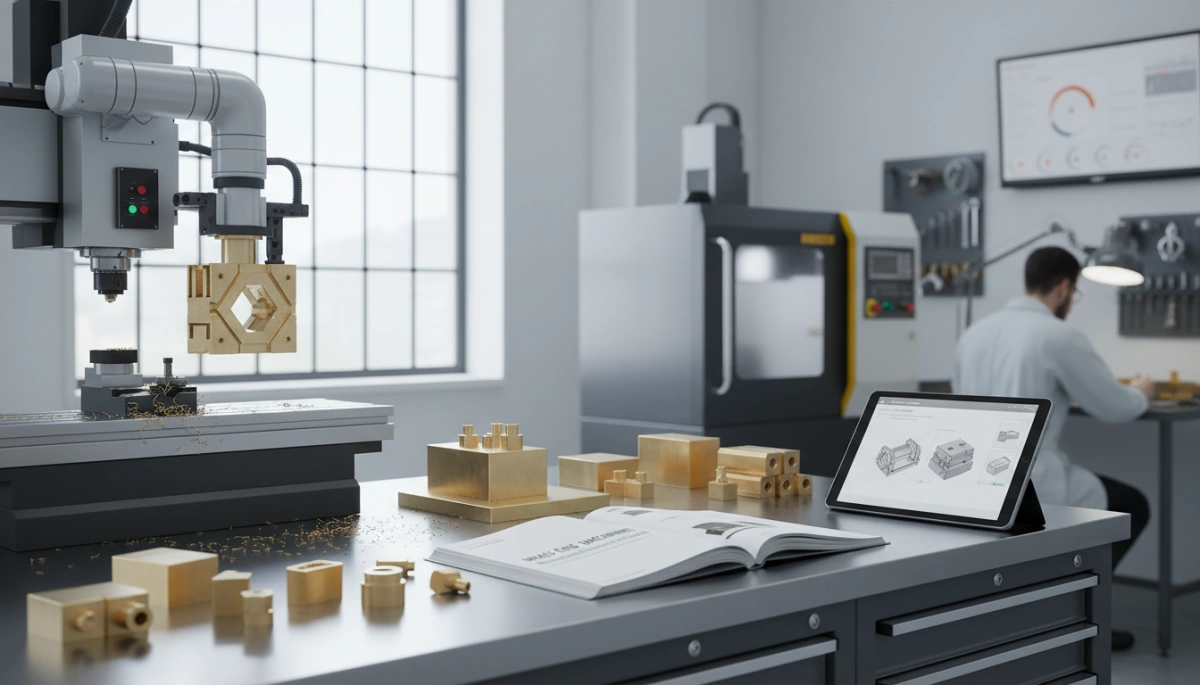
When we look at material selection for precision terminal manufacturing and electronic hardware, brass isn't just a traditional choice; it is an engineering necessity. We choose brass because it strikes the perfect balance between electrical performance, mechanical strength, and manufacturability. While pure copper offers superior conductivity, it is often too soft and "gummy" for high-speed machining, leading to poor surface finishes and tolerance issues. Brass solves this by alloying copper with zinc, creating a material that is rigid enough for Swiss CNC turning services while maintaining essential conductive properties.
Electrical Conductivity: IACS Ratings vs. Copper and Steel
Understanding the IACS conductivity rating (International Annealed Copper Standard) is critical for minimizing electrical contact resistance. Pure copper serves as the benchmark at 100% IACS. However, structural components often don't require that level of throughput.
Here is how brass stacks up against common alternatives in the shop:
| Material | IACS Conductivity Rating | Machinability Rating | Primary Use Case |
|---|---|---|---|
| C11000 (Pure Copper) | 100% | 20% | High-current busbars, pure transmission |
| C36000 Free-Machining Brass | 26% | 100% (Standard) | Connectors, pins, terminals |
| Stainless Steel (304) | ~2.5% | 45% | Structural housing, low-conductivity parts |
| Aluminum (6061) | 40-45% | 50% | Lightweight heat sinks |
For most RF connector machining and signal transmission roles, the 26% IACS of C36000 free-machining brass provides reliable connectivity without the manufacturing headaches associated with pure copper.
Thermal Management and Heat Dissipation
Electronics fail when they overheat. Brass acts as an effective thermal bridge, pulling heat away from sensitive integrated circuits and resistors. In electronic enclosure fabrication, using brass standoffs or mounts helps dissipate thermal loads more efficiently than steel or plastic. Its thermal conductivity ensures that localized hot spots are managed quickly, maintaining the longevity of the entire assembly.
Corrosion Resistance in Harsh Environments
Brass corrosion resistance is a standout feature for industrial and marine electronics. Unlike carbon steel, which rusts rapidly when exposed to humidity, brass naturally forms a protective oxide layer (patina) that prevents deep corrosion. For components exposed to saline environments or varying humidity levels, this self-protecting property reduces the risk of contact failure. This makes brass the substrate of choice for custom electrical pins that must endure decades of service without seizing or losing continuity.
Non-Magnetic Properties for EMI/RFI
In high-frequency applications, magnetic interference is a dealbreaker. Brass is inherently non-magnetic, making it ideal for EMI shielding components. When we machine housings or connectors for telecommunications, using a non-magnetic material ensures that the component does not distort magnetic fields or introduce noise into the signal path. This property is non-negotiable for RF connector machining, where signal integrity and low attenuation are the primary design goals.
Material Selection: Choosing the Right Alloy
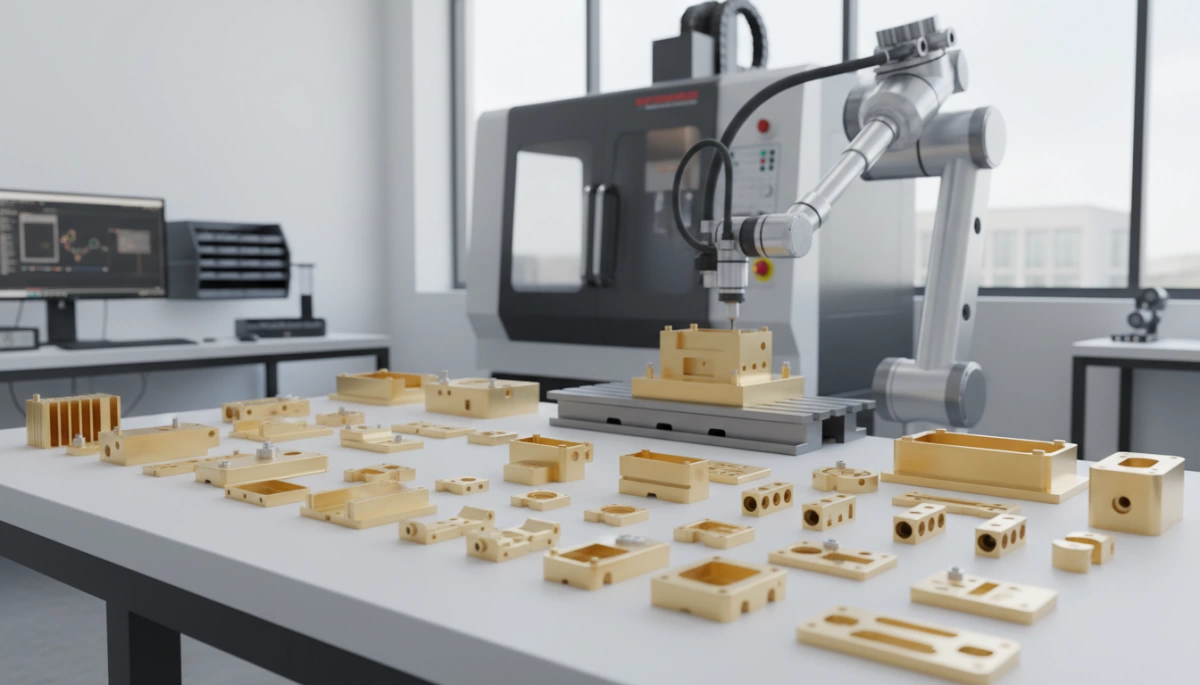
Selecting the correct alloy is the single most critical step in copper alloy machining for electronics. While many designers simply specify "brass," the specific grade dictates the component's conductivity, machinability, and compliance with global environmental standards. We guide our clients through selecting the right machining materials to ensure the final part meets both performance specs and budget requirements.
C36000 Free-Machining Brass (The Gold Standard)
When we talk about C36000 free-machining brass, we are referring to the industry benchmark for machinability. With a machinability rating of 100%, this alloy allows for extremely high cutting speeds and minimal tool wear, making it the most cost-effective choice for high-volume Swiss CNC turning services.
- Best For: High-speed automatic screw machine parts, custom electrical pins, and threaded standoffs.
- Key Trait: Excellent surface finish right off the machine, reducing the need for aggressive post-processing.
C26000 Cartridge Brass for Forming
Also known as "70/30 brass," C26000 contains a higher percentage of copper and zinc with very little lead. While it is harder to machine than C36000, it possesses superior ductility. We recommend this grade when the component requires cold working, such as crimping, bending, or deep drawing after the initial machining process.
C46400 Naval Brass for Marine Electronics
For electronics deployed in saltwater environments, standard brass can suffer from dezincification. C46400 Naval Brass includes a small amount of tin (about 1%) to inhibit corrosion. This makes it the go-to material for electronic enclosure fabrication and connectors used in maritime or harsh industrial applications where moisture is a constant threat.
Lead-Free Brass (Eco-Brass/C69300) for RoHS Compliance
With tightening global regulations, demand for RoHS compliant brass alloys has surged. Traditional free-machining brass relies on lead for chip breaking, but lead is restricted in many consumer electronics.
We utilize alloys like C69300 (Eco-Brass) or C46500, which use silicon or other additives to mimic the machinability of leaded brass without the toxicity. These are essential for exporting components to the EU market. Explore our brass material options to find the specific grade that aligns with your regulatory requirements.
Comparison of Common Electrical Brass Alloys:
| Alloy | Main Characteristic | Conductivity (IACS) | Typical Application |
|---|---|---|---|
| C36000 | Excellent Machinability | ~26% | Terminals, Standoffs, Nuts |
| C26000 | High Ductility | ~28% | Contacts requiring crimping |
| C46400 | Corrosion Resistance | ~26% | Marine connectors |
| C69300 | Lead-Free / High Strength | ~20-25% | RoHS compliant sensors |
Design for Manufacturability (DFM) for Electronic Components
Designing brass parts for electronics isn't just about making them fit; it's about ensuring they conduct electricity efficiently and survive the plating process. When we handle brass CNC machining for these applications, we look for specific geometry features that optimize both production speed and component performance.
Tolerance Management (ISO 2768 vs Precision)
In the world of electronics, a loose fit can mean a failed circuit. For general electronic enclosure fabrication, standard ISO 2768-m (medium) tolerances are usually sufficient and cost-effective. However, precision terminal manufacturing demands much tighter control.
When designing custom electrical pins or RF connectors, we often need to hold tolerances within +/- 0.005mm. This is where selecting the right machine matters. Understanding the capabilities of Swiss machining versus conventional CNC lathes is critical when your design involves long, slender parts that require exceptional concentricity.
Key Tolerance Considerations:
- Mating Parts: Specify tighter CNC turned parts tolerances (H7/g6 fits) only on mating surfaces to keep costs down.
- Thread Pitch: Fine threads in brass are durable, but ensure the relief groove is wide enough for the plating buildup.
- Concentricity: Critical for coaxial components to prevent signal loss.
Wall Thickness and Geometry Tips
Brass is rigid and machines easily, but thin walls can still vibrate under cutting pressure, leading to chatter marks. For C36000 free-machining brass, we recommend a minimum wall thickness of 0.5mm for turned components to maintain structural integrity.
- Avoid Sharp Internal Corners: End mills have a radius. Designing with a slight internal radius prevents stress concentrations and allows for faster machining.
- Chip Evacuation: Avoid deep, narrow blind holes where chips can pack and break drills. If a deep hole is necessary for a sensor housing, consider a step-drill design.
- Uniformity: Consistent wall thickness helps prevent warping during thermal cycling in operation.
Applying smart DFM principles doesn't just improve quality; it can significantly reduce the delivery time of CNC components by eliminating unnecessary machining steps and tool changes.
Surface Finish and Plating Prep
The machined surface finish is the foundation for successful plating. Plating will not hide scratches; it often highlights them. If you require gold plating for connectors to ensure low contact resistance, the underlying brass surface needs to be smooth, typically Ra 0.8 µm or better.
To prepare for plating:
- Radiused Edges: Sharp external edges can cause "dog-boning" (excess plating buildup) which interferes with assembly. Break all sharp edges.
- Surface Texture: A smoother finish reduces the risk of porosity in the plating layer, which is vital for corrosion resistance.
- Clean Geometry: Avoid designs that trap polishing compounds or cleaning solutions, as trapped chemicals will ruin the plating bath.
Essential Post-Processing for Conductivity and Longevity
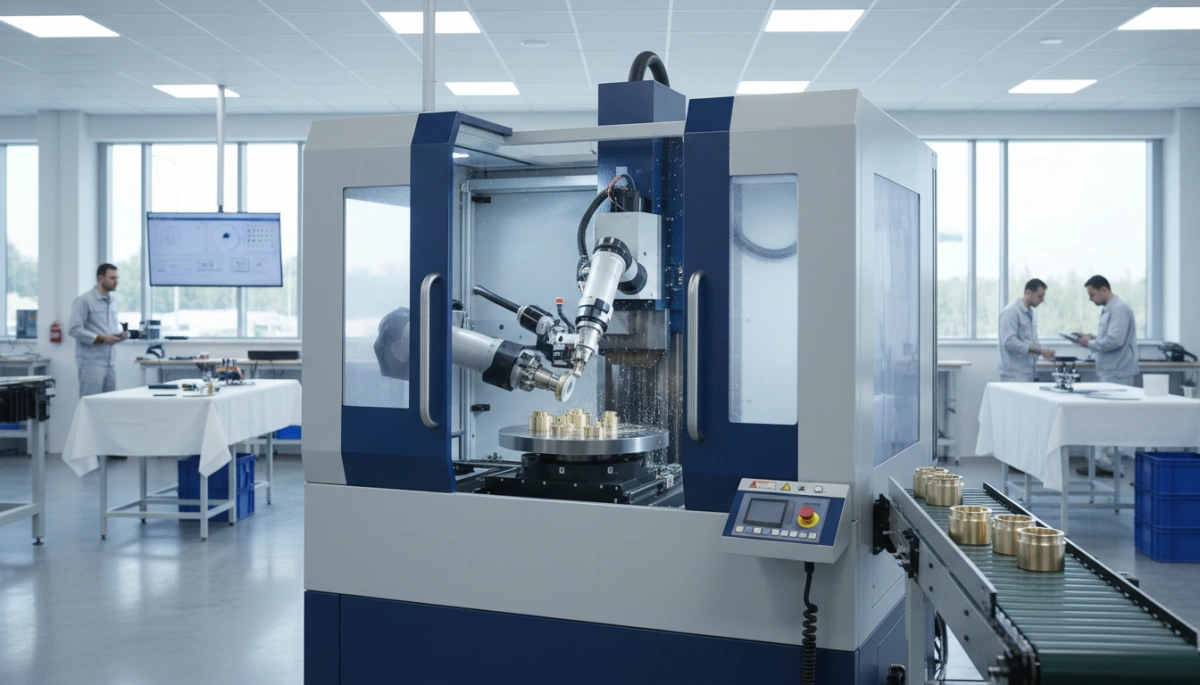
Raw machined brass looks great, but in electronics, the surface finish is where the real work happens. To ensure low electrical contact resistance and long-term durability, we almost always apply secondary treatments. The goal is to protect the base metal while enhancing its natural electrical properties.
Passivation for Cleaning
Before any plating happens, the parts must be chemically clean. Passivation involves an acid dip that removes free iron, oils, and surface contaminants left over from the cutting tools. It creates a clean base, ensuring that subsequent layers adhere perfectly to the brass substrate without peeling or blistering.
Gold Plating for Low Voltage Reliability
For critical signal transmission, gold plating for connectors is the industry benchmark. Gold does not oxidize, meaning the connection remains stable even in low-voltage applications where a tiny oxide layer could break the circuit. While expensive, it is often non-negotiable for high-reliability components, similar to the standards used for aerospace turning parts where failure is not an option.
Nickel Plating for Corrosion Barriers
Nickel is the workhorse of plating. We often use it as an underplate between the brass and gold. It acts as a diffusion barrier, stopping the zinc in the brass from migrating into the gold layer over time. It also provides significant brass corrosion resistance and physical wear protection for parts that undergo frequent mating cycles.
Tin and Silver Plating Options
Not every part needs gold. Depending on your budget and conductivity requirements, other metals might be a better fit.
| Plating Type | Conductivity | Key Benefit | Best Application |
|---|---|---|---|
| Silver | Excellent | Highest electrical conductivity | RF connectors, high-power transmission |
| Tin | Good | Excellent solderability & low cost | PCB terminals, commercial electronics |
| Nickel | Fair | Wear resistance & diffusion barrier | Battery contacts, outer shells |
| Gold | Good | Oxidation resistance | Data connectors, low-voltage switches |
Real-World Applications and Case Studies
We don't just machine brass because it looks good; we choose it because it solves specific engineering headaches in the electronics world. From the high-heat environment of a car engine to the precise signal requirements of a 5G tower, Brass CNC machining is often the unsung hero keeping systems running. Here is how we apply these alloys in real-world scenarios.
Automotive Sensor Housings and ECU Terminals
In the automotive industry, components face extreme vibration, thermal cycling, and exposure to oils and road salts. Plastic often fails under these conditions, and steel doesn't conduct electricity well enough for sensitive electronics.
- Sensor Housings: We frequently machine temperature and pressure sensor bodies from C36000 free-machining brass. The material’s natural corrosion resistance protects the delicate internal electronics, while its thermal properties help dissipate heat away from the sensor chip.
- ECU Terminals: For the Electronic Control Unit (ECU), reliability is non-negotiable. We utilize Swiss CNC turning services to produce high-volume, intricate pins and terminals. These parts require precision terminal manufacturing tolerances to ensure the connector doesn't fail after thousands of miles of vibration.
Telecommunications RF Connectors
If you work in RF (Radio Frequency) or microwave communications, you know that geometry and material consistency are everything. Brass is the standard for coaxial connectors (like SMA, SMB, and N-type connectors) because it is non-magnetic and easy to plate.
- Signal Integrity: We machine RF connector components to extremely tight concentricity specifications. Any deviation in the wall thickness can alter the impedance of the connector, causing signal loss.
- EMI Shielding: Brass housings act as excellent EMI shielding components, preventing external interference from disrupting the signal.
- Plating: These parts are almost always plated. We machine the brass to a fine surface finish (Ra 0.4 or better) to ensure that subsequent nickel or gold plating adheres perfectly, minimizing electrical contact resistance.
Industrial Power Switchgear Components
In high-voltage industrial settings, safety and durability are the main drivers. We use brass for switchgear components because it prevents arcing damage better than copper in certain mechanical switching applications due to its hardness.
- Arc Quenching: Brass withstands the physical wear of switching contacts better than pure copper.
- Enclosures and Mounts: For electronic enclosure fabrication within switchgear cabinets, brass standoffs and mounting blocks provide a solid, conductive ground path that won't corrode over decades of service.
- Machinability: Switchgear parts are often complex and bulky. Using C36000 allows us to run high-speed CNC milling operations, removing material quickly without sacrificing tool life, which keeps the cost per part lower than using tellurium copper or bronze.
FAQs About Brass CNC Machining for Electronics
When dealing with Brass CNC machining for electrical and electronic components, we often hear the same few questions from engineers and procurement managers. Getting these answers right is critical for balancing performance, cost, and manufacturability.
What is the best brass alloy for electrical conductivity?
While pure copper holds the crown for conductivity, it is difficult to machine precisely. For brass, C26000 (Cartridge Brass) is often the top pick for conductivity, offering around 28% IACS conductivity rating. However, most high-volume custom electrical pins and terminals use C36000 free-machining brass (26% IACS). The slight trade-off in conductivity is usually worth the massive improvement in machining speed and surface finish quality.
How does plating affect brass component performance?
Plating is essential for longevity. Bare brass oxidizes over time, which increases electrical contact resistance and can cause signal failure.
- Gold plating for connectors: The standard for low-voltage, high-reliability logic circuits.
- Nickel: excellent for corrosion resistance and wear.
- Tin: The go-to for solderability on PCB components.
Proper plating ensures your RF connector machining projects maintain signal integrity for years.
Can lead-free brass match C360 machinability?
The gap is closing. RoHS compliant brass alloys (like C69300 or Eco-Brass) use silicon or bismuth to break chips. While they are slightly harder on cutting tools than traditional leaded brass, they are fully capable of high-speed production in Swiss CNC turning services. If your product is destined for the EU market, these alloys are non-negotiable.
What tolerances can be achieved in brass turning?
Brass is incredibly rigid and thermally stable, making it one of the easiest materials to hold tight dimensions on. We routinely achieve CNC turned parts tolerances as tight as +/- 0.005mm for precision interconnects. To consistently hit these numbers, we adhere to strict industrial-grade CNC machining accuracy standards, ensuring that every terminal fits its housing perfectly without play.
 English
  German
  Dutch
Dutch  Russian
  Czech
Czech  French
  Korean
  Japanese
  Spanish
  Portuguese