
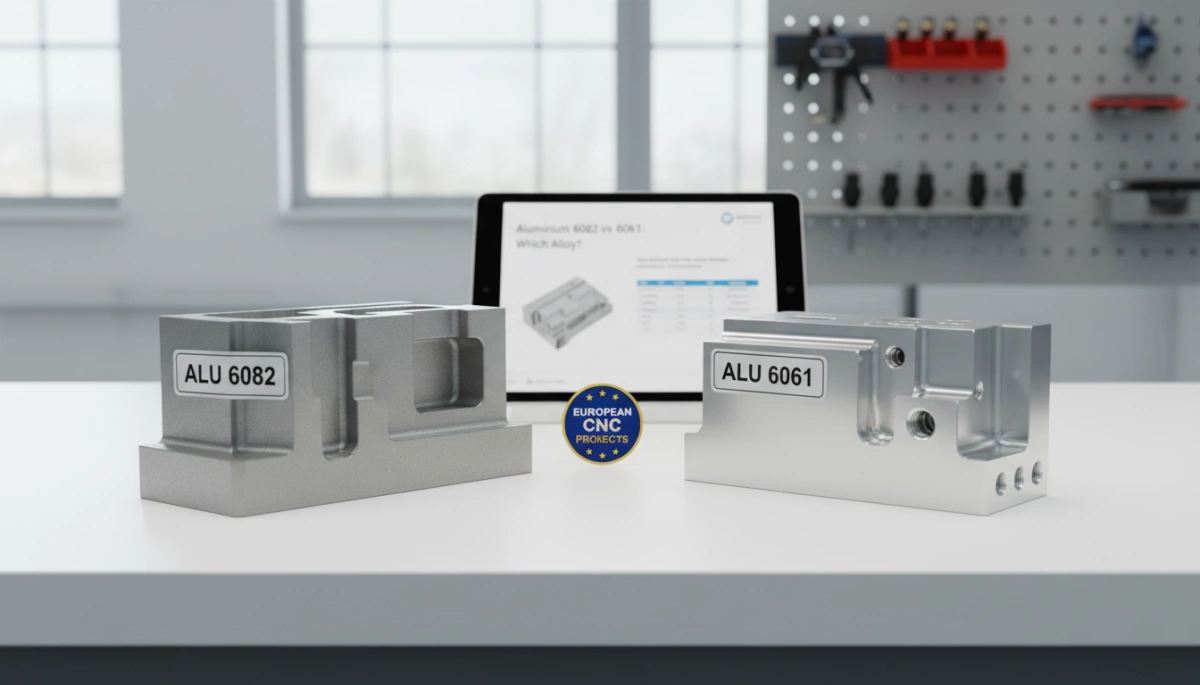
Introduction to 6061 and 6082 Aluminum Alloys
When sourcing materials for European CNC projects, the decision frequently narrows down to Aluminum 6082 vs 6061. Both are highly versatile, heat-treatable alloys renowned for their reliability in precision machining. However, regional availability, specific mechanical properties, and compliance with local regulatory frameworks dictate the smartest material choice for your manufacturing pipeline.
What is 6061 Aluminum? (The US Standard)
6061 aluminum is the undisputed workhorse of the North American manufacturing industry. Governed primarily by the ASTM standard, this alloy provides an exceptional balance of strength, weldability, and corrosion resistance.
- Market Position: The default choice for general-purpose CNC machining in the US.
- Key Advantage: Unmatched availability and highly predictable machinability.
- Common State: Most frequently machined in the 6061 T6 temper for enhanced yield strength.
What is 6082 Aluminum? (The European Standard)
Conversely, 6082 aluminum is the dominant structural alloy across the European market. Regulated rigorously by the EN standard, it serves as the European counterpart to 6061 but is engineered with a slightly different chemical composition that yields higher overall strength.
- Market Position: The highly preferred standard for European CNC projects and structural applications.
- Key Advantage: Excellent corrosion resistance combined with the highest strength of all the 6000 series alloys in plate form.
- Common State: Widely utilized in the 6082 T6 temper for maximum durability.
The 6xxx Series Alloy Family Explained
Both 6061 and 6082 belong to the versatile 6xxx series aluminum family. This specific classification dictates how the metal behaves during machining, forming, and finishing.
Core characteristics of the 6xxx series include:
- Primary Alloying Elements: Magnesium and Silicon, which combine to form magnesium silicide, making the alloys heat-treatable.
- Manufacturing Fit: Highly optimized for aluminum extrusions and complex CNC milling operations.
- Surface Finishing: Excellent responsiveness to anodizing, providing superior aesthetic and protective finishes for machined parts.
Chemical Composition and Mechanical Properties
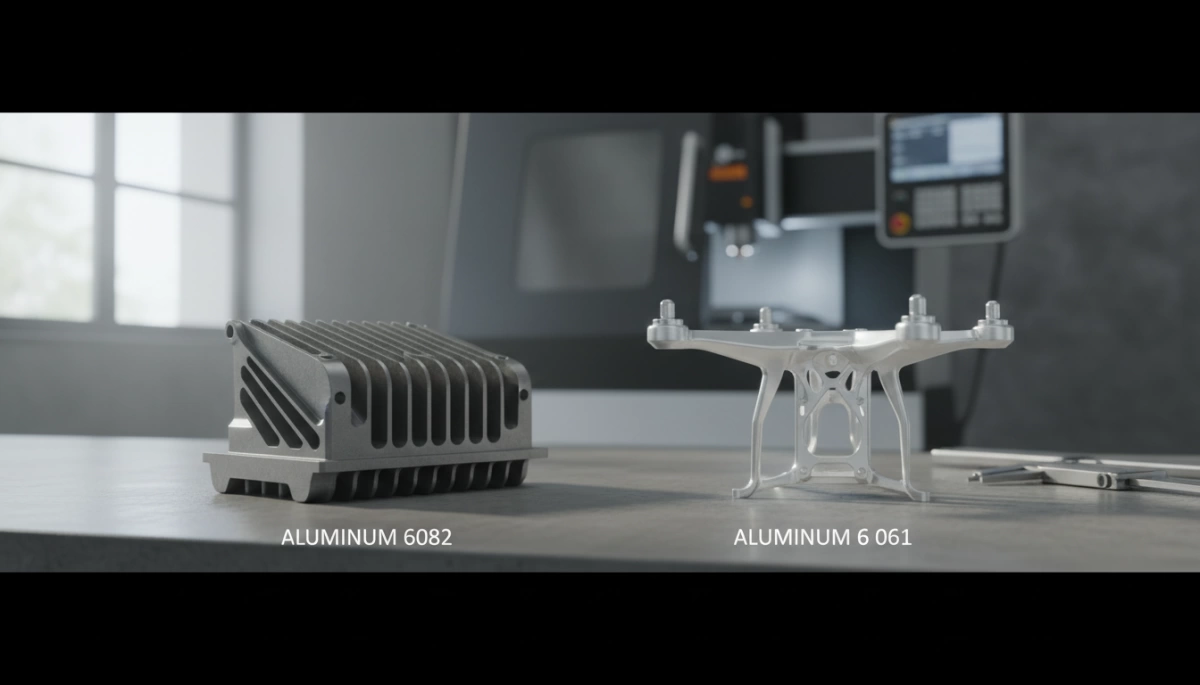
When we handle custom precision CNC machining projects at our factory, understanding the material science behind the metal is just as critical as the cutting process itself. The choice between Aluminum 6082 vs 6061: which aluminum alloy for European CNC projects? often comes down to the specific mechanical demands of your component. While both belong to the 6xxx series, their internal structures dictate how they perform under stress.
Key Differences in Chemical Makeup
The primary distinction lies in the alloying elements. Both alloys rely on Magnesium and Silicon to create magnesium silicide, which allows them to be heat-treated. However, 6082 contains a higher amount of Manganese (Mn) compared to 6061. This addition of Manganese controls the grain structure, resulting in a stronger alloy that is better suited for structural applications.
In contrast, 6061 maintains a balanced composition that makes it incredibly versatile for general machining. Understanding these chemical nuances allows our engineers to achieve tighter aluminum CNC machining tolerances for automation and packaging equipment, ensuring that the material reacts predictably during milling and turning.
Chemical Composition Breakdown:
- Aluminum 6061: Magnesium, Silicon, Iron, Copper, Chromium.
- Aluminum 6082: Magnesium, Silicon, High Manganese, Iron, Chromium.
Tensile Strength and Yield Strength Comparison
For European manufacturers, strength is often the deciding factor. 6082 T6 is generally stronger than 6061 T6. The higher Manganese content in 6082 boosts both its tensile strength and yield strength, making it the preferred choice for highly stressed parts in the construction and transport sectors.
While 6061 is sufficient for many standard components, 6082 offers that extra margin of safety for structural loads. Here is a typical comparison of their mechanical properties in the T6 temper:
| Property | Aluminum 6061 T6 | Aluminum 6082 T6 |
|---|---|---|
| Ultimate Tensile Strength | ~290 MPa | ~310 MPa |
| Yield Strength | ~240 MPa | ~260 MPa |
| Elongation | 8-10% | 8-10% |
Hardness and Overall Durability
Hardness directly impacts wear resistance and machinability. 6082 generally exhibits slightly higher hardness values (around 95 Brinell) compared to 6061 (around 95 Brinell, though often testing slightly lower in practice). This makes 6082 excellent for parts that face regular mechanical stress.
However, durability isn't just about the raw metal. At our facility, we often enhance the surface properties of both alloys through anodizing. Whether you choose 6082 for its structural rigidity or 6061 for its versatility, our CNC machining supplier services for automotive aluminum parts ensure that the final component meets rigorous durability standards, complete with hardcoat anodizing if required for superior corrosion resistance.
Performance and Machinability in CNC Projects
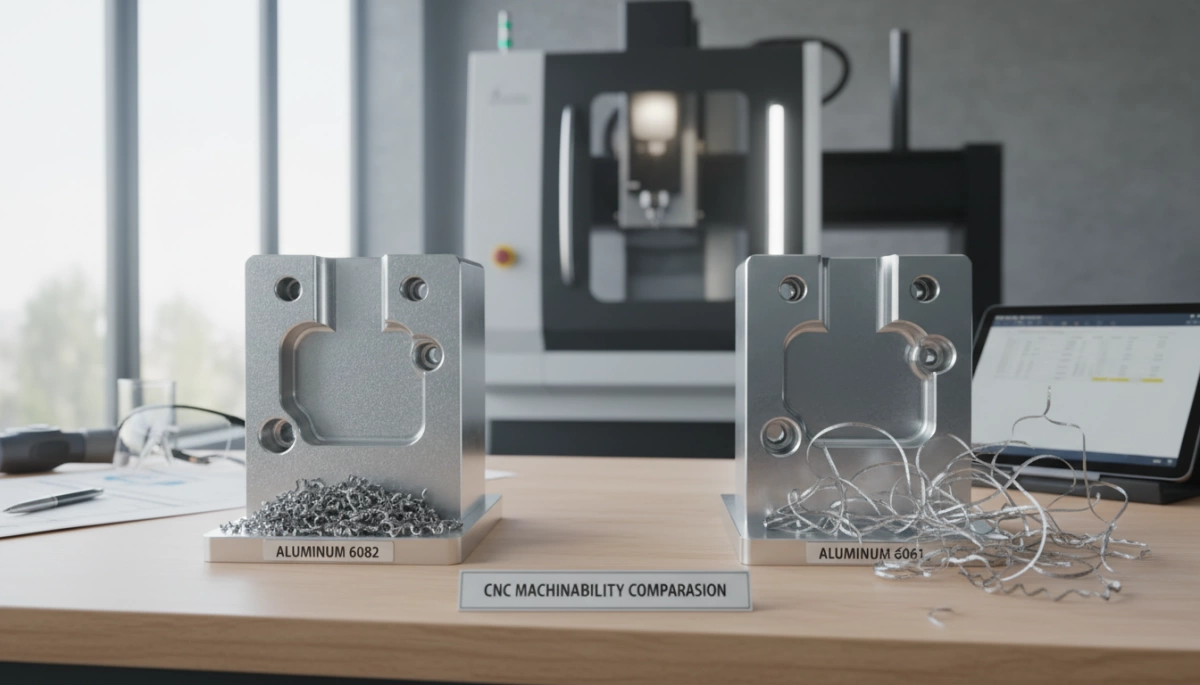
When we tackle the question of Aluminum 6082 vs 6061: which aluminum alloy for European CNC projects is best, the answer often comes down to how the material behaves on the shop floor. Both metals sit squarely in the versatile 6xxx series, but their physical properties react differently under stress. Let's break down how they actually perform during high-speed fabrication.
Machinability Comparison: 6061 vs 6082
If you are utilizing advanced CNC mill-turn services for rapid production, machinability dictates your cycle times. 6061 T6 is the long-standing baseline for easy machining. It cuts cleanly and produces brittle chips that break and evacuate easily.
On the other hand, 6082 T6 requires a slightly different approach. Because of its specific chemical composition—namely, higher manganese—it tends to produce stringier chips. You will need sharper tools and aggressive chip breakers to maintain smooth precision machining without clogging your machines.
| Machining Factor | 6061 Aluminum | 6082 Aluminum |
|---|---|---|
| Chip Control | Excellent (Breaks easily) | Moderate (Stringier chips) |
| Tool Wear | Very Low | Low |
| Machined Finish | Very Good | Excellent |
Weldability and Forming Capabilities
Both alloys are highly weldable using standard MIG and TIG techniques, but they serve slightly different engineering needs. For heavy-duty structural applications, 6082 generally takes the lead. It retains slightly better mechanical properties at the weld seam, meaning the heat-affected zone stays stronger.
When dealing with complex aluminum extrusions and aggressive forming processes, 6082 is often the go-to standard for European engineers following the EN standard. Knowing exactly how to select precise CNC machining materials ensures you don't compromise your assembly's integrity during the welding phase.
Corrosion Resistance in Various Environments
We want our machined parts to last, and both of these alloys deliver outstanding natural corrosion resistance.
- Standard Environments: Both alloys naturally resist oxidation and perform flawlessly in typical indoor and outdoor applications.
- Harsh Environments: 6082 offers a slight performance edge in highly corrosive settings, such as heavy industrial zones or marine environments.
- Finishing Aluminum Parts: Whether you need a clear protective coat or vibrant colors, both 6061 and 6082 accept anodizing beautifully, permanently sealing the metal against the elements.
Regional Standards: US vs. European CNC Manufacturing
When determining Aluminum 6082 vs 6061: which aluminum alloy for European CNC projects?, the answer often lies in the regulatory environment of the destination market. While the metals are chemically similar, the standards governing them create distinct supply chain realities. At our factory, we navigate these regional differences daily to ensure compliance for our global partners.
ASTM Standards vs. EN Standards
The primary divide is bureaucratic. In the United States, ASTM B209 is the governing standard, making 6061-T6 the default specification for almost all general machining and structural applications. Conversely, European manufacturing relies on British Standards (BS) and EN specifications (specifically EN 573 and EN 485), which prioritize 6082-T6.
For our clients, this distinction is critical during the design phase. If you are designing a part for the EU market, specifying 6061 might technically work, but it may not align with local certification requirements for structural applications. We ensure that whether your project demands ASTM or EN compliance, our tight tolerance machining processes meet European project needs with full traceability and ISO 9001 quality assurance.
Quick Comparison of Regional Standards:
| Feature | ASTM Standard (USA) | EN Standard (Europe) |
|---|---|---|
| Dominant Alloy | 6061 | 6082 |
| Key Property | Versatility & Availability | Higher Tensile Strength |
| Typical Use | General CNC Parts | Structural Components |
Material Availability in the European Market
In the European domestic market, 6082 aluminum is the standard stock item. Service centers in Germany, Belgium, or the UK will have shelves full of 6082 plate and bar stock. Finding 6061 in specific profiles in Europe can sometimes lead to longer lead times or higher import costs because it is less commonly stocked for structural use.
However, sourcing from a global CNC partner like us changes this dynamic. Since we operate directly from a major manufacturing hub with vast raw material access, we stock both alloys in high volume. This allows us to produce parts in either alloy and ship them to Europe in as fast as 7 days, bypassing local stock limitations.
Cost Differences and Sourcing Strategies
Price fluctuations between these two alloys are usually driven by local supply and demand rather than the cost of the raw elements (Magnesium and Silicon).
- In Europe: 6082 is generally more cost-effective due to high volume.
- In the US: 6061 is the commodity standard and is priced lower.
For global OEMs, the smartest sourcing strategy is to specify the alloy that matches the mechanical requirement rather than just local availability. If you are looking to optimize your budget, check our guide on reducing CNC machining costs without sacrificing quality, where material selection plays a huge role. We help clients switch between these alloys when appropriate to secure the best material cost without compromising on the final anodizing or mechanical performance.
Selecting the Right Alloy for Your CNC Application
When we evaluate Aluminum 6082 vs 6061: which aluminum alloy for European CNC projects is the best choice, the decision ultimately comes down to your project's specific mechanical properties and stress requirements. Both belong to the versatile 6xxx series and offer great corrosion resistance, but their unique chemical composition dictates where they perform best.
Ideal Applications for 6061 Aluminum
6061 T6 is the benchmark alloy under the ASTM standard. We frequently use it for general-purpose precision machining because it offers an incredible balance of machinability, weldability, and ease of finishing aluminum parts. While it doesn't match the extreme hardness of 7075 aluminium, its physical properties make it incredibly adaptable.
Best uses for 6061 include:
- Consumer & Sporting Goods: Excellent for lightweight, heavily detailed components like complex-shaped sports parts.
- Automotive Components: Brackets, custom fasteners, and interior chassis fixtures.
- Marine Hardware: Delivers solid performance in wet environments due to strong corrosion resistance.
- General Prototyping: The most cost-effective and accessible option for standard CNC milling and turning.
Ideal Applications for 6082 Aluminum
If your project is based in Europe, 6082 T6 is the structural workhorse dictated by the EN standard and British Standards. The addition of manganese gives it superior tensile strength, yield strength, and shear strength compared to 6061. Because of its exceptional fatigue resistance, we rely on 6082 for highly stressed environments. If you are leveraging CNC machining services for EU industrial machinery and equipment manufacturers, this is the alloy you will likely specify.
Best uses for 6082 include:
- Heavy Structural Applications: Trusses, bridges, scaffolding, and load-bearing architectural frameworks.
- Industrial Machinery: High-stress tooling plates, robotic arms, and heavy-duty equipment bases.
- Transport Industry: Commercial shipbuilding, rail transport framing, and automotive suspension components.
- Custom Aluminum Extrusions: Ideal for producing complex profiles that need to endure repetitive stress without failing.
| Feature | 6061 T6 (The All-Rounder) | 6082 T6 (The Heavy Lifter) |
|---|---|---|
| Primary Standard | ASTM Standard (North America) | EN Standard (Europe) |
| Best For | General machining, complex consumer parts | Structural applications, industrial machinery |
| Key Advantage | Outstanding machinability and finishing | Superior tensile and yield strength |
Custom CNC Machining for 6061 and 6082 Aluminum Parts
At ZSCNC, we specialize in precision CNC aluminum machining for both 6061 aluminum and 6082 aluminum components. Our manufacturing capabilities include 3-axis, 4-axis, and 5-axis CNC milling, high-precision CNC turning, and customized anodized surface finishing for industrial and structural applications.
Whether your project requires ASTM 6061 aluminum for North American applications or EN standard 6082 aluminum for European CNC projects, our engineering team can support rapid prototyping, small-batch production, and tight tolerance machining to ensure consistent quality and reliable performance.
We support global OEM customers with stable production capacity, strict quality control, and engineering-driven manufacturing solutions for demanding CNC machining projects.
Upload your CAD files today to receive a fast and competitive CNC machining quotation.
CNC Machining Capabilities Overview
Materials: 6061 Aluminum / 6082 Aluminum
Processes: CNC Milling, CNC Turning
Tolerance: Up to ±0.01 mm
 English
  German
  Dutch
Dutch  Russian
  Czech
Czech  French
  Korean
  Japanese
  Spanish
  Portuguese