
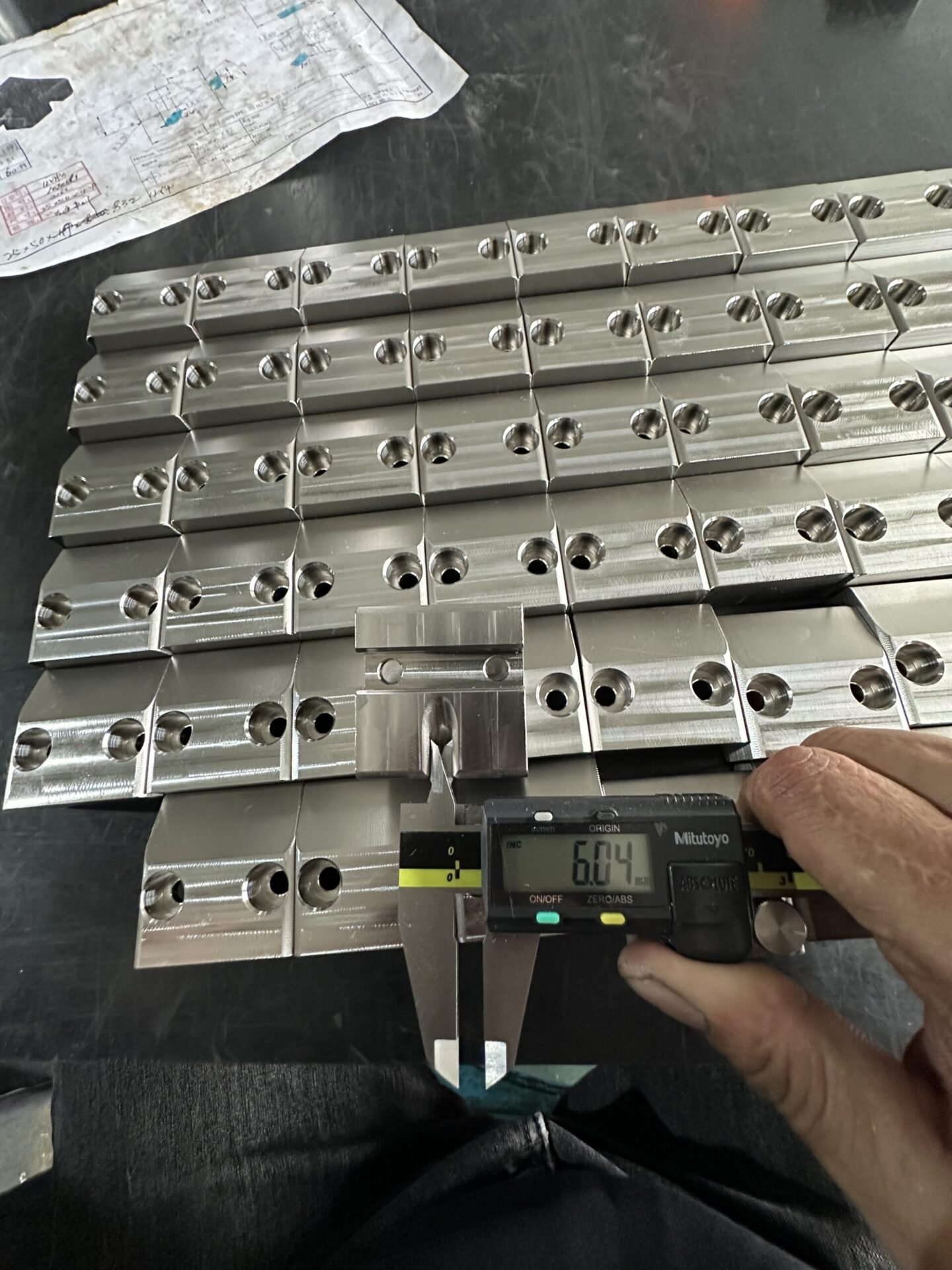
What Is 5-Axis CNC Machining?
If you’re dealing with complex, high-precision parts, 5-axis CNC machining is usually the most efficient and reliable way to make them.
Simple Definition
5-axis CNC machining is a type of multi-axis CNC machining where the cutting tool or the part moves along 3 linear axes (X, Y, Z) plus 2 rotational axes (A, B or C).
This lets us machine multiple sides and complex geometries in a single setup, with high accuracy and tight tolerances.
How Simultaneous 5-Axis Movement Works
In simultaneous 5-axis milling, all 5 axes move at the same time:
- X, Y, Z – move the tool or part linearly
- A / B / C – rotate the part or the head around one or more axes
This allows:
- Continuous contouring on complex 3D surfaces
- Precise machining of undercuts and angled features
- Short, rigid tool paths for better surface finish and tool life
3-Axis vs 4-Axis vs 5-Axis CNC
| Type | Axes Used | Best For |
|---|---|---|
| 3-axis CNC | X, Y, Z | Flat parts, simple pockets, 2.5D features |
| 4-axis CNC | X, Y, Z + 1 rotation | Parts needing machining around one side |
| 5-axis CNC | X, Y, Z + 2 rotations | Complex geometry, multi-angle surfaces |
Complexity & Accuracy Comparison
| Feature | 3-Axis | 4-Axis | 5-Axis (simultaneous) |
|---|---|---|---|
| Part complexity | Low–Medium | Medium | Medium–Very High |
| Undercuts / deep angles | Very limited | Limited | Excellent access |
| Tight tolerance machining | Moderate | High (simple geometry) | Highest for complex 3D surfaces |
| Number of setups | Many | Fewer | Often single-setup CNC machining |
With 5-axis milling services, you get better alignment, fewer setups, and less error stack-up, which leads to higher precision CNC machining on complex parts.
When Should You Choose 5-Axis CNC Machining?
Choose 5-axis CNC machining services when:
- Your part has complex 3D geometry, freeform surfaces, or organic shapes
- You need tight tolerance machining (e.g., ±0.01 mm or better in local features)
- There are undercuts, deep pockets, or hard-to-reach angled surfaces
- You want single-setup machining to reduce handling and human error
- You’re working in aerospace, medical device CNC machining, automotive CNC prototyping, or high-performance components (e.g., impellers, turbine blades, surgical instruments)
In short: if 3-axis vs 5-axis CNC is the question and your part is high-precision, multi-sided, and complex, 5-axis is almost always the most efficient and reliable choice.
Key Advantages of 5-Axis CNC Machining
5-axis CNC machining gives you more flexibility, better accuracy, and lower total cost when you need precision parts with complex geometry.
Single-setup machining = fewer errors
With 5-axis CNC machining services, we can hit multiple faces and angles in one setup instead of flipping the part several times.
- Less human handling, fewer setup mistakes
- Better alignment between features
- Higher repeatability for multi-part runs
This single-setup CNC machining approach is critical for high-precision medical, aerospace, and performance components.
Tight tolerances and premium precision
Simultaneous 5-axis milling keeps the tool at the best angle to the surface, which directly improves accuracy:
- Stable cutting conditions = less vibration
- More control over tool deflection
- Reliable tight tolerance machining on small features and thin walls
On optimized setups, we regularly target precision CNC machining tolerances down to ±0.005 mm on critical features.
Complex geometries, undercuts, and angled faces
If your part has undercuts, deep pockets, freeform surfaces, or multiple angled features, multi-axis CNC machining is often the only practical solution.
5-axis milling lets us:
- Reach hidden features without strange fixtures
- Cut deep cavities while keeping the tool short and rigid
- Machine compound angles, impeller blades, and organic shapes cleanly
This is what makes 5-axis ideal for complex geometry CNC machining in aerospace, medical, and motorsport parts.
Shorter tool paths, better surface finish
By tilting the tool toward the ideal cutting angle, 5-axis machines:
- Reduce step-over marks on 3D surfaces
- Allow smoother CNC contouring and surfacing
- Shorten tool paths and reduce cycle time
You get a better surface finish on critical areas, which is especially important on sealing surfaces, mold cavities, surgical instruments, and high-speed rotating parts. For related precision medical work, we also support stainless steel turning for medical equipment using dedicated setups and finishes (see our stainless steel medical machining capability).
Cost efficiency for complex, high-precision parts
5-axis CNC machining isn’t always the cheapest per hour, but it’s often the most cost-effective overall when parts are complex:
- Fewer setups and fixtures to design and build
- Less scrap from misalignment or re-clamping
- Shorter lead times from CAD to finished part
For high-precision CNC parts—especially in aluminum, titanium, and stainless steel—5-axis milling keeps unit cost under control while meeting strict specs.
Longer tool life, fewer fixtures
Smart 5-axis tool orientation means:
- Better chip evacuation
- Lower cutting loads
- Less heat on the tool edge
The result: extended tool life, more stable processes, and fewer special fixtures needed. That’s a direct saving on tooling and setup costs, and it improves consistency across long production runs.
5-Axis CNC Machining Capabilities and Specs
5-axis machine configurations
For our 5-axis CNC machining services, we run several configurations to match different part types and tolerances:
- Trunnion (table-tilt type) – Best for complex 3D surfaces, impellers, turbine blades, and multi‑side machining in one setup.
- Swivel-head (head-table type) – Great for tall parts and heavy workpieces where the table must stay stable.
- Table-table – Dual rotary tables for highly flexible positioning and simultaneous 5-axis milling on compact parts.
This mix lets us choose the most efficient setup for each job rather than forcing the part to fit one machine style.
Machining envelope & part size
Typical 5-axis milling capacity in our shop:
- Max travel (approx.):
- X-axis: 800–1000 mm
- Y-axis: 500–600 mm
- Z-axis: 400–500 mm
- Max part size: up to about Ø600 mm or 800 mm length, depending on configuration
- Best range for precision work: small to medium components where tight tolerance machining is critical
If you need larger 5-axis CNC machined parts, we’ll usually review the CAD early to confirm fixturing and reachable angles.
Materials we support
We specialize in multi-axis CNC machining for both metals and plastics, including:
- Aluminum alloys: AL6061, 6082, 7075, 2026
- Titanium: Ti-6Al-4V and other aerospace/medical grades
- Stainless steels: 303, 304, 316, 17-4PH
- Tool steels: P20, H13, D2, etc.
- Carbon & alloy steels: 4140, 4340, low-alloy structural steels
- Engineering plastics: PEEK, Delrin (POM), nylon, PC, ABS, PPSU
For demanding aerospace or medical work, we often pair our titanium 5-axis CNC machining services with strict traceability and certed material lots: titanium 5-axis CNC machining services.
Tolerances & accuracy
With our high-precision CNC machining setups and in-process verification, we typically achieve:
- Standard tolerance: ±0.01–0.02 mm
- Tight tolerance features: down to ±0.005 mm on critical areas (with proper GD&T, stock, and process planning)
- Positional accuracy: suitable for precision CNC parts in aerospace, medical, and high-performance automotive builds
We always confirm achievable tolerances against material, geometry, and quantity before locking the quote.
Surface finishes & post-processing
Our 5-axis milling services support a full range of cosmetic and functional finishes:
- As-machined: fine tool marks, Ra typically 1.6–3.2 μm
- Bead blasting: uniform matte finish
- Anodizing (Type II / III): clear, black, and colors for aluminum alloy CNC machining (including AL6061 5-axis machining)
- Hard anodizing: wear and corrosion resistant
- Plating: nickel, chrome, zinc
- Painting & powder coating
- Polishing, brushing, deburring, edge-breaking
We can combine tight tolerance machining with selective finishing so functional areas stay within spec.
CAD/CAM file formats we accept
For complex geometry CNC machining and simultaneous 5-axis milling, we work directly from:
- 3D CAD: STEP (.step, .stp), IGES (.igs, .iges), Parasolid (.x_t), SolidWorks, NX
- 2D drawings: PDF, DWG, DXF with full dimensions and GD&T
- CAM-ready models: including surface-heavy and organic designs
If you’re unsure about material or file prep, our engineering team can help you choose the right stock using our guide on how to select precise CNC machining materials: select precise CNC machining materials.
Industries Using 5-Axis CNC Machining
5-axis CNC machining is the go-to choice anywhere parts are complex, tolerances are tight, and quality can’t slip. With our 5-axis CNC machining services, we support customers across aerospace, medical, automotive, energy, defense, and general industrial markets worldwide.
Aerospace & Turbomachinery
Aerospace is one of the biggest users of simultaneous 5-axis milling because of its demand for lightweight, high-strength, and safety-critical parts.
Typical aerospace 5-axis CNC parts:
- Turbine blades and blisks
- Impellers, compressors, pump rotors
- Structural airframe components and brackets
- Precision housings and complex thin-wall parts
For high-strength aluminum aerospace parts we often combine 5-axis contouring with materials similar to those in our aluminum CNC parts for aerospace applications to keep weight low and performance high.
Medical & Dental Components
In medical device CNC machining, multi-axis CNC machining is key for organic shapes and tight tolerances on small features.
Typical 5-axis medical and dental parts:
- Surgical instruments with undercuts and complex tips
- Orthopedic implants (hips, knees, plates, screws)
- Dental implants, abutments, and custom tools
- Precision AL6061 and titanium CNC machining components
5-axis milling lets us hit smooth surfaces, controlled radii, and clean transitions that are critical for patient safety and regulatory compliance.
Automotive Prototyping & Production
Automotive and motorsport customers use 5-axis milling services for both rapid prototypes and low- to mid-volume production.
Common 5-axis automotive CNC parts:
- Cylinder heads, engine blocks, and combustion components
- Intake/exhaust manifolds and turbo housings
- Injection molds, die-casting tools, and trimming tools
- Performance components and lightweight structural brackets
Compared to 3-axis vs 5-axis CNC, we can machine more faces in a single setup, which cuts lead time and improves repeatability.
Energy, Oil & Gas, and Power
In energy and oil & gas, reliability and durability matter as much as accuracy. Multi-axis CNC machining helps us hit complex flow paths and heavy-duty geometries.
Typical parts:
- High-pressure valves and housings
- Drill bits, mud motor parts, and downhole tools
- Turbine components for power generation
- Pump bodies, flow control components, and impellers
5-axis machining ensures better surface finish on sealing faces and contoured flow surfaces, which directly impacts performance and service life.
Defense, Tooling & Industrial Applications
For defense, tooling, and general industrial clients, advanced CNC manufacturing services focus on robustness, precision, and repeatability.
Typical 5-axis CNC machined parts:
- Weapon system components and mounts
- Precision fixtures, jigs, and custom tooling
- Complex molds and dies with 3D contours
- High-precision housings, carriers, and automation components
These projects often combine tight tolerance machining with complex geometry CNC machining to reduce assembly steps and improve system accuracy.
Typical 5-Axis CNC Parts We Produce
Across all industries, we regularly deliver:
- Impellers, turbines, blisks, and fan wheels
- Medical-grade AL6061 and titanium 5-axis components
- Complex 3D surface parts with deep cavities and undercuts
- Custom precision CNC parts with ±0.005 mm-level tolerances
If you’re looking into 5-axis CNC machining for complex, high-precision parts, our CNC milling service capabilities are built to support everything from prototypes to full-scale production.
5-Axis CNC Machining for Precision Parts
I use 5-axis CNC machining when parts need tight tolerances, complex 3D geometry, and consistent quality from prototype to production. It’s built for precision-critical work, not just basic milling.
High-Precision Tight-Tolerance Machining
With simultaneous 5-axis control, we keep the tool always at the best cutting angle, which helps us hold tight tolerance machining down to ±0.005 mm on critical features. This is ideal for:
- Precision CNC machining for medical, aerospace, and optical parts
- Matching tight fits, sealing surfaces, and alignment features
- High-precision CNC parts where every micron matters
Complex Geometry CNC Machining
5-axis milling services really shine on complex geometry CNC machining with intricate 3D surfaces, such as:
- Freeform surfaces, deep pockets, and organic shapes
- Undercuts, cross-holes, and multi-angle features in one setup
- CNC contouring and surfacing for blades, impellers, and molds
Because we don’t have to keep reclamping the part, we get better accuracy and repeatability across the whole surface.
Lightweight, High-Strength Multi-Axis Components
For industries chasing lightweight, high-strength components, 5-axis is the right tool:
- Pocketing and skeletonizing to remove weight without losing strength
- Titanium CNC machining and aluminum alloy CNC machining (including AL6061 5-axis machining)
- Optimized ribbing, lattice structures, and complex internal cavities
This makes it perfect for CNC machining for aerospace parts, high-performance automotive, and medical device CNC machining.
Flexible From Prototypes to Production
I’ve set up our shop to handle everything from one-off prototypes to full-scale production runs:
- Rapid prototyping CNC machining with quick-turn 5-axis parts
- Small batches for validation and clinical or field testing
- Scalable production with stable process control and consistent quality
When a project also needs turning or very small, precise features, we combine 5-axis milling with our advanced CNC manufacturing services like CNC turning and Swiss machining to deliver a complete part, ready for assembly.
Why Choose Professional 5-Axis CNC Machining Services?
When you’re dealing with complex, high-precision parts, professional 5-axis CNC machining services aren’t a “nice to have” — they’re the safest and most cost-effective way to get it right the first time.
Benefits of Outsourcing to a Specialized 5-Axis CNC Shop
A dedicated 5-axis milling services shop brings mature processes, tuned machines, and experienced operators:
| Benefit | What You Get |
|---|---|
| High machine utilization | Lower unit cost and stable pricing |
| Experienced 5-axis programmers | Clean toolpaths, fewer errors, better surface quality |
| Mature production workflows | Predictable lead times and consistent quality |
| Integrated services | Machining + finishing + inspection under one roof |
You avoid the huge investment in machines, CAM software, tooling, and trained staff, while still getting advanced CNC manufacturing services on demand.
Engineering Support, DFM, and Optimization
We don’t just “cut the file.” We help you optimize for 5-axis:
- DFM review: Spot undercuts, thin walls, and risk areas before machining.
- Tolerance optimization: Keep ±0.005 mm only where it matters to cut cost.
- Material guidance: Choose the right aluminum alloy CNC machining grade, titanium, or steel for performance and price.
- Setup & fixture strategy: Smart single-setup CNC machining to protect accuracy.
This kind of engineering support is critical for precision CNC machining in sectors like aerospace, medical, and automotive.
Scalability: From Rapid Prototyping to Mass Production
Our multi-axis CNC machining workflow scales with you:
| Stage | What We Offer |
|---|---|
| Concept & prototypes | Fast rapid prototyping CNC machining in AL6061 |
| Pilot runs | Stable processes, feedback on design & tolerances |
| Mass production | Optimized cycle times, fixtures, and inspection plans |
You get the same team and process logic from prototype to production, so there’s no quality drop when volumes grow.
Balancing Cost, Lead Time, and Quality
Professional 5-axis CNC machining services are about control, not compromise:
- Cost: Part design, material choice, and tolerance bands tuned for your budget.
- Lead time: Parallel setups, optimized CAM, and clear scheduling.
- Quality: In-process checks, final inspection, and consistent tight tolerance machining.
When you need a mix of 5-axis machining with other processes like waterjet cutting or metal fabrication, we integrate them through our broader manufacturing process services so you don’t juggle multiple suppliers.
The result: custom 5-axis CNC parts delivered on time, within spec, and at a cost that actually works for global production realities.
Quality Control in 5-Axis CNC Machining
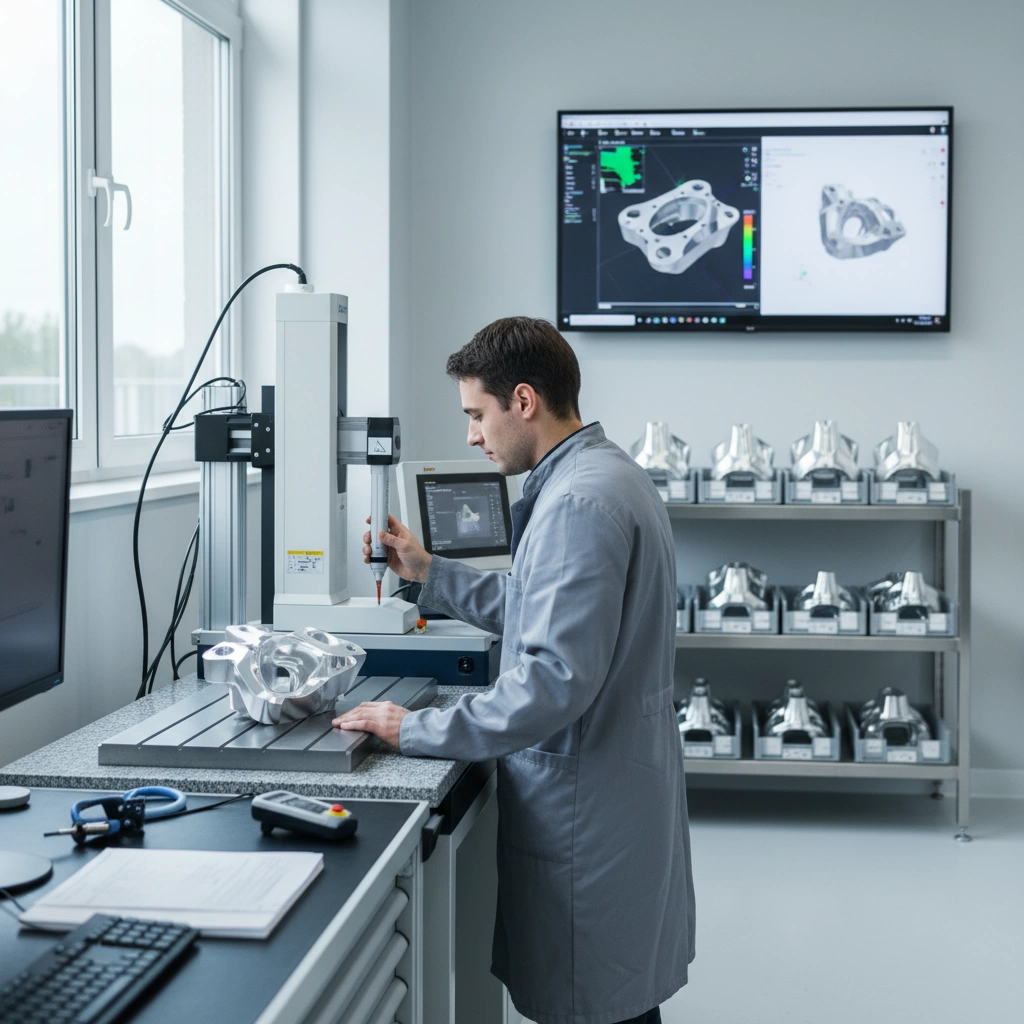
I treat quality control in 5-axis CNC machining as seriously as the machining itself. High-precision, complex geometry parts only work if every step is controlled, measured, and documented.
Inspection Methods for 5-Axis CNC Parts
For precision CNC machining and tight tolerance machining, I rely on layered inspection:
- CMM inspection (coordinate measuring machine) for full 3D validation of complex 5-axis CNC parts, including impellers, turbine blades, and medical components.
- In-process checks on the machine using probes to verify key dimensions during simultaneous 5-axis milling, reducing scrap and setup errors.
- First article inspection (FAI) for new parts or critical revisions before scaling to full production.
This combination keeps multi-axis CNC machining accurate and repeatable, even on tough materials like titanium and aluminum alloys.
Material Traceability and Certification
For aerospace, energy, and medical device CNC machining, material control is non‑negotiable:
- Full material traceability from mill cert to finished part, with batch/heat numbers tracked through every operation.
- Certificates of conformity and material test reports that match industry standards for aerospace, oil & gas, and other critical sectors.
- For sectors such as energy and oil & gas, we align our processes with the demanding quality expectations similar to those in our energy industry CNC machining solutions.
This is how I ensure every high-precision CNC part is both dimensionally correct and fully compliant.
Process Control for Tight Tolerances
To hold CNC machining tolerances like ±0.005 mm on complex geometry CNC machining, I lock down the process:
- Stable, documented CNC programs for 5-axis milling services and 3+2 axis machining.
- Tool life management and tool wear monitoring to keep surface finish and accuracy consistent.
- Controlled fixturing, clamping, and thermal conditions to maintain repeatability in single-setup CNC machining.
The result is consistent output across small prototype runs and high-volume custom 5-axis CNC parts production.
Documentation and Reporting
Every high-precision CNC job gets full documentation so you know exactly what you’re receiving:
- Inspection reports (CMM data, critical dimensions, pass/fail status).
- Process and material records, including lot numbers, programs, and revision history.
- Optional PPAP/FAI documentation for customers that need deeper validation for precision CNC machining and advanced CNC manufacturing services.
This level of quality control is what makes our 5-axis CNC machining services reliable for global customers who can’t afford to compromise on accuracy, traceability, or consistency.
Real Applications and Case Examples in 5-Axis CNC Machining
Aerospace: Impellers & Turbine Blades
For aerospace customers, we use simultaneous 5-axis CNC machining to produce impellers and turbine blades with:
- Fully contoured 3D surfaces in one setup
- Perfectly matched blade profiles and root forms
- Tight tolerance hubs and complex undercuts
By using 5-axis milling instead of multiple 3-axis setups, we’ve cut lead times for complex turbine parts by 30–40% and improved consistency across production batches.
Precision Medical AL6061 & Titanium Parts
On the medical side, we regularly machine AL6061 and titanium for:
- Orthopedic components with organic 3D shapes
- Surgical instrument handles with ergonomic surfaces
- Precise housings and fixtures for medical devices
With our precision medical AL6061 material 5-axis CNC machining, we maintain tight tolerances on small, detailed parts and clean surface finishes ready for anodizing or polishing. For more dedicated medical applications, we pair this with strict process control similar to our workflows for medical device CNC machining.
Solving Complex Geometry & Tolerance Issues
5-axis CNC machining really pays off when parts are:
- Full of undercuts, deep pockets, and angled holes
- Requiring true-position features from multiple directions
- Demanding tolerances down to ±0.005 mm on mating faces
Instead of using multiple fixtures and re-clamping (which builds in error), we hit all critical faces in a single-setup CNC machining process. This keeps geometry aligned and reduces scrap on high-value parts.
Impact on Lead Time & Cost
Switching to 5-axis CNC machining usually changes the cost structure like this:
- Higher hourly machine rate, but
- Fewer setups, fixtures, and manual operations
- Shorter cycle times on complex geometry CNC machining
- Lower total cost on tight tolerance machining and repeat runs
For complex aerospace and medical projects, this often means:
- Faster prototyping (days instead of weeks)
- Lower risk of rework
- Better scalability from prototype to production without redesigning the process.
FAQs About 5-Axis CNC Machining Services
How does 5-axis CNC machining compare to 3+2 axis machining?
- 5-axis (simultaneous): All 5 axes move at the same time. Best for complex geometry CNC machining, smooth 3D surfaces, turbine blades, molds, and high-precision CNC parts with tight tolerance machining.
- 3+2 axis (indexed): The two rotary axes lock into position, then the part is machined like 3-axis. Great for multi-face machining and undercuts, but not as smooth for heavy contouring and surfacing.
If your part needs continuous contouring, aero surfaces, or organic shapes, simultaneous 5-axis CNC machining services is the smarter choice.
Typical lead times for 5-axis CNC prototypes and production
Lead time depends on part complexity and quantity, but as a rule of thumb:
- Rapid prototypes: 5–12 working days
- Small batches (10–100 pcs): 1–3 weeks
- Larger runs / repeat orders: 2–5 weeks, depending on capacity and inspection level
Well-prepared CAD/CAM data and clear specs always speed things up.
Main cost drivers in 5-axis CNC machining
The main pricing drivers for our 5-axis milling services are:
- Material: Titanium CNC machining and high-nickel alloys cost more than aluminum alloy CNC machining like AL6061.
- Geometry & complexity: Deep pockets, thin walls, undercut CNC machining, and complex 3D surfaces increase programming and cycle time.
- Tolerance & QC: Tight tolerances (e.g. CNC machining tolerances ±0.005 mm) and CMM inspection add cost.
- Quantity: Higher volume reduces unit price once setup and programming are amortized.
- Surface finish: Additional surface finishing for CNC parts (anodizing, polishing, etc.) affects the total.
Minimum order quantities and part size limits
We support single prototypes up to full production – there is no strict MOQ as long as the project is technically and economically feasible.
Typical capabilities (may vary by machine):
- Part size: From small precision CNC machining components (<10 mm) up to larger multi-axis CNC machining parts around mid-size machine envelopes.
- Best fit: Precision 5-axis CNC machining for medical, aerospace, automotive, and tooling parts where geometry and tolerances really matter.
If you’re unsure whether your part fits, send the model through our request quote form and we’ll confirm feasibility.
You can submit models and specs directly via our online 5-axis CNC machining quote request form for a quick review.
File preparation tips for accurate 5-axis CNC quotes
To get a fast and accurate 5-axis CNC quote, prepare:
- 3D CAD file: STEP/IGES/Parasolid is best for 5-axis machining.
- 2D drawing (if available): Include dimensions, tolerances, GD&T, and critical datums.
- Material: e.g. AL6061, 7075, stainless steel, titanium, engineering plastics.
- Quantity and target lead time.
- Surface finish: Anodizing, bead blasting, polishing, passivation, etc.
- Special notes: Threads, marking, coating, inspection level (e.g. CMM reports, material certificates).
Clean, well-dimensioned files mean faster pricing, fewer questions, and a smoother production start.
How to Get Started with 5-Axis CNC Machining Projects
Information to Prepare Before Requesting a 5-Axis CNC Quote
Before you ask for a 5-axis CNC machining quote, have these ready:
- 2D & 3D files: STEP/IGES + PDF with key dimensions, tolerances, and critical surfaces.
- Material spec: e.g. AL6061, titanium, stainless steel, engineering plastics like PEEK or PTFE plastic (see our PTFE machining material guide).
- Quantity & schedule: Prototype, small batch, or production, plus target delivery date.
- Tolerance & quality needs: e.g. ±0.005 mm, cosmetic areas, functional surfaces.
- Surface finish: Anodizing, polishing, bead blasting, coating, etc.
- End use & industry: Aerospace, medical, automotive, tooling – this helps us choose the right process and inspection plan.
The more precise your info, the more accurate and faster your 5-axis CNC machining quote will be.
Best Practices for Designing Parts for 5-Axis CNC Machining
To get stable, cost-effective, high-precision CNC parts:
- Keep geometry manufacturable: Avoid tiny deep pockets, ultra-thin walls, and extreme aspect ratios unless truly needed.
- Use standard radii and hole sizes: Match common cutter sizes to reduce cost and lead time.
- Design for single-setup CNC machining: Group critical features on reachable faces to leverage simultaneous 5-axis milling.
- Call out tolerances wisely: Tight tolerance machining only where function demands it; looser where it doesn’t matter.
- Allow tool access: Make sure undercuts, channels, and angled surfaces can be reached with realistic tools and lengths.
If you’re unsure, send the model early – we’ll give DFM feedback before you lock the design.
How to Choose the Right 5-Axis CNC Machining Partner or Supplier
When you pick a 5-axis CNC machining services partner, focus on:
- Real 5-axis experience: Ask for sample parts, complex geometry CNC machining cases (impellers, medical parts, molds).
- Equipment & capabilities: Modern multi-axis CNC machining centers, high-speed spindles, and precision inspection (CMM).
- Industry fit: Proven work in your space: aerospace, medical device CNC machining, automotive CNC prototyping, etc.
- Quality system: ISO-style processes, material traceability, and clear documentation.
- Engineering support: Ability to support DFM, tolerance optimization, and cost reduction.
- Transparent pricing & lead times: Clear breakdown of cost drivers (material, complexity, quantity) and honest delivery dates.
Our shop is built around high-precision 5-axis milling services, from rapid prototyping to production, so you get reliable quality, predictable lead times, and straight answers on what’s possible.
 English
  German
  Dutch
Dutch  Russian
  Czech
Czech  French
  Korean
  Japanese
  Spanish
  Portuguese
Reviews
There are no reviews yet.