
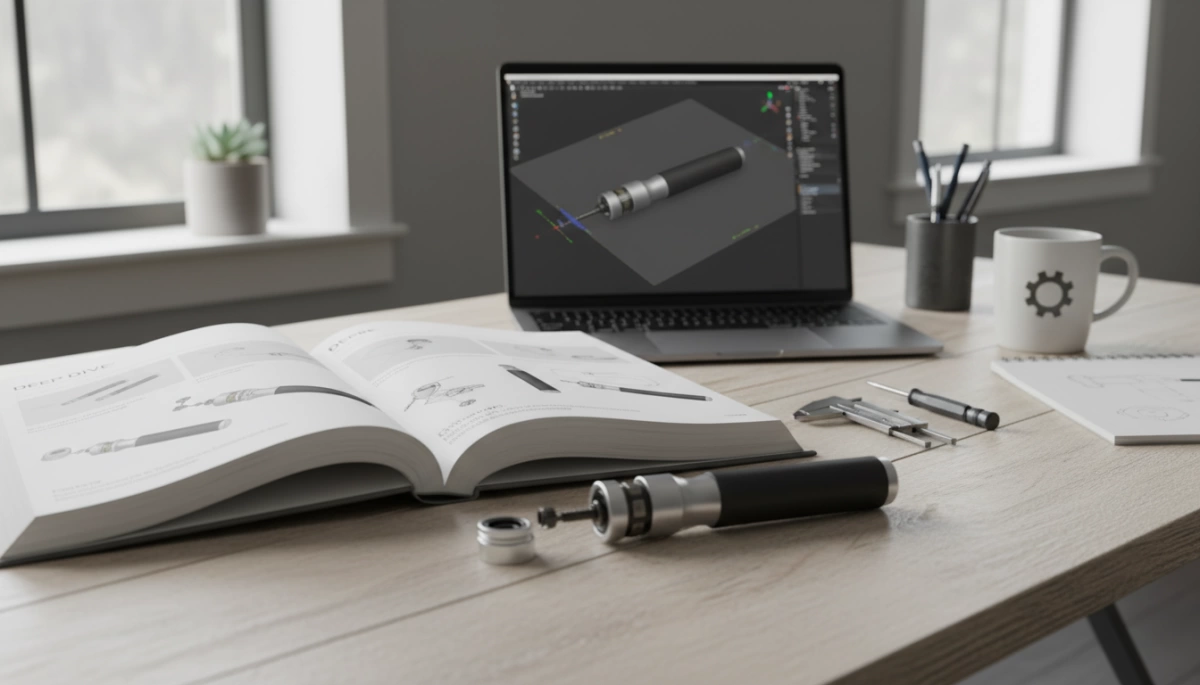
Anatomy of a Locking Mechanism: Key Design Challenges
Engineering a professional-grade jump rope requires more than just aesthetics; it demands a high-speed cable locking mechanism that survives extreme rotational stress. As a senior manufacturing engineer, I focus on the intersection of mechanical grip and rotational physics to ensure the hardware never becomes a point of failure.
Solving the Centrifugal Force vs. Friction Puzzle
The primary challenge in speed rope design is managing centrifugal force. At high RPMs, the cable is constantly trying to pull away from the handle. To counteract this, the locking mechanism must provide enough friction to hold the wire without crushing the individual strands of the steel cable.
- Precision Bore Matching: We use CNC turning for micro parts to maintain a tolerance of ±0.01mm between the cable diameter and the internal locking channel.
- Optimal Compression: The internal set screw must apply localized pressure that creates a mechanical "bite" without inducing fatigue points on the wire.
Designing Tool-Free Knurled Surfaces for Grip
In competitive fitness, tools are a hindrance. The goal is a tool-free adjustment system that remains functional when hands are slick with sweat.
- Custom Knurled Thumb Screws: We implement a 30-degree diamond knurl pattern. This specific geometry increases the surface area for finger contact, allowing for maximum torque.
- Tactile Feedback: The depth of the knurling is controlled via precision Swiss machining services to ensure it is aggressive enough for grip but smooth enough to prevent skin irritation during rapid adjustments.
Balancing Lightweight Compactness with Structural Strength
A heavy lock ruins the "flick" of a speed rope, yet a lock that is too light will fail under the sheer force of a triple-under.
- Thin-Wall Geometries: By utilizing high-strength alloys, we can reduce the wall thickness of the locking collar, keeping the assembly lightweight and compact.
- Thread Engagement: We prioritize deep thread engagement—typically 1.5x the screw diameter—to distribute the load and prevent the common issue of thread stripping during high-tension use.
- Mass Centralization: Keeping the locking hardware as close to the axis of rotation as possible minimizes wobble and improves the overall balance of the jump rope system.
Choosing the Right Material for Performance and Wear
Picking the right metal is the first step in creating a locking mechanism that doesn't fail under pressure. I focus on balancing weight, durability, and "machinability" to ensure the final product survives thousands of high-velocity rotations.
Aluminum 6061 and 7075
For the majority of professional handles and locking collars, we rely on Aluminum 6061 for its excellent machinability and high strength-to-weight ratio. It provides the lightness needed for speed ropes while maintaining enough toughness to survive gym floor impacts. When a design requires even more durability or thinner walls, we opt for 7075-T6, which offers superior fatigue resistance for elite competitive gear.
Stainless Steel for Heavy-Duty Internal Set Screws
The internal set screw is the most common point of failure in jump rope hardware. I use high-grade stainless steel for these micro-parts to prevent thread stripping and corrosion from salt and sweat.
- Thread Integrity: Stainless steel resists the "rounding off" that happens with cheaper alloys during frequent adjustments.
- Secure Grip: It maintains a sharp edge to bite into the cable, preventing slippage at high RPMs.
Machining Titanium and Brass for Premium Fitness Gear
For the boutique fitness market, we often push beyond standard alloys to create a more exclusive feel:
- Titanium: Ideal for ultralight, indestructible locking collars that are completely immune to rust.
- Brass: Provides a distinct, high-end "heft" and a classic aesthetic for luxury home gym equipment, often used in decorative yet functional locking nuts.
CNC Machining Challenges and Precision Solutions for Locking Hardware
Manufacturing adjustable jump rope locking mechanisms requires more than just standard cutting; it demands a mastery of micro-part geometry. When we deal with components this small, even a half-degree deviation in a tool path can ruin an entire batch. Our focus remains on solving the technical hurdles that separate professional-grade gear from cheap substitutes.
Overcoming Micro-Threading and M2.5 Tapping Issues
The most significant challenge in jump rope hardware is the M2.5 internal thread. Because these screws are tiny, traditional tapping often leads to tool breakage or "mushy" threads that strip under the pressure of a high-speed workout. To prevent this, we utilize precision Swiss machining services and high-end thread forming. This ensures the threads are compressed and strengthened rather than just cut, providing a rock-solid grip for the cable.
Achieving Consistent Knurling and Tactile Feel
A tool-free locking nut is useless if the user can’t get a grip on it with sweaty hands. We solve this through specialized CNC turning for micro parts, maintaining a consistent depth across every knurled diamond.
- Uniformity: We monitor tool wear every hour to ensure the texture isn't dull.
- Tactile Feedback: The "bite" of the knurling is calibrated to be sharp enough for grip but smooth enough not to irritate the skin.
- Aesthetics: Every part undergoes a visual check to ensure the pattern is perfectly centered.
Ensuring Concentricity to Eliminate Rope Wobble
At high RPMs, any weight imbalance in the locking mechanism creates a "thumping" sensation or cable wobble. We maintain strict concentricity tolerances (within 0.01mm) to ensure the center of gravity stays perfectly aligned with the cable axis. Understanding these technical requirements is much simpler when you consult a CNC machining 101 guide to see how high-speed spindles maintain such tight accuracy.
| Machining Challenge | Precision Solution | Impact on User |
|---|---|---|
| Tool Deflection | High-rigidity 5-axis CNC milling | Prevents lopsided parts and vibration |
| Thread Stripping | Thread forming taps vs. cutting taps | Long-lasting, repeatable adjustments |
| Surface Burrs | Automated centrifugal deburring | Protects the steel cable from fraying |
| Material Hardness | Specialized coating for carbide tools | Consistent dimensions across 10,000+ units |
By integrating ISO 9001 certified machine shop standards into our workflow, we ensure that every locking nut and set screw performs flawlessly under the centrifugal forces of a double-under. We don't just make parts; we engineer the stability required for elite-level fitness performance.
Essential Surface Finishes for User Safety and Aesthetics
In the production of fitness hardware, the surface finish is never just cosmetic—it is a critical functional requirement. A locking mechanism might hold tight, but if the edges are sharp, it becomes a liability. We prioritize post-processing to ensure that every component is safe to handle and durable enough to withstand intense training environments.
Rigorous Deburring Protocols
The primary enemy of a jump rope cable is a sharp metal edge. If a locking collar or screw retains microscopic burrs from the machining process, it will slice through the protective PVC or nylon coating of the rope within minutes of use. To prevent this, we implement strict deburring protocols. Whether through tumbling or manual finishing, we ensure all edges are rounded and smooth. This attention to detail is vital, as understanding the influence of surface roughness Ra directly correlates to the lifespan of the mating cable.
Anodizing and Plating for Durability
Fitness equipment faces a harsh environment: sweat. Human sweat is corrosive and can rapidly degrade untreated metals. To combat this, we apply specific treatments based on the material:
- Surface Anodizing for Aluminum Parts: For 6061 or 7075 aluminum components, Type II or Type III anodizing provides a hard, protective shell that resists salt corrosion and adds vibrant color options for branding.
- Passivation for Stainless Steel: While stainless steel is naturally resistant, passivation removes surface contaminants to maximize its anti-corrosive properties.
- Plating: For brass or carbon steel components, nickel or chrome plating offers a barrier against moisture and wear.
By integrating these finishes, we ensure the locking mechanism remains functional and aesthetically premium, even after months of heavy use.
Scaling Production: From Rapid Prototype to Mass Volume
Moving from a concept to a market-ready product requires a seamless transition from a single test unit to thousands. I focus on bridging this gap by using rapid prototyping to achieve 7-day design validation. This allows us to stress-test the locking mechanism's grip and centrifugal resistance in real-world conditions before committing to a full production run.
Maintaining Micron-Level Precision
The biggest challenge in high-volume runs is preventing "tolerance creep." Even a tiny deviation can lead to cable slippage or stripped threads. To combat this, we implement:
- Rigid Accuracy Standards: We follow strict industrial-grade CNC machining accuracy standards to maintain tolerances within ±0.005mm.
- Small Batch CNC Manufacturing: We start with smaller batches to fine-tune the 5-axis milling paths before scaling up.
- Automated Inspections: Utilizing high-speed CNC turning for micro parts ensures every locking screw is identical.
Strict Quality Control and ISO 9001 Standards
Our ISO 9001 certified machine shop follows a "zero-defect" philosophy. When dealing with the design and CNC machining challenges of adjustable jump rope locking mechanisms, guesswork isn't an option. We rely on a two-tier verification system:
| Tool | Purpose |
|---|---|
| Go/No-Go Gauges | Quick, manual verification of M2.5 thread accuracy on the shop floor. |
| CMM Inspection | Digital validation of concentricity to ensure the rope rotates without wobble. |
| Stress Testing | Simulating high-RPM centrifugal force to ensure the set screws hold firm. |
By combining rapid prototyping for fitness equipment with standardized mass production workflows, we ensure every jump rope lock that leaves the factory is professional-grade and built to last.
FAQs: Technical Solutions for Jump Rope Hardware
Why do my locking screws keep stripping during use?
Most stripping issues stem from poor thread engagement or using soft alloys. In high-speed cable locking mechanisms, we use CNC turning for micro parts to ensure M2.5 threads have a 6H tolerance fit. If the material is too soft, like low-grade aluminum, the threads can’t handle the torque required for a secure lock. Switching to Stainless steel set screws manufacturing or high-tensile 7075 aluminum usually solves this.
How can I prevent cable slippage at high RPMs?
Centrifugal force works against your lock as the rope spins. To counter this, we focus on:
- Custom knurled thumb screws: Increasing the surface friction between the screw end and the cable.
- Internal Geometry: Machining a slight "V" groove inside the housing to wedge the cable in place.
- Precision Balancing: Ensuring the locking collar is perfectly concentric to prevent vibration-induced loosening.
What is the best material for a professional speed rope lock?
The choice depends on the balance between weight and durability. While Aluminum 6061 is the industry standard, professional athletes often prefer Titanium 5-axis CNC machining services for the ultimate strength-to-weight ratio and corrosion resistance.
| Material | Strength | Weight | Best Use Case |
|---|---|---|---|
| Aluminum 6061 | Medium | Light | Standard Fitness Ropes |
| Aluminum 7075 | High | Light | Competitive Speed Ropes |
| Stainless Steel | Very High | Heavy | Weighted Heavy Ropes |
| Titanium | Extreme | Light | Premium/Professional Gear |
How does CNC machining improve cable longevity?
A common cause of "mystery" cable breaks is a sharp edge inside the locking mechanism. Our ISO 9001 certified machine shop implements rigorous deburring protocols. By using 5-axis CNC milling capabilities, we can create smooth, radiused entries and exits for the cable. This prevents the steel wire from fraying against a sharp burr, significantly extending the life of the jump rope cable during high-intensity double-under sessions.
 English
  German
  Dutch
Dutch  Russian
  Czech
Czech  French
  Korean
  Japanese
  Spanish
  Portuguese