

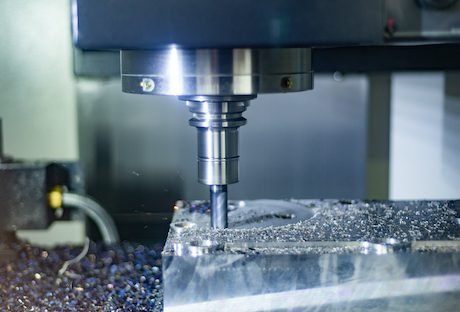
What Is CNC Machining?
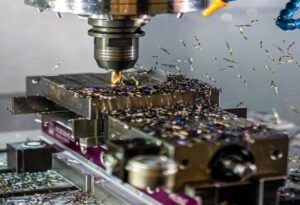
Let's start simple: CNC machining (Computer Numerical Control machining) is a manufacturing method that uses computer-controlled machines rather than manual tools to cut and shape solid materials.
The core concept: take a digital design and turn it into a physical part with high precision and repeatability. Every day, CNC is used to deliver custom machined parts, prototypes, and low-volume production for clients who need both accuracy and speed.
What Does CNC Actually Mean in Manufacturing?
In simple terms:
- CNC = Computer + Machine Tool + Programmed Movement
- The computer reads a code file (G-code) and controls the machine's motors to move cutting tools
- The result: precise, repeatable parts made from metal, plastic, wood, and more
CNC machining is a key process in modern manufacturing, used for:
- Prototyping — get functional parts fast
- Custom parts — one-off or low-volume components
- High-precision production — parts that must fit and work every time
Manufacturers worldwide choose CNC machining because it is:
- Flexible — change the program, change the part
- Scalable — from single prototypes to production runs
- Reliable — consistent quality when the process is set correctly
Subtractive Manufacturing vs. Other Methods
CNC machining is a subtractive manufacturing process. This means:
- We start with a solid block (metal, plastic, etc.)
- The machine removes material using cutting tools
- The final shape is what's left after cutting away the excess
Here's how it compares with other methods:
| Method | How It Works | Best For |
|---|---|---|
| CNC Machining | Cuts material away (subtractive) | Strong, precise parts with tight tolerances |
| 3D Printing (FDM, SLA) | Adds material layer by layer | Complex shapes, low load, fast prototypes |
| Casting | Molten material in a mold | High volume, less design flexibility |
| Sheet Metal Forming | Bending, punching, stamping | Thin-walled parts, enclosures |
Choose CNC machining when you need:
- High strength and functional performance
- Tight tolerances and good surface finishes
- Materials that are difficult for 3D printing, such as certain metals
CNC Machining for Custom Parts and Prototypes
If you need custom parts or rapid prototypes, CNC machining is one of the most practical choices available.
We use CNC to help customers with:
- New product prototypes — enclosures, brackets, fixtures, test parts
- Custom machine parts — replacement components, adapters, tooling
- Low-volume production — small batch runs before scaling up
Why it works so well for custom work:
- No expensive molds or tooling required
- Design changes are handled in software
- Parts can be ready in days, not weeks with rapid CNC
A Brief History: From Manual to CNC
CNC didn't appear overnight. It evolved step by step:
- Manual Machines
- Operators turned hand wheels and read dials
- Accuracy depended entirely on skill and experience
- NC (Numerical Control) Machines
- Introduced around the 1940s-1950s
- Used punched tape to input numbers into the machine
- Still limited and not very flexible
- Modern CNC Machines
- Fully computer-controlled with advanced software
- 5-axis, multi-tasking, high-speed machining
- Consistent precision down to ±0.005mm
Key CNC Processes
Two main processes cover most CNC work:
- CNC Milling — rotating cutting tools remove material from a stationary workpiece. Used for complex 3D shapes, slots, holes, and flat surfaces.
- CNC Turning — the workpiece rotates while a stationary cutting tool shapes it. Ideal for cylindrical parts like shafts, bushings, and threaded components.
Many modern machines combine both processes (mill-turn centers) for complete part production in a single setup.
Common Materials for CNC Machining
CNC can work with a wide range of materials:
- Aluminum (6061, 7075, 2024, 6082) — lightweight, excellent machinability
- Stainless Steel (303, 304, 316) — corrosion resistant, high strength
- Brass and Copper — excellent for electrical components and decorative parts
- Steel and Alloy Steel — high strength for structural applications
- Titanium — aerospace and medical implants
- Plastics (ABS, Nylon, PEEK, Delrin) — lightweight, chemical resistant
Getting Started with Your First CNC Project
Ready to order custom CNC parts? Here's the typical workflow:
- Prepare your 3D model — STEP, IGES, or native CAD formats
- Add technical specifications — materials, tolerances, surface finish
- Request a quote from a CNC machining supplier
- Review DFM feedback — the supplier will suggest design optimizations
- Approve and manufacture — production begins
- Inspection and shipping — quality check before delivery
Need help getting started? Contact ZSCNC for a free design review and quote. With 70+ technicians and 40+ CNC machines, we deliver precision parts from China in as fast as 7 days.
 English
  German
  Dutch
Dutch  Russian
  Czech
Czech  French
  Japanese
  Spanish
  Portuguese
  Korean