
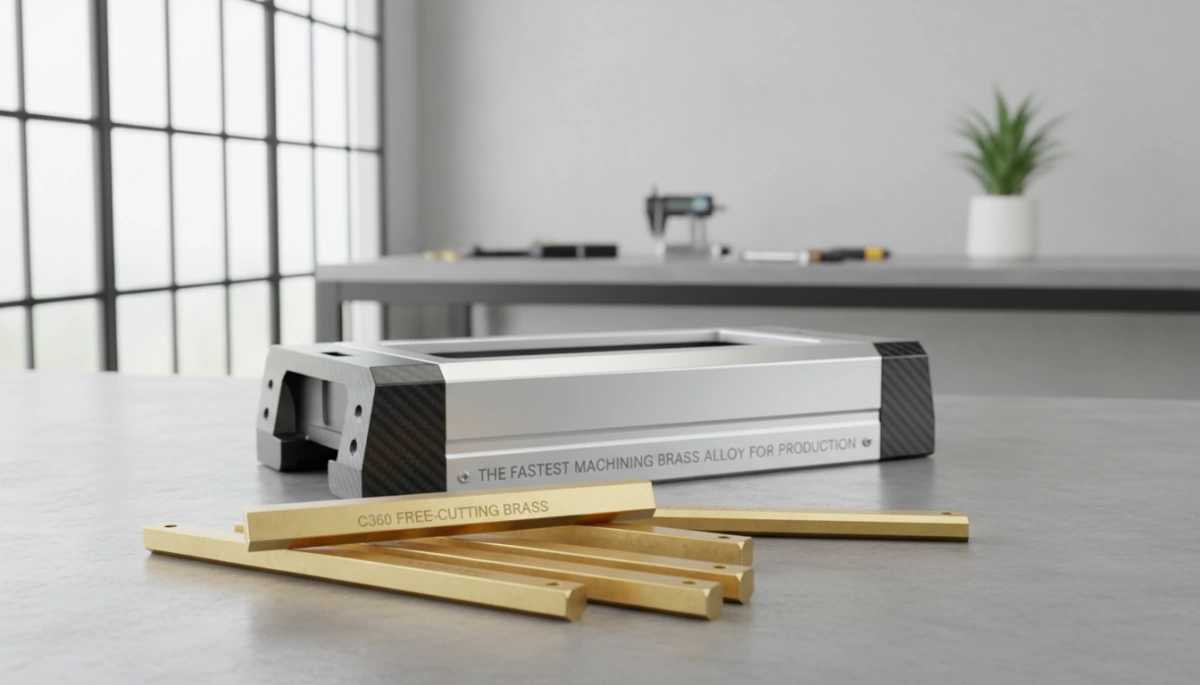
Why C360 Brass is the Machinability Benchmark
In high-volume manufacturing, time is quite literally money. I’ve found that C360 free-cutting brass remains the undisputed king of the machine shop because it allows for the highest possible spindle speeds without sacrificing tool integrity. It is the gold standard for any operation where speed and surface finish are non-negotiable.
The 100% Machinability Rating Explained
The industry uses a standardized scale to measure how easily a metal can be cut, and C36000 free machining brass sits at the very top with a 100% machinability rating. This isn't just an arbitrary number; it is the reference point for the entire metallurgy world.
- Benchmark Status: Every other alloy—from stainless steel to aluminum—is rated as a percentage of C360’s performance.
- Production Speed: Because it is the "fastest" brass, it allows for maximum feed rates on automatic screw machines and CNC lathes.
- Reduced Friction: Its unique composition minimizes heat buildup at the cutting edge.
How Lead Content Creates Brittle Chips
The secret to C360’s performance lies in its 2.5% to 3.7% lead content. Unlike other elements that alloy completely, lead remains as microscopic globules within the brass matrix. This serves two critical functions in a production environment:
- Internal Lubrication: The lead acts as a natural lubricant, reducing the coefficient of friction between the tool and the workpiece.
- Chip Breaking: Instead of creating long, "stringy" nests that tangle around the spindle, the lead causes the material to fracture easily. This results in small, brittle chips that clear the cutting zone instantly, preventing machine jams and downtime.
C360 vs. C26000: Why Lead Matters
Choosing the wrong brass can be a costly mistake. While C26000 (Cartridge Brass) is excellent for applications requiring heavy forming or cold heading, it is a nightmare for high-speed machining.
| Feature | C360 (Free-Cutting) | C260 (Cartridge Brass) |
|---|---|---|
| Machinability Rating | 100% | 30% |
| Lead Content | 2.5% - 3.7% | Trace amounts (<0.07%) |
| Chip Formation | Small, broken flakes | Long, continuous ribbons |
| Best Application | High-speed CNC turning | Deep drawing and spinning |
Without the lead found in C360, tools dull faster and cycle times skyrocket. If your goal is precision and efficiency in a high-volume run, C360 is the only logical choice.
Technical Advantages for High-Speed Machining
When we talk about high speed CNC machining brass, C360 is the undisputed king. It allows us to run machines at feeds and speeds that would destroy tooling on harder alloys. The lead content acts as an internal lubricant, significantly reducing friction at the cutting interface and preventing heat buildup that typically kills tool edges.
Cutting Speeds: HSS vs. Carbide
The difference in speed capabilities is massive depending on your tooling setup. C360 allows us to push parameters aggressively:
- High-Speed Steel (HSS): You can comfortably run C360 between 300 to 1,000 SFM (Surface Feet per Minute) for general turning.
- Carbide Tooling: This unlocks the full potential of C360 free-cutting brass, allowing speeds exceeding 1,500+ SFM without rapid edge degradation.
Impact on Tool Life and Machine Downtime
Because C360 generates minimal heat and breaks into small chips instantly, tool life in brass machining is exceptionally long. We don't have to stop the spindle constantly to index inserts or clear "bird's nest" chips that clog the work zone. This is a major advantage over other materials; for instance, machining stainless steel often involves managing work hardening and frequent tool changes, whereas C360 keeps the production line moving uninterrupted. Reduced downtime directly translates to higher parts-per-hour and lower cost per unit.
Comparison Table: C360 vs. Steel and Aluminum
Here is how brass vs steel machinability (and aluminum) stacks up in a real-world production environment:
| Feature | C360 Free-Cutting Brass | Mild Steel (1018) | Aluminum (6061) |
|---|---|---|---|
| Machinability Rating | 100% (The Standard) | ~78% | ~120% (Speed is high, but chips vary) |
| Chip Formation | Fine, brittle chips (Self-clearing) | Stringy C-shaped | Long, gummy coils (Bird-nesting risk) |
| Tool Wear | Minimal | Moderate | Low (Prone to Built-Up Edge) |
| Coolant Needs | Can be machined dry | Flood coolant required | Flood coolant recommended |
Choosing C360 eliminates the headaches of chip evacuation and rapid tool wear, making it the most reliable option for high-volume automatic screw machine parts.
Key Mechanical and Physical Properties of C360 Brass
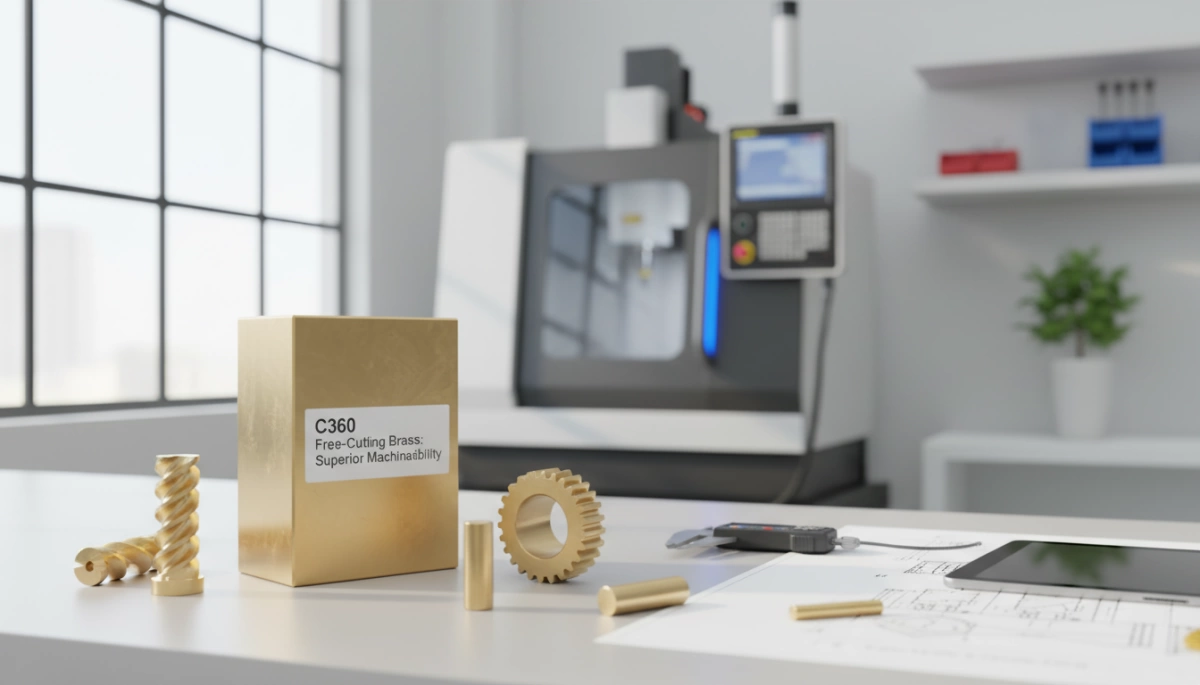
The high performance of C360 isn't just luck; it's by design. We strictly adhere to ASTM B16 standards to ensure every batch of C36000 free machining brass delivers the consistency you need for lights-out manufacturing and high-speed CNC operations.
Chemical Composition (ASTM B16 Standards)
The secret to its "free-cutting" nature is a precise blend of copper and lead. The lead remains insoluble in the brass matrix, acting as a microscopic lubricant and chip breaker.
| Element | Percentage (Wt. %) |
|---|---|
| Copper (Cu) | 60.0% – 63.0% |
| Lead (Pb) | 2.5% – 3.7% |
| Iron (Fe) | 0.35% Max |
| Zinc (Zn) | Remainder |
Tensile Strength and Conductivity Specs
While it's optimized for the lathe, C360 doesn't compromise on structural integrity. It maintains a solid balance of mechanical strength and electrical performance for complex components.
- Tensile Strength: 338 – 469 MPa (49,000 – 68,000 psi) depending on temper.
- Yield Strength: 124 – 310 MPa (18,000 – 45,000 psi).
- Electrical Conductivity: 26% IACS (International Annealed Copper Standard).
- Thermal Conductivity: 115 W/m·K.
Corrosion Resistance and Secondary Operations
C360 offers excellent resistance to corrosion in typical atmospheric conditions and non-oxidizing acids. This makes it a preferred choice for fluid power components and plumbing. Because of its smooth surface finish right off the machine, it is highly receptive to several secondary operations:
- Plating: Takes nickel, chrome, and tin plating exceptionally well for aesthetic or protective finishes.
- Joining: Excellent for soldering and brazing, though welding is generally avoided due to the lead content.
- Polishing: Easily achieves a mirror-like finish with minimal processing time.
Real-World C360 Brass Applications in Production
C360 free-cutting brass is the backbone of high-volume manufacturing. Because it machines so fast and holds tight tolerances, we use it across industries where efficiency is the top priority. It is the go-to material for parts that require intricate detailing without sacrificing speed.
Automotive and Electrical Component Manufacturing
In the automotive sector, we rely on C36000 free machining brass for sensor bodies, fuel system components, and heavy-duty connectors. Its excellent conductivity also makes it a top choice for electrical terminals and high speed CNC machining brass switchgear components. For those managing large-scale projects, knowing how to reduce machining cost for automotive CNC parts is essential for staying competitive in the global market.
Precision Fittings for Plumbing and Hydraulics
C360 is the industry standard for precision fittings. Its natural corrosion resistance and the way it handles high-pressure environments make it perfect for:
- Hydraulic valve blocks and stems.
- Compression fittings and flare adapters.
- Plumbing manifolds and high-end faucet internal components.
Best Use Cases for Swiss-Type Lathes and CNC Turning
When it comes to small, complex parts, automatic screw machine brass like C360 is unbeatable. It is the preferred material for Swiss-type lathes where high-volume brass production and a superior surface finish are non-negotiable.
| Application Type | Why C360? |
|---|---|
| Fasteners | High-speed threading and clean edges. |
| Gears/Pinions | Excellent dimensional stability for small parts. |
| Bushings | Low friction and easy to hold tight tolerances. |
Whether we are producing tiny gears or intricate hydraulic pins, this alloy ensures our CNC machines keep running with maximum uptime and minimal tool wear.
Production Efficiency and Cost Benefits
When we manage high-volume production runs at ZSCNC, C360 free-cutting brass is often our first recommendation for keeping costs down. The primary driver here is speed. Because C360 has a 100% machinability rating, we can run our CNC spindles at significantly higher speeds compared to steel or aluminum. This capability directly translates to shorter cycle times and a higher number of parts produced per hour.
By utilizing C360, we effectively speed up CNC lead times, allowing us to maintain our standard 7-day delivery for precision parts.
Reducing Cycle Times and Boosting Output
The brittle chips formed by C360 break away cleanly from the cutting tool. This eliminates the "bird's nest" of stringy chips that often plagues softer materials, reducing the need for frequent machine stops to clear debris.
Efficiency Comparison:
| Feature | C360 Brass | Standard Steel | Benefit |
|---|---|---|---|
| Machinability Rating | 100% (Benchmark) | ~40-50% | Faster cutting speeds |
| Chip Formation | Small, brittle chips | Long, stringy chips | Less downtime for cleaning |
| Tool Life | Extended | Moderate | Lower tooling costs |
| Surface Finish | Excellent (Ra 3.2 - 0.8) | Good | Less post-processing needed |
Scrap Value and ROI in Mass Production
While the raw material cost of brass can be higher than steel, the Return on Investment (ROI) for C360 becomes evident in mass production (1,000+ units). The scrap brass generated during machining retains high resale value. We can recycle these chips efficiently, which helps offset the initial material expenditure.
Furthermore, the reduction in tool wear means we spend less on replacing carbide inserts and drills. For complex components like electrical connectors or fittings, the combination of speed, extended tool life, and scrap value makes C360 the most cost-effective choice for labor-intensive parts.
Compliance and Export Standards
We understand that global manufacturing requires strict adherence to environmental standards. Even though C360 contains lead to facilitate that "free-cutting" nature, we ensure full compliance for international markets.
- RoHS & REACH: We verify that our brass components meet the necessary exemptions and standards for export to Europe and the USA.
- Material Traceability: Every batch comes with certification to prove it meets ASTM B16 and environmental regulations.
For projects requiring strictly lead-free compositions due to specific regulations, we can guide you toward alternative alloys, but for general high-speed production, C360 remains the undisputed leader in efficiency.
Machining Tips and Best Practices for C360 Brass
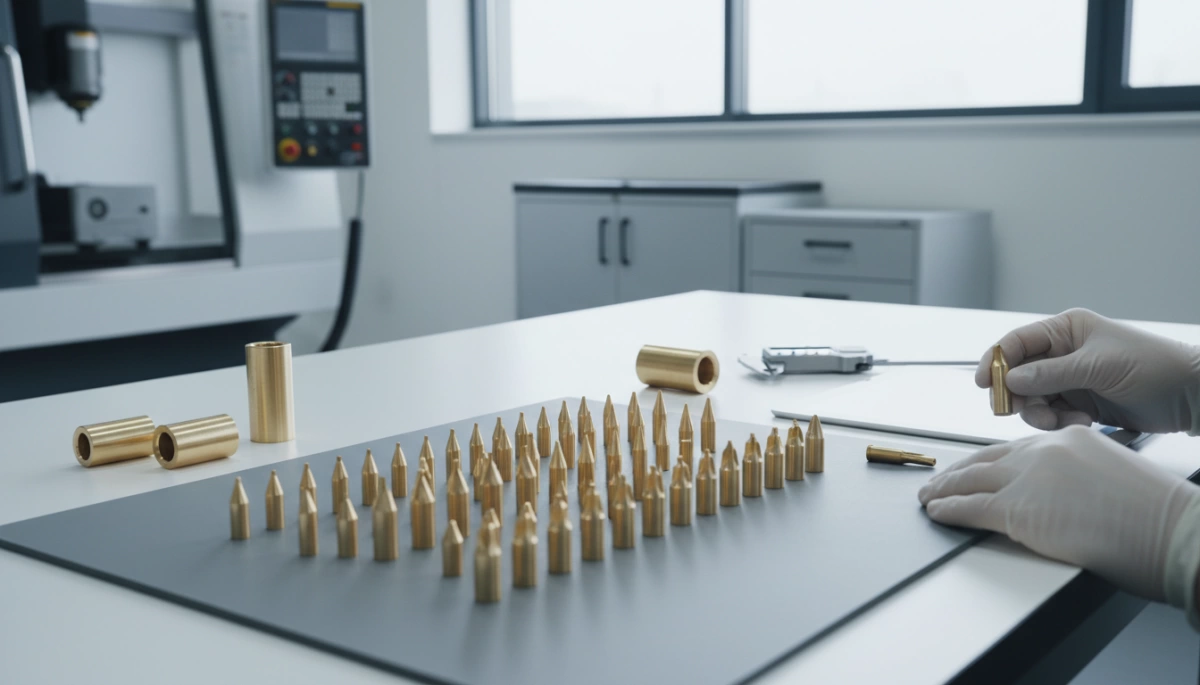
To get the most out of C360 free-cutting brass, you need to lean into its high-speed capabilities. This alloy is the gold standard for productivity, but hitting tight tolerances requires the right setup. We focus on maximizing throughput while maintaining the superior surface finish this material is known for.
Optimal Feeds, Speeds, and Tooling
C360 brass allows for incredibly high surface speeds. While High-Speed Steel (HSS) works well for short runs, carbide tooling is the professional choice for high-volume CNC environments to minimize wear and maintain consistency.
| Tooling Type | Cutting Speed (SFM) | Feed Rate (IPR) |
|---|---|---|
| HSS (Drilling) | 300 – 500 | 0.003 – 0.015 |
| Carbide (Turning) | 600 – 1000+ | 0.005 – 0.020 |
| Carbide (Milling) | 800 – 1200 | 0.002 – 0.010 (per tooth) |
Dry Machining vs. Coolant Requirements
One of the biggest perks of high speed CNC machining brass is its thermal conductivity.
- Dry Machining: Perfectly viable for simple turning or light milling. The chips carry the heat away efficiently.
- Coolant: Essential for deep-hole drilling, heavy milling, or when the design tips for parts involve thin walls that might distort from heat. Use a light paraffin-based oil or a synthetic coolant to prevent staining.
Troubleshooting Chips and Tolerances
Even with a 100 machinability rating, process control is key. C360 is famous for its brittle chip formation, which prevents the "bird-nesting" common in other metals.
- Avoid Stringy Chips: If chips start to string, increase your feed rate. C360 needs a positive "bite" to fracture the lead particles and break the chip.
- Maintain Tolerances: Because brass has a higher coefficient of thermal expansion than steel, always check your dimensions at room temperature.
- Tool Geometry: Use tools with 0° to 5° back rake angles. Too much rake can cause the tool to "dig in" to the soft brass matrix.
Focusing on these technical basics ensures your high volume brass production stays efficient with zero wasted cycles. For more complex setups, understanding how to select precise CNC machining materials can help you decide when C360 is the absolute winner for your project.
Frequently Asked Questions about C360 Free-Cutting Brass
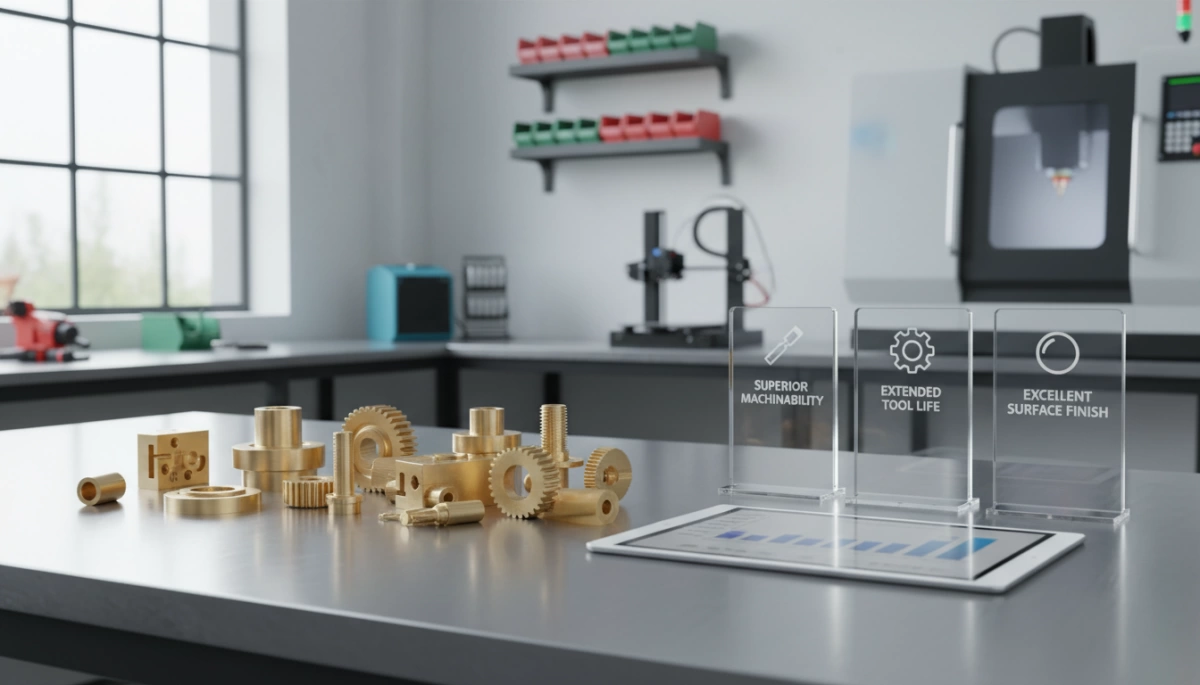
We handle thousands of brass projects yearly, and clear communication is key to getting your parts right. Here are the most common questions we hear regarding C360 free-cutting brass and how it fits into a high-efficiency production cycle.
Is C360 brass lead-free?
No. C36000 free machining brass typically contains between 2.5% and 3.7% lead. This lead is precisely what allows the material to reach its famous machinability rating of 100. The lead acts as an internal lubricant and a chip breaker. If your project requires strict RoHS compliance or is for potable water applications in specific regions, we can discuss lead-free alternatives that mimic these properties.
What is the difference between C360 and C385?
While both are popular, C360 free-cutting brass is the undisputed king of high-speed CNC turning and automatic screw machine work. C385, often called Architectural Bronze, has a slightly lower lead content and is better suited for complex extrusions and architectural shapes. For high-volume mechanical parts where speed and tool life are the priorities, C360 is almost always the better choice.
Can you weld C360 brass?
We generally advise against welding this alloy. The high lead content that makes it so easy to machine also makes it prone to "hot shortness" or cracking during the welding process. For joining leaded brass alloy C360 components, we recommend:
- Brazing (the most common and effective method)
- Soldering
- Mechanical fasteners or threaded joints
Why is C360 called free-cutting?
It earned this name because of its unique chip formation. Instead of creating long, stringy ribbons that wrap around the spindle, C360 free-cutting brass produces small, brittle flakes. These chips break away "freely" from the workpiece, preventing clogs and allowing for the extreme speeds we use in our manufacturing process.
Does it meet industry standards?
Yes, our material stock complies with ASTM B16 standards, ensuring consistent chemical composition and mechanical properties. We maintain strict quality control to ensure every batch of high speed CNC machining brass meets the tensile strength and conductivity specs your application demands.
ZSCNC: Your Partner for Precision C360 Brass Components
At ZSCNC, we leverage the full potential of C360 free-cutting brass to deliver high-quality parts with unmatched speed. As an experienced manufacturer, we understand that production efficiency relies on the right combination of material and machine expertise. We provide a seamless transition from initial design to full-scale manufacturing, ensuring your project stays on schedule and within budget.
Custom CNC Turning and Swiss Machining
Our facility is optimized for the high-speed CNC machining of brass alloys. We utilize advanced equipment to handle diverse project requirements:
- Swiss-Type Machining: Perfect for long, thin, and complex brass components.
- Multi-Axis CNC Turning: Achieving superior surface finishes and tight tolerances.
- Rapid Prototyping: Quick-turn samples to validate your designs before mass production.
- High-Volume Production: Scaling up to thousands of units while maintaining consistent quality.
Quality Assurance and Factory-Direct Pricing
We pride ourselves on being a reliable China custom CNC machining supplier for overseas buyers, offering transparency and competitive costs. By eliminating middlemen, we provide factory-direct pricing that boosts your ROI.
| Feature | ZSCNC Capability |
|---|---|
| Certifications | ISO 9001:2015 Certified Quality Management |
| Material Focus | Specialized in C36000 and lead-free brass alternatives |
| Scalability | Prototype batches to 100,000+ piece orders |
| Services | Custom CNC machining services for machinery parts |
Our commitment to precision ensures that every C360 brass component we produce meets the rigorous standards of the automotive, plumbing, and electronics industries. From complex fittings to electrical connectors, we are your dedicated partner for high-performance brass manufacturing.
 English
  German
  Dutch
Dutch  Russian
  Czech
Czech  French
  Korean
  Japanese
  Spanish
  Portuguese