
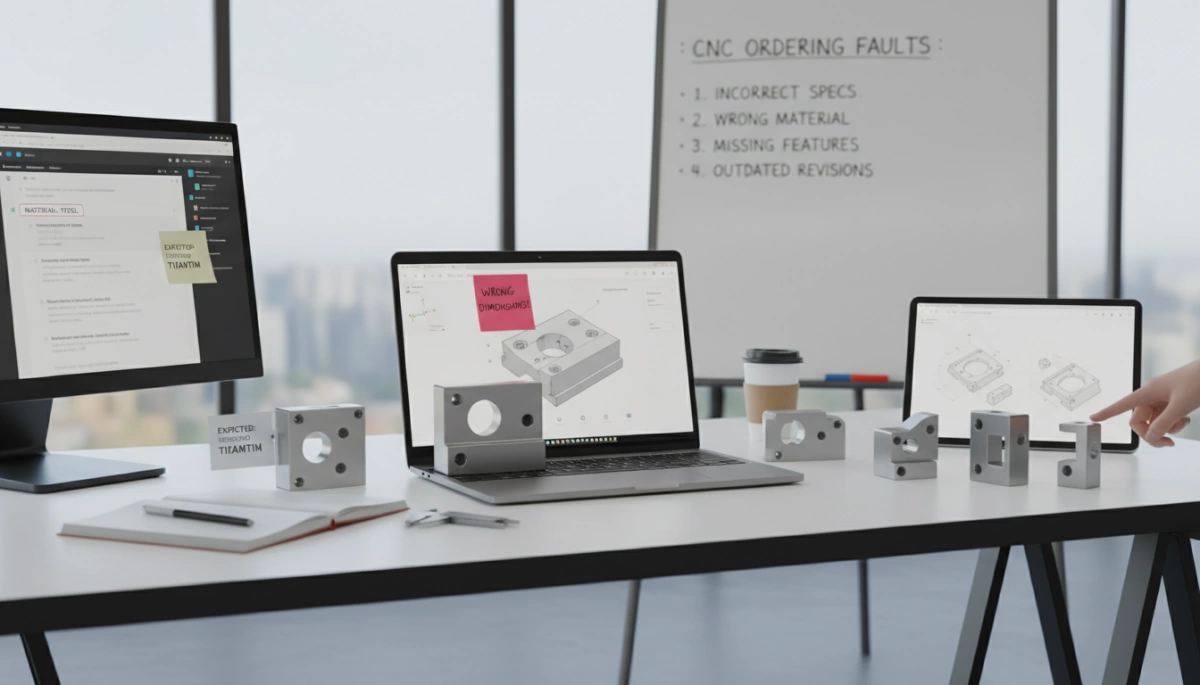
If you’ve ever ordered custom CNC parts and ended up with a quote that was double what you expected—or a lead time that suddenly jumped from 5 days to 3 weeks—you’re not alone. Many engineers make the same hidden mistakes without even realizing it.
And here’s the surprising part: most of these issues have nothing to do with machining complexity and everything to do with design choices and communication.
After reviewing thousands of drawings, I’ve seen exactly why CNC orders go wrong. From over‑specifying tolerances to designing features that can’t actually be machined, even small decisions can lead to higher costs, delays, or unusable parts.
In this guide, you’ll learn the top mistakes engineers make when ordering custom CNC parts—and more importantly, how to avoid them with simple, practical steps.
If you want faster quotes, lower pricing, and parts that come out right the first time, keep reading.
Design and Drawing Preparation Mistakes Engineers Make When Ordering Custom CNC Parts
Engineers often ask me the same questions: Why did my CNC quote come back so high? Why can’t the shop machine my part as designed? Most issues start long before production—right in the design files.
Incomplete or Unclear Drawings
One of the most common CNC machining design mistakes is submitting drawings with missing tolerances, vague datums, or undefined critical features. If I can't tell what truly matters, I have to guess—leading to delays, incorrect parts, or inflated pricing.
Over‑Specifying Tight Tolerances
Tight tolerances drive cost fast. Many designers default to “tight everywhere,” even on areas that don’t affect function.
I always tell customers:
- Specify tight tolerances only where they matter
- Use standard fits whenever possible
- Avoid unnecessary GD&T callouts
Ignoring Machinability Limits
Machinability considerations should guide every CNC part. Features that look simple on‑screen may be impossible or extremely costly on a mill or lathe. Tool reach, cutter deflection, rigidity, and chip evacuation all matter.
Sharp Internal Corners or Inaccessible Features
CNC mills can’t create perfectly sharp internal corners—cutters are round. Engineers who forget this end up with redesign cycles. Always:
- Add corner radii
- Avoid undercuts unless truly required
- Check tool accessibility from realistic machining angles
Thin Walls, Deep Pockets, and Unstable Geometries
Thin walls vibrate, deep pockets cause tool chatter, and fragile sections warp under cutting forces. These shapes slow machining and reduce accuracy.
If you need them, design smart:
- Use larger minimum wall thicknesses
- Limit pocket depth‑to‑width ratios
- Add ribs or supports where possible
Every one of these issues raises cost, extends lead time, or increases risk. Clean, machinable designs always produce better CNC parts.
Material and Surface Finish Mistakes in Custom CNC Part Orders
A lot of costly CNC machining design mistakes come from picking the wrong material or adding finishes that don’t bring real value. I see engineers choose exotic alloys or high‑end coatings even when a standard aluminum, steel, or engineering plastic would do the job. For example, many applications that need chemical resistance can be handled with a stable plastic like PTFE, and in tougher thermal environments, a high‑performance option such as PEEK works well. Both are common choices in CNC machining and are easy to quote, as shown in our PTFE and PEEK material pages.
Two things create delays more than anything else: ignoring stock sizes and not checking what materials are actually available. When a material isn’t in standard stock, lead times jump fast. The same goes for finishes. If you request a special coating for a part that doesn’t need it, you add cost, longer turnaround, and more inspection steps. Keep materials simple, match finishes to functional needs, and verify availability early so the project stays on budget and on time.
Ordering and Communication Mistakes in CNC Machining Projects
When engineers order custom CNC parts, communication slip‑ups often create most of the delays and cost overruns. One of the biggest issues is setting unrealistic lead‑time expectations. CNC machining isn’t just cutting metal; it involves programming, tooling setup, inspections, and sometimes outsourced finishes. If you need tight tolerances or complex geometries, planning ahead is the only way to avoid rush charges and production bottlenecks.
Another common mistake is skipping inspection, assembly, or packaging details. If I don't get specifications for critical dimensions, fit checks, or protective packaging, I have to make assumptions—and that usually means rework or misalignment during final assembly. Clear inspection requirements help avoid back‑and‑forth and match your internal quality standards.
Many teams also forget about tooling, workholding, and setup constraints. Features that look simple on a CAD model can become expensive or slow to machine if I need custom fixtures or multiple setups. Sharing early details, or even basic DFM checks, prevents these surprises. This is also why early supplier communication—like what we outline in our guide on safely working with a CNC machining supplier in China—matters, as explained in our reference on how to safely work with a CNC machining supplier in China: https://zscncparts.com/how-to-safely-work-with-a-cnc-machining-supplier-in-china-2/.
Clear requirements, realistic timelines, and simple upfront conversations save days, not minutes, in a CNC machining workflow.
Advanced and Strategic CNC Ordering Mistakes Engineers Overlook
A lot of cost and lead‑time problems come from decisions made early in the process. When engineers add features that don’t actually add function—like unnecessary undercuts, complex organic surfaces, or decorative bevels—they often end up paying for extra setups, custom tooling, and longer machining hours. Many of these elements look fine on a CAD model but create avoidable complications once the part is on the mill. This is where strong DFM habits make a real difference. When you skip early design reviews or don’t involve your supplier for feedback, you miss easy ways to simplify the part, improve machinability, and cut cost. Teams that collaborate early with a machining partner, especially one experienced in complex parts such as our own 5‑axis machining services, avoid most of these traps. For reference, our advanced capabilities are outlined in the 5‑axis machining guide at https://zscncparts.com/design-tips-for-parts-that-will-be-machined-on-5axis-cnc/, which helps engineers fine‑tune features before they become expensive manufacturing problems.
 English
  German
  Dutch
Dutch  Russian
  Czech
Czech  French
  Korean
  Japanese
  Spanish
  Portuguese