
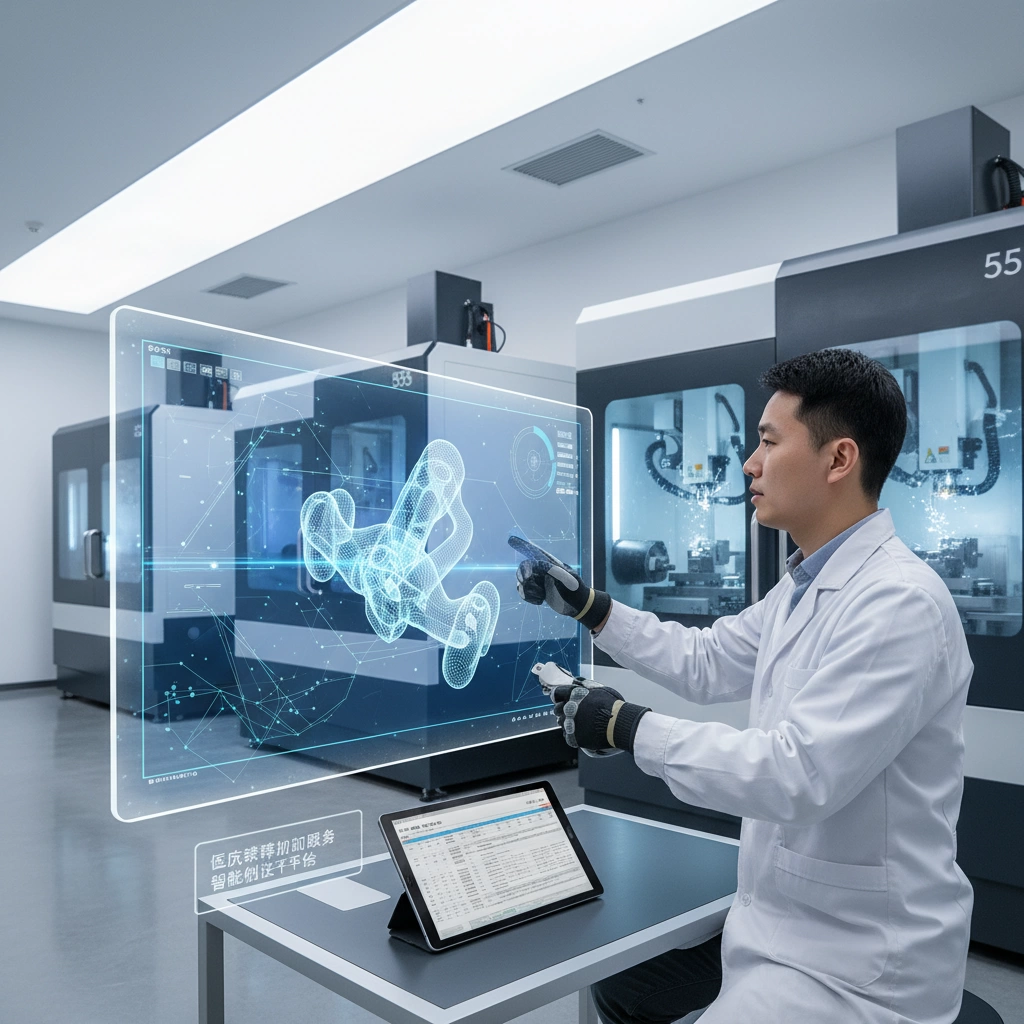
Medical Device CNC Machining Services in China
Looking for reliable, precision medical CNC machining services in China that actually meet global regulatory expectations? I built ZSCNC specifically to support medical device OEMs and startups that need tight-tolerance, compliant, and cost-effective machining without compromising on quality or traceability.
At ZSCNC, we focus on precision medical CNC machining in China using advanced multi-axis milling, turning, and Swiss CNC machining to produce custom medical device components, from stainless steel surgical instruments to titanium orthopedic implants and high-performance polymer parts. We understand ISO 13485 requirements, material certifications, and documentation demands, and we structure our workflows to support risk management, traceability, and repeatability from prototype through production.
You get:
- High precision and tight tolerance control for complex geometries
- Compliance-ready quality documentation for regulated markets
- Deep materials expertise in titanium, stainless steel, aluminum, and medical-grade polymers
- Cost advantages in China with stable quality and predictable lead times
If you’re sourcing CNC machined surgical instruments, titanium medical parts, or diagnostic equipment CNC parts, I can help you move fast with confidence.
Ready to start?
Send your RFQ, upload your CAD files, or talk directly to an engineer so we can review your design, suggest improvements, and quote accurate cost and lead time for your next medical machining project.
Why Choose Our Medical Device CNC Machining Services in China
When you work with us for medical device CNC machining services in China, you get a team that already speaks “medical”. We’ve supported both large medical device OEMs and fast-moving startups, so we understand regulatory expectations, fast prototype cycles, and the pressure to hit launch deadlines.
Deep experience with medical OEMs and startups
We routinely handle projects like CNC machined surgical instruments, titanium orthopedic parts, and diagnostic equipment CNC parts. Our engineers help you balance precision, cost, and DFM so you can move from prototype to production without rebuilding your supply chain later.
Advantages of sourcing medical machining in China
With our China-based shop, you get:
- Cost-effective precision machining for stainless steel and titanium medical parts
- Access to multi-axis CNC machining for implants and tight-tolerance components
- Competitive pricing for both low volume medical CNC production and scale-up to high volume medical CNC manufacturing
We apply the same kind of tight control we use for our industrial-grade CNC machining accuracy standards to medical work, so you can rely on stable quality across batches.
Tight tolerances & complex geometries
We’re set up for tight tolerance CNC medical parts and complex 3D features in:
- Titanium medical parts machining (e.g., bone screws, plates)
- Medical-grade stainless steel machining for instruments and housings
- PEEK machining for medical applications where biocompatibility matters
Our process control keeps repeatability high, even on complex Swiss CNC machining medical devices and multi-op parts.
Built for international buyers & long-term partnerships
We work every day with global medical device teams:
- English-speaking engineers and project managers
- Clear documentation and ISO 13485-ready CNC machining services
- Stable pricing models and capacity planning for long-term programs
Whether you need custom medical device components for a new project or a reliable medical device contract manufacturing partner in China, we structure our service around long-term, predictable cooperation.
CNC machining capabilities for medical devices in China
Our medical device CNC machining services in China are built around stable, repeatable, and high-precision production for global OEMs and startups.
3-axis to 5-axis CNC milling for complex medical parts
We run 3-axis to full 5-axis CNC milling for complex features, undercuts, and freeform surfaces on implants, housings, and surgical fixtures. Multi-face machining in a single setup keeps parts consistent, cuts handling, and improves accuracy on tight-tolerance geometry.
CNC turning and Swiss turning for small, high-precision components
For small, long, or micro medical parts like bone screws, connectors, and shafts, we use CNC turning and Swiss CNC machining for medical devices. Our Swiss machining services are ideal for high-precision, high-volume production of stainless steel and titanium medical components.
Multi-axis turn-mill for efficiency and accuracy
With multi-axis turn-mill centers, we combine milling and turning in one machine. This is perfect for complex surgical instruments and diagnostic equipment parts where concentricity, runout, and feature-to-feature relationships must be tightly controlled.
Tolerances, repeatability, and process control
On precision medical CNC machining in China, we typically hold:
- ±0.005–0.01 mm on critical dimensions
- Stable Cp/Cpk through controlled processes and documented setups
- Consistent results across batches with tool life management and in-process checks
For many stainless steel medical components we produce, you can see our approach in our high-precision turning of stainless steel projects, such as this 304 stainless steel turning example.
Surface finishing for medical components
When we talk medical device CNC machining services in China, surface finish is just as critical as tolerances. We build our finishing flow around safety, cleanability, and long-term reliability in the body or in the OR.
Burr‑free deburring & edge control
We run dedicated burr‑free medical device finishing workflows so sharp edges never become a risk:
- Controlled mechanical and thermal deburring for complex internal features
- Micro‑chamfering on cutting edges where needed, while keeping geometry intact
- 100% visual checks on all CNC machined surgical instruments and titanium implants
You get consistent, safe edges ready for sterilization and assembly.
Mirror polishing for surgical instruments & implants
For high‑end CNC machined surgical instrument parts and visible implants, we offer:
- Mirror polish on stainless steel medical components and titanium medical parts machining
- Controlled grit steps plus buffing for a clean, bright surgical look
- Stable finish from sample to mass production, supported by our documented quality control process
This improves corrosion resistance, cleanability, and brand perception in the OR.
Passivation & electropolishing for corrosion resistance
For stainless steel medical components and titanium orthopedic screw machining, we use:
- Chemical passivation for 316L and other medical steels
- Electropolishing to remove micro-burrs, smooth peaks, and boost corrosion resistance
- Processes aligned with ISO and ASTM requirements commonly used in precision medical CNC machining China
Result: clean, passive surfaces that stand up to repeated sterilization.
Surface roughness targets for implants & instruments
We control surface roughness based on the function of the part:
- Surgical instruments: typically Ra 0.2–0.4 μm for easy cleaning and smooth operation
- Joint and structural implants: Ra tuned to your spec (e.g. smooth bearing surfaces vs. rougher osseointegration zones)
- Diagnostic housings and fixtures: cosmetic and functional Ra matched to your device requirement
All Ra values are measured and recorded with full ISO 13485‑ready quality documentation, so you know exactly what you’re getting on every lot.
Medical-grade materials we machine
For medical device CNC machining services in China, we focus on a tight range of proven, medical-grade materials so your devices are safe, consistent, and compliant.
Titanium medical machining (Ti-6Al-4V & others)
We machine:
- Ti-6Al-4V (Grade 5) for orthopedic implants, trauma plates, and screws
- Grade 23 (ELI) and other titanium grades for higher toughness and biocompatibility
You get:
- High strength-to-weight ratio for implants and surgical tools
- Excellent fatigue resistance and corrosion resistance in body fluids
- Smooth, consistent surface finish ready for further treatment or coating
Stainless steel 316L and medical steels
We run 316L and other medical-grade stainless steels daily for:
- Surgical instruments, clamps, holders, and reusable components
- Housings and structural parts in diagnostic equipment
Our shop is optimized for precision stainless steel medical components, with stable cutting parameters and finishing workflows. For more details on our steel capabilities, see our stainless steel CNC machining overview.
Aluminum for diagnostic & non-implant parts
For non-implant applications we machine:
- Aluminum 6061, 6082, 7075 and other common grades
Typical uses:
- Diagnostic equipment frames and CNC machined housings
- Lab automation parts, brackets, and lightweight fixtures
You get lower part cost, faster machining, and good thermal performance where biocompatibility is not the primary requirement.
PEEK, PEI (Ultem), PTFE & medical polymers
We have dedicated setups for PEEK machining for medical applications, plus:
- PEI (Ultem) for high-temperature and insulating parts
- PTFE for low-friction, chemically resistant components (see our PTFE machining capability)
These polymers are ideal for:
- Implantable and short-term contact components (grade-dependent)
- Insulators, handles, spacers, and disposable device parts
Biocompatibility & material traceability
We build every project around biocompatible materials machining and full traceability:
- Only certified medical-grade raw material from audited suppliers
- Mill certs / material certificates linked to each lot
- Lot-based traceability from bar/plate to finished part
- Controlled separation of medical vs non-medical materials and tools
- Documentation prepared to support ISO 13485 CNC machining services and customer audits
This way, your titanium medical parts, stainless steel medical components, and high-precision medical polymers all come with the documentation and consistency global device OEMs require.
Applications and Medical Components We Produce
We provide medical device CNC machining services in China for a wide range of critical components. Our team focuses on tight tolerance CNC medical parts with stable quality and reliable delivery for global OEMs.
CNC Machined Surgical Instruments
We CNC machine surgical instrument parts such as:
- Forceps, clamps, needle holders
- Scalpels and blade handles
- Endoscopic and laparoscopic tools
Using stainless steel medical components (like 410, 420, 17-4PH) and titanium, we hold sharp edges, burr-free features, and mirror polish surgical parts for easy cleaning and long tool life.
Orthopedic Implants and Titanium Medical Parts
We specialize in orthopedic implant CNC manufacturing, including:
- Bone screws, bone plates, trauma systems
- Spinal cages, joint components, fixation parts
Our shop runs titanium medical parts machining (Ti-6Al-4V and other grades) and titanium orthopedic screw machining with multi-axis CNC to hit complex shapes, consistent threads, and implant-grade surface finishes.
Diagnostic Equipment CNC Parts
For diagnostic equipment CNC parts, we machine:
- Housings, covers, and frames
- Precision brackets and mounting plates
- Probes, fixtures, alignment parts
We work with aluminum, stainless steel, and PEEK machining for medical applications to deliver stable, dimensionally accurate parts for imaging, lab, and monitoring systems. Our experience reducing cost on low-volume precision builds draws on methods similar to those we use for cost-effective CNC parts.
Dental and Prosthetic Device Components
We produce custom medical device components for dental and prosthetic use:
- Abutments, posts, and small titanium connectors
- Dental tool components and handpiece parts
- Prosthetic joints, adapters, and brackets
Our high-precision medical turning and milling keeps tight tolerances on very small geometries, ensuring smooth fit and comfort for end users.
Respiratory, Cardiac, and Minimally Invasive Device Parts
For life-support and minimally invasive systems, we machine:
- Respiratory valves, manifolds, and connectors
- Cardiac device housings, pump components, fittings
- CNC machining for surgical implants and MIS tools
We combine Swiss CNC machining medical devices with multi-axis milling to deliver burr-free medical device finishing, leak-tight sealing faces, and consistent precision machining for medical device components ready for assembly and validation.
Quality control and certifications for medical CNC machining in China
When you trust us with medical device CNC machining in China, quality and compliance come first. We run ISO 13485‑ready quality workflows so your parts, documents, and records match what your regulatory team expects.
ISO 13485‑ready quality workflows
We build every project around a controlled QMS:
- Process control plans and documented work instructions
- FAI / IQ‑OQ‑PQ support when you need validation data
- Full lot-based routing so we can trace how each part was made
Our team is used to working with global OEM and startup quality teams, so aligning with your internal procedures is straightforward.
Material certification, lot traceability, and DHR
For medical device CNC machining, material traceability is non‑negotiable:
- Mill certs / material certificates kept and shared per lot
- Heat / lot numbers tied to each production batch
- DHR (Device History Record) files with route cards, inspection data, and special process records
You get clear traceability from raw titanium or stainless steel bar to finished, packed parts.
In‑process inspection with CMM and optical measurement
We keep tight tolerances under control by checking parts while we run them:
- CMM inspection for complex 3D geometries, implants, and tight tolerances
- Optical and vision measurement for micro-features, slots, and small turned parts
- SPC and sampling plans defined around your critical dimensions
For complex 5‑axis titanium or stainless steel medical components, we back up our machining with metrology that actually matches the geometry.
Surface roughness and dimensional inspection reports
Medical device customers need data, not just good-looking parts. We provide:
- Dimensional inspection reports (full or key characteristics only)
- Surface roughness (Ra) reports for implants and surgical instruments
- GR&R and capability data on request for long‑term programs
For demanding implant and surgical programs, we combine advanced machining (including our 5‑axis CNC services) with documented, repeatable inspection.
Risk management, change control, and documentation
We treat your program like a long‑term medical partnership:
- Risk assessment around critical features, materials, and processes
- Formal change control for tooling, process, or material changes
- Version‑controlled drawings, CAD, and specs linked to each order
You get a China‑based medical machining supplier that understands regulatory pressure, traceability, and documentation, not just cutting metal.
Prototyping to Production Workflow for Medical Device CNC Machining Services in China
When you work with us for medical device CNC machining services in China, we keep the path from prototype to mass production simple and controlled.
Rapid CNC Prototypes for Design & Clinical Validation
We move fast on precision medical CNC machining prototypes so your team can:
- Validate clinical performance and ergonomics
- Test different materials (titanium, stainless steel, PEEK, etc.)
- Lock in critical dimensions and surface finish early
You can send native CAD or STEP files, and we’ll machine parts on the same type of equipment used for production for consistent results.
Bridge Production & Low-Volume Medical Builds
Before you commit to full-scale medical implant prototyping in China, we support:
- Pilot runs for design verification and clinical trials
- Low-volume, high-mix builds for custom or niche devices
- Engineering builds where you still expect design changes
We keep flexible fixtures and modular setups so changes are fast and cost-effective.
Scaling to Stable, High-Volume Manufacturing in China
Once designs are frozen, we scale into high-volume medical CNC manufacturing using:
- Standardized process plans and tooling libraries
- Documented work instructions and control plans
- Capacity planning across multiple machines and shifts
This keeps cost per part down while maintaining tight tolerances and repeatability.
DFM Feedback to Cut Cost & Lead Time
Our engineers review every RFQ for DFM (design for manufacturability):
- Identifying features that drive cost (deep pockets, undercuts, very tight tolerances)
- Suggesting geometry tweaks that keep function but reduce machining time
- Recommending the best mix of 3-axis vs 5-axis machining based on complexity
If you want more technical insight into our machining methods, you can check our overview of CNC machining services at ZSCNC: CNC machining capabilities and processes.
From first prototype to stable production, our goal is simple: reliable CNC machined surgical instruments and medical components, with predictable lead times and no surprises on quality or cost.
Cleanroom and secondary medical services
When you use our medical device CNC machining services in China, we don’t just stop at precision parts — we finish them to cleanroom and sterilization-ready standards.
Cleanroom assembly for sensitive parts
We offer controlled-environment assembly for small, delicate, or contamination‑sensitive components, including:
- Optical and diagnostic parts
- Minimally invasive and implant‑adjacent components
- Sealed sub-assemblies that must arrive ready for sterilization
Our team follows documented work instructions and ISO 13485‑ready workflows to keep every medical assembly consistent.
Laser marking and UDI coding
We provide high-contrast laser marking and UDI coding on:
- CNC machined surgical instruments
- Titanium orthopedic screws and plates
- Stainless steel medical components and PEEK parts
Marks are permanent, legible, and positioned to avoid functional or sterile barriers.
Validated cleaning and packaging
We run validated cleaning processes to remove oils, particles, and burr residue from precision medical CNC machining. Typical options include:
- Ultrasonic and aqueous cleaning
- Particle and visual cleanliness checks
- Clean packing in sealed bags or trays
When you also need enclosures or brackets, we can combine machined parts with sheet metal fabrication services and pack them as one kit.
Sterilization‑ready parts and packaging
We support sterilization‑ready preparation for:
- EO, gamma, or steam sterilization workflows
- Double pouches, Tyvek-style packaging, and labeled inner/outer packs
- Clear orientation and handling instructions for your contract sterilizer
You get CNC machined medical parts that land at your site or your sterilization partner ready to go into the next step — no rework, no repacking, no surprises.
Supply chain, lead times, and pricing for medical device CNC machining services in China
Typical lead times for prototypes and production
For precision medical CNC machining in China, we keep lead times tight and predictable:
- CNC prototypes: usually 5–10 working days after DFM confirmation
- Small pilot / validation lots: around 2–3 weeks
- Stable production orders: typically 3–5 weeks, depending on material and process setup
- Urgent medical projects: we can fast-track critical parts when you’re up against clinical or submission deadlines
We lock in timing during quoting so your team can plan builds, clinical trials, and validations with confidence.
MOQ, batch sizes, and flexible quantities
We support both startups and large OEMs with flexible order models:
- No strict MOQ for most CNC prototypes – ideal for early design and clinical builds
- Bridge and pilot runs: from 20–500 pcs for trials and V&V
- High-volume medical CNC manufacturing: thousands of parts per month with long-term agreements
- Annual blanket orders and scheduled releases help you balance stock risk and unit price.
Key cost drivers for medical CNC machining in China
We’re transparent on what drives pricing for titanium and stainless steel medical parts machining:
- Material type and size: titanium, PEEK, and complex stainless steel grades cost more than common alloys
- Part complexity: 5-axis machining, deep cavities, and ultra-tight tolerances add cycle time
- Tolerances and inspection level: tighter specs and full reports increase programming and QA time
- Surface finish: burr-free edges, mirror polish, passivation, and electropolishing add process steps
- Volume and repeat orders: higher and repeat volumes reduce setup cost and unit price
We’ll highlight cost-saving options (tolerance relax, material change, process tweaks) without compromising function.
Shipping, customs, and global logistics support
We ship CNC machined surgical instruments, implants, and diagnostic components to North America, Europe, and APAC every week:
- Incoterms: EXW, FOB China port, CIF, DAP depending on your preference
- Transport modes: express air for prototypes, air freight for urgent builds, sea freight for large batches
- Customs documentation: commercial invoices, packing lists, HS codes, and material certificates prepared correctly to avoid delays
- We can align our purchase order terms and conditions with your process and share them upfront for smoother onboarding.
Our logistics team works with medical customers daily, so you get reliable ETAs, clear paperwork, and predictable landed cost.
Case studies: medical device CNC machining in China
Complex titanium implant machining project
A US orthopedic OEM came to us with a family of complex titanium implants (Ti-6Al-4V) with tight tolerances and critical surface requirements.
- Part type: Spinal and trauma implants with multi-axis features and internal radii
- Main challenges:
- ±0.01 mm tolerances on functional features
- Consistent surface roughness for osseointegration
- Full material traceability and batch documentation
- What we did:
- 5-axis CNC machining with stable process controls
- Dedicated fixtures and toolpaths to prevent distortion
- Incoming material verification and lot-based records
- Outcome:
- First article approved on second iteration
- Stable mass production with >98% first-pass yield
- Cost-down vs local suppliers while keeping ISO 13485-ready documentation
If you need similar titanium medical parts machining, we can route you to our dedicated titanium CNC machining capabilities.
CNC machined surgical instruments: finish and repeatability
A European surgical instrument company tasked us with CNC machined surgical instrument parts for a new minimally invasive set.
- Part type: Handles, jaws, and instrument tips in 420 and 17-4 stainless steel
- Key requirements:
- Burr-free edges and safe handling
- Mirror polish on visible and functional surfaces
- Tight repeatability between batches from China
- What we did:
- Swiss CNC machining for small, high-precision components
- Controlled deburring and multi-step polishing process
- SPC monitoring for key dimensions
- Outcome:
- Consistent mirror finish surgical parts across repeated orders
- No field complaints on sharp edges or finish quality
- Long-term program with scheduled releases and stable pricing
Diagnostic device CNC parts: from prototype to production
A diagnostics startup needed precision machining for medical device components for a new benchtop analyzer.
- Part type: Aluminum housings, stainless brackets, and PEEK fluidic parts
- Goals:
- Move from CAD to functional prototypes fast
- Lock in design for regulatory submission
- Scale to low-volume CNC production in China without redesign
- What we did:
- Rapid CNC prototypes in 7–10 days
- DFM feedback to simplify machining and reduce cost
- Same fixtures and programs scaled into production lots
- Outcome:
- Smooth transition from prototype to pilot build
- Short lead times for repeat batches
- Fewer design iterations and lower total project cost
For aluminum diagnostic housings and structural parts, we also offer optimized aluminum CNC machining options.
Collaborating across time zones
We work daily with engineers and buyers in the US, EU, UK, and APAC on precision medical CNC machining in China.
- Communication approach:
- English-speaking project managers
- Quick response via email, Teams, or Zoom
- Overlapping working windows for design reviews and quality calls
- Project control:
- Shared drawings, 3D files, and change logs
- Regular progress updates with photos and inspection data
- Clear timelines for prototypes, PPAP/FAI, and production
You send CAD and requirements; we handle the machining, documentation, and logistics so your team stays focused on design, approval, and launch.
FAQ on Medical Device CNC Machining in China
Certifications, audits, and compliance
Q: Do you support ISO 13485 and medical compliance?
Yes. Our processes are built around ISO 13485-ready workflows, full material traceability, and controlled documentation. We support customer audits, supplier questionnaires, and compliance packages for EU, US, and other regulated markets.
Q: Can you provide quality documentation?
We offer:
- Material certs (MTC, CoC) and lot traceability
- Dimensional and surface roughness reports
- DHR-style records aligned to your QMS
You can also review typical documentation and policies in our online FAQ and support resources.
File formats, NDA, and IP protection
Q: Which CAD/CAM file formats do you accept?
STEP, IGES, Parasolid, SolidWorks, and common 2D drawings (PDF, DWG, DXF). Just upload your CAD and we’ll handle the rest.
Q: How do you protect IP for custom medical device components?
We sign NDAs on request and treat all files as confidential. Data is stored on secure servers, only accessible to the project team. We never share, resell, or reuse designs.
Material selection and design guidelines
Q: Can you help choose materials for medical CNC machining?
Yes. We regularly machine titanium medical parts, stainless steel medical components, aluminum, and engineering polymers like PEEK and PTFE. Tell us the application (implant, instrument, diagnostic housing, etc.) and we’ll suggest options.
Q: Do you provide DFM for precision medical CNC machining in China?
We review your design for:
- Machinability and cost
- Tolerances and fits
- Surface finish and cleaning requirements
This helps avoid redesigns and supports faster regulatory submissions.
Payment terms, Incoterms, and shipping
Q: What payment terms do you offer?
Typical terms are T/T with a deposit for new projects, with options to adjust terms for long-term partners.
Q: Which Incoterms and shipping options are available?
We support EXW, FOB China port, and CIF/DDP for many regions. We ship globally using air express for prototypes and urgent builds, and sea or air freight for production batches.
Q: Do you assist with customs and logistics?
Yes. We help organize shipping, export paperwork, and basic customs support so your precision medical CNC machining orders clear smoothly and on time.
How to get started with ZSCNC medical device CNC machining in China
Working with us for medical device CNC machining services in China is straightforward. We’re set up to support both fast-moving startups and established OEMs that need reliable, compliant production.
What to send with your RFQ
To quote precisely for precision medical CNC machining in China, send:
- 2D drawings (PDF) with:
- Complete dimensions and tolerances
- Critical-to-quality (CTQ) features
- Surface finish requirements (Ra, mirror polish, etc.)
- 3D CAD files:
- STEP / STP, IGES, Parasolid, or native formats
- Material details:
- Grade (e.g. Ti-6Al-4V, 316L, PEEK)
- Required standards (ASTM, ISO, etc.)
- Quantity and schedule:
- Prototype, bridge, or production volumes
- Target delivery dates
- Special requirements:
- ISO 13485 documentation level
- Cleaning, passivation, electropolishing, UDI laser marking
- Packaging / sterilization-ready needs
You can send all project files through our secure online RFQ form.
Our quoting, sampling, and approval process
For custom medical device components and CNC machined surgical instruments, our workflow is:
- DFM review & quotation
- Engineering review for manufacturability, risk, and cost drivers
- Clear quote with pricing, lead time, and suggested optimizations
- Sampling / prototypes
- CNC prototypes or first articles based on your drawing and spec
- Full inspection reports available on request
- Customer review & feedback
- You review parts, documentation, and test results
- We adjust machining parameters or design details if needed
Next steps after you approve pricing and samples
Once you approve pricing and samples for your titanium medical parts machining or stainless steel medical components:
- We lock in the process route, tooling, and inspection plan
- Set up production fixtures and CNC programs for repeatability
- Start batch production under ISO 13485–ready workflows
- Provide ongoing:
- In-process and final inspection reports
- Lot and material traceability
- Schedule updates and logistics support
If you’re ready to move, share your CAD, drawings, and basic requirements, and we’ll come back with a clear plan and quote for your tight tolerance CNC medical parts.
 English
  German
  Dutch
Dutch  Russian
  Czech
Czech  French
  Korean
  Japanese
  Spanish
  Portuguese
Reviews
There are no reviews yet.