
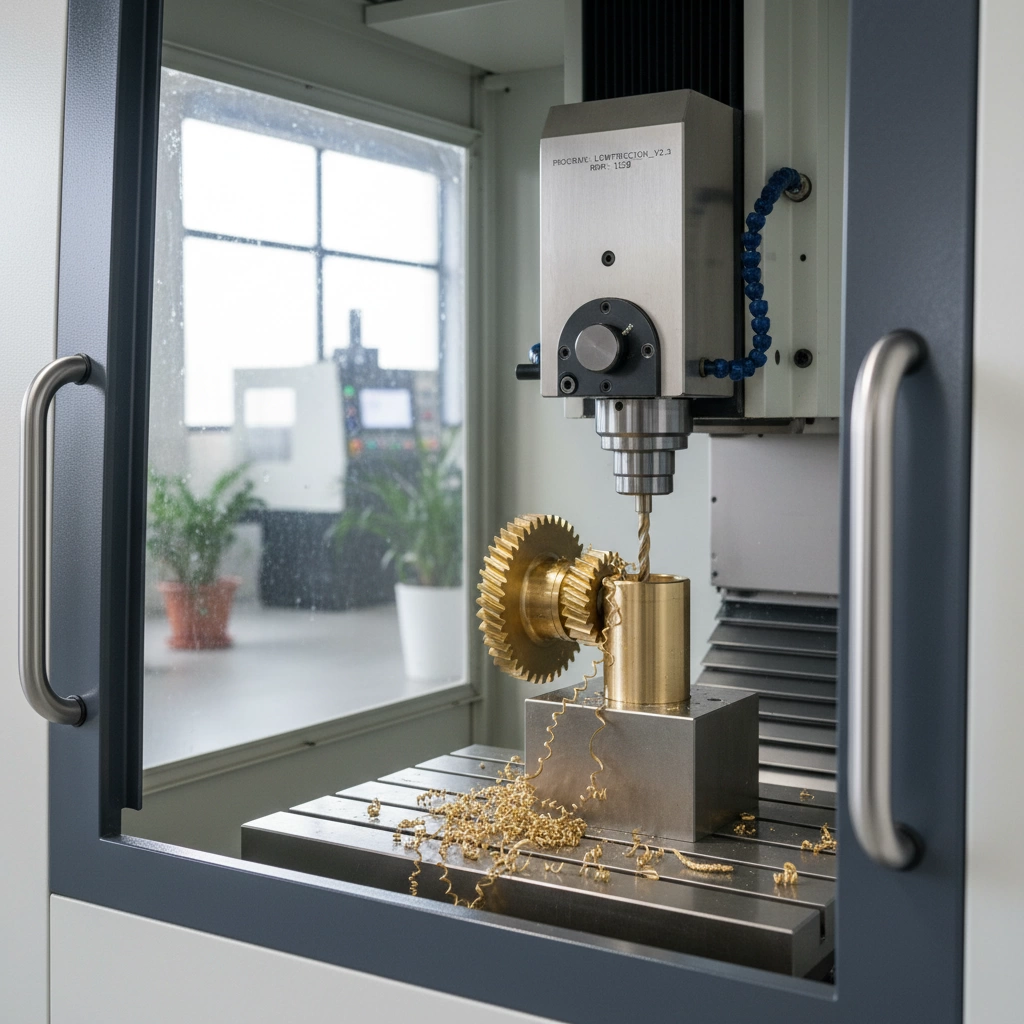
Key Advantages of Brass in Gear and Bushing Manufacturing
When sourcing materials for high-performance industrial components, brass stands out as a premier choice. For parts that demand continuous motion and reliability, brass delivers an unmatched combination of workability and durability in precision manufacturing.
Exceptional Machinability and Faster Production Cycles
Brass is renowned for its high machinability, making it an ideal material for creating complex gears and bushings.
- Faster Machining Cycles: Highly efficient material removal during CNC milling and turning significantly accelerates production timelines.
- Tight Tolerances: The predictable behavior of brass during the machining process allows for the exact specifications vital for custom machined parts.
- Tool Longevity: The softness of brass results in reduced wear on cutting tools, lowering overall manufacturing costs and minimizing downtime.
Natural Lubricity for Self-Lubricating Bearings
In mechanical systems, friction rapidly degrades moving parts. Brass offers intrinsic surface properties that directly combat this wear.
- Inherent Slickness: The natural lubricity of brass reduces the strict dependence on heavy, continuous external lubrication.
- High Wear Resistance: A lower friction coefficient means machined gears and bushings last longer, performing reliably inside demanding industrial machinery.
- Smooth Operation: Brass prevents the binding, galling, or seizing that frequently leads to catastrophic equipment failure in metal-on-metal applications.
Superior Dimensional Stability and Corrosion Resistance
Industrial environments are unforgiving, requiring materials that will not deform, expand, or degrade under operational stress.
- Dimensional Stability: Brass holds its precise shape under heavy mechanical loads, ensuring gears and bushings maintain perfect alignment over their operational life.
- Corrosion Resistance: The alloy naturally resists rust and degradation caused by moisture or harsh lubricants, making it highly reliable in exposed or fluid-heavy environments.
- Thermal Conductivity: Excellent heat dissipation prevents localized overheating and thermal expansion, further extending the lifecycle of your critical mechanical components.
Best Brass and Bronze Alloys for Industrial Bushings
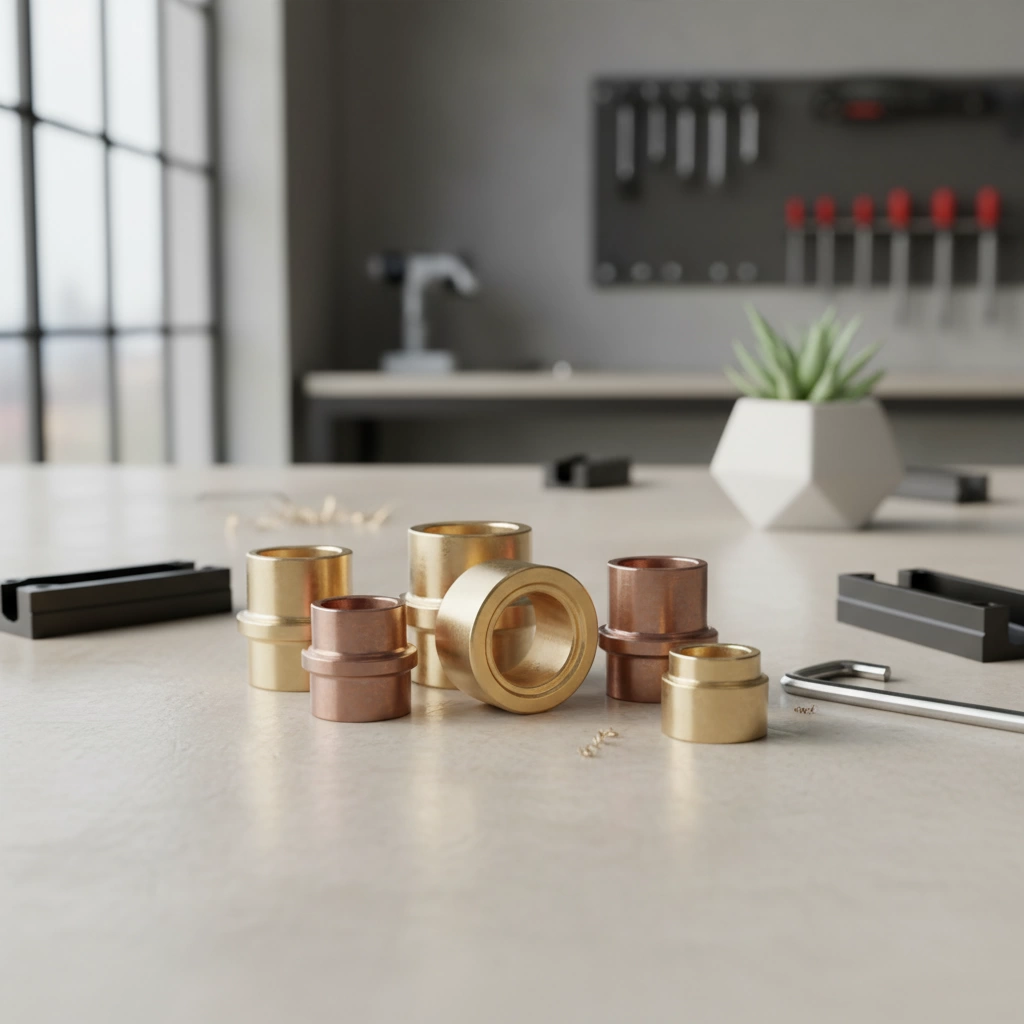
When handling brass gear and bushing CNC machining for low-friction industrial applications, the material you choose makes or breaks the project. We rely on a select group of metals to ensure superior wear resistance and reliable dimensional stability for global manufacturing demands.
C360 Free-Cutting Brass for Tight Tolerances
C360 is our absolute favorite for precision manufacturing. Because it offers incredibly high machinability, it allows us to hit tight tolerances consistently without wearing down our tools.
- Faster machining cycles: Drastically cuts down your production time and costs.
- Perfect for precise specs: Ideal when your custom machined parts require exact, repeatable dimensions.
- Reliable foundation: Selecting standard brass materials for CNC machining like C360 guarantees a flawless surface finish right off the machine.
C260 Cartridge Brass for High-Strength Parts
If your moving parts face heavier stress, C260 is the better option. It sacrifices a tiny bit of machinability for a massive boost in structural strength. We use this specifically for heavy industrial machinery where parts need to resist mechanical deformation while still maintaining excellent corrosion resistance.
Comparing Brass vs. Bronze (C932) Bushings
How do standard brass alloys compare to a dedicated bearing bronze like C932 (commonly known as SAE 660)? Knowing the difference prevents premature part failure on the assembly line.
| Feature | C360 Brass | C932 Bronze (SAE 660) |
|---|---|---|
| Best Application | High-speed, light-load components | Heavy-duty, high-load bearings |
| Wear Resistance | Good | Excellent |
| Friction Control | Low friction for fast movement | Natural self-lubricating properties |
| Machinability | Outstanding | Very Good |
For everyday industrial components, brass keeps costs down and speeds up your production line. But when you are dealing with heavy loads and constant friction, upgrading to SAE 660 bearing bronze is the smartest investment for long-term durability.
Critical CNC Machining Parameters for Brass Components
When executing brass gear and bushing CNC machining for low-friction industrial applications, getting the machine settings right is everything. Precision manufacturing relies on dialing in the exact parameters to maintain tight tolerances and ensure moving parts function flawlessly in industrial machinery.
Optimizing Cutting Speeds and Feed Rates
Brass is famous for its high machinability. This natural advantage allows us to push for faster machining cycles without sacrificing quality. For custom machined parts, we typically keep cutting speeds high and feed rates moderate. This optimal balance prevents material tearing and ensures strict dimensional stability.
| Machining Operation | Cutting Speed (SFM) | Feed Rate (IPR) |
|---|---|---|
| CNC Turning | 500 – 800 | 0.002 – 0.015 |
| CNC Milling | 400 – 700 | 0.002 – 0.010 |
Tool Selection and Wear Reduction Strategies
Even though brass is relatively soft, choosing the right cutting tools is crucial for consistent production. We rely on uncoated carbide tools because they stay sharp and resist edge build-up. Keeping tools sharp is our best defense against poor tolerances. If you are comparing material behavior, understanding how aluminum vs brass vs stainless steel machine differently can show you why brass tool wear is significantly lower, ultimately saving money on industrial components.
- Tool Material: Use uncoated, polished solid carbide for the cleanest cuts.
- Rake Angle: Apply a zero or slightly negative rake angle to prevent the tool from digging into the brass.
- Clearance Angle: Keep clearance angles generous to avoid rubbing and minimize heat buildup.
Coolant and Lubrication Setup for Optimal Surface Finish
Excellent surface finishing is non-negotiable for low-friction mechanical components. While brass can frequently be machined dry, we use light cutting fluids or water-soluble coolants for high-precision jobs.
- Chip Evacuation: High-pressure coolant flushes away small brass chips instantly, preventing recutting.
- Temperature Control: Keeps the cutting zone cool, which is vital for maintaining dimensional accuracy during long production runs.
- Smooth Finish: Provides the necessary lubrication to achieve the mirror-like finishes required for low-friction gear and bushing surfaces.
Surface Finishes to Enhance Low-Friction Performance
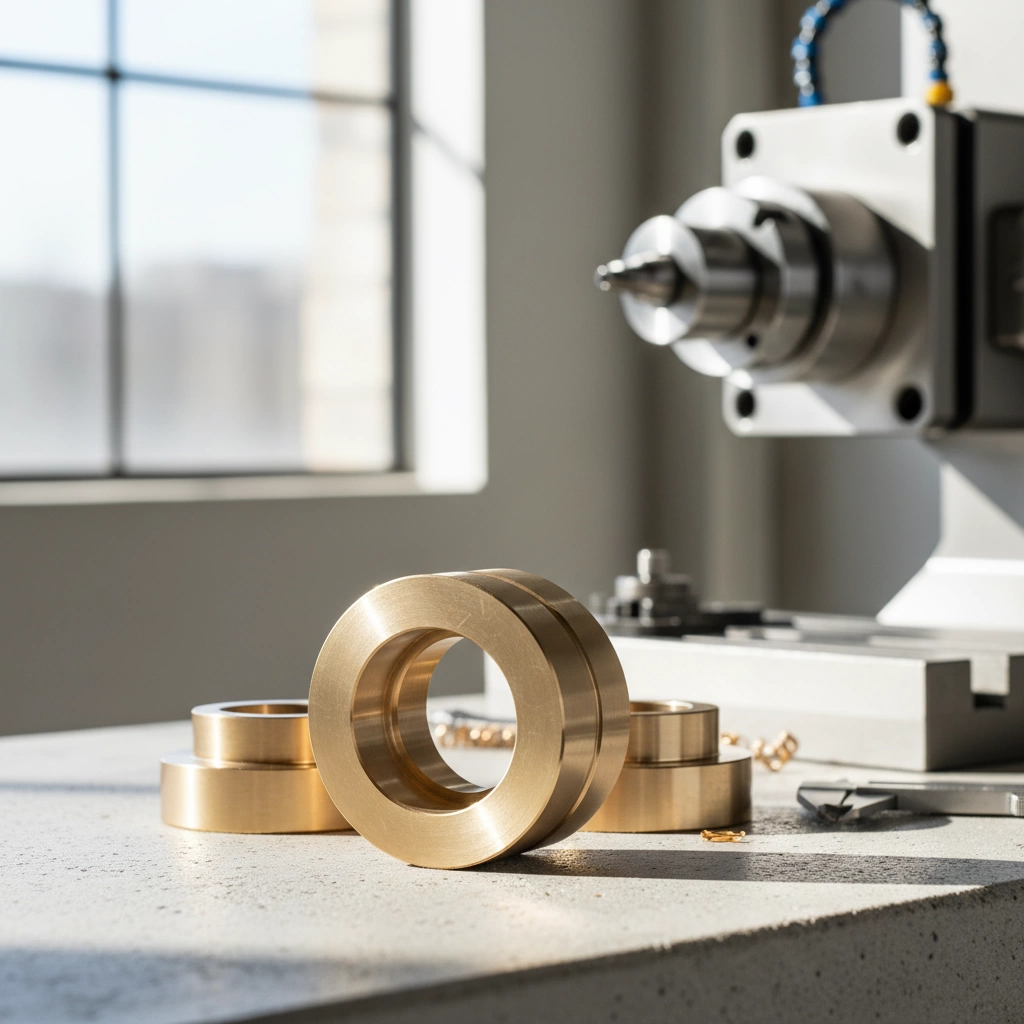
When we handle brass gear and bushing CNC machining for low-friction industrial applications, getting the dimensions right is only half the job. To maximize the lifespan of moving parts, applying the correct surface finishing is non-negotiable. A proper finish dramatically increases wear resistance and ensures your industrial components run efficiently under load. If you are unsure about the specific finishing requirements for your project, reviewing a comprehensive manufacturing FAQ can help clarify which treatments align best with your operational goals.
Honing and Polishing for Smooth Operation
For precision manufacturing requiring tight tolerances, raw machining marks simply will not cut it. We rely on honing and polishing to drastically reduce surface friction and prevent premature wear.
- Honing: Creates a highly precise, micro-cross-hatched pattern on the metal surface. This texture is specifically designed to trap and hold lubrication, making it ideal for continuous operation.
- Polishing: Buffs out microscopic peaks and valleys, leaving a mirror-like finish. This minimizes metal-on-metal friction and ensures smooth mechanical action.
Electroplating and Coating Options
While brass naturally offers great lubricity, demanding environments often require an extra layer of protection. We apply targeted coatings to boost surface hardness and push friction levels even lower.
| Finish Type | Primary Benefit | Best For |
|---|---|---|
| Electroless Nickel | Exceptional wear resistance and uniform thickness | High-load industrial machinery and gears |
| PTFE Coating | Ultimate low-friction, non-stick surface | Dry-running or self-lubricating bushing systems |
| Hard Chrome | Extreme surface hardness and scratch prevention | Components consistently exposed to abrasives |
Common Industrial Applications for Machined Brass Gears
Our approach to brass gear and bushing CNC machining for low-friction industrial applications delivers parts that keep global industries moving. We focus on precision manufacturing to produce reliable custom machined parts that perform across various demanding environments.
Power Transmission and Mechanical Systems
Mechanical components rely on consistent, smooth motion to prevent system failure. Brass gears are the standard for power transmission setups where low friction is non-negotiable.
- Moving Parts: Natural lubricity ensures quiet, efficient operation.
- Wear Resistance: Extends the working life of critical industrial components, reducing maintenance downtime.
- Precision Fit: We hold tight tolerances to guarantee flawless mesh in complex gearboxes.
Heavy Machinery and Fluid Control Equipment
Harsh environments require materials that don’t degrade under stress. Heavy industrial machinery, pumps, and fluid control valves depend on the physical properties of brass to function safely over time.
- Corrosion Resistance: Stands up against water, oils, and harsh industrial fluids without rusting.
- Dimensional Stability: Maintains its shape and structural integrity even under fluctuating pressures.
Electrical and Electronic Hardware Integration
Because brass offers excellent electrical conductivity alongside its mechanical strength, we frequently machine gears and bushings that integrate directly into sensitive tech hardware, motors, and switchgear. Proper material choice is critical here. By leveraging optimized brass CNC machining for electrical and electronic components, we ensure your parts provide both the structural support and the conductive properties required for modern electronic assemblies.
 English
  German
  Dutch
Dutch  Russian
  Czech
Czech  French
  Korean
  Japanese
  Spanish
  Portuguese
Reviews
There are no reviews yet.