

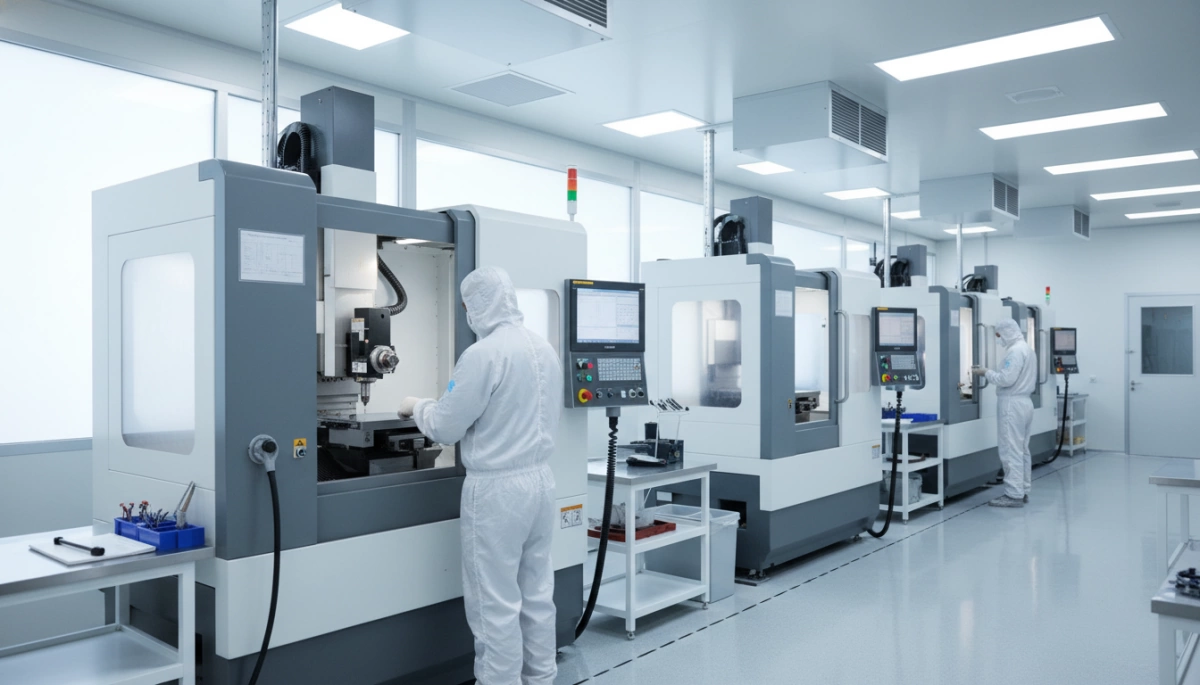
If you’re designing parts for industrial automation CNC machining, getting reliability right isn’t optional — it’s critical. The tiniest design oversight can cause downtime or costly failures in automated systems. In this guide, you’ll discover practical design tips for reliable parts that consider real-world machining constraints and system demands. From managing tight tolerances and wall thickness to selecting materials and finishes that stand up to rugged use, this is your go-to resource for creating CNC milled components that keep automation running smoothly. Ready to elevate your designs and reduce costly errors? Let’s dive in.
Introduction to CNC Machining for Industrial Automation
The Role of CNC Milled Parts in Automation
CNC milled parts are fundamental components in industrial automation systems. Precision CNC machining delivers micron-level accuracy essential for the seamless operation of robotics, conveyor systems, and automated assembly lines. Custom parts fabricated with advanced milling, turning, and multi-axis technologies ensure reliable mechanical function and long-term structural integrity. These precise components enable complex motion, tight fits, and durable connections critical in automation hardware.
Key Requirements for Reliable Automation Systems
Reliable automation requires parts that consistently meet tight tolerances and dimensional stability under operational stresses. Key requirements include:
- Micron-level accuracy to maintain system repeatability
- Material strength and wear resistance to withstand continuous use
- Surface finish quality to reduce friction and prevent contamination
- Compatibility with assembly processes for streamlined production
- Repeatability across small batch and volume runs for flexibility
Achieving these depends on disciplined design aligned with CNC machining capabilities and quality control standards such as ISO 9001 certification. This foundation supports industrial automation systems built for both performance and longevity.
Understanding CNC Machining Restrictions
Tool Geometry and Cutting Constraints
CNC machining is powerful but bound by the physical limits of cutting tools. Tool geometry—such as diameter, length, and shape—dictates the minimum feature size and achievable detail. Deep pockets or narrow slots require smaller tools, which can increase machining time and cost. Overly complex shapes may cause tool deflection or wear, impacting part accuracy and surface finish. Recognizing these constraints early helps in designing parts that maintain micron-level precision without causing manufacturing delays or defects.
Tool Access and Part Orientation
Proper tool access is essential to ensure every feature is reachable during machining. Complex parts often require multiple setups or orientations to expose hidden surfaces. Designing parts with clear tool paths in mind reduces the need for excessive repositioning, cutting lead times and costs. Orientation also affects fixture design and rigidity during machining, directly impacting dimensional stability. Balancing design complexity with practical access considerations is key to reliable, repeatable production of industrial automation components, especially when leveraging advanced options like 5-axis CNC machining.
For detailed turning needs, precision CNC lathe services optimize tool access for cylindrical parts through advanced live tooling and multi-axis capabilities. This approach ensures both complex geometries and tight tolerances are consistently achieved. Find out more about our dedicated CNC turning services for precision shafts and components here.
Core Design Guidelines for Reliable Parts
Managing General and Tight Tolerances
Balancing tolerances is critical for reliable automation parts. General tolerances should be as loose as possible without sacrificing function to reduce machining costs and improve yield. For features requiring precision, tight tolerances down to micron-level can be achieved using advanced techniques like 5-axis CNC machining and Swiss turning. Maintaining realistic tolerances that match the manufacturing capabilities avoids rework and assembly issues.
Optimizing Wall Thickness and Cavities
Uniform wall thickness helps prevent warping and reduces stress concentrations in metal and plastic parts. Thin walls save weight but may compromise strength or rigidity, so design with machining limits in mind. Cavities and pockets should have accessible depths and rounded corners to minimize tool wear and improve finishing quality. Gradual thickness transitions improve structural resilience and avoid distortion.
Designing Internal Edges and Radii
Sharp internal corners increase stress concentration and reduce tool life. Incorporating radii or fillets on internal edges enhances part durability and prevents cracks. Radii also facilitate easier tool access and smoother machining paths, accelerating production without sacrificing quality. Consistent corner radii simplify tooling setups and inspection.
Best Practices for Holes and Threads
Proper hole placement and sizing ensure consistent fit and alignment in assemblies. Avoid placing holes too close to edges or tight clusters to prevent material weakening. Threads should follow standard dimensions suitable for the machining process, with allowances for tapping or thread milling. When possible, design holes for standard tooling and avoid deep or small diameter holes that increase lead time and cost. Leveraging expertise in hole tolerances and threading options streamlines production and improves function.
For complex geometries requiring tight tolerances and multi-axis work, leveraging precision 5-axis CNC machining ensures accuracy and reliability, as outlined in our detailed 5-axis CNC machining solutions.
Material Selection and Surface Finishes
Common Metal Alloys for Industrial Parts
Selecting the right metal alloy is crucial for durable, reliable industrial automation parts. Aluminum offers excellent strength-to-weight ratio and corrosion resistance, making it ideal for structural components. Stainless steel provides superior wear resistance and toughness, suited for rugged environments. Titanium stands out for its high strength and lightweight properties where weight reduction matters. Other options like brass deliver good machinability and electrical conductivity for specialized applications. Understanding the mechanical demands guides alloy choice to match stiffness, thermal stability, and environmental exposure.
Factoring Material Machinability
Machinability directly impacts manufacturing efficiency and part accuracy. Materials like aluminum and brass typically machine faster with less tool wear, enabling faster turnaround on prototypes or small batches. Stainless steel and titanium require optimized tool paths and cutting parameters due to their toughness and heat resistance. Considering machinability early helps balance production costs, tool life, and dimensional precision. Partnering with a CNC shop skilled in handling various alloys—for example, those with expertise in complex stainless parts—is essential for optimal outcomes.
Choosing Durable Surface Finishes
Surface finish affects part longevity, corrosion resistance, friction, and aesthetics in automation systems. Common finishes include anodizing for aluminum, passivation for stainless steel, and plating or polishing depending on application needs. Selecting the right finish improves wear resistance and prevents contamination or material degradation in harsh environments. Integrating finishing processes into the manufacturing flow ensures seamless quality control and reduces total lead times. For precision metal components requiring detailed cuts or profiles, advanced options like precise laser cutting can also enhance surface integrity and dimensional control.
For intricate metal parts with complex contours, leveraging advanced 5-axis machining techniques paired with suitable surface treatments ensures exceptional durability and performance.
Advanced Strategies for Complex Automation Components
3-Axis vs. 5-Axis CNC Machining
Choosing between 3-axis and 5-axis CNC machining is critical for producing complex automation parts efficiently. While 3-axis machines excel at straightforward cuts and simpler geometries, 5-axis machining offers far greater flexibility by allowing simultaneous multi-directional tool movement. This capability enables the creation of intricate features, undercuts, and tight tolerances in a single setup, reducing secondary operations and improving part accuracy. For highly detailed automation components, investing in 5-axis machining often leads to better surface finishes and reduced lead times.
Utilizing CAD and CAM Software Simulation
Leveraging advanced CAD and CAM software plays a key role in designing reliable CNC parts. Simulations help identify potential tool collisions, optimize tool paths, and predict machining times before production starts. This reduces costly errors and ensures manufacturability. Using CAM software also aids in selecting the best tooling strategy and feed rates, which supports consistent quality and maximizes machine efficiency. Simulation-driven workflows aid in refining designs to meet stringent precision and repeatability demands needed in industrial automation.
Implementing Rigid Workholding Solutions
Stable and rigid workholding is essential for machining complex automation parts with precision. Secure clamping minimizes vibration and part movement, which directly impacts dimensional accuracy and surface finish. Custom fixtures or modular workholding systems should be designed to support multi-axis machining without compromising tool access. Proper workholding reduces tool wear and cycle time while safeguarding part integrity—especially for thin walls or delicate features. This strategy ensures consistent output critical to dependable automation hardware.
For manufacturing high-speed, quality parts tailored for demanding automation, combining advanced machining techniques with precision software and robust fixturing is vital. These strategies enhance productivity, reliability, and overall component performance. For more on high-speed production with tailored metal alloys, see our guide on freecutting brass CNC machining.
Design for Manufacturability (DFM) and Cost Reduction
Minimizing Overhangs and Undercuts
Design parts to reduce overhangs and undercuts that complicate CNC machining. These features often require special tooling or secondary operations, increasing cost and lead time. Simplifying geometries improves tool access and machining efficiency, enabling faster turnaround and more consistent quality.
Avoiding Common CNC Design Pitfalls
Steer clear of extremely thin walls, sharp internal corners, and excessively tight tolerances beyond machine capabilities. These often cause machining difficulties, increased scrap rates, and higher costs. Plan for realistic tolerances aligned with 5-axis or Swiss machining capabilities to balance precision and manufacturability.
Prototyping and Iteration for Reliability
Leverage prototyping to validate designs before full production, especially with complex automation parts. Rapid prototyping helps identify machining challenges early, supporting quick revisions and reducing risk. This approach aligns perfectly with our experience delivering customized parts through flexible batch sizes and fast 7-day production cycles, ensuring reliable outcomes for industrial automation systems.
For precise brass components used in automation, consider materials like free-cutting brass alloys to optimize production speed without sacrificing quality. More on optimizing metal choices and finishing can be found in our detailed secondary finishing services and custom CNC machining for automation offerings.
 English
  German
  Dutch
Dutch  Russian
  Czech
Czech  French
  Japanese
  Spanish
  Portuguese
  Korean