
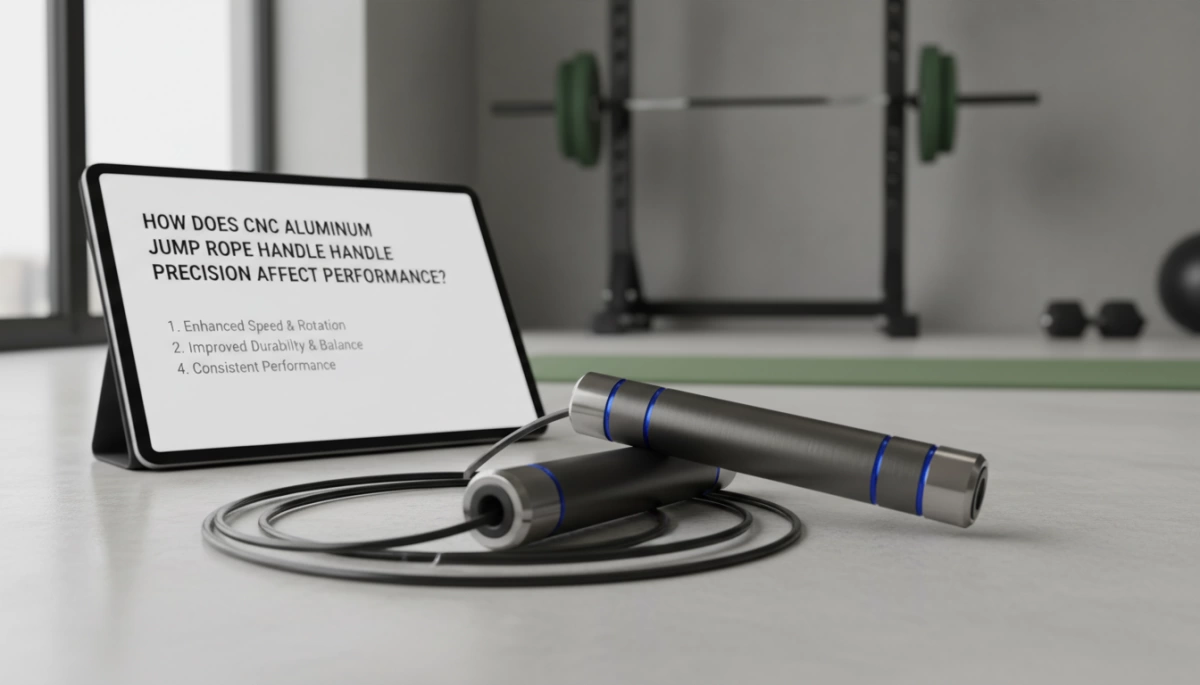
The Physics of Speed: Tolerance and Bearing Fit
When we talk about high-performance jump ropes, specifically those designed for competitive speed or CrossFit double-unders, the conversation often starts with the cable but ends with the handle. As a manufacturer, I see firsthand that the difference between a world-class rope and a mediocre one lies in the microscopic details of the handle housing.
The Critical Interface
The most vital component of an aluminum handle isn't the grip on the outside; it's the internal cavity that houses the ball bearing. This interface dictates the entire rotation mechanism. If the bearing doesn't sit perfectly, the rope cannot spin freely.
In our CNC turning centers, we treat this housing like an aerospace component. The relationship between the aluminum wall and the steel bearing outer race must be exact. Even a deviation of a few microns changes the physics of the rotation.
The "Press Fit" Challenge
Achieving the perfect fit is a balancing act that mass-production casting methods simply cannot master. We constantly navigate two extremes:
- Loose Tolerances (The Wobble): If the machined cavity is even slightly too large, the bearing shifts during rotation. This creates "wobble," which bleeds kinetic energy. The athlete feels this as vibration or lag, breaking their rhythm.
- Tight Tolerances (The Freeze): Conversely, if the cavity is too small, pressing the bearing in compresses its outer race. This squeezes the internal balls, increasing rolling resistance and friction. The result is a sluggish spin that fatigues the athlete's wrists.
The CNC Advantage
This is where precision CNC machining separates professional gear from toy-grade equipment. Unlike die-casting, which suffers from material shrinkage and inconsistencies, our CNC process allows us to hit specific ISO tolerance classes, such as H7/g6 fits.
By using computer-controlled turning and milling, we ensure:
- Perfect Concentricity: The bearing axis aligns perfectly with the handle axis.
- Consistent Interference: The bearing is held securely without deforming.
- Effortless RPM: The system allows for maximum rotational speed with minimal input force.
At Zhansong, we leverage our micron-level accuracy to ensure that every handle coming off the line supports the effortless, high-RPM spins required by elite athletes.
Material Mastery: Why 6061 Aluminum is the Standard
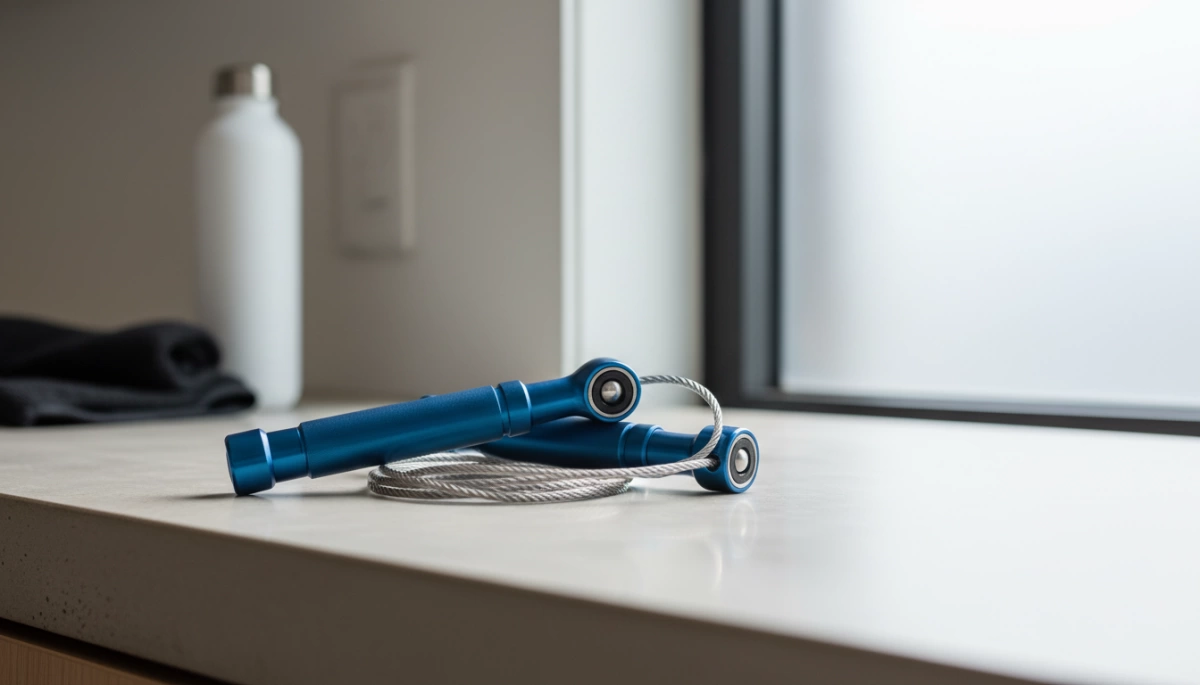
In the world of precision manufacturing, material selection dictates performance. For professional jump rope handles, 6061 Aluminum has emerged as the undisputed standard. While we process various metals at our Shanghai facility, this specific alloy hits the "sweet spot" for athletic equipment, balancing machinability with physical properties that directly benefit the athlete.
Strength-to-Weight Ratio
The primary reason we utilize 6061 aluminum alloy machining for handles is the exceptional strength-to-weight ratio. Steel handles are often too heavy, causing rapid wrist fatigue during endurance sets. Conversely, plastic handles are often too light, failing to provide the necessary tactile feedback an athlete needs to know exactly where the rope is in its rotation.
Aluminum offers a substantial feel without the weight penalty. This balance allows for high-speed "double-unders" where the user maintains control without fighting the equipment's mass.
Rigidity Transfer
Performance is about energy efficiency. When a user flicks their wrist, that energy must travel instantly to the cable.
- Plastic: Often suffers from flex or "give," which dampens the energy transfer, creating a lag.
- Aluminum: Is rigid. It transfers kinetic energy directly from the hand to the bearing system with zero loss.
This rigidity ensures that the rotational inertia is generated by the cable, not wasted on bending the handle. For manufacturers, understanding the difference between Swiss machining and conventional lathe turning is crucial here; precise turning ensures the wall thickness is consistent, maintaining that rigidity throughout the entire length of the handle.
Durability Factors
Gym environments are harsh. Equipment gets dropped on concrete floors, tossed into gym bags, and stepped on.
- Impact Resistance: Unlike cast plastic which can crack or shatter upon impact, 6061 aluminum might dent under extreme force but will rarely fail structurally.
- Surface Finish: Aluminum handles accept anodized aluminum surface finishes exceptionally well. This not only allows for vibrant branding colors but also adds a hard, protective layer that resists corrosion from sweat and prevents the knurling from wearing down over time.
By sticking to ISO 9001 certified material sourcing, we ensure that every batch of aluminum meets these durability standards, preventing the inconsistencies often found in cheaper, mixed-metal castings.
Ergonomics and Grip: The Role of Surface Machining
Precision isn't just about how the bearing spins; it's about how the handle connects with the athlete. In high-performance sports, the interface between hand and hardware determines control. Through advanced CNC techniques, we transform raw aluminum stock into ergonomic tools that feel like a natural extension of the arm.
Knurling Precision for Superior Control
Grip failure during a high-intensity workout is not an option. Unlike molded plastic handles that rely on slippery textures or rubber sleeves that degrade, CNC machining allows us to cut grip patterns directly into the metal. Using precision turning centers, we create diamond or spiral CNC knurling patterns that provide aggressive traction without tearing up the hands. This mechanical grip remains consistent even when sweat becomes a factor, ensuring the handle stays secure during rapid double-unders.
Complex Geometries via 5-Axis Machining
The human hand isn't a straight line, so a high-end handle shouldn't be a simple cylinder. We utilize 5-axis CNC machining services for complex aluminum parts to produce tapered, ergonomic designs that fit the natural curve of the palm. This multi-axis approach allows us to machine organic shapes and contours in a single setup. By contouring the handle to match anatomical mechanics, we reduce grip fatigue, allowing athletes to train longer with better form.
Engineered Balance Points
A handle's performance relies heavily on where its weight is concentrated. If a handle is too heavy at the back, it drags; too heavy at the front, and it feels unstable. Through precise material removal, we can dictate the exact center of gravity. We program our machines to bore out internal sections to specific depths, shifting the balance point to the optimal location for rotational inertia. This level of customization—often validated through rapid prototyping—ensures the handle pivots effortlessly around the bearing axis.
Consistency: The Hidden Performance Metric
The "Left vs. Right" Problem
In high-performance training, balance is everything. If one handle weighs even a fraction of a gram more than the other, it creates a subtle drag that throws off an athlete's timing during double-unders. This is the "Left vs. Right" problem. Unlike cast parts, which often suffer from inconsistent density or internal voids, CNC Aluminum Jump Rope Handle Precision ensures that every handle is a perfect mirror image of its partner. By removing material with micron-level accuracy, we guarantee identical weight distribution in both hands, preventing muscle imbalances and fatigue.
Batch Consistency and Automation
For fitness brands, the challenge isn't just making one perfect handle; it's making thousands. We utilize automated CNC centers to ensure that the 1,000th unit coming off the production line is geometrically identical to the first prototype. This repeatability is vital for maintaining brand reputation. Whether it is a small batch customization or large-scale manufacturing, our automated processes eliminate the variance found in manual machining or molding, delivering a uniform product every time.
Quality Control via CMM Inspection
Precision is nothing without verification. To guarantee that every handle meets the required H7 or g6 fits for bearings, we rely on rigorous inspection protocols. Our facility operates under ISO 9001 standards, employing Coordinate Measuring Machines (CMM) to validate critical dimensions. This ensures that the specific aluminum alloy properties—like rigidity and weight—are fully optimized in the final product. We provide full traceability documentation, ensuring that the performance specs promised in the design phase are exactly what the athlete experiences in the gym.
Case Study: Precision in Speed Ropes vs. Weighted Ropes
When we manufacture handles for different fitness disciplines, the machining strategy changes drastically based on the end-use. Whether it's for high-velocity CrossFit competitions or strength-building workouts, the internal geometry of the handle dictates performance.
Speed Ropes: Lightweighting Without Failure
For speed ropes, the goal is minimizing rotational inertia. We use precision CNC turning to shave down the wall thickness of 6061 aluminum handles to the absolute minimum required for structural integrity.
This process, often called "lightweighting," is risky without high-end equipment. If the wall is too thin or uneven due to poor tolerance control, the handle can crack under the stress of high-speed impact. Our micron-level accuracy ensures that even with ultra-thin walls, the handle remains durable and perfectly balanced for double-unders.
Weighted Ropes: Secure Internal Cavities
Weighted ropes present a different challenge: internal stability. These handles require deep internal boring to house steel weights. If the internal cavity is even slightly too large, the weight will shift and rattle during rotation, throwing off the athlete's rhythm.
We utilize advanced boring and turning techniques to create a snug, interference-free fit for these inserts. This ensures the added mass feels like a solid extension of the handle, not a loose component. By maintaining strict aluminum CNC machining tolerances, we guarantee that weighted handles provide consistent feedback without the distraction of mechanical noise or vibration.
FAQ: Common Questions About CNC Aluminum Jump Rope Handles
Does the weight of the aluminum handle affect rotation speed?
Yes, absolutely. While the cable does the spinning, the handle's inertia plays a huge role in control. A handle that is too heavy causes wrist fatigue, slowing you down over time. One that is too light offers zero feedback, making it hard to time your jumps. By using CNC turning to remove excess material from the core, we can dial in the exact weight needed for optimal rotational inertia. This balance allows for faster, more consistent double-unders without the drag associated with solid metal bars.
How does CNC precision extend the life of jump rope bearings?
It all comes down to the fit. In cheap manufacturing, the bearing housing might be slightly oval or too tight. This forces the bearing to compress, increasing friction and heat, which kills the bearing quickly. Our micron-level tolerance machining ensures the bearing seat is perfectly round and sized to exact ISO specifications (like H7 fits). This precision allows the bearing to spin freely without axial load stress, significantly extending the lifespan of the equipment even under high-RPM use.
Why is 6061 aluminum better than plastic for professional jump ropes?
Plastic handles often flex under tension, especially during high-speed movements. This flex absorbs energy that should be going into the cable rotation. 6061 aluminum alloy machining provides a rigid structure that transfers energy efficiently from your wrist directly to the rope. Additionally, aluminum is far more durable. Plastic cracks when dropped on concrete gym floors; aluminum might scratch, but it won't shatter. For brands looking for quality, CNC machining services in China for European buyers offer a cost-effective way to access this level of material durability compared to molded plastics.
Can CNC machining create custom grip patterns for different athletes?
Definitely. Unlike casting or molding, which requires expensive tooling changes to alter a texture, CNC milling allows us to program virtually any grip pattern. We can cut deep diamond knurling for maximum sweat resistance or spiral grooves for a smoother tactile feel. This flexibility is perfect for small batch customization, allowing fitness brands to prototype different ergonomics rapidly. Whether you need an aggressive grip for CrossFit or a subtle texture for speed training, our 5-axis capabilities make it possible to tailor the surface finish to specific athlete needs.
 English
  German
  Dutch
Dutch  Russian
  Czech
Czech  French
  Korean
  Japanese
  Spanish
  Portuguese