
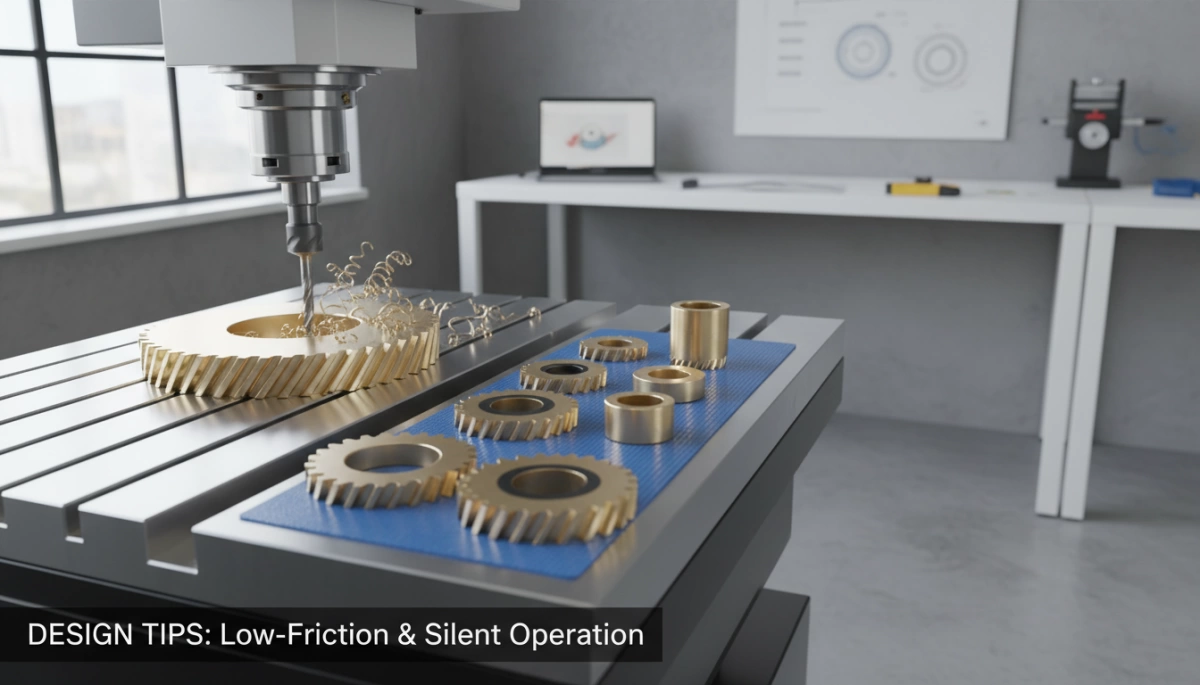
Key Properties of Brass for Low-Friction Components
Brass is a premier material choice for manufacturing precision mechanical parts. When engineering CNC machining brass gears and bushings, leveraging the inherent mechanical advantages of brass alloys guarantees long-lasting, highly efficient performance.
Natural Lubricity and High Wear Resistance
The elemental composition of brass provides an exceptionally low friction coefficient. This natural lubricity prevents galling and ensures smooth operation across high-cycle mechanical applications.
- Self-Lubricating Interface: Brass minimizes metal-on-metal friction without requiring heavy external lubrication, making it the industry standard for supporting rotating shafts.
- Superior Wear Protection: The material actively resists surface degradation under continuous load, extending the functional lifespan of precision-machined components.
- Thermal Stability: Excellent heat dissipation pulls thermal energy away from high-friction contact points, preventing thermal expansion and preserving strict dimensional tolerances.
Acoustic Dampening for Silent Operation
Noise reduction is a critical requirement in premium mechanical assemblies. Brass inherently absorbs operational vibrations, translating raw mechanical motion into completely silent operation.
- Vibration Absorption: The specific density and elasticity of brass neutralize high-frequency micro-vibrations before they amplify into audible chatter.
- Smooth Gear Meshing: Custom gear machining in brass ensures engineered tooth profiles glide seamlessly together, eliminating the harsh grinding sounds characteristic of harder steel alloys.
- Quiet Interface Dynamics: Brass bushings maintain a stable, noise-free boundary layer. This makes them perfectly suited for environments requiring whisper-quiet functionality, such as consumer electronics, medical devices, and precision robotics.
Choosing the Right Brass Alloys for Machining
Selecting the best material is the absolute foundation of any successful project. When CNC machining brass gears and bushings, the specific alloy you choose directly impacts the final friction coefficient, how well it manages tool wear during production, and the component's ultimate lifespan.
Popular Brass Grades for Gears and Bushings
We rely on a few standout brass alloys that consistently deliver top-tier results in precision machining:
- C360 (Free-Machining Brass): The industry standard. Its high lead content ensures excellent chip formation and minimal tool adhesion. It is the absolute go-to choice for cost-effective manufacturing of standard gears and light-duty bushings.
- C353 (Leaded Clock Brass): When we handle intricate custom gear machining that requires tiny, precise tooth geometry, C353 is unbeatable. It machines incredibly cleanly, virtually eliminating burr formation on delicate gear teeth.
- C464 (Naval Brass): This grade offers superior wear protection and corrosion resistance. It is significantly tougher than C360, making it ideal for heavier loads and demanding conditions.
Matching Alloy Properties to Operating Environments
You cannot just pick a popular grade and hope for the best; the alloy's properties must perfectly align with its working environment.
- High-Friction Zones: For parts sliding constantly against steel components, we specify brass with a higher lead content to naturally reduce friction, mimicking the properties of self-lubricating rotating shafts.
- Corrosive or Heavy-Duty Environments: If the gears are exposed to moisture or heavy continuous loads, standard free-machining brass will fail prematurely. In these scenarios, upgrading to Naval brass or exploring heavy-duty bronze bushings is required.
- High-Performance Applications: When producing demanding parts like automotive prototypes for German and Benelux markets, we rigorously match the brass alloy's thermal and wear properties to the exact mechanical environment to guarantee silent, low-friction operation under stress.
CNC Machining Brass Gears and Bushings: Design Tips for Low-Friction and Silent Operation
When we design brass components, the ultimate goal is achieving a low friction coefficient and silent running. Smart design choices made before the metal ever hits the machine dictate the final performance of the part.
Optimizing Gear Tooth Geometry and Profile
The exact shape of the gear teeth determines how quietly the parts engage. We focus heavily on precise involute gear design to ensure smooth, continuous power transmission without the clatter.
- Standardized Pressure Angles: Keeping standard angles minimizes sliding friction during gear engagement.
- Profile Modifications: Making slight, calculated reliefs at the tooth tip prevents harsh impacts and significantly cuts down on operating noise.
- Surface Contact: Maximizing the rolling action over sliding action protects against premature tooth wear.
Designing Bushings for Proper Clearance and Lubrication
Bushings need exact breathing room. If the fit is too tight, they seize; if it is too loose, they rattle. Getting the clearance right is crucial for high-speed rotating shafts.
- Precision Internal Clearances: We calculate tolerances that allow for thermal expansion of the brass without causing shaft wobble.
- Lubrication Channels: Designing internal grooves helps distribute oils or greases evenly across the shaft, serving as essential wear protection.
- Leveraging Material Traits: While brass has natural self-lubricating properties, designing proper pathways maintains the hydrodynamic film needed for heavy loads.
Minimizing Contact Points and Material Waste
Efficient design reduces both friction and production costs. We want to eliminate unnecessary rubbing between moving parts while keeping material usage lean. When we map out our CNC machining services, optimizing the initial part geometry is always step one.
- Targeted Load Bearing: We design components so only the critical functional surfaces make contact, which instantly lowers the overall friction.
- Weight Reduction: Hollowing out non-critical areas saves on raw brass without sacrificing structural integrity.
- Cost-Effective Manufacturing: Streamlined, well-thought-out designs translate directly to faster machining times, less tool wear, and minimal material scrap.
CNC Machining Processes for Custom Brass Gears
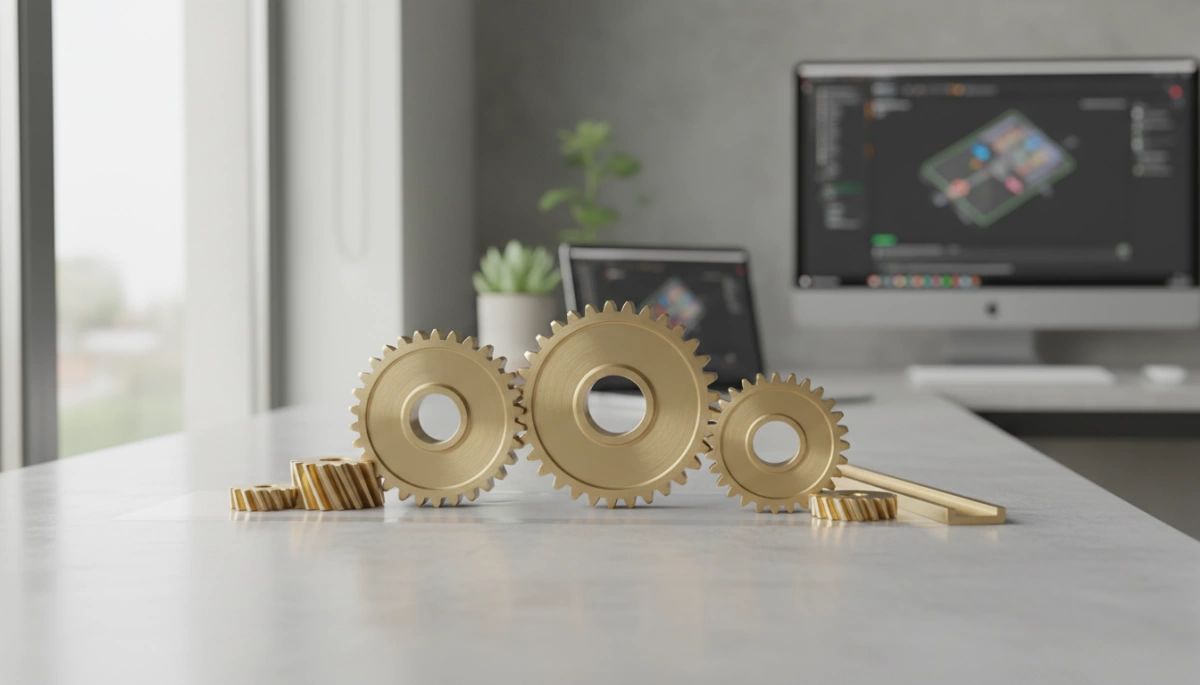
When we handle custom gear machining, getting the production process right is everything. Brass is highly machinable, but achieving truly low-friction and silent operation requires exact CNC techniques. Starting with top-tier metal materials lays the necessary foundation for high-performance rotating shafts and complex gear systems.
Primary Gear Cutting and Generation Techniques
The first step is establishing the basic shape perfectly. We rely on a few core methods for precise gear tooth generation:
- Gear Hobbing: Our primary choice for standard spur and helical gears. It is highly efficient and ideal for cost-effective manufacturing.
- CNC Milling: Perfect for specialized tooth geometry or small custom runs. We use precision end mills to carve out exact profiles.
- Shaping & Broaching: The best approach for internal gears or custom splines that connect directly to rotating shafts.
Nailing the involute gear design during this primary phase prevents meshing errors and significantly reduces friction.
Gear Tooth Refinement for Enhanced Accuracy
Cutting the teeth is only half the job. To guarantee quiet, smooth operation, we focus heavily on gear tooth refinement. Raw cuts often leave microscopic imperfections that create noise under load.
- Careful Deburring: We actively manage and minimize burr formation during the initial cut, following up with a strict deburring pass so no stray metal edges catch or grind.
- Precision Shaving: A secondary pass that shaves off minimal material to perfect the profile and create a superior surface finish.
- Burnishing: Rolling the gear against hardened dies compresses the brass surface, creating an ultra-smooth finish that naturally lowers the friction coefficient.
Properly choosing the right CNC material—specifically highly machinable brass—means these refinement steps yield a much smoother and more accurate final gear compared to working with harder metals.
Precision CNC Operations for Brass Bushings
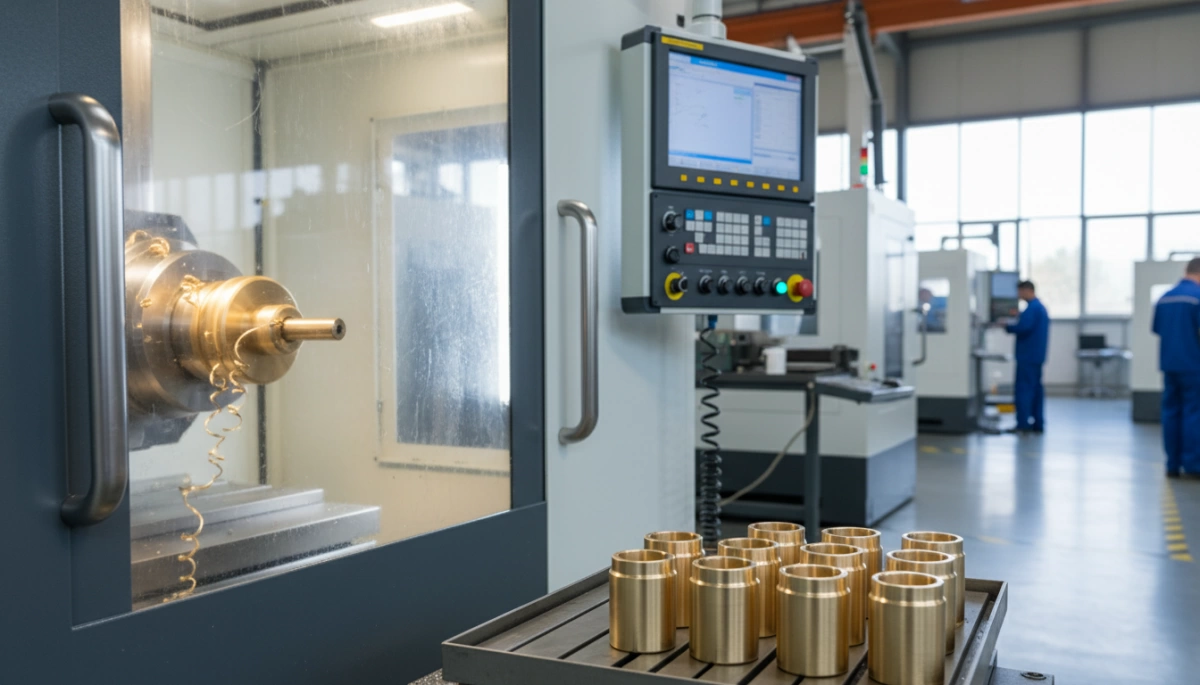
Producing reliable brass components requires a deep understanding of precision machining. When we manufacture bushings, our primary goal is to create a seamless environment for rotating shafts. Getting the dimensions exactly right is what guarantees low-friction movement and silent operation over the life of the part.
Turning and Boring Strategies for Internal Clearances
The internal diameter of a bushing does the heavy lifting. We have to machine this inner surface with exact clearances to allow for proper lubrication and maximum wear protection.
- Sharp boring tools: We use highly tuned boring bars to ensure clean cuts, which directly minimizes burr formation inside the cylinder.
- Managing chip formation: Brass chips easily, but clearing those chips quickly prevents them from scratching the freshly cut internal surface.
- Choosing the right equipment: Depending on the size of the brass alloys being cut and the volume of the order, we often evaluate our setup based on Swiss machining vs CNC lathes to find the most cost-effective manufacturing route.
Whether we are cutting standard brass or specialized copper bronze bushings, controlling these turning and boring strategies keeps the friction coefficient exactly where it needs to be.
Managing Tight Tolerances for Perfect Bushing Fits
A bushing that rattles is a bushing that fails. To achieve silent operation, the outside diameter must press perfectly into its housing, while the inside diameter must guide the shaft without binding. Our brass CNC machining services are built around holding these extremely tight tolerances.
To maintain perfect fits across a production run, we focus on a few core variables:
- Optimized speeds and feeds: We dial in our cutting parameters to reduce heat buildup, which prevents the brass from expanding and altering the final dimensions.
- Tool wear monitoring: Brass is generally easy to cut, but we continuously check for tool adhesion. Swapping out inserts before they dull ensures every bushing matches the exact geometry of the first one.
- Surface finishing: A smooth finish naturally lowers friction, allowing even self-lubricating setups to perform flawlessly under pressure.
Essential Machining Tips for High-Quality Brass Parts
Getting the best results when CNC machining brass gears and bushings requires the right setup. We rely on precision machining techniques to maintain tight tolerances and ensure flawless operation. For projects requiring specialized setups, our custom CNC machining services provide the exact capabilities needed for perfect execution.
Selecting Appropriate Cutting Tools for Brass
Brass is highly machinable, but improper tooling can easily lead to tool adhesion and poor surface finishes.
- Use Carbide Tools: Solid carbide end mills offer excellent durability and minimize tool wear over long production runs.
- Polished Flutes: Opt for tools with polished flutes. This improves chip formation and clears material out of the cutting zone quickly.
- Sharp Cutting Edges: Extremely sharp edges prevent material smearing and reduce burr formation during custom gear machining.
Optimizing Cutting Parameters and Speeds
Dialing in the right cutting parameters is essential for cost-effective manufacturing. Proper speeds and feeds prevent overheating and ensure a clean cut every time.
| Tool Material | Cutting Speed (SFM) | Feed Rate | Application focus |
|---|---|---|---|
| High-Speed Steel (HSS) | 200 - 400 | Medium | Basic roughing and short runs |
| Uncoated Carbide | 400 - 800 | High | Precision finishing |
| Coated Carbide | 500 - 1000+ | Very High | High-volume production |
Planning Efficient Tool Paths
Smart tool paths reduce cycle times and drastically improve the final quality of your brass components.
- Climb Milling: We always utilize climb milling where possible. It pushes the cutting forces downward, resulting in a superior surface finish and less strain on the tool.
- Consistent Tool Engagement: Maintain a constant radial engagement. This prevents sudden spikes in cutting force, keeping the tool stable and preventing chatter.
- Minimize Air Cutting: Keep the tool engaged with the material. Efficient paths reduce unnecessary retractions, speeding up the entire machining process.
Surface Finishing and Tolerance Control for CNC Machining Brass Gears and Bushings
When we manufacture rotating components, getting the dimensions and surface right is everything. Proper control here directly determines the low-friction and silent operation of the final assembly.
Specifying Appropriate Tolerances for Moving Parts
Setting the right tolerances is a balancing act. If a brass bushing fits too tightly on a rotating shaft, the friction coefficient spikes and the part overheats. If the fit is too loose, custom gear machining loses its precision, causing unwanted noise and rapid wear.
Here is how we handle tolerances for optimal precision machining:
- Internal Bushing Clearances: We generally target a clearance of 0.001" to 0.002" for standard brass bushings. This allows just enough space for a proper fluid lubrication film to form.
- Accurate Center Distances: We maintain strict tolerances on gear center distances to prevent teeth from binding, which is critical for any smooth involute gear design.
- Cost vs. Precision: Extremely tight tolerances drive up production costs. When navigating cost, quality, and supplier selection for European OEMs, we strictly apply high-precision limits only to the vital mating surfaces, leaving non-critical dimensions looser to save money.
Cost-Effective Surface Finishes to Reduce Friction
Brass naturally produces a clean, smooth surface right off the cutting tool. Because of this natural advantage, we can leverage cost-effective manufacturing techniques to achieve excellent wear protection without paying for expensive secondary polishing. This is highly beneficial when producing large volumes of custom CNC machining for automation and robotics parts.
Best Surface Finishing Strategies for Brass Components:
- Standard As-Machined (Ra 1.6 to 3.2 µm): A standard machined finish is typically smooth enough for reliable gear tooth generation and standard operational speeds.
- Vibratory Tumbling: This is our preferred method for economical deburring. It aggressively removes sharp burr formation on bulk orders without damaging the delicate tooth geometry.
- Roller Burnishing: For the internal diameters of bushings, burnishing is highly effective. It compresses the surface of the brass, creating a harder, ultra-smooth finish that drastically drops the friction coefficient.
 English
  German
  Dutch
Dutch  Russian
  Czech
Czech  French
  Korean
  Japanese
  Spanish
  Portuguese