
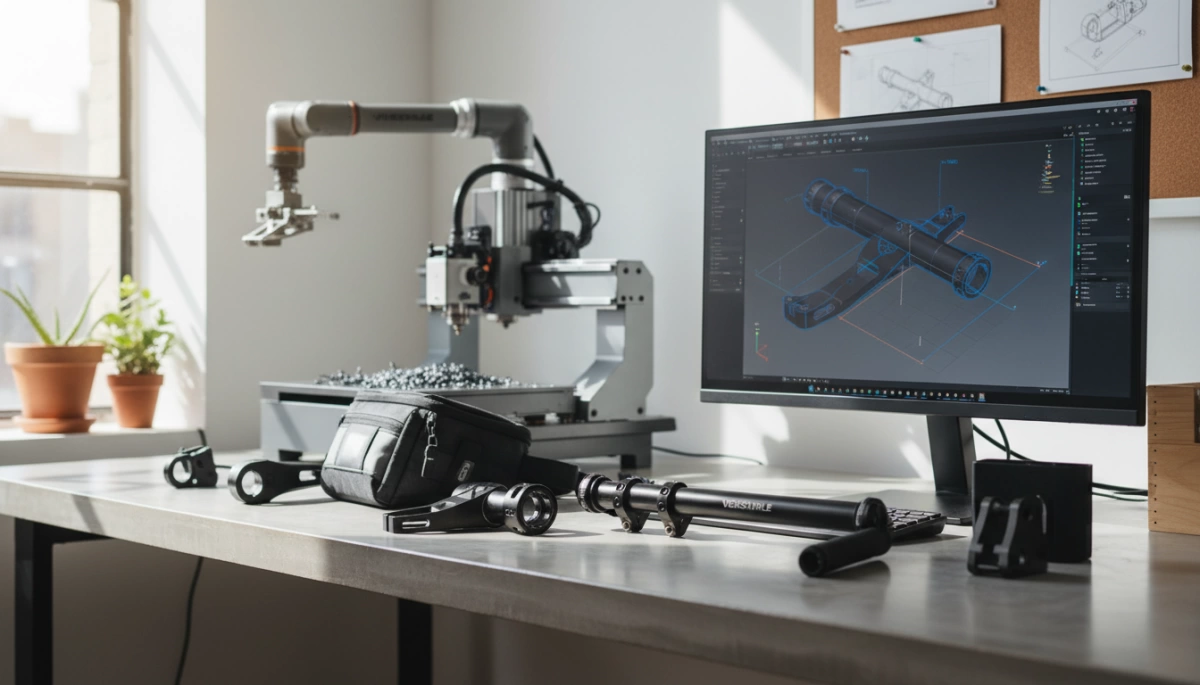
Designing Modular Interfaces for CNC Bicycle Parts
When we talk about the design behind versatile bike accessories, the conversation inevitably starts with how parts connect. Riders demand flexibility, but they absolutely despise rattling gear or failing mounts on a rough trail. The secret to solving this is mastering compatible interfaces design.
Defining Modular Bicycle Components
Modularity in cycling is about engineering a unified, adaptable ecosystem. Instead of cluttering a handlebar or frame with single-use proprietary clamps, we design a centralized base mount that effortlessly accepts various attachments.
- Interchangeable Loadouts: A single base that securely holds water bottle cages, LED lights, or GPS head units.
- Streamlined Ecosystems: Allowing riders to swap gear in seconds without reaching for an Allen key every time.
The Challenge of Standardizing Connections
Building uniform mounting points across different accessories is a serious engineering challenge. Bicycles operate in highly dynamic, abusive environments.
- Vibration Resistance: Connections must withstand high-frequency road chatter and aggressive trail impacts without loosening.
- High Torque Loads: The mounting interface must resist twisting and slipping when riders apply heavy leverage or hit unexpected drop-offs.
Eliminating Slop with Tight Tolerance Machining
Why do so many "versatile" accessories end up feeling cheap or rattling over time? It usually comes down to the manufacturing process. Traditional cast parts inherently suffer from shrinkage and dimensional variation as the metal cools. In a modular setup, this variation creates "slop"—unwanted movement between the base and the accessory.
To create seamless interlocking components, we have to eliminate that slop completely. This is why we rely on tight tolerance machining.
- Micron-Level Accuracy: Achieving exact fitment so interchangeable parts slide, lock, and hold with absolute zero play.
- Preventing Failure: Eliminating the micro-movements between components dramatically reduces fatigue and prevents the mechanical failure of the mount under stress.
Why CNC Machining Is Ideal for Bicycle Components
When we design versatile gear, we need manufacturing that can keep up. This is exactly why CNC machining is the backbone of modular bicycle components. It bridges the gap between a smart concept and a trail-ready reality.
Here is how we use this technology to push the limits of bike accessory design:
- Uncompromising Precision & Tolerances: Modular setups demand parts that fit together flawlessly. Through tight tolerance machining, we achieve the exact fitment required for parts to slide, lock, and hold securely under extreme riding conditions. It is not just about the dimensions, either; controlling how smooth these interlocking surfaces are is critical, as the surface roughness (Ra) directly impacts the performance of sliding and locking parts.
- Strength-to-Weight Optimization: Nobody wants heavy, overbuilt gear. We use intelligent cutting toolpaths to carve away excess material without compromising structural integrity. This strength-to-weight ratio optimization ensures the accessory remains incredibly tough while keeping your setup as light as possible.
- Rapid Prototyping: The shift from a digital model to a physical part happens incredibly fast. By streamlining CAD to CAM bike design, we can transition directly from the software to a rideable, testable prototype within days. This rapid prototyping for bicycles drastically shortens our design cycles, allowing us to test, tweak, and perfect bespoke cycling accessories faster than ever before.
Best Materials for CNC Machined Bicycle Parts
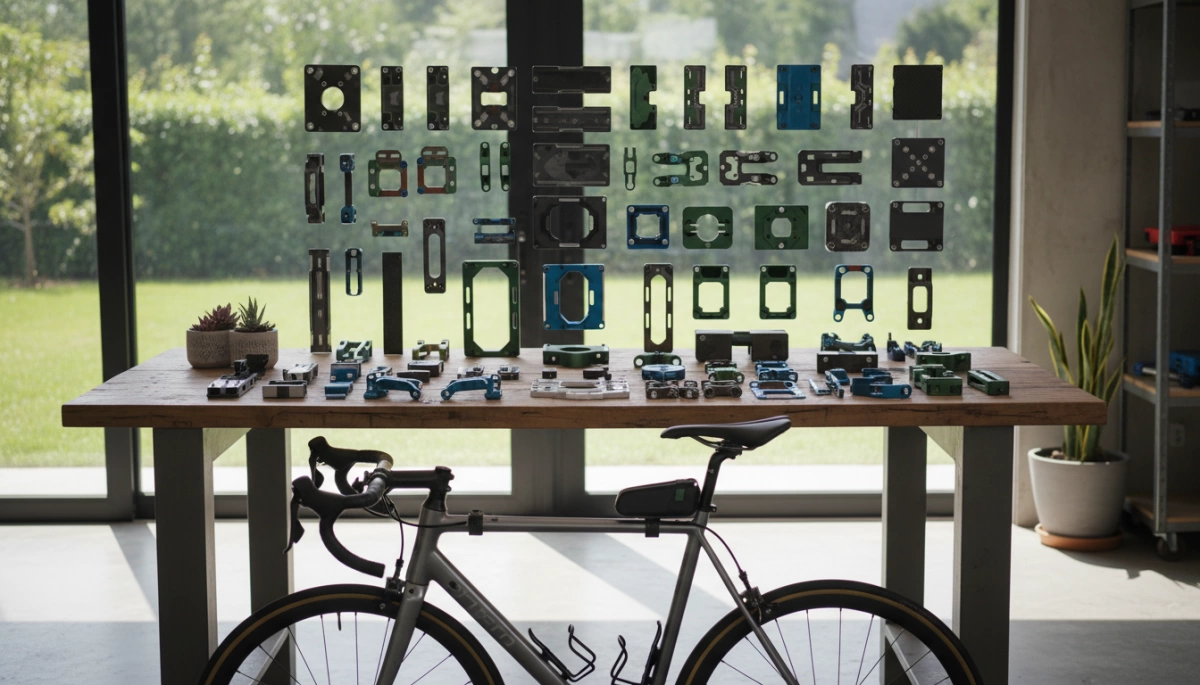
When we design bespoke cycling accessories, finding the sweet spot between toughness and weight is everything. Achieving perfect strength-to-weight ratio optimization comes down to selecting the exact right raw materials for the job. You need parts that can take a beating on rough trails but won't slow a rider down.
Here is a breakdown of our go-to materials for custom bike parts manufacturing:
- 6061 Aluminum: This is the absolute industry standard for structural bike gear. 6061 aluminum machining is highly favored because the alloy offers an incredible mix of easy machinability, natural corrosion resistance, and a fantastic balance of strength and lightness. If you're trying to choose the right CNC material for a modular base mount or bracket, this is almost always the starting line.
- Titanium: When a setup calls for premium, indestructible gear, we step up to titanium bike components. It handles high-stress connection points effortlessly, offering exceptional durability and fatigue resistance. It is tougher to machine but absolutely essential for elite, high-torque applications where part failure isn't an option.
- Engineering Plastics (PEEK, POM, Nylon): Metal isn't the only answer for modular setups. We utilize high-performance engineering plastics for lightweight modular inserts, spacers, and locking mechanisms. These materials provide vital vibration-dampening qualities, eliminating rattle and securing the fit without adding unnecessary bulk to the bike.
CNC Machining Workflow for Custom Bicycle Parts
Turning digital concepts into ride-ready versatile bike accessories requires a dialed-in process. We rely on a streamlined manufacturing workflow to guarantee precision at every single stage.
- Step 1: Conceptualization & CAD/CAM Verification We start by ensuring our designs are fully optimized for machining before the first cut is made. A solid CAD to CAM bike design strategy minimizes unnecessary tool changes and avoids deep, hard-to-reach pockets. This verification speeds up production while keeping the structural integrity of the accessory intact.
- Step 2: 5-Axis CNC Milling & Turning To handle complex geometries and multi-sided modular interfaces, we rely heavily on 5-axis CNC milling. Machining these intricate components in a single setup means we never lose accuracy by manually repositioning the part. This ensures the tight tolerance machining required for modular bases and mounts to slide, snap, and lock together flawlessly.
- Step 3: Custom Anodized Surface Finishing Machining is only half the battle. Because bespoke cycling accessories face harsh weather and constant vibration, we apply a custom anodized surface finishing alongside HD polishing. This final step adds critical weather protection, delivers a premium aesthetic, and provides essential wear resistance on high-friction interlocking joints.
Selecting the right foundation is just as important as the machining process itself; evaluating the optimal manufacturing materials ensures the final modular component is both lightweight and rugged enough for any riding condition.
Cost Advantages of Small Batch CNC Bicycle Parts Production
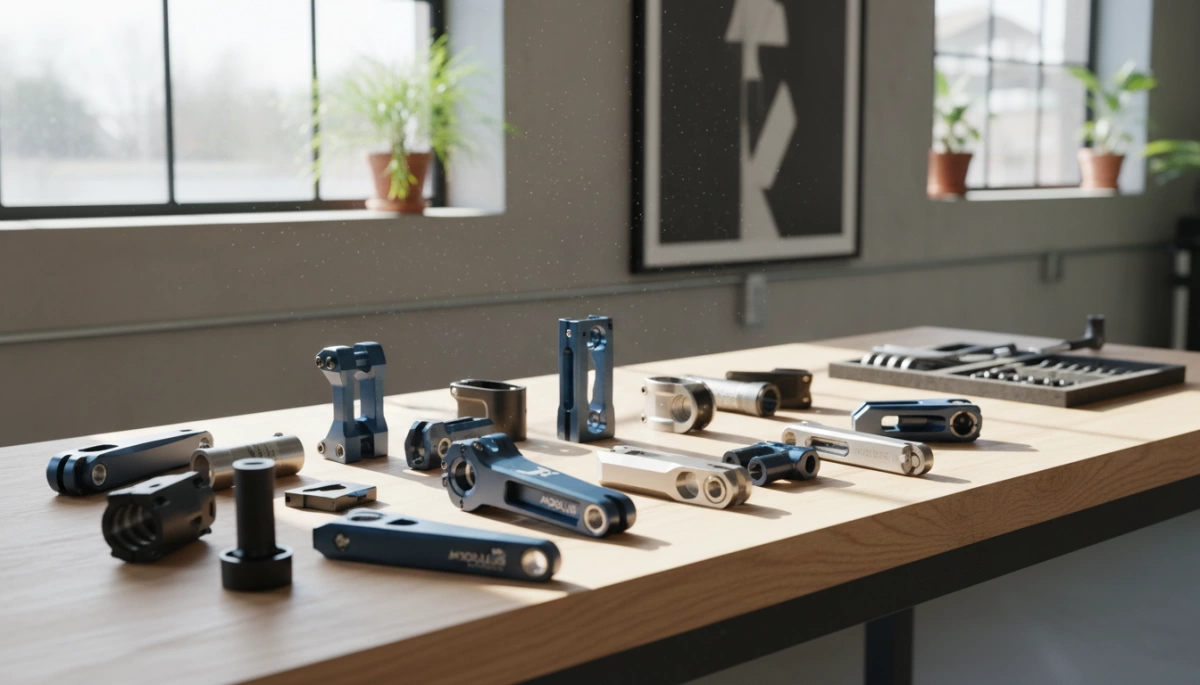
When dealing with custom bike parts manufacturing, traditional casting and molding methods quickly become a financial trap. The upfront tooling costs are massive, leading to rigid and high Minimum Order Quantities (MOQs). If you are developing niche, modular setups, these traditional methods are completely cost-prohibitive.
We rely on CNC technology to break this barrier and make agile manufacturing a reality. Here is how the economics of our process break down:
- Breaking the MOQ Barrier: Bypassing expensive molds means we can manage multi-variety part machining costs efficiently. You only pay for the actual machining time and materials, eliminating the need to order thousands of units just to justify tooling.
- Agile Production: By utilizing advanced CNC mill-turn services, brands can execute a small batch CNC production run. This allows you to produce a limited number of modular components, test them in the market, gather rider feedback, and iterate the design quickly without taking on massive financial risk.
- Long-Term ROI: Agile production directly translates to lower inventory costs—you stop paying to store dead stock. Additionally, the flawless finish and exact tolerances of CNC-machined goods provide strong premium pricing power. The higher retail value of these bespoke cycling accessories consistently drives a much stronger return on investment.
Frequently Asked Questions (FAQs)
How does modularity improve bicycle accessory design?
Modularity lets riders swap gear in seconds. Instead of running a cluttered handlebar, a single base mount can hold your light, GPS, or action camera. This focus on compatible interfaces design means you invest in one core system and just snap in attachments as your ride changes. It saves weight, cuts costs, and keeps your bike looking incredibly clean.
What makes 5-axis CNC machining ideal for complex bike components?
Bike frames and custom mounts rely on curved, organic geometries that standard 3-axis machines struggle to cut. 5-axis CNC milling tackles these awkward angles by working the part from multiple sides in a single setup. This process delivers the tight tolerance machining required for modular bicycle components to interlock perfectly without vibrating loose on rough trails. If you want to dive deeper into why this works so well for complex shapes, looking at the differences between 5-axis machining vs multiaxis turning shows exactly why milling is our go-to for structural mounts.
Can small-batch CNC production be cost-effective for custom bike parts?
Absolutely. Traditional casting and molding require thousands of dollars upfront just to create the tooling. Small batch CNC production skips the mold entirely. We take your CAD to CAM bike design straight to the machine floor. Wiping out those massive tooling costs makes multi-variety part machining practical, allowing brands to test bespoke cycling accessories in the market without taking a massive financial hit.
Which materials are best for CNC machining lightweight cycling gear?
When manufacturing bike accessories, we have to balance strength, weight, and cost. Here is what we typically run:
- 6061 Aluminum: This is the industry workhorse. 6061 aluminum machining offers fantastic corrosion resistance and reliable strength-to-weight ratio optimization for everyday modular setups.
- 7075 Aluminum: Harder and stronger than 6061, making it perfect for high-stress linkages or structural mounts. If you aren't sure which to spec for your next project, checking a 6061 vs 7075 aluminum comparison helps lock down the right choice.
- Titanium & Engineering Plastics: Titanium is reserved for premium components needing extreme fatigue resistance. Meanwhile, plastics like PEEK or POM serve as lightweight, vibration-dampening inserts within our custom bike parts manufacturing setups.
-
Custom CNC Bicycle Parts Manufacturing Services
ZSCNC provides precision CNC machining for bicycle components and modular bike accessories.
Our capabilities include:
3-axis / 5-axis CNC machining
aluminum, titanium, and engineering plastics
rapid prototyping for bike accessory brands
small-batch and medium-volume production
anodizing and laser engraving
If you are developing custom bicycle parts, our engineering team can help turn your design into production-ready components.
Request a quote today.
 English
  German
  Dutch
Dutch  Russian
  Czech
Czech  French
  Korean
  Japanese
  Spanish
  Portuguese