
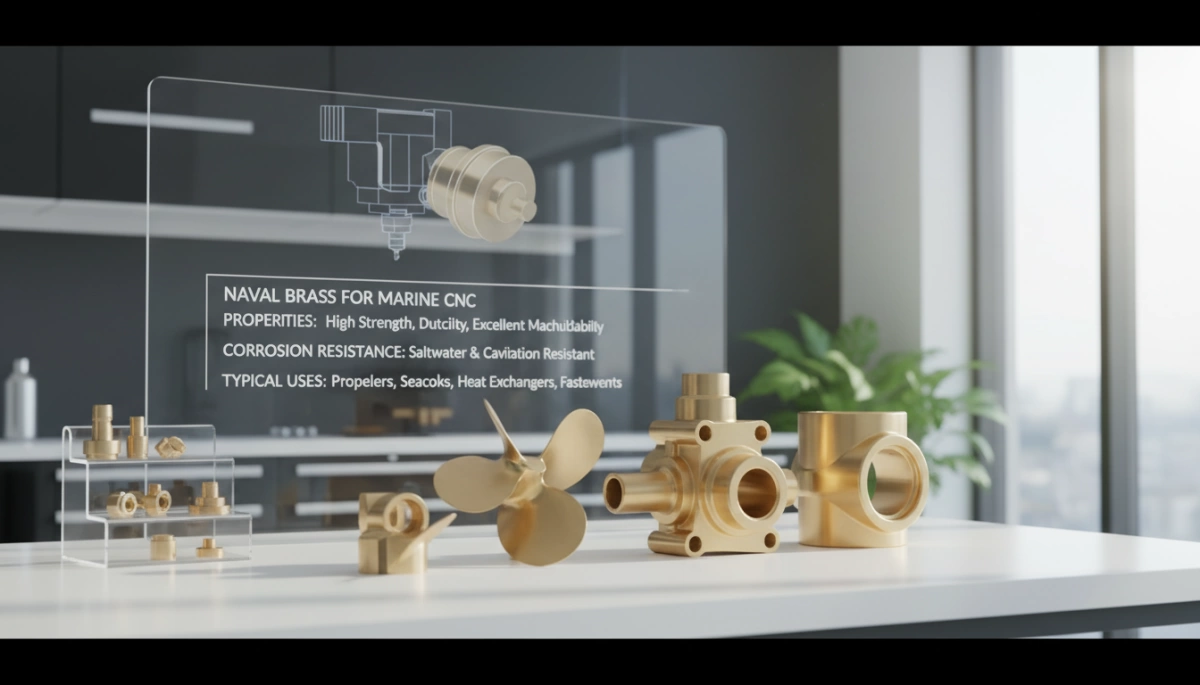
Understanding Naval Brass (C46400)
What is C46400 Naval Brass?
C46400, commonly known as Naval Brass, is a high-strength copper-zinc alloy specifically engineered for the rigors of marine environments. Unlike standard commercial brasses, this alloy is formulated to withstand the aggressive corrosive nature of seawater and brine. It is categorized as a "duplex alloy," meaning its microstructure contains both alpha and beta phases, granting it exceptional hardness and rigidity. For CNC machinists and marine engineers, C46400 is the go-to material when a component requires the durability of steel but the corrosion resistance inherent to copper-based alloys. It is widely recognized under specifications like ASTM B21 and AMS 4611, ensuring consistent industrial quality.
Chemical Composition and the Role of Tin
The defining characteristic of Naval Brass lies in its precise chemical makeup. While it shares the copper-zinc base of standard brass, the addition of tin is the game-changer.
Typical Chemical Composition:
- Copper (Cu): 59.0% – 62.0%
- Zinc (Zn): 39.25% (Remainder)
- Tin (Sn): 0.5% – 1.0%
- Lead (Pb): 0.20% Max (kept low to maintain strength)
The inclusion of tin is critical. It acts as a potent inhibitor against dezincification—a common form of corrosion where zinc leaches out of the alloy, leaving a porous, weak copper sponge behind. By fortifying the alloy with tin, C46400 achieves superior resistance to saltwater corrosion, making it far more durable than standard cartridge brass in submerged or splash-zone applications.
Naval Brass vs. Standard Brass and Bronze
Selecting the right marine metal requires distinguishing between these common alloys. While they may look similar, their performance in saltwater varies drastically.
- Naval Brass vs. Standard Brass (e.g., C260 Cartridge Brass): Standard brass is excellent for cold working and aesthetics but fails quickly in seawater due to dezincification. Naval Brass is harder, stronger, and chemically stabilized to survive where standard brass would corrode.
- Naval Brass vs. Bronze (e.g., Phosphor Bronze): Bronze generally offers the highest level of corrosion resistance but can be significantly more expensive and harder to machine. Naval Brass strikes an optimal balance—it offers better machinability and lower material costs than many bronzes while providing adequate corrosion protection for most marine hardware, shafts, and fittings.
Key Takeaway: Choose Naval Brass when you need a cost-effective, high-strength material that can be hot-worked and machined easily without sacrificing saltwater durability.
Core Properties and Benefits of Naval Brass
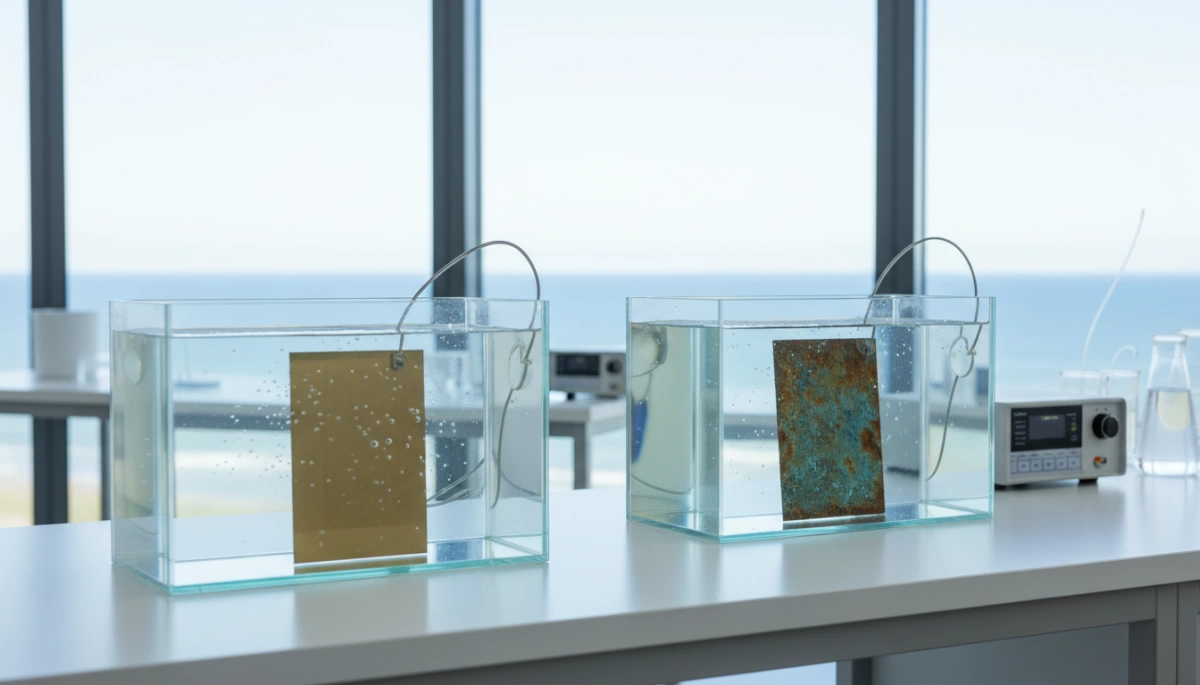
Physical and Mechanical Properties
When we machine brass components, we focus on retaining the material's inherent strength and durability. Naval brass is valued in manufacturing for its hardness and ability to hold complex geometries under stress. At ZSCNC, our facility utilizes advanced 5-axis and Swiss machining centers to process these copper-zinc alloys with micron-level accuracy.
We ensure that the mechanical properties of the raw material are preserved through precise cutting speeds and feeds. This results in components that offer:
- High Tensile Strength: Suitable for structural hardware.
- Excellent Wear Resistance: Ideal for moving parts and fittings.
- Tight Tolerances: We achieve strict dimensional accuracy for critical assemblies.
Superior Corrosion Resistance in Marine Environments
The primary reason our clients request naval brass is its exceptional ability to withstand saltwater and harsh industrial atmospheres. Unlike standard metals that degrade quickly, this alloy builds a protective patina.
Our manufacturing process ensures that surface finishes are executed perfectly to maximize this natural resistance. Whether for offshore energy projects or specialized industrial equipment, we deliver parts designed to last. For more insights on how we handle brass specifications, check our brass CNC machining design guide.
Understanding Dezincification Resistance
Dezincification is a common failure mode in standard brass where zinc leaches out, leaving a porous copper structure. High-quality naval brass is formulated to resist this process.
As an ISO 9001 certified manufacturer, we prioritize material verification. We source high-grade metals to ensure that the stock used for your project meets the necessary standards for long-term reliability. Our quality control protocols help prevent material failure by ensuring the alloy composition aligns with your specific project requirements before machining begins.
Thermal Characteristics and Weldability
Naval brass exhibits good thermal stability, which is crucial during both the machining process and final application. It dissipates heat effectively, reducing the risk of deformation during high-speed milling or turning.
Key Thermal Benefits in Manufacturing:
- Stability: Maintains dimensions under fluctuating temperatures.
- Conductivity: Efficient heat transfer for heat exchangers and plumbing.
While our primary focus is precision machining, we also support fabrication services. If your project requires assembly, our team understands how to handle the material's thermal properties to ensure secure and durable connections.
Machinability of Naval Brass for CNC Applications
At ZSCNC, we leverage years of expertise to handle various brass alloys, ensuring that components meet the rigorous standards required for marine environments. Our facility, established in 2013, is fully equipped to manage the specific machining characteristics of durable metals used in naval applications.
C46400 Machinability Rating and Performance
While specific machinability ratings depend on the exact alloy composition, brass materials generally offer excellent performance when processed on high-speed equipment. In our factory, we utilize over 40 CNC machines to optimize the production of brass components. Our skilled technicians adjust feed rates and tooling strategies to accommodate the material's properties, ensuring efficient material removal without sacrificing surface quality. Whether for rapid prototyping or larger production runs, our setup ensures consistent results for brass parts.
Advantages for Precision Marine CNC Parts
Marine applications demand components that can withstand harsh conditions while maintaining exact dimensions. We achieve this through:
- Micron-Level Accuracy: We deliver tight tolerances essential for complex marine assemblies.
- Complex Geometries: utilizing advanced 5-axis CNC machining, we can produce intricate shapes that standard 3-axis machines cannot achieve.
- Versatile Production: From Swiss Machining for small, detailed pins to large-scale milling for structural parts, our diverse equipment list covers all bases.
Best Practices for CNC Machining Naval Brass
To maintain the integrity of brass parts during the manufacturing process, we adhere to strict ISO 9001 certified protocols. Our best practices include:
- Rigorous Quality Control: Every part undergoes strict inspection to ensure it meets the client's exact specifications.
- Optimized Tooling: We select cutting tools specifically designed to minimize burrs and ensure a smooth surface finish on brass.
- Advanced Techniques: For extremely precise features, we employ EDM Machining alongside traditional turning and milling.
- Rapid Verification: We support fast iterations, delivering prototypes in as fast as 7 days to verify designs before full-scale production.
Typical Uses of Naval Brass in Marine Environments

At ZSCNC, we frequently handle custom manufacturing projects where durability in harsh conditions is non-negotiable. Marine environments are notoriously unforgiving, requiring materials that can withstand constant exposure to salt, moisture, and mechanical stress. Our facility, equipped with over 40 CNC machines, supports the production of high-precision brass components tailored for these demanding saltwater and freshwater applications.
Propeller Shafts and Structural Hardware
One of the most common applications we encounter for corrosion-resistant copper-zinc alloys is in the fabrication of drivetrain components. Propeller shafts require exceptional straightness and balance, which we achieve through our precision CNC turning services. Beyond the drivetrain, structural marine hardware such as heavy-duty brackets, struts, and rudder stocks rely on the material's high tensile strength.
When selecting materials for these load-bearing structural parts, it is critical to compare aluminum, brass, and stainless steel properties to ensure the chosen alloy offers the necessary fatigue resistance. We machine these robust parts to exact specifications, ensuring they maintain their integrity even under the constant vibration and load of marine propulsion systems.
Precision Valves, Fittings, and Fasteners
For smaller, complex geometries, our Swiss machining and 5-axis milling capabilities are essential. We manufacture a wide range of fluid handling components, including:
- High-pressure valve bodies: Critical for controlling flow in onboard plumbing systems.
- Custom pipe fittings: Tees, elbows, and adapters designed for seawater intake systems.
- Specialized fasteners: Bolts and nuts that resist seizing in corrosive environments.
These parts demand micron-level accuracy to prevent leaks and ensure seamless assembly. By utilizing naval brass for these components, we help clients produce marine hardware that resists the pitting and crevice corrosion often seen in standard commercial metals.
Offshore and Submersible Components
Our experience extends into the energy and robotics sectors, where we fabricate components for offshore platforms and submersible equipment. In these industrial settings, parts are often submerged for extended periods. We machine housings, sensor casings, and connector bodies that protect sensitive electronics from seawater intrusion. The excellent machinability of brass allows us to create complex internal features required for these advanced subsea applications, ensuring reliability where maintenance is difficult or impossible.
Material Selection and Purchasing Guide
Choosing the right brass alloy is critical when manufacturing parts destined for harsh marine environments. While many alloys look similar on paper, their performance in saltwater varies drastically. Here is how to navigate the selection process for your CNC projects.
Comparing C46400 to C360 Free-Cutting Brass
In the machining world, C360 (Free-Cutting Brass) is the gold standard for machinability. However, for marine applications, C46400 (Naval Brass) is often the necessary choice despite being slightly harder to machine. The key difference lies in the addition of tin.
While C360 contains lead to break up chips and speed up machining, it lacks the corrosion inhibitors found in C464. Naval Brass sacrifices a small amount of machinability (rated around 60% compared to C360's 100%) to gain massive improvements in strength and saltwater resistance. If your part will be submerged or exposed to sea spray, C360 will eventually succumb to dezincification, whereas C46400 will hold up.
| Feature | C46400 Naval Brass | C360 Free-Cutting Brass |
|---|---|---|
| Primary Use | Marine hardware, structural components | High-speed screw machine parts |
| Corrosion Resistance | Excellent (Saltwater resistant) | Fair (Not for marine immersion) |
| Machinability Rating | ~60% | 100% (The Standard) |
| Key Alloying Element | Tin (0.5% - 1.0%) | Lead (2.5% - 3.7%) |
| Strength | High tensile strength | Moderate tensile strength |
Assessing Marine Project Requirements
Before ordering material, you need to evaluate the specific stresses your component will face. Not every "marine" part needs the same grade, but structural integrity is non-negotiable. When we consult on material selection for offshore or nautical clients, we look at three main factors:
- Exposure Level: Is the part fully submerged, in the splash zone, or just in a humid salt-air environment? Submerged parts absolutely require the tin content of C46400.
- Mechanical Load: Naval brass offers better tensile strength than standard brass. If the part is load-bearing (like a turnbuckle or shaft), C464 is superior.
- Fabrication Method: If your design requires welding or hot forming in addition to CNC machining, C46400 is far more adaptable than leaded brasses, which can crack during hot working.
Available Forms: Plate, Rod, and Tube
Sourcing the right raw material form can significantly reduce machining time and waste. C46400 is widely available in standard industrial geometries, making it easy to integrate into CNC workflows.
- Round Rod/Bar: The most common form for turning operations. Ideal for producing fasteners, bushings, and propeller shafts.
- Plate/Sheet: Used for milling flat components like wear plates, heavy-duty marine flanges, and structural gussets.
- Tube: Essential for heat exchangers and piping systems where corrosion resistance is paramount.
- Hex Bar: Frequently stocked for manufacturing marine-grade nuts and bolts without needing to mill the hex profile.
By selecting the form factor closest to your final part dimensions, you reduce cycle times and material costs, ensuring your marine hardware remains cost-effective without sacrificing quality.
Frequently Asked Questions (FAQs)
Does Naval Brass Rust in Saltwater?
Naval brass is specifically engineered for high corrosion resistance, making it far superior to standard carbon steel in marine environments. While no metal is entirely immune to nature, this copper-zinc alloy creates a protective patina that prevents the deep, destructive rusting seen in ferrous metals. At ZSCNC, we machine brass components designed to maintain their structural integrity and precision tolerances even when exposed to harsh saltwater conditions, ensuring long-term reliability for your marine hardware.
What Grade of Commercial Quality is Naval Brass?
This material is typically categorized under specific industrial standards, such as ASTM, to ensure consistency in composition and performance. When we handle your manufacturing projects, we strictly adhere to ISO 9001 certified quality control protocols. Our team verifies that all raw materials meet the necessary commercial quality grades before they ever hit our CNC machines. This rigorous material verification is part of our commitment to delivering high-precision parts to our global clients in the USA, Europe, and Japan.
Can C46400 Naval Brass Be Readily Welded?
Yes, unlike some free-cutting brass alloys that contain high lead, C46400 is generally considered to have good weldability, particularly for hot working and soldering applications. Our facility is equipped to handle complex fabrication needs, supporting your project from initial machining to final assembly. If your application requires alternative materials with different joining properties, we also provide high-precision turning processing of 304 stainless steel parts to meet diverse engineering requirements.
 English
  German
  Dutch
Dutch  Russian
  Czech
Czech  French
  Korean
  Japanese
  Spanish
  Portuguese