

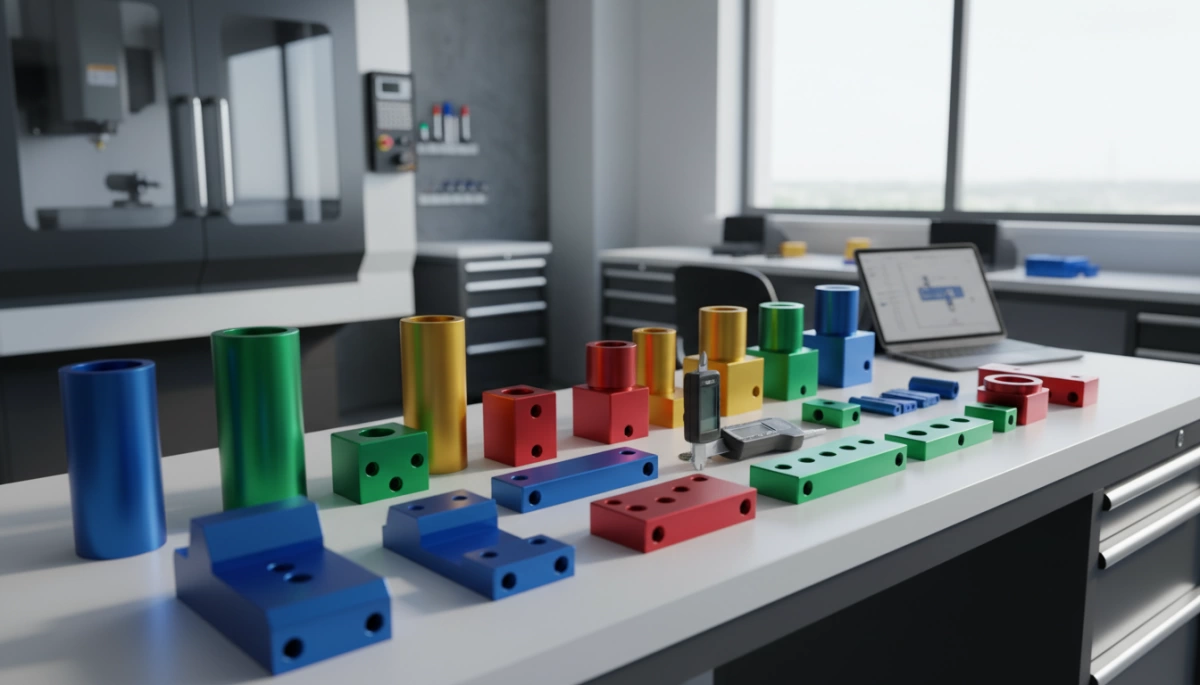
Trying to choose the right aluminum anodizing process for your CNC machined parts?
You’re in the right place.
In this guide, I’ll break down the real differences between Type II anodizing and Type III hardcoat anodizing, plus the color options, finish quality, and machining details that actually affect the final result.
If you want better corrosion resistance, stronger wear protection, and a cleaner cosmetic finish, this is the guide for you.
Let’s dive in.
Understanding Aluminum Anodizing for CNC Machined Parts
What is Anodizing and How Does the Process Work?
Aluminum anodizing for CNC machined parts is an electrochemical surface treatment that converts the outer layer of the metal into a durable anodic oxide layer. For precision CNC parts, this process improves appearance, adds protection, and supports functional performance across industrial applications. At ZSCNC, anodizing is handled in-house as part of a streamlined drawing-to-product workflow, helping control quality from machining to finishing.
The Role of the Anodic Oxide Layer in Protection
The anodic oxide layer acts as a hard, stable barrier on aluminum alloys. It helps improve corrosion resistance, surface durability, and scratch resistance while maintaining tight dimensional control for precision parts. For demanding components, this layer is especially important when the part must keep reliable fit, finish, and long-term performance after machining.
Surface Preparation: Cleaning, Etching, and Polishing
Surface preparation is critical before anodizing CNC parts. Proper cleaning removes residue, while controlled etching and polishing help create a uniform base for consistent results. ZSCNC also supports sandblasting for matte or textured finishes, which is useful when a specific cosmetic effect or surface feel is required. Careful preparation helps reduce visible defects and supports a cleaner anodized finish on aluminum parts.
Type II vs. Type III Anodizing: Key Differences and Specifications
For aluminum anodizing guide for CNC parts: Type II vs Type III and color options, I usually separate the choice by purpose: appearance and basic protection, or heavy-duty wear resistance. We support both finishes in-house for CNC machined aluminum parts, including parts made from 6061 and 7075, with tight machining control and fast turnaround.
| Item | Type II Anodizing | Type III Anodizing |
|---|---|---|
| Main use | Decorative finish and basic corrosion resistance | High-wear parts and stronger protection |
| Finish look | Brighter, more color-friendly | Darker, more industrial |
| Hardness | Standard protective layer | 400–600+ HV hardcoat |
| Best fit | General CNC aluminum parts | Pulleys, seat tracks, hydraulic manifolds |
Type II: Standard Sulfuric Acid Anodizing for General Use
Type II anodizing is the common choice when I need a clean look, stable corrosion resistance, and vibrant custom colors. It works especially well on 6061, which gives a uniform result and reacts beautifully to dye. This finish is a strong fit for general CNC machining projects, including aluminum alloy parts used in commercial and industrial settings.
- Best for: cosmetic parts and light-duty protection
- Color options: clear coat and vibrant custom dyes
- Material note: 6061 is the easiest to color-match
Type III: Hardcoat Anodizing for Extreme Wear Resistance
Type III hardcoat anodizing is the better choice when surface life matters more than color. I use it for parts that face friction, abrasion, and repeated contact. It delivers a much harder anodic layer and is built for demanding industrial applications where wear resistance and corrosion resistance both matter.
- Best for: functional parts with heavy wear
- Hardness: 400–600+ HV
- Typical use: moving or contact-heavy CNC components
Technical Comparison: Coating Thickness and Surface Hardness
Here is the simple way I compare them for anodic coating selection:
| Spec | Type II | Type III |
|---|---|---|
| Primary goal | Appearance + basic protection | Wear resistance + stronger protection |
| Hardness | Lower than hardcoat | 400–600+ HV |
| Color behavior | More consistent and vivid | Usually darker, less color-focused |
| Typical fit | 6061 general-purpose parts | High-load and high-friction parts |
For custom aluminum CNC machining parts, I keep the decision practical: Type II for clean aesthetics and color flexibility, Type III for hard use and long service life. For projects that need both machining precision and finishing control, our in-house process is built to keep tolerances tight and the final surface consistent.
See also: 6061 aluminum CNC machining for general-purpose structural components
Color Options and Aesthetic Finishes for Anodized Aluminum
Standard and Custom Dyeing for Type II Anodizing
I use Type II anodizing when the part needs a clean look, basic corrosion resistance, and strong color options. It works especially well on 6061 aluminum, which takes dye in a very even way and gives a bright, uniform anodic layer.
| Finish Type | Typical Look | Best Fit |
|---|---|---|
| Clear | Natural metallic finish | Simple protective surface treatment |
| Custom dye | Vibrant, colored finish | Branding, visible consumer parts |
| Matte prep + dye | Soft, textured appearance | Controlled aesthetic finish |
- Type II supports clear and custom color options.
- 6061 usually gives the most consistent dyeing results.
- Sandblasting can be used first to create a matte look before anodizing.
Natural Color Limits and Dark Shades of Type III Hardcoat
Type III hardcoat is built for performance first. The finish is usually darker and less focused on bright color, so I treat it as an industrial finish rather than a decorative one. It is the better choice when wear resistance matters more than visual brightness.
| Anodizing Type | Color Behavior | Main Purpose |
|---|---|---|
| Type II | Wide dye range | Aesthetic finish |
| Type III | Darker natural tone | Hardcoat protection |
- Type III is mainly selected for durability and abrasion resistance.
- Color is less flexible than Type II.
- The finish often looks deeper and more industrial.
Color Uniformity and Cosmetic Control
I keep color uniformity tight by controlling the alloy, surface prep, and finishing path. 6061 is the easiest route for consistent cosmetic anodizing. 7075 can show more color deviation, so it needs more care when the project has strict visual standards.
| Factor | Effect on Color |
|---|---|
| Alloy choice | Strong impact on dye consistency |
| Surface prep | Helps reduce visible marks and uneven tone |
| Machining quality | Affects the final cosmetic finish |
- Fine machining and clean edges help the anodic layer look smoother.
- Scratch control matters because anodizing does not hide defects well.
- For strict cosmetic work, I keep the process stable from part to part.
For parts that need extra finishing support, I combine anodizing with secondary finishing services for CNC parts to keep the final look more controlled and consistent.
Critical CNC Machining Considerations for Anodizing
Dimensional Growth and Tolerances
I machine anodized CNC parts with the finish in mind from the start. Anodizing adds a measurable layer, so tight features need allowance before coating. For precision work, I keep tolerance control very close, especially when the part will be used in a mating assembly.
| Item | Practical point |
|---|---|
| Coating effect | Anodizing changes final size |
| Tight features | Need pre-finish allowance |
| Best practice | Plan for build-up before machining final dimensions |
| Precision target | Hold fine tolerances where fit matters |
Masking Threads and Critical Areas
I protect threads, bores, and other critical contact points with masking when needed. This helps keep the anodic layer off surfaces that must stay functional, such as fastener seats, bearing fits, and electrical contact areas. It is a simple step, but it saves rework and keeps the part usable after finishing.
Surface Roughness and Machining Marks
Anodizing does not hide poor machining. It usually makes scratches, burrs, and tool marks more visible, especially on decorative Type II finishes. I aim for clean surfaces before coating, because smoother prep gives a better final look and a more consistent anodic layer.
Key control points
- Remove burrs before anodizing
- Reduce visible cutter marks
- Keep surface finish uniform
- Use sandblasting only when a matte or textured look is wanted
Selecting the Right Aluminum Alloy for Anodizing
6061-T6: Best All-Around Choice
I usually treat 6061-T6 as the most reliable alloy for aluminum anodizing guide for CNC parts: Type II vs Type III and color options. It anodizes cleanly, takes dye well, and gives a more uniform finish for both clear and vibrant colors. For custom CNC parts, it is the easiest way to get a consistent look without fighting the process.
- Smooth, predictable anodic layer
- Strong color absorption for Type II anodizing
- Good fit for precision CNC machined parts
7075-T6: Strong, But Harder to Finish
7075-T6 is chosen when strength matters more than easy finishing. It works well for high-performance CNC parts, but I handle it with more care because the anodized result can be less consistent. Color deviation is more likely, especially when a perfect cosmetic match is needed.
- Higher-strength alloy
- Better for demanding functional parts
- More finishing variation in dyeing technology
How Alloy Chemistry Affects Color
Alloy chemistry changes how the porous oxide layer forms and how dye is absorbed. That is why 6061 often gives a cleaner, more even aesthetic finish, while 7075 can look darker or less uniform. For global customers who need repeatable surface treatment, I keep this in mind early so the final anodic layer matches the part’s use and appearance.
| Alloy | Anodizing Result | Color Consistency |
|---|---|---|
| 6061-T6 | Very stable | High |
| 7075-T6 | Strong but less predictable | Lower |
For parts where visual consistency and corrosion resistance both matter, I prefer 6061. For parts where mechanical properties come first, 7075 still has its place, but the finishing expectations should stay realistic.
Applications and Decision Guide: Choosing Type II or Type III
I use Type II anodizing when the part needs a clean look, custom color, and basic corrosion resistance. It fits well for aluminum CNC parts that are visible, handled often, or need a clear protective finish. For many aluminum CNC applications in automotive, medical, and packaging parts, this is the practical choice.
When to Specify Type II for Decorative and Corrosion Needs
- Best for appearance: vibrant colors, clean finish, and good visual consistency on 6061.
- Best for general protection: basic corrosion resistance for indoor and light-use parts.
- Best for cost control: a simpler finish when extreme wear resistance is not required.
Industrial Scenarios Requiring Type III Functional Hardness
I specify Type III hardcoat anodizing for high-wear parts that need stronger surface performance. It is the better fit for pulleys, seat tracks, hydraulic manifolds, and other functional CNC parts that take repeated contact or abrasion. The hardcoat layer supports demanding industrial use and stronger corrosion resistance.
Cost, Lead Time, and Manufacturing Logistics Comparison
| Item | Type II | Type III |
|---|---|---|
| Main use | Decorative + corrosion protection | Wear resistance + functional durability |
| Color options | Vibrant custom colors, clear coat | Darker industrial look |
| Surface feel | Cleaner cosmetic finish | Harder technical finish |
| Typical fit | General-purpose parts | High-load, high-wear parts |
For global customers, I keep the choice simple: pick Type II when finish and color matter most, and choose Type III when service life and abrasion resistance are the priority. With in-house CNC machining and anodizing, I can keep the process tighter, faster, and easier to manage from drawing to delivery.
Troubleshooting and Quality Control for Anodized Parts
For aluminum anodizing guide for CNC parts: Type II vs Type III and color options, I keep quality control tight from start to finish. In-house CNC machining and finishing help me catch issues early, especially on parts that need clean surface treatment, stable corrosion resistance, and a consistent anodic layer.
Avoiding Common Defects: Burning, Pitting, and Streaking
- Burning: usually comes from poor current control or surface issues.
- Pitting: often starts with contamination, scratches, or bad pre-cleaning.
- Streaking: can show up when the material or dye response is uneven.
For better results, I rely on clean prep, controlled sandblasting when needed, and careful handling of aluminum alloys like 6061 and 7075. 6061 is more forgiving for vibrant, uniform anodizing, while 7075 needs closer control to reduce color deviation and cosmetic mismatch.
Post-Anodizing Sealing for Enhanced Corrosion Resistance
After anodizing, sealing helps lock in the finish and improve corrosion resistance. This matters for parts used in industrial applications, where wear resistance and a stable clear finish or dyed finish both need to last. I treat sealing as part of the full surface treatment, not an optional step.
Inspection Methods for Coating Thickness and Adhesion
I inspect anodized CNC parts with a simple but strict routine:
- Coating thickness checks for Type II and Type III consistency
- Dimensional checks to protect tight tolerances, including +/- 0.005mm targets where required
- Adhesion and fit review for critical mating features
- Surface inspection for burrs, scratches, and visible machining marks
This approach keeps anodic oxide layer quality stable and supports fast delivery without losing control of the final appearance or function. For complex aluminum parts that need precision finishing, I keep the process centered on inspection, traceability, and repeatable results through precision CNC machining services.
Frequently Asked Questions about Aluminum Anodizing for CNC Parts
Does Anodizing Hide Tool Marks and Surface Scratches?
Anodizing does not erase tool marks or scratches. It can make a clean machined finish look more even, but any burrs, dents, or deep marks still show through after the anodic oxide layer is added. I keep the rule simple: the better the CNC surface before finishing, the better the anodized result.
- Sandblasting can help create a more uniform matte look
- Fine machining marks may stay visible on glossy or dyed parts
- Surface defects should be handled before Type II or Type III anodizing
Can You Remove or Rework an Anodized Coating?
Anodized coating is a finished surface treatment, so rework is limited. In practice, parts usually need to be stripped and processed again if the finish is being changed. That is why I treat anodizing as a final step after the design, tolerance, and cosmetic checks are already stable.
- Rework is not the same as simple touch-up
- Removing the coating can affect surface quality and dimensions
- Repeat finishing should be planned carefully for precision CNC parts
How Do Racking Points and Electrical Contacts Affect the Part?
Racking points are necessary for the electrochemical process, but they leave contact marks where the part is held. I plan these points on non-critical areas whenever possible, especially on parts with tight tolerances or visible cosmetic zones.
- Contact areas may stay uncoated or show small marks
- Good rack placement helps protect functional faces and threads
- For global customers, I keep critical fit surfaces and display surfaces separated in the finishing plan
 English
  German
  Dutch
Dutch  Russian
  Czech
Czech  French
  Japanese
  Spanish
  Portuguese
  Korean