

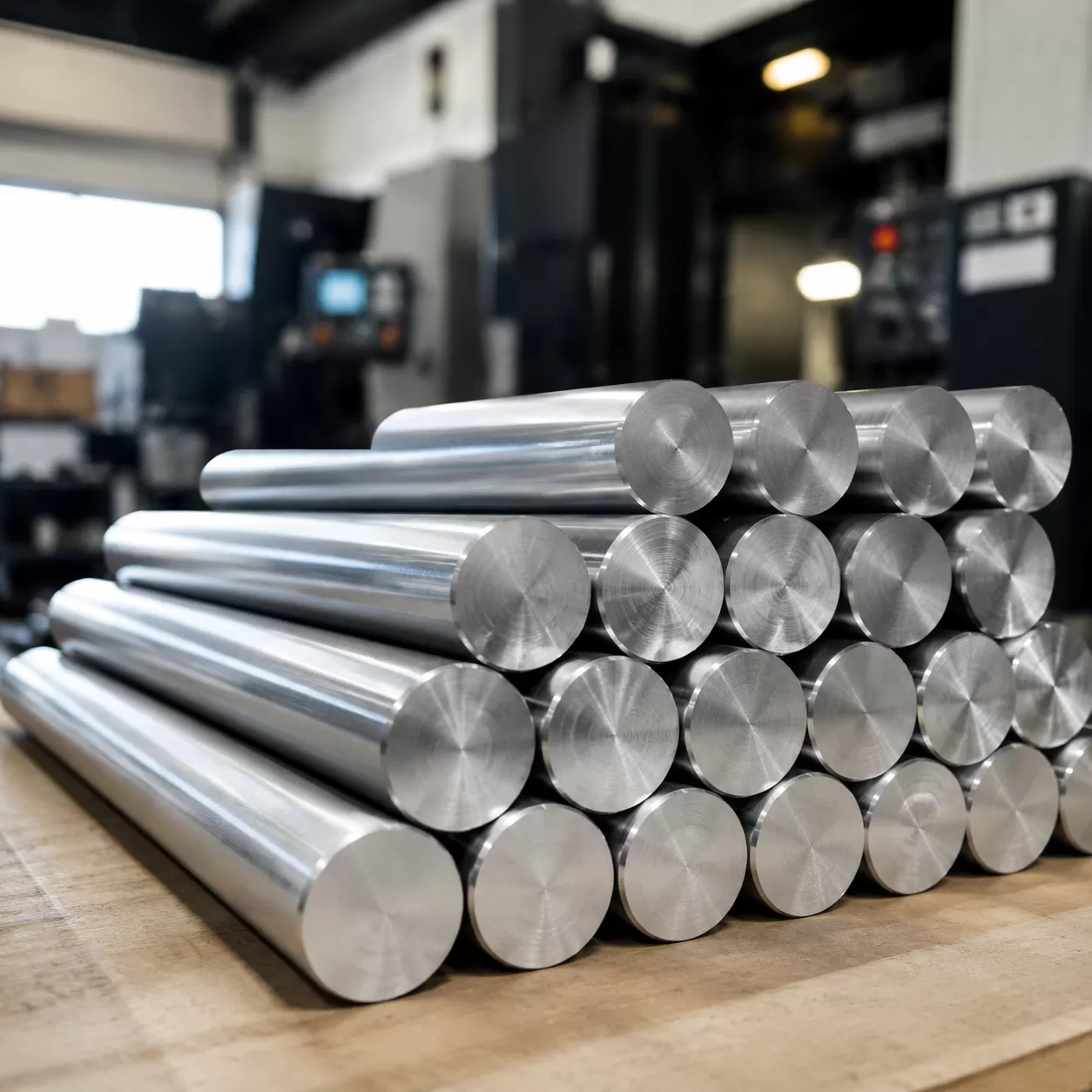
You probably know that high-speed CNC turning can completely crush your production timelines if you\'re fighting stubborn, stringy materials.
But what if you could drastically cut cycle times while achieving a flawless finish?
Enter 2011 aluminum alloy—the undisputed king of free-machining aluminum.
Whether you are running Swiss lathes or high-volume automatic screw machines, this specific alloy is engineered for one thing: blistering speed. If you are looking to slash tool wear, master chip control, and maximize your shop\'s mass production efficiency, this guide is for you.
Let’s dive right in.
Introduction to 2011 Aluminum Alloy
What Is 2011 Aluminum?
2011 aluminum alloy is a high-strength, copper-based aluminum formulation specifically engineered for exceptional workability. Renowned globally as the premier choice for high-speed CNC turning, this material stands out because of its unique chemical composition, which includes micro-alloys of bismuth and lead.
These elemental additions act as internal chip breakers, allowing the metal to be cut at extreme speeds without bird-nesting or excessive heat buildup. For precision machining services targeting global markets, 2011 aluminum serves as the foundational standard for high-volume, highly complex component manufacturing.
The History of 2011 Aluminum as the \"Free-Machining\" Alloy
Developed to satisfy the manufacturing boom of the mid-20th century, 2011 aluminum earned the title of the definitive \"free-machining\" alloy. Traditional aluminum grades often suffered from \"gummy\" behavior during rapid cutting, which choked automated equipment and ruined tool life.
By optimizing the metallurgical blend to produce brittle, easily broken chips, engineers created a material that allowed automatic screw machines to operate continuously at maximum capacity. Today, it remains the gold standard for high-efficiency milling operations and CNC turning, driving down cycle times across the automotive, electronics, and industrial fastening sectors.
Common Tempers: 2011-T3 vs. 2011-T6
The mechanical properties and performance of 2011 aluminum heavily depend on its heat treatment. The two primary tempers utilized in global manufacturing are 2011-T3 and 2011-T6.
| Feature / Property | 2011-T3 Aluminum | 2011-T6 Aluminum |
|---|---|---|
| Process Treatment | Solution heat-treated, cold-worked, and naturally aged. | Solution heat-treated and artificially aged. |
| Machinability Rating | Excellent (Highest); produces the cleanest, smallest chips. | Very Good; slightly more ductile than T3. |
| Mechanical Strength | Higher tensile and yield strength due to strain hardening. | Moderate strength; optimized for dimensional stability. |
| Best Used For | Ultra-high-speed CNC turning and automatic screw machine stock. | Applications requiring uniform hardness and structural stability. |
- 2011-T3: Provides the ultimate balance of material hardness and chip control, making it our preferred specification for rapid, continuous lathe operations.
- 2011-T6: Offers a more uniform internal crystalline structure through artificial aging, yielding excellent precision for parts requiring tight tolerance configurations without warping.
Material Properties and Composition
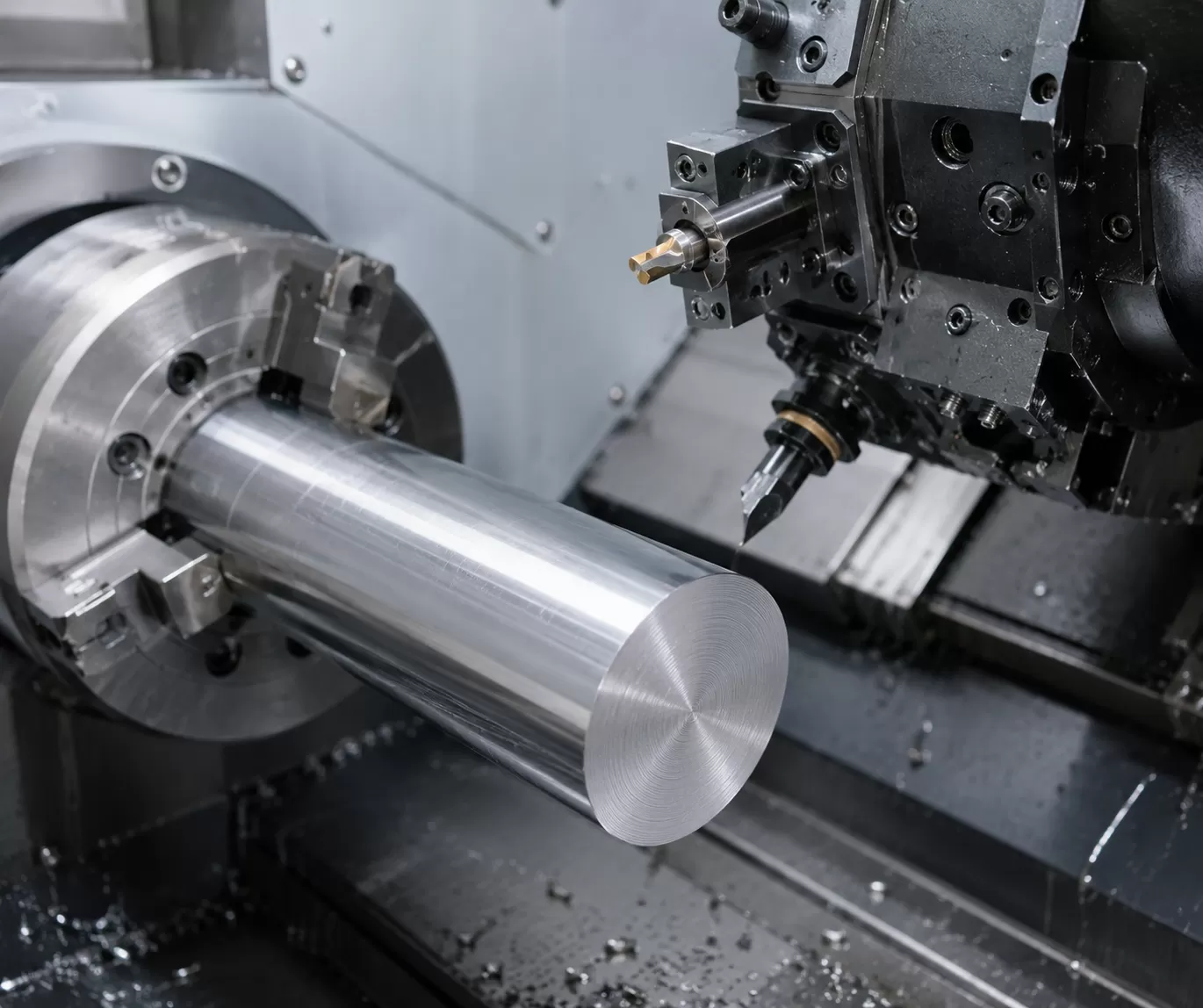
Chemical Composition and the Role of Lead/Bismuth
The secret behind the unmatched machinability of 2011 aluminum lies in its unique chemical composition. Unlike standard grades, we alloy this material with specific percentages of bismuth and lead.
These elements act as natural chip breakers during high-speed production. As the cutting tool meets the metal, the localized heat melts the microscopic lead and bismuth pockets. This creates a self-lubricating effect that forces the metal to snap into tiny, manageable chips rather than long, dangerous stringers.
- Copper (5.0–6.0%): Provides the foundational structural strength.
- Lead (0.2–0.6%): Enhances lubrication and chip breakage.
- Bismuth (0.2–0.6%): Pairs with lead to optimize high-speed cutting efficiency.
Mechanical and Physical Properties
When evaluating mechanical properties, 2011 aluminum balances rapid material removal with solid component longevity. It delivers excellent dimensional stability, ensuring that intricate parts hold their exact design tolerances after leaving the lathe.
| Property | Value (Typical) |
|---|---|
| Density | 2.83 g/cm³ (0.102 lb/in³) |
| Tensile Strength | 310–380 MPa |
| Yield Strength | 150–290 MPa |
| Brinell Hardness | 95–115 HB |
While it offers great structural integrity for millions of everyday turned parts, it is important to cross-reference your design requirements to avoid the top mistakes engineers make when ordering custom CNC parts, particularly regarding material selection for high-stress environments.
Thermal Properties and Heat Treatment
This alloy responds exceptionally well to thermal treatments, which directly influences its final temper and hardness. The material undergoes solution heat treating followed by either artificial aging or cold working to reach its peak performance state.
- Thermal Conductivity: High thermal dissipation rates prevent heat buildup at the cutting edge, extending overall tool life.
- Melting Range: $535°text{C} – 645°text{C}$ ($995°text{F} – 1190°text{F}$), allowing it to handle the friction generated by aggressive machining speeds without warping.
- Heat Treatment Response: Reaches its optimized mechanical threshold through precise thermal aging, yielding the popular T3 and T6 tempers used worldwide.
Why 2011 Aluminum Excels in High-Speed CNC Turning
Exceptional Machinability and Chip Control
When it comes to high-speed CNC turning, 2011 aluminum is the undisputed king of efficiency. Often rated with a 100% machinability index, this specific aluminum alloy allows machines to run at maximum spindle speeds without breaking a sweat. The secret lies in its unique chemical composition, which creates incredibly small, brittle chips during cutting. Instead of long, gummy bird-nest stringers that wrap around tooling and ruin part setups, 2011 aluminum produces fine, easily cleared chips. This excellent chip control dramatically reduces cycle times and keeps production lines running without constant manual intervention.
Suitability for Automatic Screw Machines and Swiss Lathes
For high-volume production on automatic screw machines and high-precision Swiss lathes, 2011 aluminum is the industry standard screw machine stock. The material feeds smoothly and shears effortlessly, making it ideal for the rapid-fire manufacturing of intricate components. Whether executing complex milling operations or aggressive turning, the predictable nature of this alloy maximizes tool life and protects expensive carbide grades from premature chipping. This flawless performance in automated setups is exactly why we rely on it to deliver highly efficient, bulk CNC machining services for EU automotive components and motorsport parts, where timing and consistency are everything.
Achievable Surface Finish and Precision Tolerances
Achieving tight precision tolerances is effortless with 2011 aluminum. Because the material cuts so cleanly, it leaves behind an exceptionally smooth, bright surface finish right off the tool, often eliminating the need for secondary polishing or grinding. It minimizes tool deflection and resists built-up edge (BUE), ensuring that every single mechanical component matches exact blueprint specifications from the first part to the ten-thousandth.
| Feature | Performance in CNC Turning | Benefit for High-Speed Production |
|---|---|---|
| Machinability Index | 100% (Excellent) | Maximum cutting speeds, lowest resistance |
| Chip Formation | Small, broken chips | Prevents tangling, minimizes machine downtime |
| Surface Finish | High-quality, smooth glaze | Reduces the need for secondary post-processing |
| Tolerance Control | Exceptionally stable | Perfect for micro-components and tight fits |
Key Advantages of Using 2011 Aluminum
When you are running high-volume jobs, choosing the right material makes or breaks your margins. 2011 aluminum is our go-to choice for high-speed CNC turning because it directly slashes manufacturing friction and boosts your bottom line.
Excellent Production Efficiency and Speed
This alloy is engineered for raw speed. Because of its incredible aluminum alloy machinability, you can push your CNC machines to their absolute limits without worrying about bird-nesting or tangled chips.
- Ultra-Fast Cycle Times: Allows for maximum spindle speeds and aggressive feed rates.
- Flawless Chip Control: Breaks into tiny, manageable chips automatically, preventing machine jams.
- Continuous Operation: Ideal for automated setups, meaning less downtime and more parts out the door.
Reduced Tool Wear during CNC Machining
Tooling costs can quietly eat away at your profits. Machining tougher metals wears down inserts quickly, but 2011 aluminum is incredibly forgiving on your equipment.
| Feature | Impact on CNC Operations |
|---|---|
| Lower Cutting Forces | Puts less stress on the machine spindle and cutting tools. |
| Extended Tool Life | High-quality carbide grades last significantly longer, reducing tool changeover frequency. |
| Heat Dissipation | Generates less friction heat, protecting delicate tool edges during rapid milling operations. |
Cost-Effectiveness for Mass Production Parts
For large-scale production, every second and every penny counts. The combination of rapid cycle times and minimal tool wear makes 2011 aluminum the most cost-effective option for mass-producing high-precision hardware. When manufacturing parts like complex aerospace components or intricate commercial fittings, using screw machine stock made from 2011 aluminum ensures you get the lowest possible per-part cost without sacrificing dimensional accuracy.
Limitations and Material Considerations
Every high-performance material has its trade-offs. While 2011 aluminum is the undisputed king of cycle times and rapid chip breaking, it is not a universal fix for every mechanical component. To get the most out of this free-machining aluminum alloy, you need to understand its boundaries.
Poor Corrosion Resistance and Surface Finishing Options
Unlike the highly resilient 6061 alloy, 2011 aluminum contains elevated levels of copper, bismuth, and lead. This specific chemical composition makes it highly prone to galvanic and atmospheric corrosion.
- Anodizing Issues: It does not take clear anodizing well, often leaving a dark, unattractive gray finish.
- Protection Requirements: If your parts face harsh outdoor elements or moisture, they require strict post-machining surface treatments like hard-coat anodizing or specialized chemical conversion coatings to prevent oxidation.
Low Weldability and Joining Constraints
If your project requires fusing parts together, 2011 aluminum is generally the wrong choice.
- Thermal Cracking: The same bismuth and lead elements that grant exceptional machinability create severe hot-shortness during welding.
- Joining Constraints: Attempting to TIG or MIG weld this alloy results in severe thermal cracking and brittle joints.
- The Solution: Stick to mechanical fasteners, threads, or custom CNC machining services for machinery and robotics parts where components are designed to interlock mechanically rather than through thermal joining.
Lower Strength Compared to 2026 and 7075 Alloys
When it comes to raw structural integrity, 2011 aluminum takes a back seat to other aerospace-grade variants. It lacks the intense fatigue strength of 2026 and the massive yield strength of 7075.
| Aluminum Alloy | Yield Strength (MPa) | Tensile Strength (MPa) | Primary Advantage |
|---|---|---|---|
| 2011-T3 | 270 | 310 | Best Machinability & Chip Control |
| 2026-T4 | 325 | 470 | High Fatigue Resistance |
| 7075-T6 | 505 | 570 | Ultra-High Structural Strength |
Takeaway: Use 2011 aluminum for high-speed precision turning of complex, high-volume parts. For heavy load-bearing structural brackets or high-stress aerospace frames, upgrade to 2026 or 7075.
Common Applications and Industry Uses
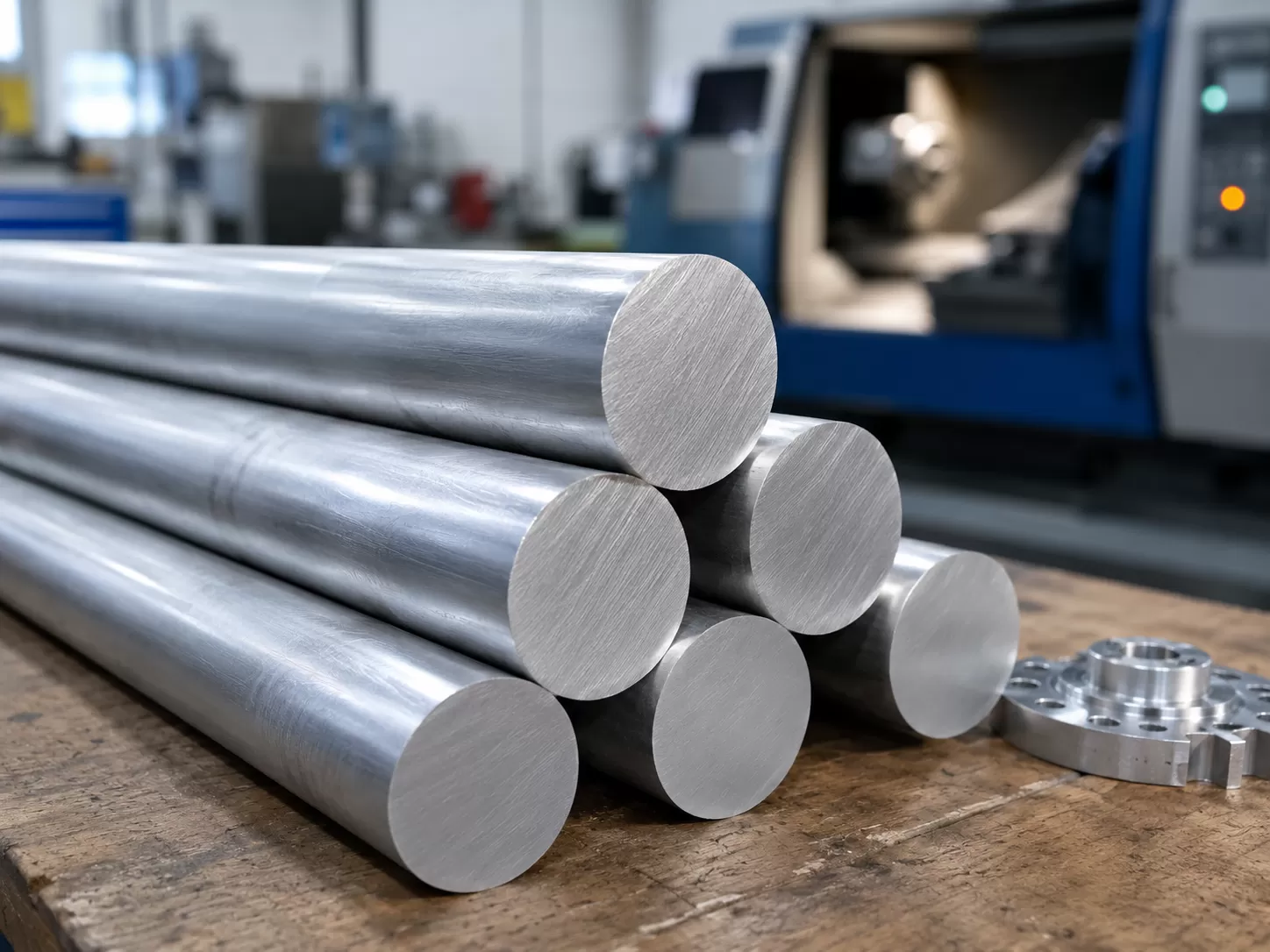
When you need high-volume production with tight tolerances, 2011 aluminum is the premier free-machining aluminum for high-speed CNC turning. Its ability to handle intense spindle speeds while producing brittle, easily broken chips makes it a staple across several major manufacturing sectors. We regularly rely on this alloy to deliver precise, complex parts rapidly without sacrificing quality.
Automotive and Aerospace Components
In the automotive and aerospace sectors, weight reduction and manufacturing speed are critical. We utilize 2011 aluminum to produce intricate internal components that do not require heavy structural load-bearing capabilities but demand extreme dimensional accuracy.
- Fluid System Components: Fuel injector nozzles, hydraulic valves, and sensor housings.
- Speed and Efficiency: High-speed milling operations and rapid turning cycle times allow us to mass-produce these mechanical components with minimal downtime.
- Alternative Processes: For intricate internal pathways where traditional turning hits a wall, advanced edm machining can complement our high-speed turning setups to handle specialized geometries.
Industrial Fasteners, Screws, and Bolts
The exceptional machinability of 2011 aluminum makes it the absolute standard for high-volume hardware production. It is the go-to screw machine stock for automated environments.
- Mass Production: Perfect for manufacturing custom screws, heavy-duty bolts, rivets, and threaded inserts.
- Tool Longevity: The inclusion of bismuth and lead ensures that chip breakers work perfectly, dramatically extending tool life even during continuous, unattended runs.
- Thread Precision: The material allows for clean, sharp threads without tearing, ensuring reliable fastening in industrial machinery.
Electronics, Connectors, and Fittings
The electronics and instrumentation industries demand microscopic precision and excellent surface finishes. This alloy excels in creating small, highly detailed hardware where clean interfaces are mandatory.
- Key Hardware: Specialized electrical connectors, coaxial fittings, test equipment probes, and hardware pins.
- Precision Tolerances: Easily achieves a mirror-like surface finish right off the lathe, reducing the need for secondary polishing.
- Custom Parts: Ideal for complex electronic housings that integrate seamlessly with broader precision machining services to meet strict global quality standards.
Comparing 2011 Aluminum with Alternative Alloys
When choosing the right material for high-speed CNC turning, balancing machinability against mechanical needs is essential. While 2011 aluminum is the undisputed king of fast cycle times and crisp chip control, other alloys bring different strengths to the table.
2011 vs. 6061: Free-Machining vs. All-Around Utility
The choice between 2011 and 6061 aluminum comes down to production volume versus structural needs. 2011 aluminum is engineered specifically for ultra-fast material removal, making it the go-to for complex high-volume parts. On the flip side, 6061 offers excellent corrosion resistance, weldability, and structural strength, though it tends to form long, gummy chips during machining.
| Feature | 2011 Aluminum | 6061 Aluminum |
|---|---|---|
| Primary Benefit | Maximum machinability speed | Excellent structural versatility |
| Chip Formation | Tiny, brittle chips (excellent) | Long, stringy chips (requires chip breakers) |
| Corrosion Resistance | Poor | Very Good |
| Best Used For | Mass-produced precision turnings | Frames, brackets, and structural parts |
2011 vs. 2026: Machinability vs. Fatigue Strength
Both belong to the 2xxx series copper-alloyed family, but they serve completely different roles. We utilize 2011 when the priority is hitting tight tolerances with minimal tool wear during rapid CNC turning services. However, 2026 aluminum sacrifices some of that effortless machinability to deliver significantly higher fatigue strength and fracture toughness, which is why 2026 remains an aerospace standard for high-stress structural components.
2011 vs. 6020: Lead-Free Alternatives for Environmental Compliance
The traditional 2011 alloy relies on small amounts of bismuth and lead to achieve its famous \"free-machining\" status. For projects bound by strict environmental regulations like RoHS and REACH, 6020 aluminum serves as a prominent lead-free alternative. While 6020 offers great corrosion resistance and matches much of 2011’s chip-breaking behavior without the environmental liabilities, 2011 still holds the upper hand for pure cutting speed and tool life optimization in non-regulated applications.
Best Practices for Machining 2011 Aluminum
Optimizing Cutting Speeds and Feeds for CNC Turning
Maximizing the efficiency of 2011 aluminum: the free-machining aluminum for high-speed CNC turning requires aggressive speed and feed settings. Because this alloy produces small, broken chips, you can run your equipment at peak velocity without worrying about bird-nesting or chip buildup.
- Cutting Speed ($V_c$): Aim for 200 to 400 m/min (650 to 1300 SFM) when using high-speed steel, and push beyond 600 m/min (2000+ SFM) with high-grade carbide tooling.
- Feed Rate: Maintain a heavy enough feed (0.15 to 0.40 mm/rev) to ensure the tool actively shears the metal rather than rubbing against it.
- Depth of Cut (DOC): Maintain a stable depth of cut to fully engage the chip breaker geometry on your inserts.
For complex components that require intricate milling or multi-axis profiling alongside rapid turning, utilizing advanced 5-axis CNC machining services for aluminum keeps cycle times low while holding tight geometric tolerances.
Selecting the Right Tooling and Coolants
Tool selection directly impacts both tool life and the final surface finish of your parts. Even though 2011 aluminum is incredibly forgiving on cutting edges, choosing the right material standards for your tooling prevents premature degradation and edge build-up.
| Tooling Element | Recommended Specification | Purpose |
|---|---|---|
| Tool Material | Uncoated or DLC-coated carbide grades | Prevents aluminum from welding to the cutting edge. |
| Tool Geometry | High rake angles and polished flutes | Ensures smooth chip evacuation and reduces friction. |
| Coolant Type | Water-soluble emulsified oils (8-10% concentration) | Delivers excellent cooling and lubrication at high RPMs. |
While dry machining is possible for light milling operations, a continuous flood of coolant is highly recommended during high-speed turning to flush away the rapid accumulation of small, needle-like chips from the work area.
Post-Machining Surface Treatments and Coatings
While 2011 aluminum delivers an exceptional as-machined finish right off the lathe, its high copper content means its natural corrosion resistance is relatively low. If your mechanical components face harsh operating environments, applying the right surface treatment is a critical final step.
- Anodizing (Type II & Type III): Provides a hard, protective oxide layer. Note that the copper in 2011 results in a darker, more matte gray appearance compared to 6061 or 7075 alloys.
- Chemical Conversion Coating (Alodine/Chromate): Offers a budget-friendly option for corrosion protection without altering the critical dimensions of your precision machining services output.
- Electroless Nickel Plating: The premier choice for maximum wear resistance and uniform thickness inside complex internal threads and connectors.
 English
  German
  Dutch
Dutch  Russian
  Czech
Czech  French
  Japanese
  Spanish
  Portuguese
  Korean