

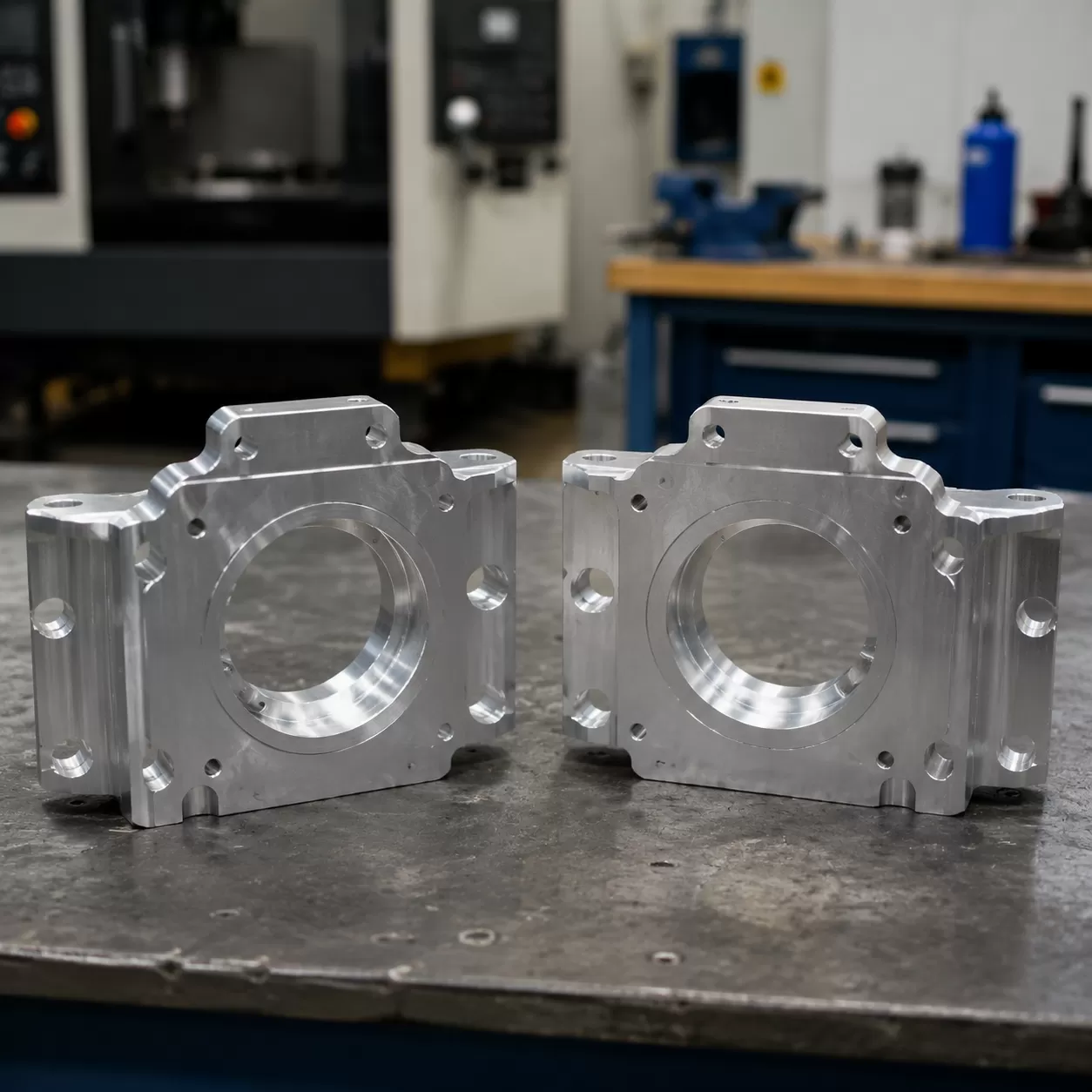
What is a Battery Module End Plate?
Definition and Role in EV Battery Packs
A battery module end plate is a critical heavy-duty structural component positioned at both ends of a lithium battery pack module. Designed to withstand high physical stress, it serves as the primary structural anchor that binds individual battery cells together into a rigid, unified assembly.
In modern electric vehicle (EV) and new energy vehicle applications, these plates ensure that individual cells maintain constant mechanical alignment despite harsh driving conditions, intense vibrations, and thermal expansion forces. Utilizing CNC precision machining during production guarantees that every end plate meets exact geometric standards, providing flawless integration into the overall battery chassis.
Core Functions: Structural Support and Thermal Safety
The battery module end plate plays a dual role in safeguarding the performance, structural longevity, and operational safety of the entire power system:
-
- Structural Compression & Cell Containment: Lithium-ion cells naturally expand and contract during charge and discharge cycles. End plates provide rigid clamping force to prevent cell swelling, mechanical distortion, and structural collapse over long-term usage.
- Vibration & Impact Absorption: Engineered to endure sudden physical impacts, collisions, and continuous road vibrations, shielding delicate internal cell connections from mechanical failure.
- Thermal Management & Safety: Manufactured from high-thermal-conductivity materials, these plates assist in heat dissipation while providing physical containment to help prevent thermal runaway propagation across adjacent cells.
- Electrical Insulation Alignment: High-precision manufacturing ensures exact mounting surfaces for insulating barriers, preventing electrical grounding faults and short circuits across the module.
Key Features and Advantages of Aluminum End Plates
We manufacture each aluminum battery module end plate to solve the core challenges of weight, structural stability, and thermal safety in modern power systems. By combining premium alloys with CNC precision machining, we deliver components engineered to withstand extreme operational demands.
Lightweight Design for Optimized Vehicle Range
Reducing deadweight in a lithium battery pack directly extends driving range and energy efficiency. Aluminum delivers exceptional mechanical performance at roughly one-third the weight of traditional steel components.
-
- Weight Reduction: Cuts structural mass inside the module frame by up to 45%.
- Payload Efficiency: Maximizes overall pack energy density without sacrificing stiffness.
- Material Versatility: Utilizing extrusion-grade 6063 aluminum profiles allows for integrated mounting features and complex weight-saving geometry.
High Structural Strength and Impact Resistance
Battery cells naturally expand and contract during charge and discharge cycles. Every battery module end plate we produce is designed to maintain constant clamping force against cell swelling while protecting the pack from external road shocks.
-
- Expansion Control: Withstands continuous lateral pressure exerted by prismatic and pouch cell stacks.
- Crash Protection: Absorbs high impact energy during sudden shocks or collision events.
- Material Integrity: Leveraging high-yield options through 5083 aluminum CNC machining guarantees exceptional stress-fatigue resistance and overall durability.
Superior Thermal Management Capabilities
Managing heat buildup during rapid charging cycles is vital for safety and longevity in any electric vehicle. Aluminum end plates actively assist in thermal regulation, working seamlessly alongside liquid cooling plates and thermal interface materials.
| Feature | Aluminum End Plate Advantage | Impact on Pack Performance |
|---|---|---|
| High Thermal Conductivity | Passive heat dissipation (~200 W/m·K) | Reduces localized hot spots |
| Precision Tolerances | Surface flatness held within tight limits | Guarantees maximum contact with thermal pads |
| Thermal Stability | Minimal structural deformation | Prevents module warping during high-temp operations |
CNC Precision Machining for Battery Module End Plates
We rely on CNC precision machining to produce high-performance battery module end plates that meet the rigorous demands of modern electric vehicle power systems. When safety, weight, and structural integrity are on the line, standard manufacturing methods fall short.
Why CNC Machining is Crucial for End Plate Production
A battery module end plate must absorb mechanical stress, maintain constant pressure on battery cells, and fit perfectly within tight pack enclosures. Machining these components directly from solid billet or extrusions gives us complete control over geometry and structural performance.
-
- Design Flexibility: Swiftly update CAD models and adjust mounting points without retooling costly molds.
- Flawless Integrity: Eliminate internal voids, porosity, and structural weak spots common in standard die-casting.
- Complex Features: Easily machine intricate cooling paths, wire harness channels, and localized weight-reduction pockets.
Strict Tolerances and High Dimensional Accuracy
In a high-voltage lithium battery pack, even a fraction of a millimeter variance can cause uneven cell compression, electrical shorting, or thermal breakdown. We maintain microscopic accuracy across every face, hole, and mounting thread.
Our facility leverages advanced techniques comparable to high-precision aluminum CNC machining tolerances used in complex automation equipment to guarantee dead-accurate alignment during module assembly.
| Machining Specification | Standard Manufacturing | Our CNC Precision Machining |
|---|---|---|
| Hole-to-Hole Distance | ±0.10 mm | ±0.02 mm |
| Surface Flatness | 0.20 mm/m | ≤ 0.05 mm/m |
| Positioning Accuracy | ±0.08 mm | ±0.01 mm |
| Thread Precision | Standard 2H | Precision Class 3H / 4H6H |
Advanced Surface Treatments and Finishing Options
End plates operate in harsh environments requiring active thermal protection and electrical insulation. We offer customized post-machining finishes designed to maximize durability, heat dissipation, and dielectric strength.
-
- Sandblasting: Creates a uniform matte surface, removing machining marks and optimizing adhesion for secondary coatings.
- Anodized Finish: Provides an anti-corrosive, wear-resistant oxide layer while enhancing dielectric insulation.
- Powder & E-Coating: Applies a thick, non-conductive barrier to protect against high voltages and environmental exposure.
By combining precision milling with specialized surface finishes and tight tolerances, we deliver custom end plates ready for immediate integration into demanding battery platforms.
Material Specifications and Manufacturing Process
Aluminum Alloys Used in End Plate Manufacturing
We select high-grade aluminum alloys to give every battery module end plate the ideal balance of weight, thermal conductivity, and structural integrity.
-
- AL6061: Offers superior yield strength, rigidity, and corrosion resistance. We implement smart aluminum 6061 design for manufacturing strategies to ensure tight tolerances without excessive material waste.
- AL5083: Excellent resistance to harsh environments and mechanical stress, making it ideal for heavy-duty electric vehicle battery enclosures.
- AL6063: High thermal performance that allows for efficient heat dissipation when integrated directly into the thermal management layout.
Extrusion vs. Die-Casting vs. CNC Machining
Choosing the right production method directly impacts structural stability, component precision, and lead times for any new energy vehicle application.
| Process | Structural Strength | Precision & Tolerance | Tooling Cost | Lead Time | Ideal Application |
|---|---|---|---|---|---|
| CNC Precision Machining | Highest (Solid billet) | Ultra-precise (±0.005 mm) | None | Fast (1–3 days) | Custom battery module end plates, prototypes, low-to-mid volume |
| Aluminum Extrusion | Moderate–High | Standard | Medium | Moderate | Long structural side rails and uniform cross-sections |
| High Pressure Die Casting | Moderate | Standard–High | High (Expensive molds) | Slow setup | High-volume standardized mass production |
Quality Inspection and Compliance Standards
To ensure zero defects across every lithium battery pack, our quality control framework relies on strict industrial precision tolerance standards.
-
- 3D CMM Measurement: Full coordinate measuring machine verification for structural mounting holes and flatness.
- Non-Destructive Testing (NDT): Ultrasonic checks to detect internal micro-voids or material flaws before milling.
- Surface Coating Verification: Accurate gauge testing to confirm thickness consistency after an anodized finish or sandblasting treatment.
- Automotive Compliance: ISO 9001 and IATF 16949 certified inspection protocols to guarantee end-to-end reliability.
Main Applications of Battery Module End Plates
We manufacture structural battery module end plates designed to maintain high structural integrity and safety across diverse energy applications.
Electric Vehicle (EV) Power Battery Modules
In the electric vehicle and new energy vehicle sectors, battery module end plates provide essential axial clamping force to resist cell swelling during continuous charge-discharge cycles.
-
- Passenger & Commercial EVs: Absorbs severe road shock, chassis vibrations, and side impacts.
- Material & Precision: Machined from AL6061 or AL5083 with strict precision tolerance to ensure perfect fitment inside high-voltage lithium battery pack enclosures.
Industrial & Commercial Energy Storage Systems
Stationary energy storage units require durable structural containment that withstands continuous mechanical loads over decades of operational life.
-
- Grid & Commercial BESS: Maintains steady compression across massive multi-module rack arrays.
- Thermal Integration: Works alongside structural cooling layouts. We frequently combine these structural parts with our custom CNC machined liquid cold plates for energy storage to manage heat buildup in high-density energy storage installations.
Custom Lithium-Ion Battery Packs
Specialized industries require tailored end plate geometries that off-the-shelf components cannot accommodate.
-
- Aerospace, Marine & AGVs: Designed for unique battery dimensions, severe weight restrictions, and tight space envelopes.
- High-Performance Builds: Utilizes CNC precision machining for rapid prototyping, complex cutouts, integrated wiring channels, and protective anodized finish options.
Custom CNC Battery End Plate Selection & Buying Guide
Selecting the right battery module end plate requires balancing structural integrity, thermal management, and precise tolerances. We work directly with engineering teams to ensure every custom CNC precision machining job meets strict operational demands.
Customization Options and Engineering Specifications
We tailor every battery module end plate to match the exact dimensions and load requirements of your lithium battery pack. Here is a breakdown of our standard manufacturing specs:
| Engineering Parameter | Available Customization Options |
|---|---|
| Primary Materials | Premium aluminum alloys including AL6061 and AL5083 |
| Manufacturing Methods | 4-axis / 5-axis CNC milling, aluminum extrusion finishing, or post-processing for high pressure die casting |
| Machining Tolerances | Precision tolerance control down to ±0.01 mm |
| Surface Treatments | Protective anodized finish, uniform sandblasting, or customized powder coating |
| Target Application | Electric vehicle modules, commercial energy storage systems, and custom battery enclosures |
Key Factors When Choosing a CNC Machining Manufacturer
Partnering with the right factory is essential for high-stakes new energy vehicle component manufacturing. Focus on these core supplier criteria:
-
- Verified Quality Control: Ensure the facility provides CMM inspection reports, material test certifications, and strict batch traceability.
- Multi-Axis Milling Capabilities: Multi-axis machinery ensures complex geometry and mounting holes are processed in a single setup for better alignment.
- Scalable Production Line: Your supplier must handle early-stage rapid prototyping and scale up to full production runs smoothly.
Reviewing technical qualifications early prevents costly delays downstream. You can learn more in our detailed guide on CNC machining supplier selection and quality control to streamline your sourcing decisions.
How to Request a Custom Prototype and Quote
Getting an accurate quote for your custom battery module end plate project is fast and direct. Follow these steps to launch your order:
-
- Upload CAD Files: Share your 3D models (STEP or IGES) and 2D technical drawings highlighting critical tolerances.
- Specify Finish & Alloy: Indicate your required material (such as AL6061) along with surface preferences like sandblasting or an anodized finish.
- Define Production Volume: State your initial prototype count and expected mass production quantities.
Understanding pricing dynamics helps keep your project on budget. Check out our guide on how to calculate small-batch CNC part prices to optimize your initial prototype setup costs. We review all technical files promptly to provide DFM feedback and competitive pricing.

 English
  German
  Dutch
Dutch  Russian
  Czech
Czech  French
  Japanese
  Spanish
  Portuguese
  Korean
Reviews
There are no reviews yet.