

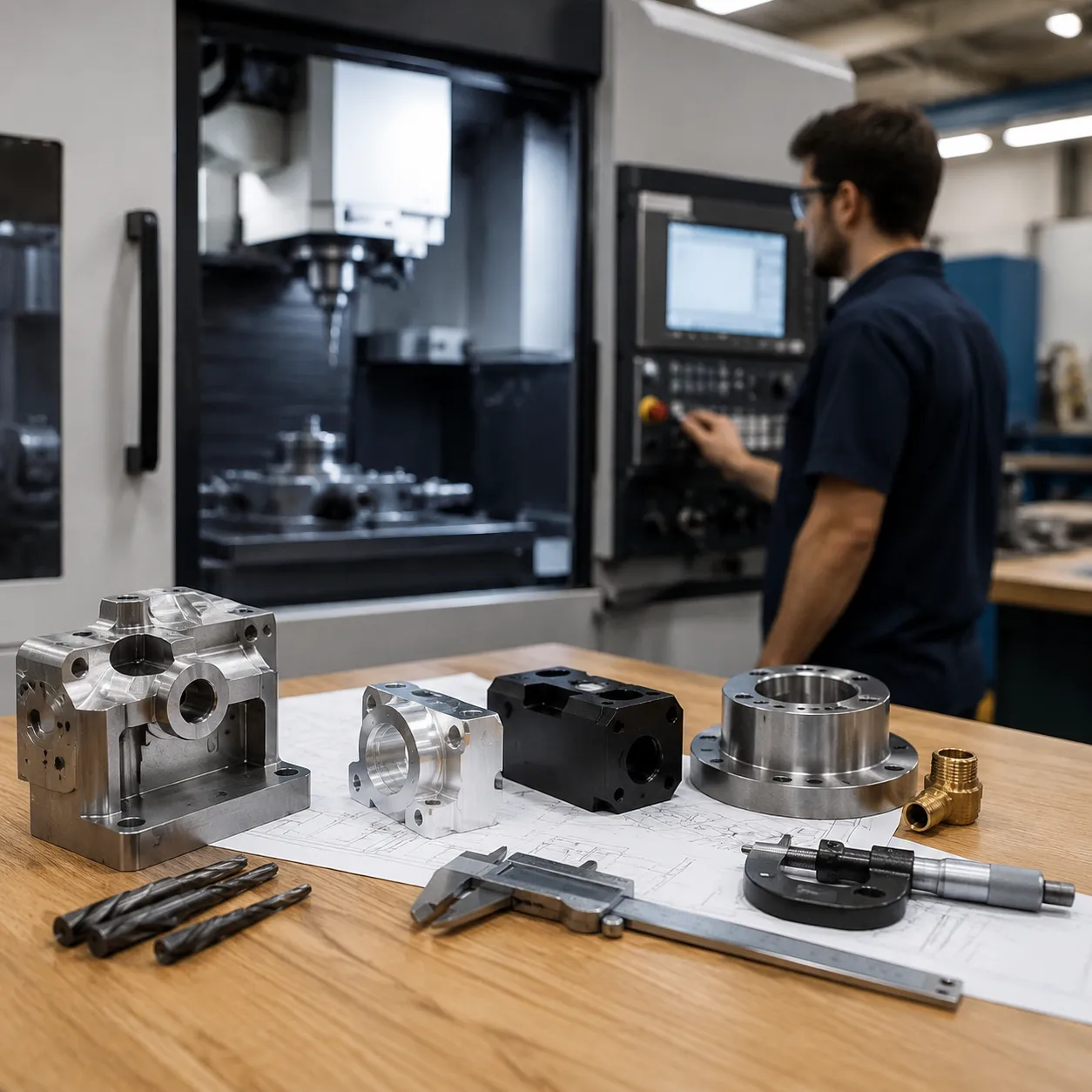
Is CNC Machining Cost-Effective for Small-Batch Production?
Understanding Small-Batch CNC Production
Small-batch CNC part processing is where cost-efficiency and flexibility meet. In global markets, engineers and buyers often need tens or hundreds of pieces—not tens of thousands—yet still require tight tolerances, complex geometries, and reliable lead times. This is exactly where precision CNC machining excels.
Instead of investing in expensive tooling or long setup cycles typical of mass production, small-batch CNC machining relies on programmable, computer-controlled equipment to cut metal and plastics directly from digital 3D models. Setup fees, machining cost calculation, and machine time are focused on rapid changeovers and short runs, making it ideal for:
-
- Rapid prototyping and design validation
- Pre-series production before full-scale ramp-up
- Custom and high-mix, low-volume parts for specialized applications
At our in-house ISO 9001–compliant factory in China, we have structured our CNC workflows to support these small volumes efficiently, balancing setup costs with fast turnaround and consistent quality.
Advantages of CNC Machining for Low-Volume Runs
For low-volume runs, CNC machining delivers a combination of precision, speed, and flexibility that few methods can match. When you calculate the price for small-batch CNC part processing, you are paying for:
-
- High accuracy and repeatability – Micron-level tolerances and stable dimensional accuracy from part #1 to part #100.
- Design freedom – Complex geometries, deep pockets, undercuts, and intricate features are achievable using 3-axis, 5-axis, Swiss machining, and EDM.
- Material versatility – Aluminum, stainless steel, titanium, brass, copper, and engineering plastics like PEEK, ABS, and POM are all available from a single source.
- Reduced upfront investment – No need for costly hard tooling; CAD/CAM programming and tooling setups are amortized over the small batch.
For buyers, this means you can iterate quickly, optimize design, and reach the market faster—without committing to large inventory or long-term tooling.
CNC Machining vs. Alternative Low-Volume Manufacturing Methods
When evaluating whether CNC machining is cost-effective for small-batch production, it is essential to compare it with other low-volume manufacturing options such as casting, molding, or additive manufacturing.
-
- Compared to casting and molding
- These methods often require expensive molds and longer lead times.
- They become cost-effective only at higher batch volumes.
- For small batches, tooling costs dominate the price per part.
- Compared to additive manufacturing (3D printing)
- 3D printing is excellent for very early prototypes but can struggle with tight tolerances, specific surface finishes, and industrial metals.
- CNC machining provides superior dimensional accuracy, material properties, and surface finish for functional end-use parts.
- Why CNC stands out for small batches
- It offers a balanced machining hourly rate, material selection flexibility, and reliable quality control.
- It is particularly strong for parts that must move straight into real-world service, not just prototype demonstrations.
With over 40 advanced CNC machines and more than 70 skilled technicians, we position CNC machining as a cost-effective, production-grade solution for small-batch runs, combining rapid quoting, fast delivery, and solid international manufacturing standards.
How to Calculate the Price for Small-Batch CNC Part Processing
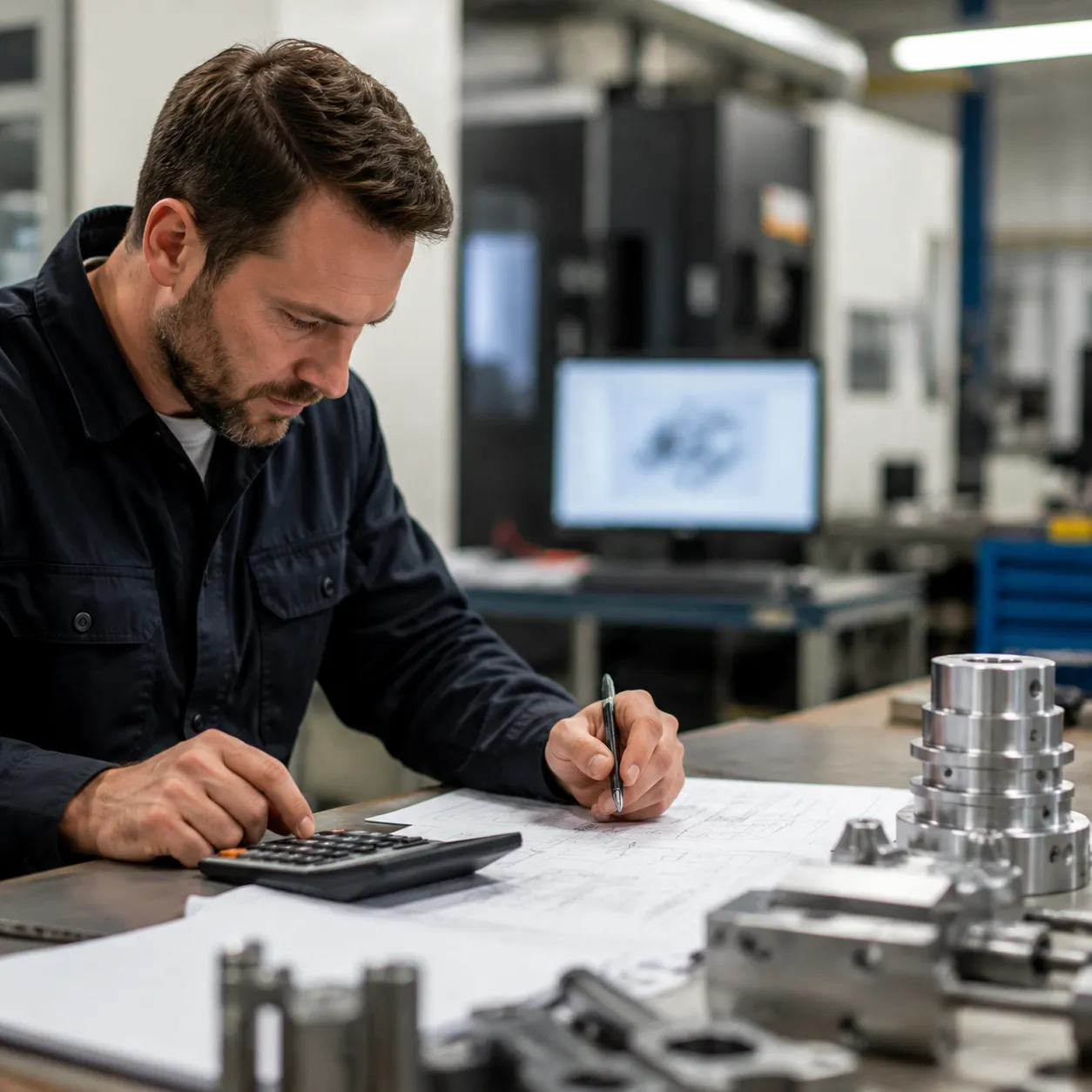
Core Components of CNC Machining Cost Calculation
When I quote small-batch CNC parts, I always break the machining cost calculation into a few core pieces. No matter where you’re sourcing from, these elements drive the final price:
-
- Material cost
- Type of metal or plastic, bar/plate/stock size, and a waste factor.
- Common materials like aluminum, stainless steel, brass, copper, and engineering plastics are priced by weight and stock size.
- Machine time cost
- Actual cutting time on CNC milling, turning, 5-axis, Swiss, or EDM machines.
- Longer cycles and more tool paths mean higher machine time cost.
- Setup and programming cost
- CAD/CAM programming, fixture design, and machine setup time.
- On small batches, this setup cost is spread over fewer parts, so it matters a lot.
- Post-processing and inspection
- Surface finish (polishing, bead blasting, anodizing, etc.)
- Quality control, measuring tight tolerances, and final inspection reports.
- Logistics and handling
- Packing, export handling, and international shipping where needed.
Every small-batch CNC quote we issue is essentially these same components combined in a transparent way.
Calculating Machine Hourly Rates (MHR) and Machining Time
Machine hourly rate (MHR) and machining time sit at the heart of CNC pricing. In practice, I look at:
-
- Different machines, different MHR
- Standard 3-axis milling or turning has a lower hourly rate than advanced 5-axis or Swiss-type machining.
- EDM machining is typically at a premium because of slower processes.
- Estimating machining time
- Cycle time per part (roughing, finishing, drilling, tapping, etc.)
- Number of operations and setups
- Tool changes and spindle speeds required for the chosen material
Once we know the cycle time, the formula is straightforward:
-
- Machining cost = Machine Hourly Rate × Total Machining Time
For example, if a part needs 15 minutes of machining and you run 20 pieces, that’s 5 hours of total machine time. Multiply that by the specific machine’s hourly rate, and you have the core machining cost portion of your quote.
Setup and Programming Costs Explained
For small batches, setup and programming have a bigger impact than many buyers expect. I treat them as separate line items because they cover:
-
- Programming
- Converting your 2D drawings or 3D models into CAM tool paths
- Selecting tools, feeds, speeds, and machining strategies for each feature
- Setup
- Installing and aligning fixtures and vises
- Loading and calibrating tools
- Trial cuts and first article validation
This is mainly time cost, not material. On large production runs, setup cost is spread across hundreds or thousands of parts. On a small batch of 10–50 units, the same setup time has to be absorbed by far fewer pieces, which is why small-batch CNC machining often shows higher cost per part.
A big part of our job is cutting this setup time through smart fixturing and repeatable processes. That’s also why we share practical ideas in resources like our guide on how to reduce machining cost for low-volume automotive CNC parts ordered from China at
https://zscncparts.com/how-to-reduce-machining-cost-for-lowvolume-automotive-cnc-parts-ordered-from-china/.
Using Online CNC Cost Calculators for Estimates
Online CNC cost calculators can be handy if you just want a quick estimate, but they only give rough numbers. Here’s how I see them fitting into the process:
-
- Good for early-stage budgeting
- You can plug in rough dimensions, material type, and quantity to get a ballpark figure.
- Useful for comparing concepts or deciding whether CNC is viable for a prototype or small batch.
- Limitations of generic calculators
- They don’t fully capture part complexity, real-life setup challenges, or specific surface finish and tolerance requirements.
- They rely on average machining cost calculation assumptions, not on your exact drawing.
- Why we still recommend custom quotes
- For accurate pricing, we always work from your actual drawings, 3D models, and requirement list.
- With our in-house factory, over 40 CNC machines, and a 24-hour quoting process, we can give a precise number instead of a general guess.
If you need a reliable number instead of an estimate, the best path is still to submit your design for a tailored quote based on real machine time, material selection, and setup requirements.
Key Influencing Factors of Small-Batch CNC Processing Prices
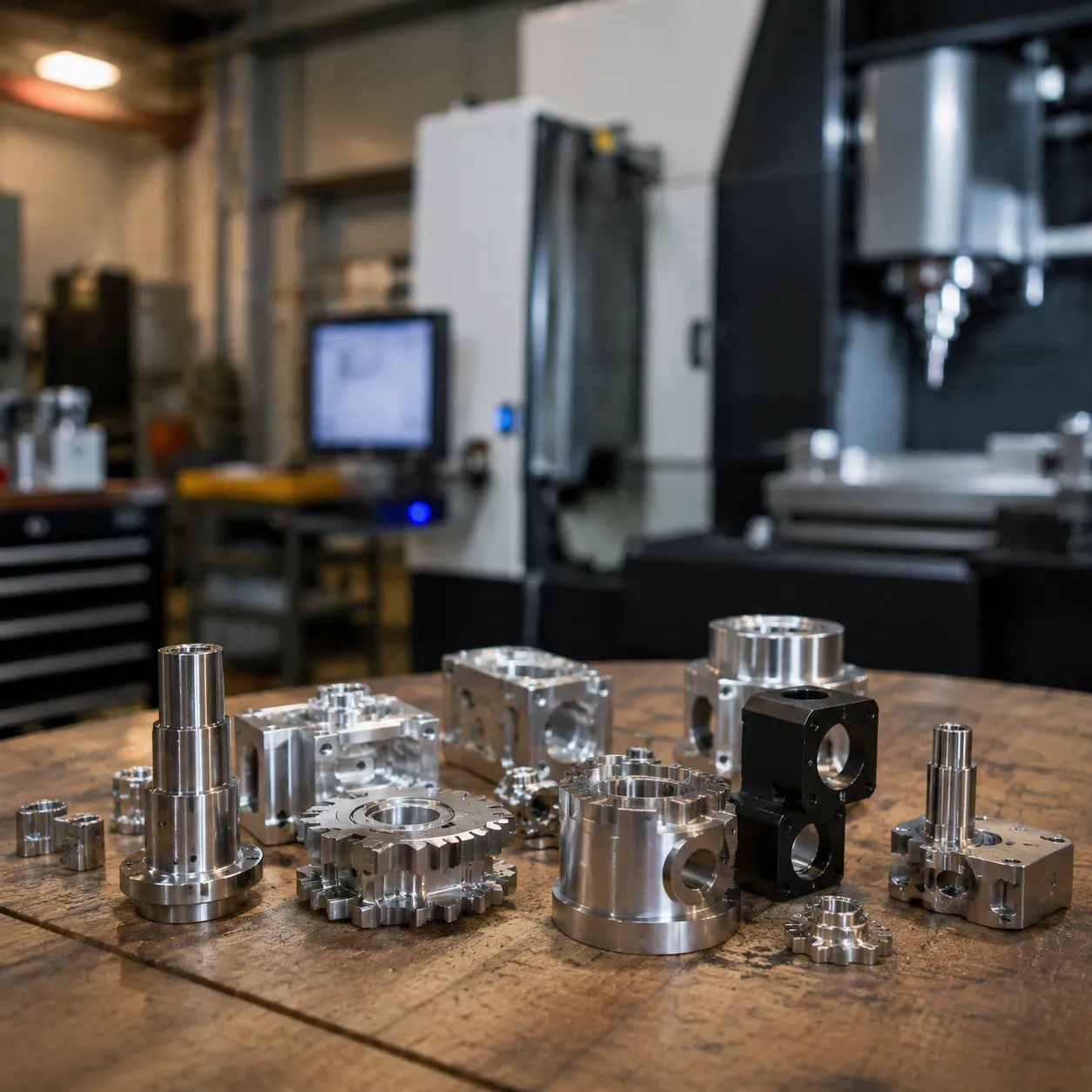
Material Selection and Machinability
Material choice is one of the biggest drivers of small-batch CNC machining cost. When I quote parts, I look at three things: material price, machinability, and the waste rate.
-
- Raw material cost: Metals like titanium and high-grade stainless steel are more expensive than common aluminum or brass. Engineering plastics such as PEEK or PTFE typically cost more than ABS or POM.
- Machinability: Harder, tougher materials take more machine time and wear out tools faster. That increases both machine hourly rate impact and tooling costs on the job.
- Waste factor: Complex shapes often need larger stock sizes, which increases offcut and scrap. More waste means more material cost per part in a small batch.
Choosing a material that balances performance and machinability is one of the most effective ways to control CNC machining cost, especially for global customers working with tight budgets and fast timelines.
Part Geometry and Design Complexity
Part geometry directly affects machine time, programming effort, and setup fees. Simple prismatic parts are always cheaper than complex organic shapes.
Key cost drivers include:
-
- Number of features: More pockets, holes, threads, and undercuts mean longer machining time.
- Access and toolpaths: Deep cavities, thin walls, and narrow channels require slower feeds, special tools, and sometimes multiple setups.
- Multi-face machining: If the part needs to be re-clamped several times or rotated across multiple axes, you’re paying for extra setup and alignment time.
For small-batch CNC part processing, complex geometry spreads over fewer parts, so the cost per unit rises sharply. Design optimization and early manufacturability checks keep this under control.
Tolerances, Dimensional Accuracy, and Surface Finishes
Tight tolerances and premium surface finishes are major cost multipliers in CNC machining.
-
- Tight tolerances: Micron-level dimensional accuracy demands slower cutting speeds, finer toolpaths, and more in-process measurement. That adds machine time and inspection time.
- Critical features: Features that must hold tight tolerances, like bearing seats or sealing surfaces, often need dedicated operations and specialized tooling.
- Surface finish requirements: If the part needs very smooth surfaces, cosmetic finishing, or specialized texture, it can require additional passes or secondary processes.
In industries like medical and electronic devices, these factors are especially important. For deeper guidance on how tolerances and surface finish affect machining cost, our insights on CNC machining for medical devices materials, tolerances and surface finishes at zscncparts.com give practical examples based on real projects.
Machine Selection: 3-Axis vs. 5-Axis Premium Rates
Not all CNC machines carry the same hourly rate. The machine you need for your design has a direct impact on pricing.
-
- 3-axis milling and basic turning: Ideal for simpler geometries and standard parts. Lower machine hourly rates and faster setup make them cost-effective for many small batches.
- 5-axis machining: Used for complex, multi-face parts where multiple angles must be reached in a single setup. These machines are more advanced, and their CNC machining cost per hour is higher.
- Swiss machining and EDM: For very small, precise parts or intricate profiles. These methods can be essential but come with specialized cost structures.
As an in-house factory with milling, turning, 5-axis, Swiss, and EDM capabilities, we match your part geometry with the right machine to avoid unnecessary premium rates while keeping quality consistent with ISO 9001 requirements.
Post-Processing, Quality Control, and Logistics
Small-batch CNC processing prices don’t stop at machining. Post-processing, inspection, and logistics complete the cost picture.
-
- Post-processing: Anodizing, plating, polishing, bead blasting, laser marking, or heat treatment add extra operations, minimum charges, and lead time.
- Quality control: High-precision parts require comprehensive measurement, documentation, and sometimes testing. This includes CMM checks, detailed reports, and traceability.
- Packaging and logistics: Protective packaging, export documentation, and international shipping affect the final price, especially for urgent, global deliveries.
When I build a quote, I look at the entire chain—from raw material to finished, inspected parts on your dock. For a structured overview of how these factors stack up in real projects, our small-batch CNC part processing guide and cost quotation at zscncparts.com breaks down the process step by step for international buyers who need clear, predictable machining cost calculation.
How to Reduce Costs in Small-Batch CNC Processing
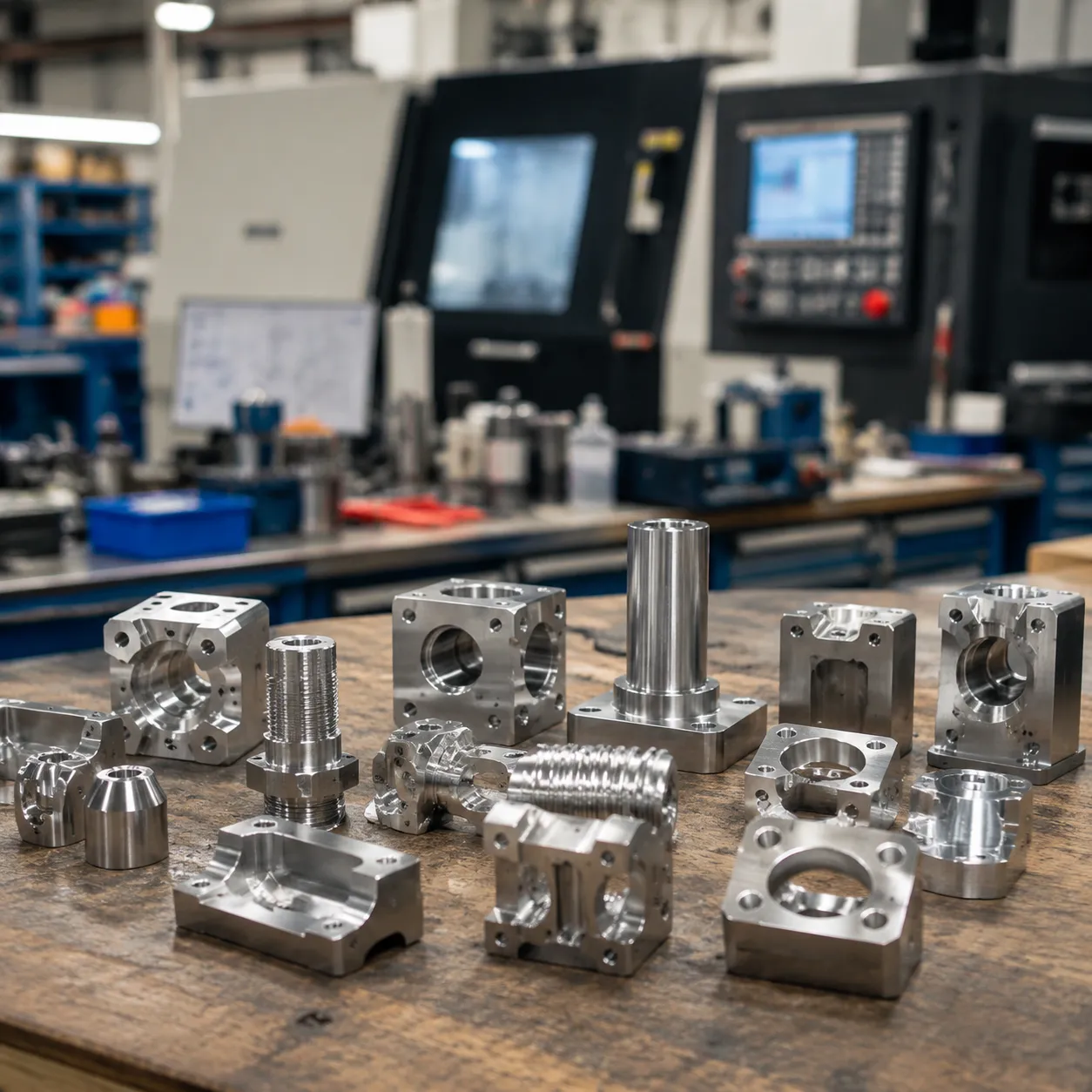
Optimize Design for Manufacturability (DFM)
When I look at small-batch CNC projects, most cost problems start in the design. Design for manufacturability is the fastest way to cut machining cost.
Key DFM moves that lower machining cost calculation:
-
- Avoid unnecessary 5-axis features if 3-axis or simple turning can achieve the same function.
- Limit deep pockets and thin walls that need slow feeds and special tooling.
- Use standard hole sizes and thread types to match common drills and taps.
- Combine parts when possible to reduce total setups and machine time.
- Keep critical features on one side to avoid multiple re-fixtures.
A simple, production-ready design lets our 40+ CNC machines hit stable cycle times and reduces programming, tooling costs, and setup fees.
Material Standardization and Size Optimization
Material selection and machinability directly impact CNC hourly rate and tool life. For small batches, I standardize materials whenever the application allows.
Practical steps:
-
- Choose common grades like Aluminum, Stainless Steel, Brass, or engineering plastics that are already in stock.
- Avoid exotic alloys unless performance truly requires them.
- Match part size to standard stock sizes to reduce waste and cutting time.
- Minimize wall thickness extremes to prevent vibration and slow passes.
This approach keeps raw material costs predictable and shortens lead time, especially for automation and robotics parts where we already optimize design and material choices for precision CNC machining.
Relax Tolerances and Simplify Finishing Requirements
Tolerances, dimensional accuracy, and surface finish are big cost drivers in small-batch CNC machining.
Cost-saving rules I apply:
-
- Use standard tolerances (e.g., general ±0.1 mm) on non-critical features.
- Reserve tight, micron-level tolerances only for mating or functional surfaces.
- Limit high-end surface finishes to areas that truly need cosmetic or friction control.
- Avoid multiple finishing processes (e.g., polish + anodize + coating) unless they add clear value.
For many global customers, shifting from ultra-tight to functional tolerances cuts both machine time and inspection time, while still meeting performance expectations.
Leverage Batch Scaling Strategies and Multipliers
Small-batch CNC pricing is sensitive to how setup costs spread over the batch. I use batch scaling strategies to reduce per-part cost without committing to huge volumes.
Simple tactics:
-
- Run parts in logical batches (e.g., 20–50 pcs) to amortize setup and programming.
- Group similar parts that use the same material and tooling.
- Plan repeat orders so we reuse programs and fixtures, lowering future setup fees.
- Use multipliers wisely: a small increase in quantity often drops the unit price sharply.
This is especially useful for rapid prototyping moving into early production, where per-part cost needs to fall quickly as designs stabilize.
Work Directly with Factory Partners and Automate Processes
To really control CNC machining cost, I cut out middle layers and automate as much as possible.
What works best:
-
- Partner directly with an in-house CNC factory instead of trading companies, avoiding markups.
- Use a single supplier that covers milling, turning, 5-axis, EDM, and sheet metal, so you don’t pay multiple onboarding costs.
- Automate RFQs and drawing handoff through a structured 24-hour quote process.
- Standardize inspection and documentation to reduce back-and-forth on quality requirements.
Working straight with an ISO 9001-compliant factory that has over 40 machines and 70+ technicians keeps pricing transparent, cycle times controlled, and small-batch CNC processing costs as low as possible.
Frequently Asked Questions (FAQs)
What is the average cost of CNC machining per hour?
There’s no single “average” hourly rate that fits every CNC job. The machining cost calculation depends on:
-
- Machine type – Simple 3-axis milling or turning generally has a lower hourly rate than complex 5-axis or Swiss machining.
- Material – Tough materials like stainless steel or titanium can require slower feeds, more tooling costs, and higher effective machine time.
- Part requirements – Tight tolerances, high-end surface finishes, and detailed inspection increase the real hourly cost.
At our in-house ISO 9001-certified factory in China, we don’t publish fixed hourly rates because we quote based on your drawing, material selection, and machining time. That’s the only way to keep pricing realistic and fair for both simple parts and demanding high-performance components.
Why is small-batch CNC machining more expensive per part than large batches?
Small-batch CNC machining usually shows a higher per-part price because key fixed costs are spread over fewer pieces:
-
- Setup fees and programming – CAD/CAM programming, workholding design, tool setup, and first-article validation take time whether you order 5 parts or 500.
- Tooling costs – Custom tools, fixtures, and gauges are amortized across the batch size.
- Inspection and documentation – Dimensional checks and quality reports are done for the project, not just for each part.
When the batch volume is low, those upfront costs don’t have many parts to “share” them, so the cost per part goes up. This is why working with a factory that specializes in small-batch CNC and rapid prototyping is important: we structure our processes, machine selection, and logistics to keep these overheads under control for low-volume runs.
How can I get an accurate price quote for custom CNC parts?
To get a precise CNC machining cost calculation for your project, we need clear technical information rather than generic estimates. The most reliable way is to:
-
- Send a 2D/3D drawing (STEP, IGES, DWG, etc.) with all key dimensions, tolerances, and surface finish notes.
- Specify material (for example, aluminum alloys, stainless steel, titanium, or engineering plastics like PEEK and ABS).
- Indicate quantity and batch strategy – One-off prototypes, small batches, or recurring low-volume orders.
- Note any special requirements – Heat treatment, coating, tight micron-level tolerances, or specific inspection standards.
Our team uses this data to calculate machine time, setup, material usage, post-processing, and quality control. We then provide a 24‑hour custom quote and can support fast delivery, often as quick as 7 days, depending on complexity and batch size.
If you’re working with aluminum performance parts, you can send drawings together with your requirements and we’ll treat them similarly to our existing CNC aluminum machining services for high-performance parts in Europe:
high-performance CNC aluminum machining services.
 English
  German
  Dutch
Dutch  Russian
  Czech
Czech  French
  Japanese
  Spanish
  Portuguese
  Korean