

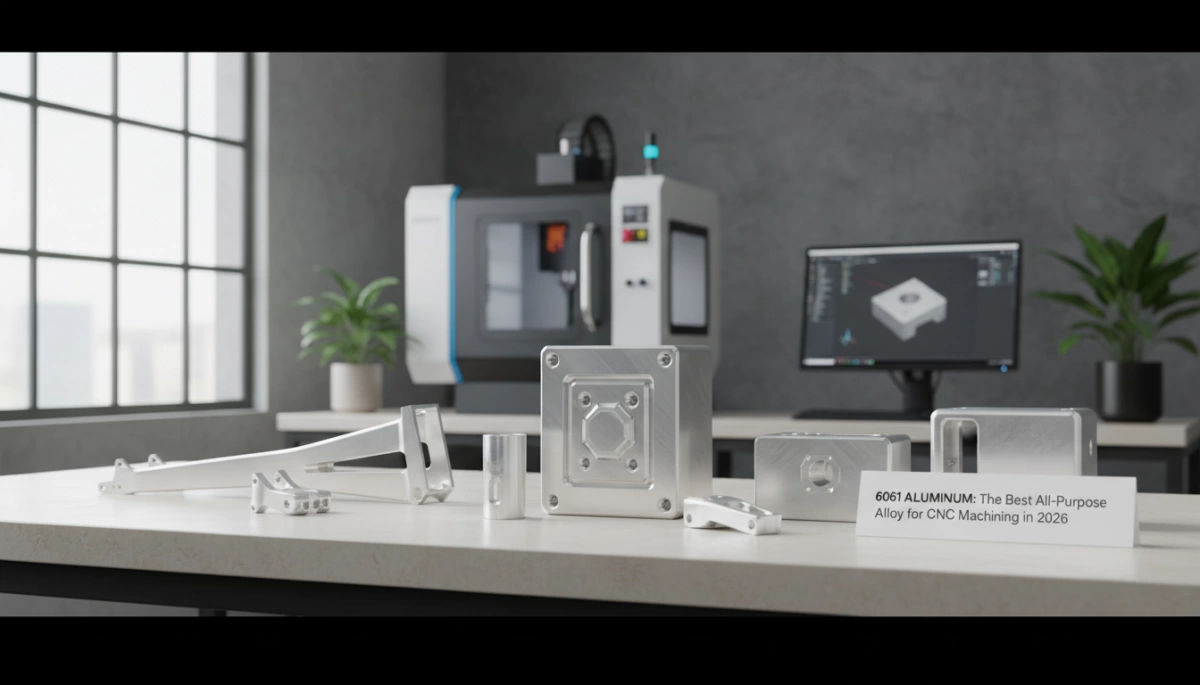
What is 6063 Aluminum? The Ideal Alloy for Extrusions
Understanding 6063 Aluminum and Its Characteristics
6063 aluminum is a heat-treatable aluminum alloy known for its excellent extrudability, smooth surface quality, and reliable corrosion resistance. It is a magnesium-silicon alloy designed for precision-shaped profiles, making it a top choice for aluminum extrusion applications such as frames, rails, and architectural sections. Compared with stronger structural alloys, 6063 delivers a better balance of formability, finish, and dimensional consistency.
Why 6063 is Preferred for Extrusion Profiles
6063 aluminum is preferred for extrusion profiles because it flows well through dies, supports complex cross-sections, and produces clean edges with minimal surface defects. This makes it ideal for CNC machining frames, t-slot profiles, window frames, door frames, and industrial framing systems. Its natural surface quality also reduces finishing effort, helping manufacturers achieve a premium look with efficient processing.
- High extrudability for complex shapes
- Good surface finish for visible components
- Strong corrosion resistance in global environments
- Easy fabrication for cutting, drilling, and assembly
Common Temper Designations: 6063-T5 vs. 6063-T6
The two most common tempers are 6063-T5 and 6063-T6. T5 is typically cooled from the extrusion process and artificially aged, offering good strength with excellent stability for many frame applications. T6 receives a stronger solution heat treatment and aging cycle, delivering higher mechanical performance when extra load capacity is required. In practice, the choice depends on the balance between mechanical properties, cost, and fabrication needs.
| Temper | Main Benefit | Typical Use |
|---|---|---|
| 6063-T5 | Good strength and finish | Frames, profiles, architectural parts |
| 6063-T6 | Higher strength | Loaded structural components |
Key Technical Specifications and Material Composition of 6063 Aluminum
Chemical Composition of 6063 Aluminum Alloy
I use 6063 aluminum as a go-to extrusion grade because its chemistry is balanced for clean profile forming and stable finishing. The alloy is based on magnesium and silicon, which gives it good extrudability and solid corrosion resistance.
| Element | Typical Range | Main Effect |
|---|---|---|
| Aluminum (Al) | Balance | Base metal |
| Magnesium (Mg) | 0.45–0.90% | Strength and heat-treat response |
| Silicon (Si) | 0.20–0.60% | Extrudability and surface quality |
| Iron, copper, manganese, others | Low trace levels | Control of performance and finish |
Mechanical Properties: Strength, Hardness, and Ductility
6063 aluminum gives a practical mix of yield strength, tensile strength, and ductility. I like it for frames and profiles where shape quality matters as much as strength.
- Good strength for light structural use
- Moderate hardness for stable machining and handling
- High ductility for bending and forming
- Reliable weldability for joined assemblies
| Property | 6063-T5 | 6063-T6 |
|---|---|---|
| Tensile strength | Moderate | Higher |
| Yield strength | Lower | Higher |
| Ductility | Very good | Good |
| Hardness | Medium | Higher |
Physical Properties and Thermal Conductivity
6063 aluminum has a low weight, smooth finish potential, and strong thermal conductivity. That makes it a strong fit for industrial framing, electronic covers, and heat-dissipating profiles.
| Property | Typical Benefit |
|---|---|
| Density | Lightweight for easy handling and transport |
| Thermal conductivity | Useful for heat transfer in profiles and enclosures |
| Corrosion resistance | Works well in indoor and outdoor use |
| Surface finish | Supports anodizing and decorative coating |
For buyers who care about precision and tolerance control, I keep 6063 aluminum aligned with exact profile specs, much like the standards used in tight tolerance CNC machining for European projects.
CNC Machining and Fabrication of 6063 Aluminum
CNC Machining for Precision Frames and Components
I machine 6063 aluminum when I need clean edges, stable tolerances, and a good surface finish on CNC frames and profiles. It cuts smoothly, supports tight dimensional control, and works well for industrial framing, enclosure parts, and lightweight structural components. For buyers who need accurate quoting and repeatable results, a clear machining plan matters; I also use a detailed CNC machining quote checklist to keep cost, tolerance, and finish requirements aligned.
Drilling, Tapping, and Secondary Fabrication Processes
6063 aluminum is easy to drill, tap, mill, and deburr, which makes it practical for fast assembly and secondary fabrication. I usually recommend it for:
- T-slot frames and joined profile systems
- Threaded mounting holes and hardware interfaces
- Cut-to-length parts with clean end machining
- Light post-processing like milling, chamfering, and slotting
Its balance of machinability and corrosion resistance keeps production simple for global projects.
Welding and Joining Techniques for 6063 Profiles
6063 profiles can be joined with welding, mechanical fasteners, or corner brackets depending on strength and appearance needs. For visible frames, I prefer methods that preserve the surface finish and reduce distortion. In practice, the choice usually depends on:
- Required load and stiffness
- Final appearance and surface finish
- Assembly speed and serviceability
- Whether the part will be anodized or coated after fabrication
For custom extrusions, the cleanest results come from planning welding and joining around the profile design from the start.
The Aluminum Extrusion Process for Custom Profiles
How 6063 Aluminum Extrusions are Manufactured
I work with 6063 aluminum because it extrudes cleanly and supports tight-profile production for CNC machining frames and structural parts. The billet is heated, pushed through a die, then cooled, stretched, and cut to length. This gives stable custom extrusions with a smooth surface finish and strong extrudability for global industrial framing needs.
Precision Tooling and Die Design for Complex Shapes
Custom profiles depend on the die. I design tooling to hold sharp corners, thin walls, T-slot details, and other complex shapes without losing flow balance. Good die design helps control aluminum alloy movement, reduces scrap, and keeps the profile ready for secondary fabrication and milling.
Achieving Dimensional Accuracy in Custom Frames
Dimensional control comes from the full process: die setup, cooling rate, stretch straightening, and final inspection. For custom frames, I keep tolerances tight so parts fit assembly systems, electronic covers, and architectural profiles without extra rework. For projects needing precise CNC post-processing, our metal material and fabrication solutions support consistent results across batch orders.
- Stable profile shape for repeat production
- Clean edges and smooth surfaces for easier machining
- Tight tolerances for frame assembly and fit-up
- Good extrudability for complex custom sections
Surface Treatment and Finishing Options for 6063 Aluminum
Anodizing Performance and Decorative Finishes
I use anodizing often on 6063 aluminum because it improves corrosion resistance and gives a clean, premium surface finish. It also keeps the natural metal look while adding color control for architectural profiles, window frames, and CNC machining frames.
| Finish | Main Benefit | Best Use |
|---|---|---|
| Anodized | Hard, wear-resistant, decorative | Frames, covers, visible profiles |
| Clear anodized | Natural metal appearance | Industrial and clean-design parts |
| Colored anodized | Better branding and style | Consumer products and display systems |
Powder Coating and Electrophoretic Coating
For global customers who need stronger color coverage, I often recommend powder coating. It gives a thicker protective layer and works well for door frames, industrial framing, and custom extrusions. Electrophoretic coating offers more even coverage on complex shapes and helps protect tight corners and hidden areas. For aluminum parts used in medical or high-cleanliness environments, surface quality matters just as much as function; related precision finishing expectations are similar to what I see in medical device CNC machining services.
Brushed, Polished, and Mill Finish Options
Different projects call for different looks:
- Brushed finish: soft texture, modern look, hides minor marks
- Polished finish: bright, reflective, decorative
- Mill finish: raw and cost-friendly, good for internal parts
| Finish Type | Look | Typical Advantage |
|---|---|---|
| Brushed | Matte, linear texture | Better appearance, less visible wear |
| Polished | Glossy, reflective | High-end decorative use |
| Mill finish | Plain, untreated | Low cost, fast production |
In practice, the right finish depends on appearance, protection, and budget. For 6063 aluminum profiles, I balance surface finish, anodizing performance, and coating choice to match the final use without overcomplicating production.
Core Applications of 6063 Aluminum Profiles
Architectural Framing and Construction Systems
I use 6063 aluminum extrusion for architectural profiles because it gives a clean surface finish, stable dimensions, and strong corrosion resistance. It works well for window frames, door frames, curtain walls, rails, and t-slot building systems. For global projects, it is a practical choice when teams need easy fabrication, neat appearance, and reliable fit across different industrial framing standards. Aluminum CNC machining parts supplier for custom frames and profiles
Electronic Enclosures and Heat Sinks
6063 aluminum is also common in electronic covers, enclosures, and heat sinks because it balances extrudability with good thermal conductivity. I prefer it for parts that need clean machining, anodizing, and consistent wall thickness. It handles cutouts, mounting holes, and secondary milling well, which makes it a solid material for compact devices and control boxes.
Industrial Machinery and Consumer Product Frames
For industrial machinery and consumer product frames, 6063 aluminum profiles give lightweight support with enough strength for many non-heavy-load structures. I use it for machine guards, display frames, equipment housings, and modular assemblies where appearance, weldability, and fabrication speed matter. In real production, this alloy is popular because it is easy to process, cost-effective, and dependable for custom extrusions used worldwide.
Comparison: 6063 Aluminum vs. 6061 Aluminum Alloy
Strength vs. performance
I usually treat 6063 aluminum as the better fit for extrusion frames and profiles, while 6061 aluminum alloy is the stronger choice for heavy-duty parts.
| Item | 6063 Aluminum | 6061 Aluminum |
|---|---|---|
| Mechanical strength | Moderate | Higher |
| Yield strength | Lower | Higher |
| Main use | Frames, profiles, architectural parts | Load-bearing parts, machined components |
- 6063 gives clean shape control and stable performance.
- 6061 handles more stress and impact.
- For most industrial framing, 6063 is the more practical aluminum alloy.
Surface quality and appearance
6063 aluminum has a smoother surface finish and is easier to anodize well, which is why I prefer it for visible profiles, window frames, door frames, and decorative architectural profiles.
- 6063: better surface quality, cleaner finish, better for anodizing
- 6061: slightly rougher appearance after extrusion or milling
For customers who care about a neat look and consistent surface finish, 6063 usually wins.
Machinability and extrudability
Both alloys machine well, but the trade-off is clear: 6061 is stronger after machining, while 6063 is easier to extrude into complex shapes with tight tolerances.
| Factor | 6063 Aluminum | 6061 Aluminum |
|---|---|---|
| Extrudability | Excellent | Good |
| Machinability | Good | Good to very good |
| Profile complexity | High | Moderate |
| Best fit | T-slot frames, custom extrusions | Structural CNC parts |
For global buyers balancing cost, finish, and production speed, 6063 aluminum extrusion is often the smarter pick for frame systems. For more demanding CNC aluminum machining, I use high-precision CNC aluminum machining services for performance parts when the design needs stronger 6061-style behavior.
Selection Guide: Buying 6063 Aluminum Extrusions
Factors Influencing 6063 Aluminum Pricing
I usually price 6063 aluminum extrusions based on these main points:
| Factor | Impact on Price |
|---|---|
| Alloy condition | T5 temper is often lower cost than T6 temper |
| Profile complexity | Custom shapes and tight tolerances raise tooling and extrusion cost |
| Surface finish | Anodizing, powder coating, or polishing adds extra processing |
| Order volume | Higher volumes usually reduce unit price |
| Certification | Material reports and compliance documents can add cost |
I also factor in wall thickness, length, and scrap rate during fabrication. For buyers in global markets, shipping method and local compliance can change the final landed cost a lot.
How to Choose the Right Temper for Your Application
| Temper | Best For | Simple Note |
|---|---|---|
| 6063-T5 | Frames, profiles, covers, light structural use | Good balance of strength and extrudability |
| 6063-T6 | Parts needing higher mechanical properties | Stronger, but not always needed for basic profiles |
I choose 6063-T5 when the project needs clean surface finish, stable extrusion, and easy fabrication. I choose 6063-T6 when the design needs more yield strength and tensile strength, especially for loaded industrial framing or precision CNC machining parts.
Quality Standards and Certification Requirements
For reliable 6063 aluminum extrusion supply, I look for:
- Chemical composition control for consistent aluminum alloy performance
- Mechanical properties data such as yield strength and tensile strength
- Dimensional tolerances for frames, t-slot profiles, and custom extrusions
- Surface quality checks for anodizing and decorative finish consistency
- Traceability documents like mill test certificates and inspection reports
In global sourcing, I keep specs clear and compare against the needed European standard, local industrial framing rules, and customer drawing tolerances. A good supplier should also confirm weldability, corrosion resistance, and batch consistency before shipment.
Frequently Asked Questions About 6063 Aluminum
Is 6063 aluminum suitable for CNC machining?
Yes. I use 6063 aluminum for CNC machining when the job needs clean cuts, stable profiles, and a good surface finish. It machines well, especially for frames, brackets, covers, and custom extrusions. It is not the strongest aluminum alloy, but for precision parts and general industrial framing, it gives a solid balance of machinability, extrudability, and corrosion resistance.
What is the difference between 6063-T5 and 6063-T6?
The main difference is strength. 6063-T5 is typically cooled from the extrusion process and artificially aged, while 6063-T6 is solution heat treated and aged for higher mechanical properties. In simple terms:
- T5: easier to form, good for standard aluminum extrusion profiles
- T6: stronger, better for load-bearing frames and tighter performance needs
For most global buyers, I see T5 used more in architectural profiles and T6 chosen when yield strength matters more.
Is 6063 aluminum corrosion resistant?
Yes. 6063 aluminum has strong corrosion resistance, especially in indoor, urban, and general outdoor use. Its magnesium and silicon content supports stable performance, and anodizing makes it even better for long-term protection and appearance. That is why I often recommend 6063 aluminum for window frames, door frames, electronic enclosures, and other parts that need a clean look with low maintenance.
For buyers comparing materials, I also keep a broad range of aluminum materials for CNC machining and extrusion applications available for different strength, finish, and fabrication needs.
 English
  German
  Dutch
Dutch  Russian
  Czech
Czech  French
  Japanese
  Spanish
  Portuguese
  Korean