

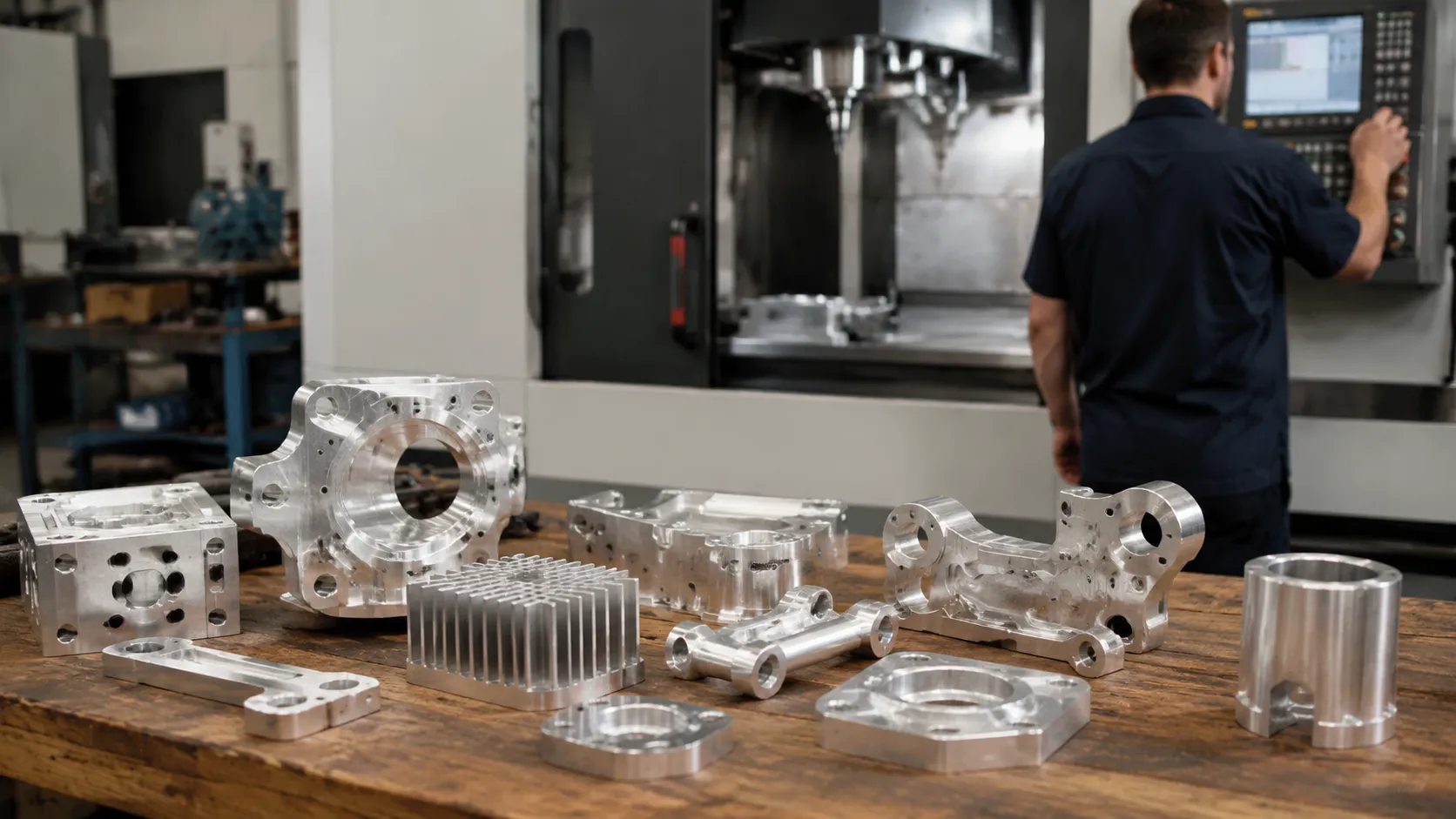
Finding a reliable shop for CNC machining 6061 aluminum alloy shouldn't feel like a gamble. One wrong choice, and you're stuck with out-of-tolerance parts, poor surface finishes, or missed project deadlines.
Having vetted dozens of machine shops over the years, I know exactly what separates elite fabricators from low-tier operations. In this guide, you’re going to learn the precise technical criteria and quality checklists you need to confidently choose a manufacturer for your production runs.
Let's dive right in.
Why 6061 Aluminum Alloy Matters in CNC Machining
When you need a material that balances strength, weight, and cost, 6061 aluminum CNC machining is the industry standard. It is the go-to choice for global manufacturing because it handles cutting forces beautifully while staying structurally sound. However, getting the most out of this material requires more than just a standard lathe or mill. It demands an experienced aluminum alloy CNC manufacturer who understands how the metal behaves under stress.
Key Properties of 6061 (Especially 6061-T6)
The T6 temper is where this alloy truly shines. Through solution heat treating and artificial aging, 6061-T6 machining services deliver components with excellent mechanical integrity.
-
- High Strength-to-Weight Ratio: Offers structural toughness without adding heavy mass to your assembly.
- Excellent Corrosion Resistance: Naturally forms an oxide layer that protects against environmental degradation.
- Superb Machinability: Chips break away cleanly, which reduces tool wear and speeds up production times.
- Anodizing Compatibility: Accepts protective and decorative surface coatings exceptionally well.
| Property | Typical Value (6061-T6) | Benefit for Precision Components |
|---|---|---|
| Tensile Strength | 310 MPa (45,000 psi) | Resists deformation under high structural loads |
| Yield Strength | 276 MPa (40,000 psi) | Maintains shape memory under continuous stress |
| Thermal Conductivity | 167 W/m-K | Dissipates heat quickly during high-speed milling |
Typical Applications Where 6061 CNC Machining Is Used
Because of its versatility, we utilize this alloy to manufacture custom 6061 aluminum parts across a massive range of demanding global industries:
-
- Aerospace: Lightweight brackets, enclosures, and structural fittings.
- Automotive: Engine components, suspension parts, and custom valve covers.
- Electronics: Heat sinks, chassis, and shielded housings that require high thermal conductivity.
- Industrial Automation: Robotic arms, fixtures, and pneumatic manifolds.
Why the Right Manufacturer Is Critical for 6061
Just because 6061 is highly machinable does not mean any aluminum CNC fabrication shop can hit your exact specifications. Subpar shops often run their machines at incorrect speeds, leading to localized overheating, material warping, and burr formation.
Partnering with a specialized precision aluminum machining expert ensures that tight CNC machining tolerances for aluminum are consistently met. The right partner optimizes cutting parameters, manages internal material stresses, and delivers flawless anodized 6061 CNC components that fit your assembly perfectly every single time.
Step 1 – Define Your Project Requirements Before Shortlisting Manufacturers
Before you start contacting any aluminum alloy CNC manufacturer, you need to know exactly what you need. Skipping this step usually leads to miscommunication, delayed timelines, and unexpected costs.
Clarify Design and Performance Requirements
Every part has a specific job to do. We always recommend analyzing the structural demands, weight limits, and environmental conditions your parts will face. For example, if you are developing automation components, you must balance lightweight design with rigidity to ensure smooth mechanical movements. For deeper insights on balancing these specific design factors, check out our guide on precision CNC machining for automation and robotics.
Specify Material and Temper Requirements Clearly
Do not just say "aluminum." You need to be specific. While 6061-T6 is the industry standard for its excellent strength-to-weight ratio and machinability, other tempers or a strict machining 6061 vs 7075 comparison might be necessary depending on your stress and load requirements.
| Material Designation | Key Condition | Best Used For |
|---|---|---|
| 6061-T6 Aluminum | Solution heat-treated and artificially aged | High strength, excellent structural integrity, clean machining |
| 6061-O Aluminum | Annealed (un-aged) | Maximum ductility, low strength, easy forming before final treating |
Define Volume, Lead Time, and Budget Constraints
Your project volume dictates the type of fabrication shop you choose. A prototype shop won't handle mass production efficiently, and a high-volume facility will overcharge for short runs. Clearly layout your expected quantities, target delivery dates, and financial boundaries from day one to keep the procurement process transparent.
Prepare the Right Technical Package
An expert fabrication partner cannot give an accurate quote based on a napkin sketch. To get a fast, precise quote for your custom 6061 aluminum parts, ensure your technical package includes:
3D CAD Files: STEP or IGES formats for CNC programming.
2D Technical Drawings: PDF format showing critical dimensions, strict tolerances, and surface finish notes.
Material Certification Requirements: Note if you need raw material traceability reports.
Post-Processing Instructions: Clearly state if you require anodizing, powder coating, or passivating.
Step 2 – Evaluate a Manufacturer’s Core CNC Capabilities for 6061 Aluminum
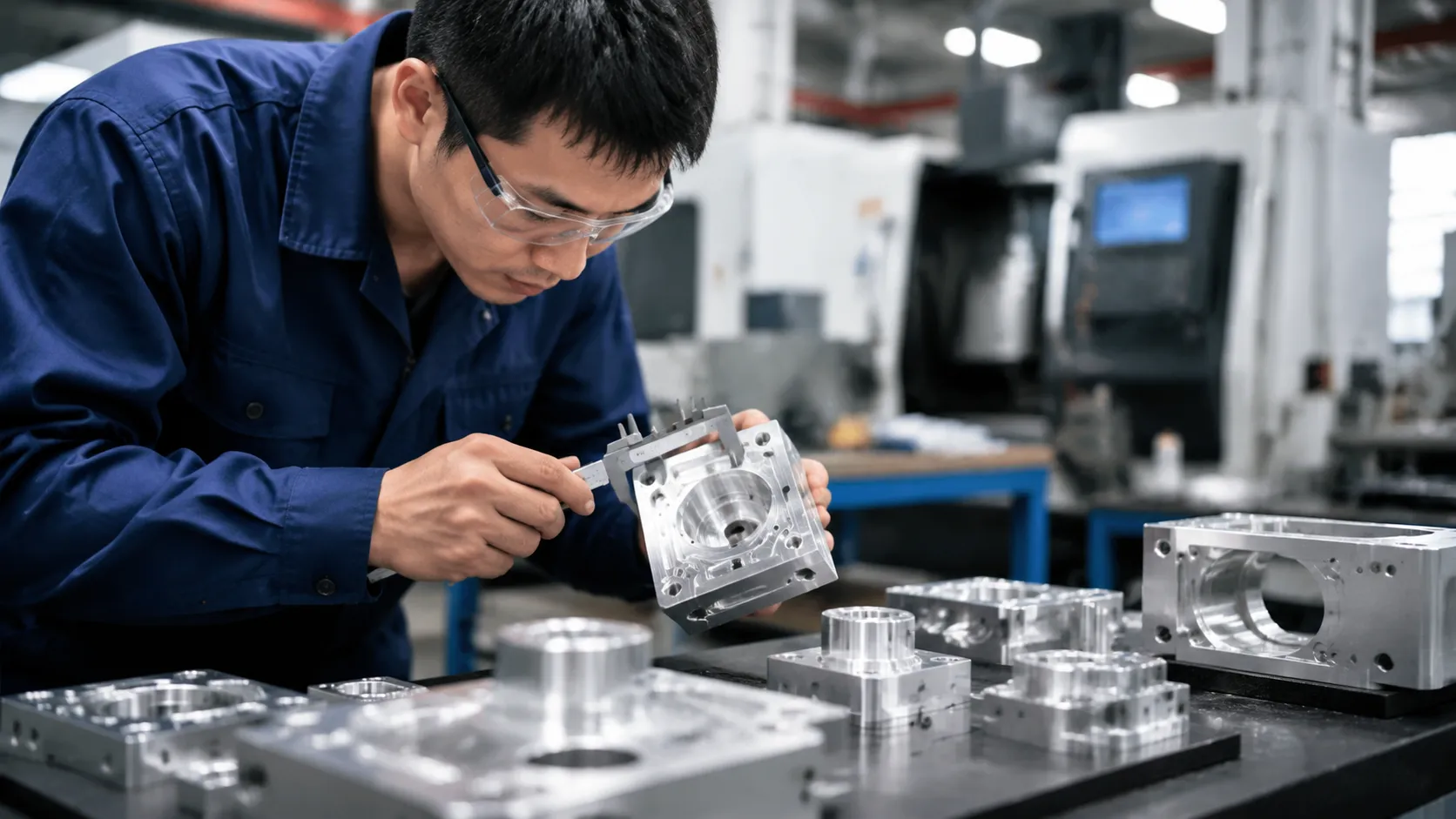
When choosing an aluminum alloy CNC manufacturer, you must look closely at their actual shop floor capabilities. Not all machine shops handle 6061 the same way. To get custom 6061 aluminum parts that match your exact prints, the provider needs the right gear, a deep understanding of the metal, and optimized machining strategies.
CNC Equipment and Process Capability
High-precision aluminum components require advanced machinery. Look for a partner running multi-axis machines (like 3-axis, 4-axis, and 5-axis CNC mills) and high-speed CNC lathes. 6061 aluminum cuts beautifully, but only if the machine has the spindle speed and rigidity to handle high material removal rates without introducing vibration or part distortion.
Experience Specifically with 6061 Aluminum
Experience matters because aluminum behaves differently depending on how it was processed. For instance, understanding the nuance of 6061-T651 vs 6061-T6 aluminum stress relief is critical for preventing part warping during heavy milling operations. We have spent years dialing in our 6061-T6 machining services, meaning we know exactly how the material reacts to heat and tool pressure.
Tolerances and Precision They Can Consistently Achieve
A reliable aluminum CNC fabrication shop must hit tight tolerances repeatably, not just on a single golden sample. Below is a quick breakdown of the standard vs. high-precision CNC machining tolerances for aluminum that you should expect from a top-tier provider:
| Machining Feature | Standard Tolerances | High-Precision Tolerances |
|---|---|---|
| Linear Dimensions | ± 0.127 mm (± 0.005") | ± 0.0127 mm (± 0.0005") |
| Hole Diameters | ± 0.050 mm (± 0.002") | ± 0.005 mm (± 0.0002") |
| Flatness / Parallelism | ± 0.100 mm (± 0.004") | ± 0.025 mm (± 0.001") |
Cutting Parameters and Process Optimization
True precision manufacturing comes down to process optimization. To keep your CNC machining 6061 cost down while keeping quality high, we focus heavily on dialing in the perfect cutting parameters. This means matching the ideal spindle speeds, feed rates, and specialized carbide tooling coatings to eliminate chip buildup and edge burrs. Proper parameter control ensures a flawless surface finish straight off the mill, saving you money on post-processing.
Step 3 – Assess Quality Management, Inspection, and Certification
Quality Systems and Certifications
When you are selecting an aluminum alloy CNC manufacturer, certifications tell you if a shop actually walks the walk. We maintain a strict quality management system to ensure every single batch meets your exact engineering standards. For high-stakes industries, working with an ISO-certified CNC machine shop is non-negotiable. If you are developing parts for demanding sectors, choosing a partner with the right quality framework ensures compliance and traceable material sourcing, which is especially critical when executing CNC machining for aerospace parts.
Inspection Equipment and Metrology Capability
High-precision aluminum components require more than just a good eye; they require advanced metrology tools. Our facility utilizes coordinate measuring machines (CMM), optical comparators, and digital height gauges to verify part geometry. We don't just trust the machine output—we validate every critical dimension against your blueprints to guarantee absolute accuracy before your parts ship out.
Handling of 6061 Material and Dimensional Stability
6061-T6 is highly machinable, but improper handling can cause internal stresses to warp the material during or after production. We employ specialized clamping techniques, optimized tool paths, and controlled storage environment protocols to maintain the dimensional stability of your custom 6061 aluminum parts. This prevents distortion, ensuring your components stay flat, true, and perfectly within specifications.
Defect Prevention, Root Cause Analysis, and Corrective Actions
True precision manufacturing relies on proactive defect prevention. When unexpected variations occur, our engineering team immediately triggers a structured root cause analysis and applies formal corrective actions.
| Quality Metric | Our Standard Practice |
|---|---|
| Material Verification | Raw 6061-T6 material certification and destructive/non-destructive testing. |
| In-Process Inspection | First-article inspection (FAI) and operator checks at defined production intervals. |
| Metrology | 100% inspection on critical CNC machining tolerances for aluminum. |
| Traceability | Full documentation routing from raw stock to finished, shipped components. |
Step 4 – Verify Surface Finishing and Post-Processing Capabilities
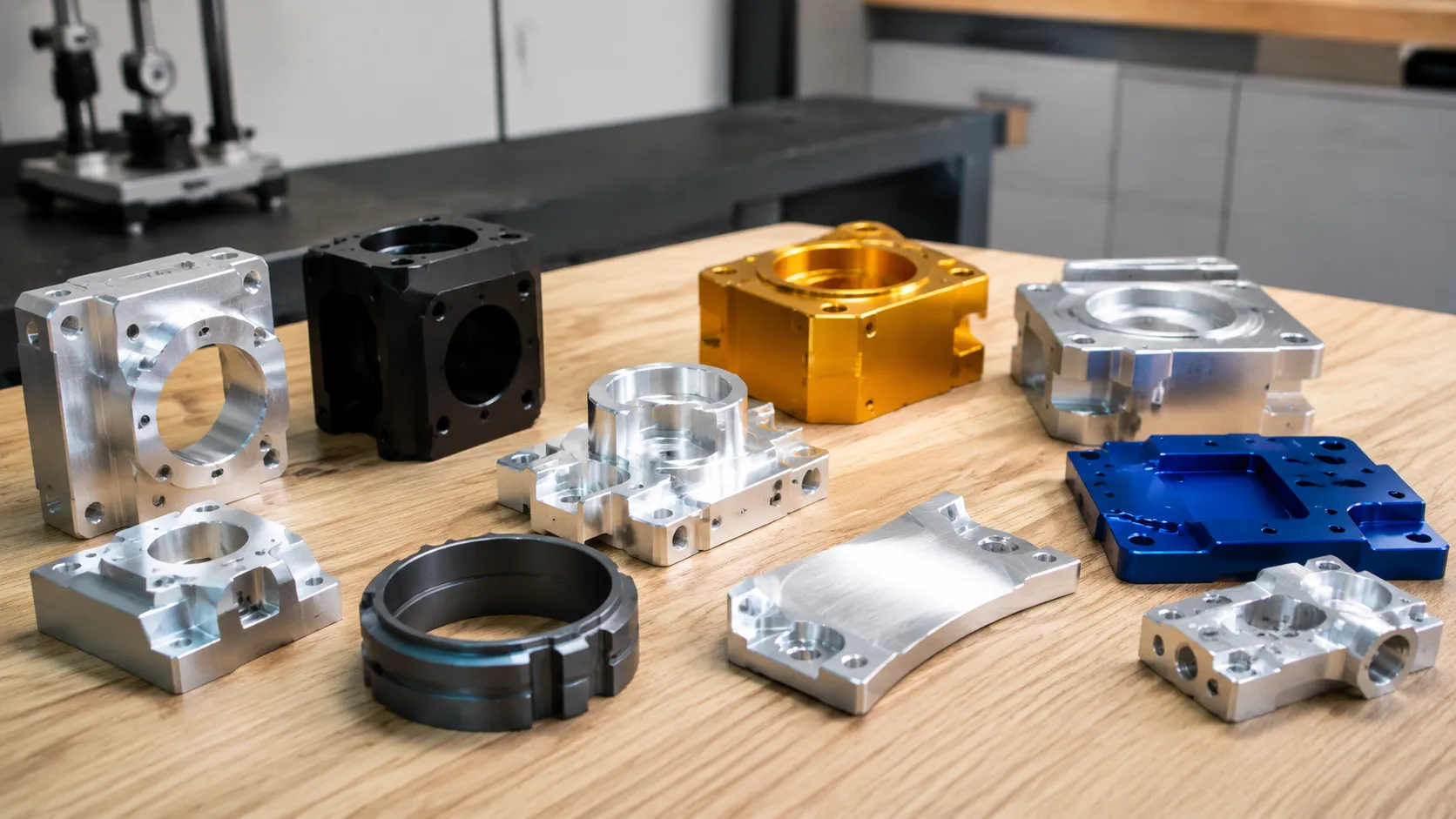
6061 aluminum alloy is highly adaptive, but its performance and look depend heavily on post-processing. When choosing an aluminum alloy CNC manufacturer, you must verify how they handle surface finishing to ensure your custom 6061 aluminum parts meet both technical and visual standards.
Common Surface Finishes for 6061 CNC Parts
Different applications demand different surface treatments. A capable fabrication shop should offer a variety of finishing options to enhance corrosion resistance, surface hardness, or aesthetic appeal.
| Finish Type | Primary Benefit | Typical Applications |
|---|---|---|
| As-Machined | Cost-effective, visible tool marks | Internal structural components |
| Bead Blasting | Uniform matte, satin texture | Consumer electronics, brackets |
| Type II Anodizing | Corrosion resistance, color options | Automotive parts, decorative items |
| Type III Hardcoating | Extreme wear resistance, high hardness | Aerospace, heavy machinery, industrial rollers |
| Chemical Film (Chromate) | Electrical conductivity, corrosion barrier | Electronic enclosures, military gear |
In-House vs. Outsourced Finishing
We manage surface finishing with strict oversight to maintain precision manufacturing standards. If a CNC machining service provider outsources these steps, it often introduces risks like extended lead times, shipping damage, or dimensional changes. For highly regulated industries, our specialized finishing processes ensure strict compliance, similar to how we manage high-level requirements for CNC machining for medical devices. Working with an ISO-certified CNC machine shop that controls or tightly audits the finishing line keeps your project on schedule and within spec.
Functional vs. Cosmetic Requirements
You must clearly distinguish whether your anodized 6061 CNC components are for functional protection or cosmetic appeal.
-
- Functional Needs: Focuses on layer thickness, wear resistance, and maintaining strict CNC machining tolerances for aluminum. Hardcoat anodizing adds thickness that must be factored into the initial machining dimensions.
- Cosmetic Needs: Focuses on color consistency, removing surface scratches, and achieving a flawless texture.
A reliable partner reviews your engineering drawings to confirm that the selected finish matches your part's environmental exposure and mating tolerances.
Step 5 – Compare Pricing, Lead Times, and Total Cost of Ownership
Understanding Cost Drivers in 6061 CNC Machining
When evaluating quotes for a 6061 aluminum CNC machining project, looking at the unit price alone doesn't give you the whole picture. The overall cost is heavily driven by cycle times, raw material utilization, machine setups, and the complexity of the geometry. For instance, parts that require multiple setups or specialized 5-axis milling will naturally carry a higher price tag. A premium aluminum alloy CNC manufacturer optimizes the cutting parameters to reduce machine cycle times, directly lowering your production expenses.
How to Read and Compare Quotations
Comparing quotes from different shops requires an apples-to-apples approach. Ensure that every estimate clearly breaks down the costs of raw material, machining time, surface finishing, and inspection. Watch out for hidden fees like tooling charges or programming costs that might be omitted upfront. For a deeper breakdown of hidden production costs, delivery timelines, and quality trade-offs, look over our 2026 manufacturing guide on managing cost and delivery uncertainties.
Lead Time and Production Flexibility
A low piece-price means very little if your parts arrive late, stalling your assembly line. When vetting an aluminum machining service provider, look at their current capacity and lead time guarantees.
-
- Prototyping: Rapid turnaround options (3 to 5 days).
- Low-Volume Production: Flexible scheduling to scale up smoothly.
- Bridge Production: Reliable lead times that help you navigate supply chain shifts.
Total Cost Over the Product Lifecycle
The cheapest quote up front can quickly become the most expensive if you end up with high scrap rates, assembly failures, or missed deadlines. True cost efficiency is found by looking at the total cost of ownership.
| Cost Element | Short-Term Focus | Long-Term Lifecycle Focus |
|---|---|---|
| Initial Quote | Lowest piece-price | Fair price with verified quality |
| Defect Rate | High risk of out-of-tolerance parts | Near-zero scrap due to robust QA |
| Logistics & Late Fees | Unpredictable shipping and delays | Reliable delivery that prevents downtime |
| Engineering Support | None (Machined exactly as drawn) | DFM feedback that lowers future costs |
Choosing an ISO-certified CNC machine shop ensures that you minimize these secondary, hidden costs through rigorous quality control and reliable delivery schedules. Navigating these supply chain variables effectively is crucial, especially when working with overseas production partners. For a comprehensive look at balancing these factors, read our strategic CNC machining guide for supplier selection.
Step 6 – Evaluate Communication, Engineering Support, and DFM Capability
When you choose a manufacturer for CNC machining 6061 aluminum alloy, technical capability is only half the battle. If a machine shop cannot communicate smoothly or handle engineering updates, your project will face costly delays. You need a partner that acts as an extension of your own engineering team.
Responsiveness and Communication Channels
Miscommunications lead to scrapped parts. We emphasize rapid, transparent updates through dedicated project channels to keep your production on track. A reliable aluminum alloy CNC manufacturer should offer:
24-Hour RFQ Turnaround: Fast quoting with upfront lead times.
Direct Engineer Access: The ability to speak directly with the machining experts, not just a sales representative.
Proactive Problem Solving: Immediate notifications if an issue arises on the shop floor.
Design for Manufacturability (DFM) Support
The best way to control production costs is to optimize your part before the first cut is made. Our team reviews your 3D models and prints to identify thin walls, deep pockets, or overly tight tolerances that drive up prices. Utilizing professional design for manufacturability aluminum feedback ensures you achieve the most efficient tool paths, minimizing cycle times and reducing material wastage during the CNC milling 6061 aluminum process.
Documentation, Change Control, and Version Management
Engineering designs evolve, and your CNC fabrication shop must handle revisions seamlessly. We utilize a strict version control system to ensure the shop floor always works from the latest CAD file.
| Feature | Low-Capability Shop | High-Capability Partner (ZSCNC) |
|---|---|---|
| Revision Control | Verbal confirmation or loose emails | Formal sign-offs with updated ERP system routing |
| Material Traceability | Missing or delayed mill sheets | Material certificates provided automatically |
| Inspection Data | Hard to get or handwritten notes | Digital FAIR (First Article Inspection Report) capability |
A robust change management process prevents outdated revisions from being machined, saving you time, money, and headaches during your custom 6061 aluminum parts production run.
Step 7 – Check References, Case Studies, and Industry Experience
Industry Sectors Served
We know that a reliable aluminum alloy CNC manufacturer must prove their worth through real-world experience. If a shop mostly machines plastics or soft woods, they will struggle with the specific stress-relief and chip-breaking needs of 6061 aluminum CNC machining. We look for partners who regularly supply critical sectors like aerospace, automotive, robotics, and medical devices. A proven track record in these demanding fields ensures the team understands how the material behaves under different tool paths.
Case Studies and Sample Projects
Before signing a contract for custom 6061 aluminum parts, we always review a shop's portfolio. Real case studies show how a machine shop tackles complex geometries, thin walls, and tight tolerances. If you want to know how a top-tier factory handles overseas demands, it helps to understand how international buyers source these services. For instance, European engineering teams often look for specific quality benchmarks when they choose an aluminum CNC machining supplier in China. A transparent manufacturer will readily share breakdown data, fixture setups, and before-and-after photos of past 6061 projects to prove their capability.
Customer Feedback and Reputation
Third-party reviews, client testimonials, and historic retention rates tell the true story of an aluminum machining service provider. We look past the marketing copy and focus on actual feedback regarding delivery timelines, communication, and part consistency.
-
- High retention rates: Indicates a supplier consistently hits technical specifications.
- Low rejection rates: Shows stable quality control across high-volume production runs.
- Positive long-term partnerships: Proves the shop resolves issues quickly instead of deflecting blame.
How ZSCNC Approaches CNC Machining of 6061 Aluminum
We don't just cut metal; we optimize the entire manufacturing process. At ZSCNC, we treat 6061 aluminum CNC machining as a science, balancing speed, precision, and tool life to deliver flawless components every single time.
ZSCNC’s Expertise in 6061 Aluminum CNC Machining
Our facility is fully optimized for precision aluminum machining. We understand how 6061-T6 behaves under high spindle speeds, and we configure our cutting parameters to eliminate material distortion and thermal buildup. Whether your project requires high-speed CNC milling 6061 aluminum or complex turning, our advanced machinery ensures perfect execution on every custom part.
Our Quality and Inspection Practices
As a premier aluminum alloy CNC manufacturer, our quality control is uncompromising.
Material Verification: Every batch of raw material undergoes strict testing to confirm it meets true 6061-T6 specifications.
In-Process Metrology: We utilize advanced coordinate measuring machines (CMM) to verify tight tolerances during production runs.
Stability Control: Aluminum can warp if stressed incorrectly. We use specialized workholding and stress-relieving techniques to ensure long-term dimensional stability.
Surface Finishing and Value-Added Services
A great machined part isn't complete without the right final treatment. We provide comprehensive surface finishing options directly in-house or through certified partners to streamline your supply chain. From clear and color anodizing to bead blasting and chemical conversion coatings, we deliver durable, anodized 6061 CNC components tailored to your exact functional or cosmetic needs. To get a deeper understanding of why this material stands out as the ultimate choice for your projects, check out our comprehensive guide on 6061 aluminum for CNC machining.
How We Support You from RFQ to Production
We make the journey from digital design to physical reality seamless and highly cost-effective.
| Phase | What We Deliver | Your Benefit |
|---|---|---|
| 1. RFQ & DFM | Comprehensive design for manufacturability aluminum review. | Lower CNC machining 6061 cost and fewer production roadblocks. |
| 2. Prototyping | Fast-turnaround machining for functional testing. | Rapid validation of your engineering concepts. |
| 3. Mass Production | Scalable manufacturing with rigid quality tracking. | Consistent, high-precision components delivered on schedule. |
Practical Checklist: Questions to Ask a CNC Manufacturer for 6061 Aluminum
When you are looking to partner with an aluminum machining service provider, you cannot afford to guess. You need to interview candidates with direct, pointed questions to ensure they can handle your 6061 aluminum CNC machining project without costly delays or defects. Use this practical checklist during your vetting process.
Technical and Capability Questions
-
- What specific CNC milling 6061 aluminum parameters do you use to prevent tool buildup? Experienced shops know how to manage chip evacuation and spindle speeds to avoid gumming up the machine.
- What standard CNC machining tolerances for aluminum can you hold consistently? Ensure their production machinery can hit your precise design limits without driving up scrap rates.
- Do you handle post-machining surface treatments in-house? If your project requires surface protection, ask how they manage processing. For instance, we closely control these steps, which you can learn about in our comprehensive aluminum anodizing guide for CNC parts.
Quality and Certification Questions
| Question Area | Specific Vetting Question | What to Look For |
|---|---|---|
| Certifications | Are you an ISO-certified CNC machine shop? | Valid, up-to-date ISO 9001 or AS9100 registration certificates. |
| Material Traceability | Do you provide Mill Test Reports (MTRs) for 6061-t6 raw stock? | Verification that they use authentic alloy, not cheap or unverified alternatives. |
| Inspection Equipment | What metrology tools do you use for high-precision aluminum components? | In-house Coordinate Measuring Machines (CMM) and optical comparators. |
Commercial and Project Management Questions
-
- How do you calculate your CNC machining 6061 cost structure? Look for transparency regarding raw material costs, machine cycle times, and setup fees so there are no surprise charges on the final invoice.
- What is your typical lead time for custom 6061 aluminum parts, and how do you handle expedites? A reliable aluminum CNC fabrication shop must provide clear production schedules and maintain flexibility for urgent design revisions.
- Do you offer design for manufacturability aluminum (DFM) reviews before cutting metal? Early engineering feedback cuts down on machining time and reduces your overall spend per part.
Common Mistakes to Avoid When Choosing a 6061 CNC Machining Partner
Finding the right manufacturing partner for 6061 aluminum alloy requires looking beyond marketing claims. In our experience working with global clients, avoiding a few critical missteps saves thousands of dollars and prevents costly project delays.
Choosing Only on Lowest Price
Selecting an aluminum alloy CNC manufacturer based solely on the lowest initial quote is one of the most frequent mistakes. Ultra-low bids often mask hidden risks that compromise part quality and delivery schedules.
-
- Material Substitution: Unscrupulous shops may use non-certified aluminum stock or inferior tempers instead of genuine 6061-T6.
- Poor Quality Control: Low prices often mean skipped inspection steps, leading to out-of-tolerance parts and high scrap rates.
- Hidden Post-Processing Costs: Deburring, surface finishing, and specialized packaging may be excluded from the initial quote.
| Risk Factor | Impact of Lowest-Cost Bidding | Long-Term Result |
|---|---|---|
| Material Quality | Non-certified or recycled aluminum | Structural failure or poor anodizing results |
| Machining Speed | Aggressive feed rates to cut machine time | Excessive burrs and poor surface finish |
| Inspection | Minimal dimensional checks | High defect rates upon arrival |
Not Verifying Real Experience with 6061
While 6061 aluminum is widely used, achieving tight tolerances and flawless surface finishes requires specific process expertise. Machining parameters, tool selection, and chip evacuation must be optimized specifically for aluminum alloys to prevent material buildup on cutting tools.
Before committing, ensure you understand the best practices for working safely with a CNC machining supplier by auditing their past projects, material certifications, and machine shop capabilities.
Vague or Incomplete Technical Requirements
Providing incomplete engineering drawings or ambiguous specifications leads to misinterpretation and costly rework. When sourcing custom parts, technical packages must clearly define every critical parameter.
-
- Missing Temper Specifications: Failing to specify whether you need standard 6061-T6 or stress-relieved material.
- Undefined Tolerances: Leaving standard tolerances open without highlighting critical fitment dimensions.
- Unclear Surface Finish Callouts: Omitting specific anodizing types, color codes, or roughness averages (Ra).
For standard applications, specifying high-quality 6061 aluminum CNC machining components with complete technical documentation ensures the shop delivers exact functional requirements on the first run.
Ignoring Communication and Support
A successful manufacturing partnership relies on clear, proactive communication. Ignoring how a supplier handles engineering inquiries during the quoting phase often signals future production issues.
-
- Lack of DFM Feedback: A good shop reviews your design for manufacturability (DFM) to optimize costs and prevent machining defects before cutting metal.
- Poor Engineering Responsiveness: Slow responses to design revisions or technical questions cause severe project bottlenecks.
- No Version Control: Inadequate documentation management can result in parts being machined from outdated CAD models.
 English
  German
  Dutch
Dutch  Russian
  Czech
Czech  French
  Japanese
  Spanish
  Portuguese
  Korean