

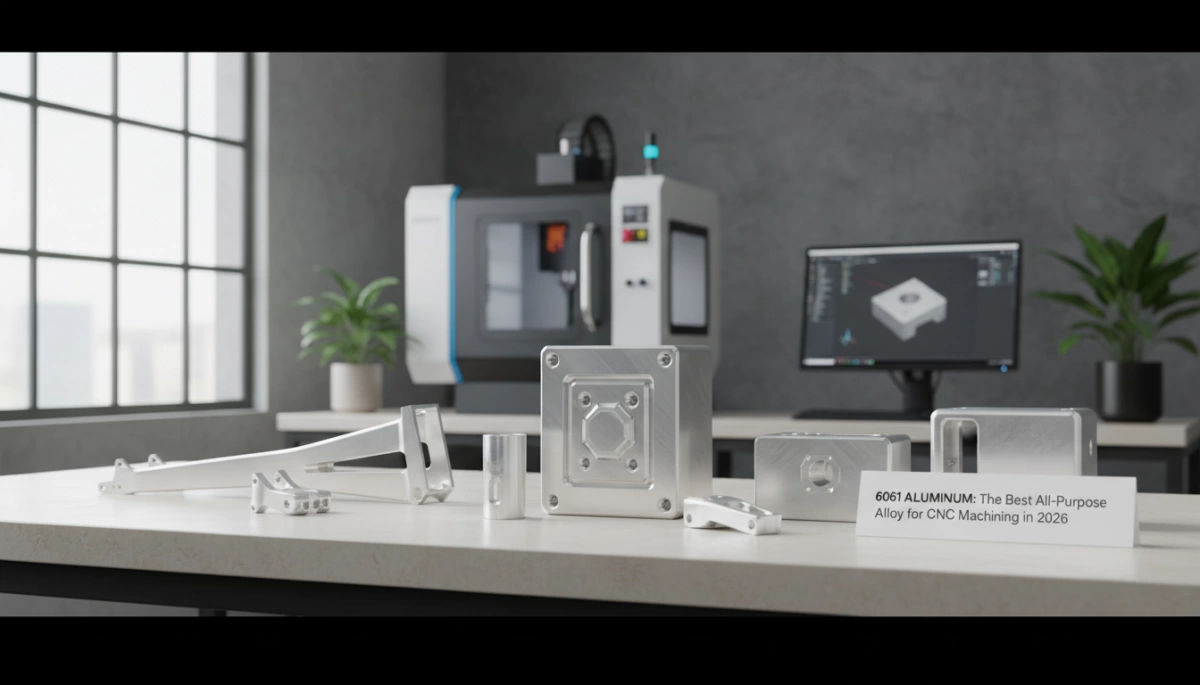
Are you struggling to pin down the perfect material for your next manufacturing run?
You might already know that flashy, exotic new alloys hit the market every single year...
But which one actually delivers reliable results on the shop floor?
As a manufacturing expert, I know that balancing cost, strength, and flawless machinability can make or break a project.
And despite the hype around new materials, 6061 aluminum remains the undisputed workhorse of the industry.
In this post, you're going to learn exactly why it is the best all-purpose aluminum alloy for CNC machining in 2026.
I'll walk you through its core mechanical properties, the massive advantages of the T6 temper, and the exact machining strategies needed for perfect surface finishes.
Let's dive right in.
Ever watched an unpredictable alloy weld itself to your end mill mid-cycle, ruining a critical part? When you are chasing tight tolerances and need a material that behaves predictably on the mill or the lathe, guesswork isn't an option. That is exactly why I default to the industry heavyweight.
6061 aluminum: the best all-purpose aluminum alloy for CNC machining in 2026
We call 6061 the "Gold Standard" because it strikes the perfect balance between mechanical strength, corrosion resistance, and pure cutability. The machinability rating of 6061 aluminum is exceptionally high, meaning the material shears cleanly off the cutting edge rather than tearing or smearing.
Instead of fighting long, stringy bird nests that wrap around your tooling, you get manageable, tightly broken chips. This predictable chip control keeps spindles running, lowers cycle times, and guarantees predictable surface finishes across batches.
T6 heat treatment benefits
The raw alloy composition is only half the story. The real performance gains are unlocked during the tempering process.
- 6061-T6 (Strength): In this state, the aluminum is solution heat-treated and then artificially aged. This specific thermal cycle drastically bumps up the yield strength and hardness, making the material tough enough for rigid structural applications while maintaining that easy-to-machine characteristic.
- 6061-T651 (Stability): If you are hogging out a massive amount of material from a billet, residual stress is your worst enemy. The T651 temper takes the T6 process and adds a controlled, stress-relieving stretch. This guarantees superior 6061-T651 dimensional stability, ensuring your custom aluminum milled parts stay dead flat and geometrically true, even after aggressive roughing passes remove bulk material.
Core Mechanical Properties of 6061 Aluminum
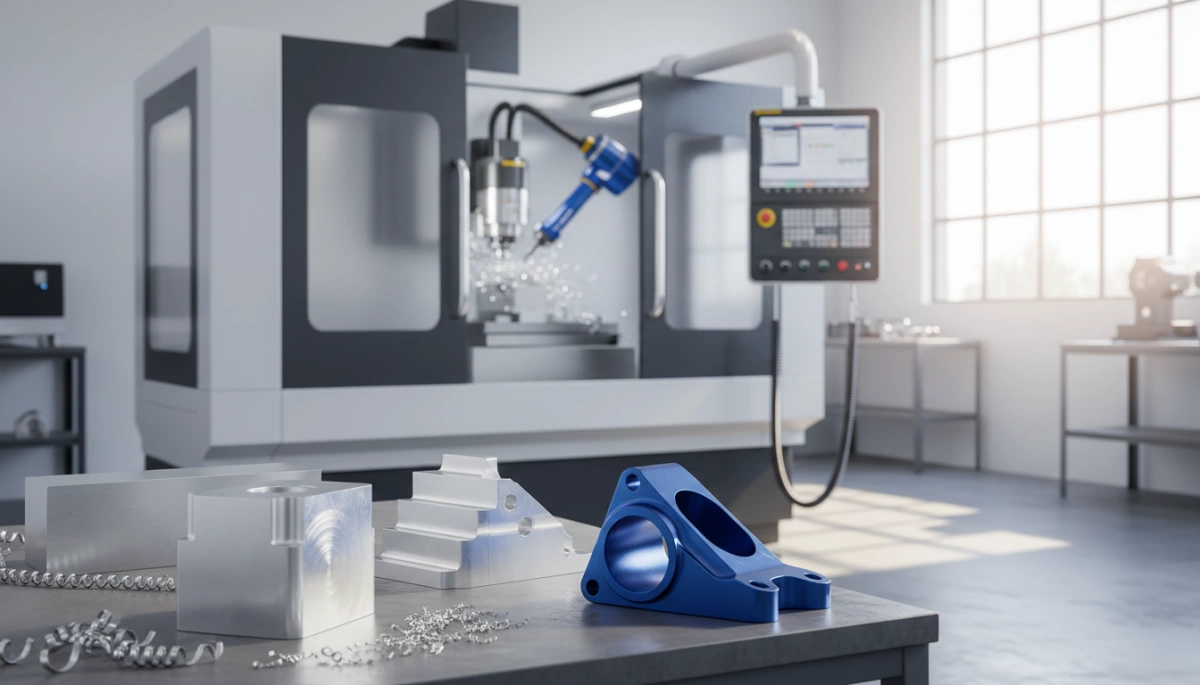
When we evaluate the 6061-T6 aluminum mechanical properties, it is easy to see why this material remains a staple for global manufacturing. It strikes the perfect balance between raw strength, structural integrity, and ease of manufacturing.
Here is a quick breakdown of the core metrics you can expect when working with this alloy:
6061 Aluminum Yield Strength and Hardness
- Yield Strength: Typically sits at 276 MPa (40,000 psi). This means the material can handle significant applied stress before it permanently deforms or bends.
- Ultimate Tensile Strength: Peaks around 310 MPa (45,000 psi), ensuring reliable performance under heavy tension.
- Hardness: Measures roughly 95 on the Brinell hardness scale. It is tough enough to resist everyday surface wear but still highly responsive to cutting tools.
Machinability Rating of 6061 Aluminum
When it comes to production speed, the machinability rating of 6061 aluminum sits at an impressive 90%. It chips cleanly and predictably. This high rating means less tool wear, faster spindle speeds, and shorter cycle times. Because of this, it is arguably the most cost-effective base material for producing tight-tolerance custom aluminum CNC machined parts at scale.
Anodizing 6061 Aluminum Parts Surface Finish
Beyond just cutting well, this alloy is highly receptive to post-processing. Anodizing 6061 aluminum parts surface finish is incredibly straightforward. The material reacts beautifully to both Type II (standard clear or dyed) and Type III (hard-coat) anodizing. This allows us to easily add superior corrosion resistance, improve surface hardness, or apply vibrant custom colors to your final components.
6061 vs. Other Common Aluminum Alloys
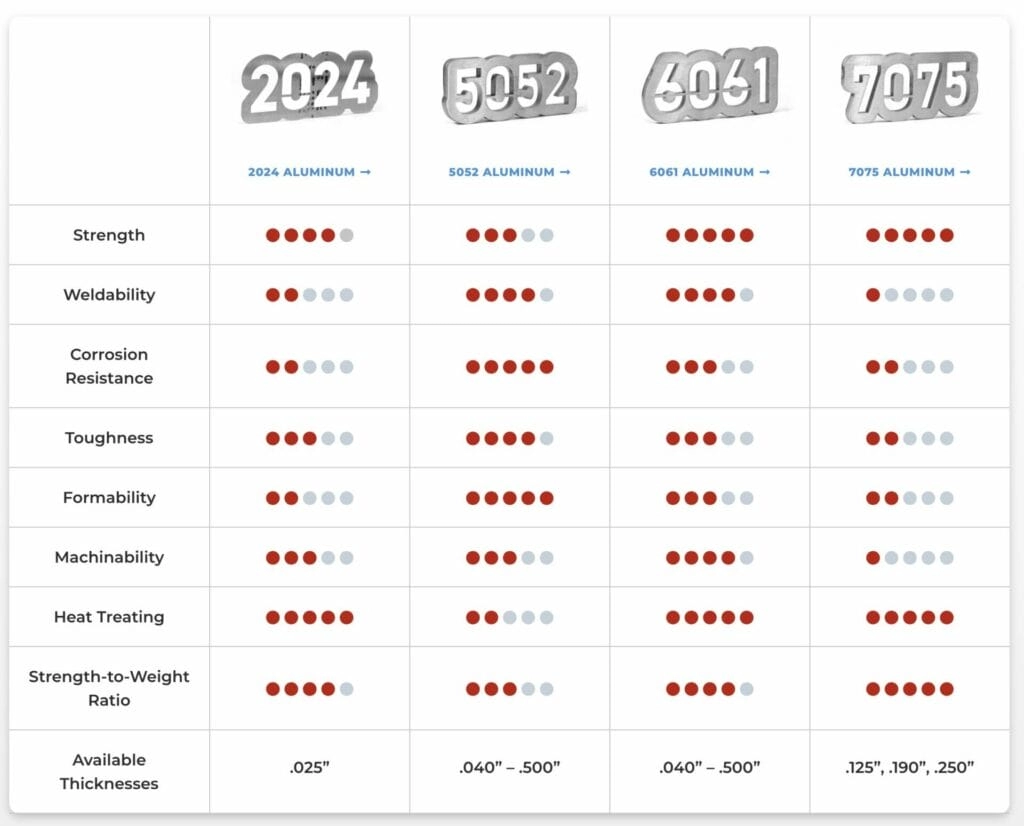
When we manufacture custom aluminum milled parts, selecting the right material grade dictates the success of the project. While 6061 aluminum: the best all-purpose aluminum alloy for CNC machining in 2026 remains our top recommendation for most projects, it is important to see exactly how it compares to other common grades like 7075 and 5052.
6061 vs 7075 Aluminum CNC Machining
The debate between 6061 vs 7075 aluminum CNC machining usually comes down to a trade-off between absolute strength and overall versatility. 7075 is heavily alloyed with zinc, making it exceptionally strong and a staple in the aerospace industry. However, 6061 holds a distinct advantage for most commercial applications.
- Corrosion Resistance: 6061 stands up to the elements far better than 7075.
- Weldability: 6061 is highly weldable, whereas 7075 is notoriously prone to cracking during welding.
- Cost Efficiency: 6061 is significantly more budget-friendly, reducing raw material costs.
If your project requires intricate geometries where balancing cost, strength, and finish is critical, pairing 6061 with 5-axis CNC machining services for complex aluminum parts is the most efficient route. 7075 is overkill unless you are building parts that must survive extreme stress environments.
6061 vs 5052 for Precision Milling
We often see 5052 used in sheet metal fabrication because of its excellent formability and bending characteristics. However, for precision milling, 6061 easily takes the lead.
- Chip Control: 5052 is a softer, non-heat-treatable alloy. When milled, it tends to get "gummy," wrapping around the cutting tool and slowing down cycle times.
- Surface Finish: 6061 chips cleanly and predictably, resulting in a superior, glass-smooth machined surface right off the machine.
- Dimensional Stability: The structural rigidity of 6061 makes it far better suited for holding tight tolerances during aggressive milling operations.
Quick Alloy Comparison Breakdown
| Feature | 6061 Aluminum | 7075 Aluminum | 5052 Aluminum |
|---|---|---|---|
| Ideal Application | All-purpose CNC machining | High-stress aerospace parts | Sheet metal forming & bending |
| Machinability Rating | Excellent (Chips clean) | Good | Fair (Gummy) |
| Weldability | Excellent | Poor | Good |
| Cost | Moderate | High | Low |
Typical 2026 Applications for 6061 Machined Parts
The outstanding advantages of 6061 aluminum for CNC make it the most versatile material on our shop floor today. From aerospace aluminum machining components to everyday industrial fixtures, its blend of strength, weldability, and corrosion resistance fits almost every global market need. Because the cost and lead time for 6061 CNC parts are highly predictable, we rely on it to keep production schedules tight across three main sectors.
Automotive Engine Components and Chassis Parts
In the automotive sector, custom aluminum milled parts made from 6061 are the industry baseline.
- Weight reduction: Perfect for creating lightweight chassis frames without sacrificing structural integrity.
- Durability: Capable of handling the thermal and mechanical stress required for critical engine components.
- Cost-efficiency: The high machinability rating of 6061 aluminum keeps cycle times fast and production costs low.
Robotics and Automation Structural Frames
Automation systems demand rigid, precise frameworks. We use 6061 for robotic arms, sensor mounts, and heavy-duty structural frames. The 6061-T651 dimensional stability guarantees that these parts will not warp during or after the milling process. When we need to meet strict aluminum CNC machining tolerances for packaging and automation equipment, 6061 consistently delivers the exact specifications required to keep high-speed automated lines running smoothly.
Medical Devices and Sterilizable Equipment
The medical field requires materials that can withstand rigorous, repeated sterilization while remaining lightweight and highly precise. 6061 is ideal for:
- Complex surgical tool handles
- Durable diagnostic machine housings
- Custom laboratory and cleanroom fixtures
Meeting the key requirements for CNC machining medical device components is straightforward with this alloy. Its chemical makeup allows for a premium anodizing 6061 aluminum parts surface finish, creating a sealed, sterile, and wear-resistant exterior that complies with the strict hygienic standards healthcare professionals trust.
Best Practices for Milling and Turning 6061
Even though 6061 is famously "user-friendly," achieving tight tolerances and a surface finish that looks like a mirror requires dialing in your process. We treat every block of aluminum differently depending on the final application, but there are universal rules we follow to ensure quality and efficiency.
Tooling Choices for Avoiding Built-Up Edge (BUE) in Aluminum
The biggest enemy when machining softer alloys is "gummyness." As the tool cuts, hot aluminum tends to weld itself to the cutting edge—this is avoiding built-up edge (BUE) in aluminum 101. Once BUE starts, your surface finish is ruined, and tool breakage isn't far behind.
To prevent this, we stick to these tooling rules:
- Flute Count: Use 2 or 3-flute end mills. This provides larger gullets for chip evacuation, preventing chips from packing in.
- Coatings: Never use AlTiN (Aluminum Titanium Nitride) on aluminum; the aluminum in the coating attracts the aluminum in the part. Instead, we use ZrN (Zirconium Nitride), DLC (Diamond-Like Carbon), or simply polished uncoated carbide.
- Helix Angle: A high helix angle (around 45°) helps shear the material away cleanly rather than pushing it.
CNC Machining Speeds and Feeds for 6061
You can run 6061 fast. In fact, running it too slow often causes more problems (like rubbing and heat generation) than running it fast. CNC machining speeds and feeds for 6061 should be aggressive to keep the heat in the chip, not the part.
Here is a general baseline we use for high-speed machining:
| Parameter | Metric | Imperial | Note |
|---|---|---|---|
| Surface Speed (SFM) | 250 - 350 m/min | 800 - 1200 SFM | Run high RPM to minimize cutting forces. |
| Chip Load (IPT) | 0.05 - 0.25 mm | 0.002" - 0.010" | Depends heavily on tool diameter. |
| Coolant | High Pressure | High Pressure | Flood coolant is essential to flush chips. |
Whether we are running complex geometries on our CNC milling centers or precision shafts on a lathe, maintaining these parameters ensures the material shears cleanly.
Design Tips for Keeping Cycle Times Low
Cost is almost always driven by cycle time. If you want to keep your cost and lead time for 6061 CNC parts down, the design phase is where you win or lose. We always encourage engineers to simplify where possible without sacrificing function.
- Standardize Radii: Don't design a pocket with square corners. Use a corner radius that is slightly larger than a standard tool radius (e.g., use radius 6.35mm for a 12mm tool) to allow the tool to turn without stopping.
- Limit Tool Changes: Try to design features that can be cut with the same tool. Every tool change adds time.
- Avoid Deep, Narrow Pockets: These require long-reach tools which must run slower to avoid chatter.
- Wall Thickness: Keep walls above 0.8mm if possible. Thin walls vibrate, forcing us to slow down the machine significantly.
For more strategies on how to streamline your order, read our guide on reducing the delivery time of CNC components.
Bringing Your 6061 Designs to Life with ZSCNC
Unmatched Precision with 5-Axis CNC Machining Aluminum
When it comes to manufacturing complex geometries, 6061 is highly versatile, but the equipment matters just as much as the material. We utilize advanced 5-axis CNC machining to tackle the most demanding custom aluminum milled parts. By moving the cutting tool across five different axes simultaneously, we eliminate the need for multiple setups. This directly translates to tighter tolerances, superior surface finishes, and absolute precision for your most critical components.
Speed and Scale: Rapid Prototyping to High-Volume Production
6061 is widely recognized as the best aluminum grade for rapid prototyping because it machines cleanly and transitions perfectly into full-scale manufacturing. Whether you need a handful of prototypes to validate a new design or tens of thousands of units for market launch, our aluminum precision machining services scale directly with your production demands. We optimize our tool paths and machining strategies to keep the cost and lead time for 6061 CNC parts as low as possible, getting your products to market faster.
ISO 9001 Certified Quality and Transparent 3-Step Process
Quality control is built into every stage of our production line. As a dedicated custom aluminum CNC machining parts supplier, our facility operates under strict ISO 9001 certification standards. We eliminate the guesswork from manufacturing with a straightforward, transparent 3-step process:
- Fast Quoting & DFM: Submit your CAD files to receive a rapid quote alongside actionable Design for Manufacturability (DFM) feedback to optimize your 6061 parts.
- Precision Machining: Our technicians program the ideal speeds and feeds to mill and turn your components to your exact specifications.
- Inspection & Delivery: Every single batch undergoes rigorous dimensional and visual inspection before being securely packaged and shipped to your door.
 English
  German
  Dutch
Dutch  Russian
  Czech
Czech  French
  Japanese
  Spanish
  Portuguese
  Korean