

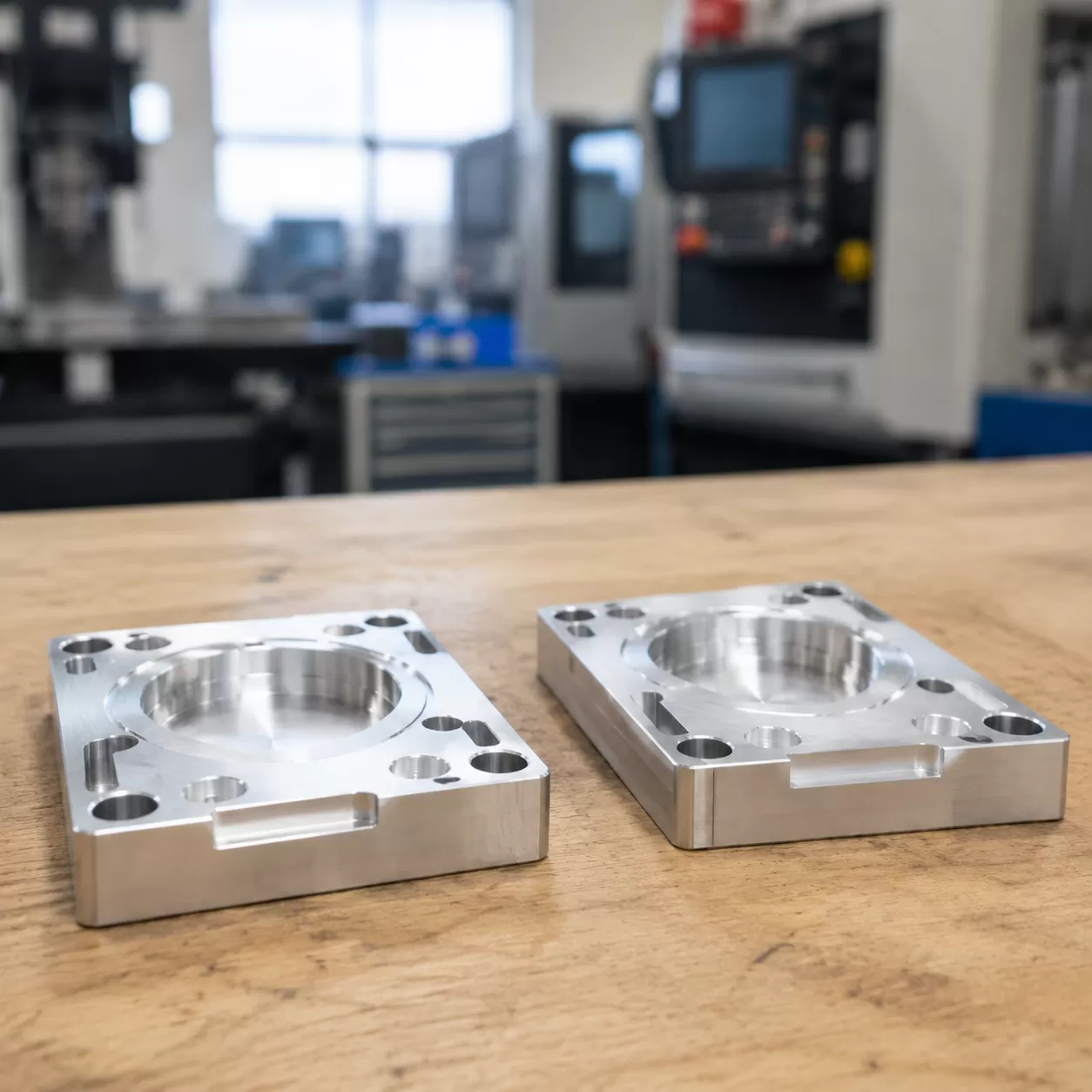
Understanding 6061 Aluminum Temper Designations
When manufacturing high-precision CNC parts, selecting the correct material temper is just as critical as choosing the alloy itself. While 6061 aluminum is the backbone of modern manufacturing, the suffixes T6 and T651 represent entirely different internal stress profiles that directly impact machining accuracy, warping, and dimensional stability.
What is 6061-T6 Aluminum?
6061-T6 aluminum is a high-strength, heat-treated alloy that has undergone solution heat treatment and artificial aging. This standard temper provides excellent mechanical properties, high yield strength, and good corrosion resistance, making it the go-to choice for structural components.
However, standard T6 material retains significant internal stresses from the rapid quenching phase of the heat treatment process. While perfectly suited for structural frames, these raw internal stresses can cause unpredictable warping and deformation when aggressive milling or deep pocketing is performed during CNC machining.
What is 6061-T651 Aluminum?
6061-T651 aluminum is the premium choice for precision parts requiring strict dimensional stability. The "51" suffix indicates that after the standard solution heat treatment and quenching, the material undergoes a controlled stretching process.
This mechanical stretching alters the internal structure of the alloy:
- Stress Relief: It relieves the severe residual stress introduced during quenching.
- Flatness Control: It minimizes workpiece deformation during heavy material removal.
- Uniform Grain Structure: It ensures consistent machinability throughout the entire plate stock or bar stock.
The Heat Treatment and Stress-Relief Process
The transformation from raw alloy to a stabilized CNC workpiece follows a precise thermal and mechanical sequence:
| Step | Process Phase | Impact on Material |
|---|---|---|
| 1. Solution Heat Treatment | Heating the alloy to a high temperature to dissolve alloying elements uniformly. | Readies the molecular matrix for strengthening. |
| 2. Quenching | Rapid cooling (typically in water) to freeze the elements in place. | Creates high strength but introduces severe residual stress. |
| 3. Mechanical Stretching | (T651 Only) Pulling the metal by a controlled 1% to 3% on a stretcher. | Neutralizes internal stresses and guarantees dimensional stability. |
| 4. Artificial Aging | Heating at a lower temperature for a set duration to precipitate hardening. | Locks in final yield strength and tensile strength. |
By eliminating the latent internal forces through stretching, 6061-T651 ensures that when CNC cutters remove material, the workpiece remains perfectly flat without bending, twisting, or bowing.
6061-T6 vs 6061-T651: Mechanical and Material Properties
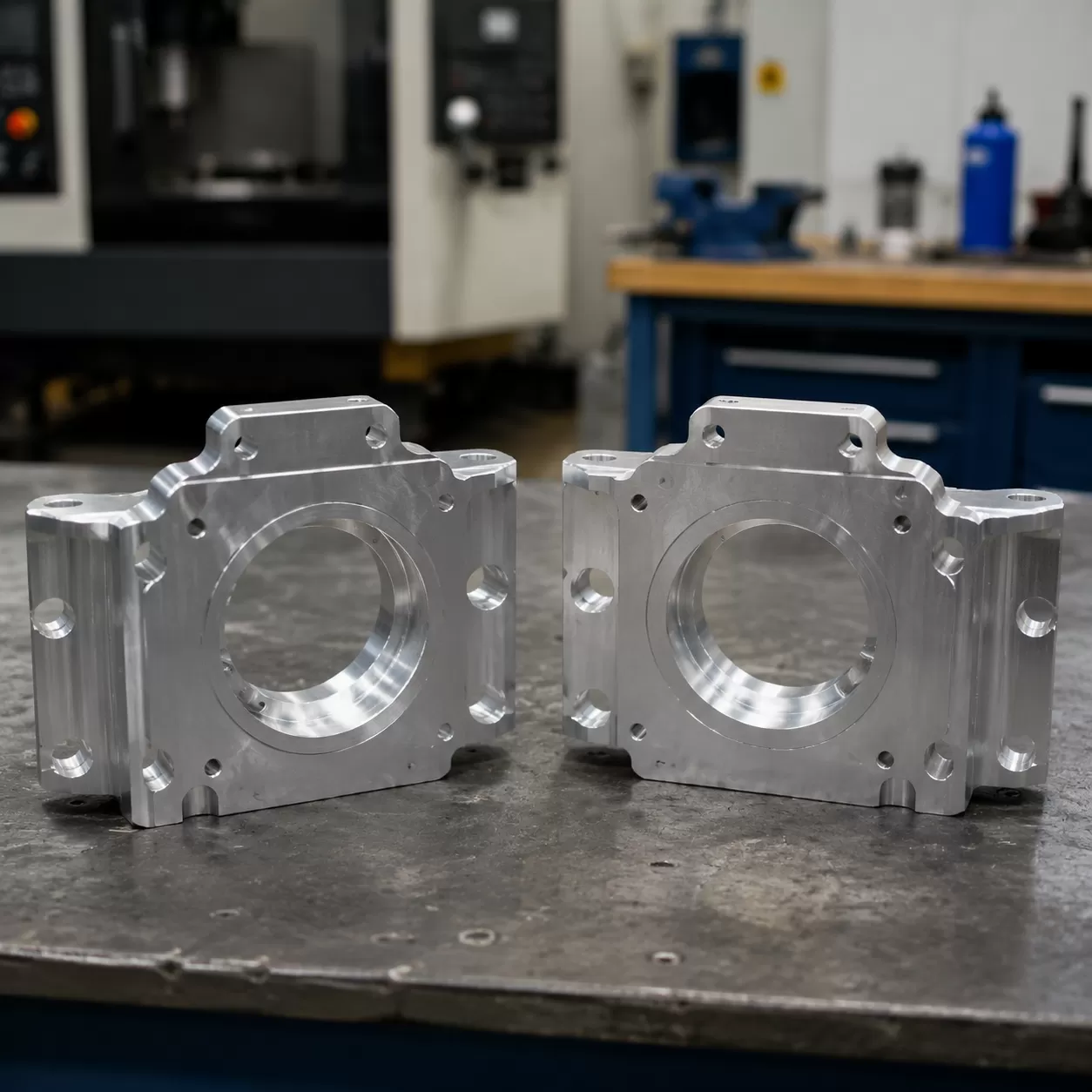
Chemical Composition and Physical Properties
When looking at 6061-T6 vs 6061-T651 aluminum, both share the exact same base chemical composition. As a premium magnesium-silicon alloy, the core physical properties—like density, thermal conductivity, and electrical conductivity—remain identical. The real differentiator lies entirely in how we post-treat the material to manage internal stresses.
Strength, Hardness, and Stiffness Comparison
In terms of raw mechanical properties, T6 and T651 tempers are virtually identical on paper. Both deliver excellent yield strength and tensile strength. However, the stretching process used to create T651 plate stock yields a more uniform grain structure, eliminating the locked-in residual stress found in standard T6.
| Property | 6061-T6 Temper | 6061-T651 Temper |
|---|---|---|
| Tensile Strength | $\approx 310 \text{ MPa}$ | $\approx 310 \text{ MPa}$ |
| Yield Strength | $\approx 276 \text{ MPa}$ | $\approx 276 \text{ MPa}$ |
| Hardness (Brinell) | 95 | 95 |
| Elongation at Break | 12%–17% | 12%–17% |
| Internal Stress Level | High (Prone to warping) | Extremely Low (Highly stable) |
Cost and Material Availability
Because T651 undergoes an extra mechanical stretching process to achieve stress relief, it carries a slightly higher material cost compared to standard T6.
- 6061-T6: Most commonly available as extrusion profiles, round bars, and standard sheets. It is highly economical for general structural parts.
- 6061-T651: Typically sold as thick plate stock. While it carries a premium temper price tag, it saves significant money during manufacturing by preventing workpiece deformation.
For high-tolerance components, investing in T651 plate stock prevents expensive scrap pieces caused by twisting and stretching during aggressive milling. If you are designing complex parts, sourcing the right material is just as critical as choosing the right custom aluminum CNC machined parts provider to ensure your flatness and machinability requirements are met perfectly.
Internal Stress and Dimensional Stability in CNC Machining
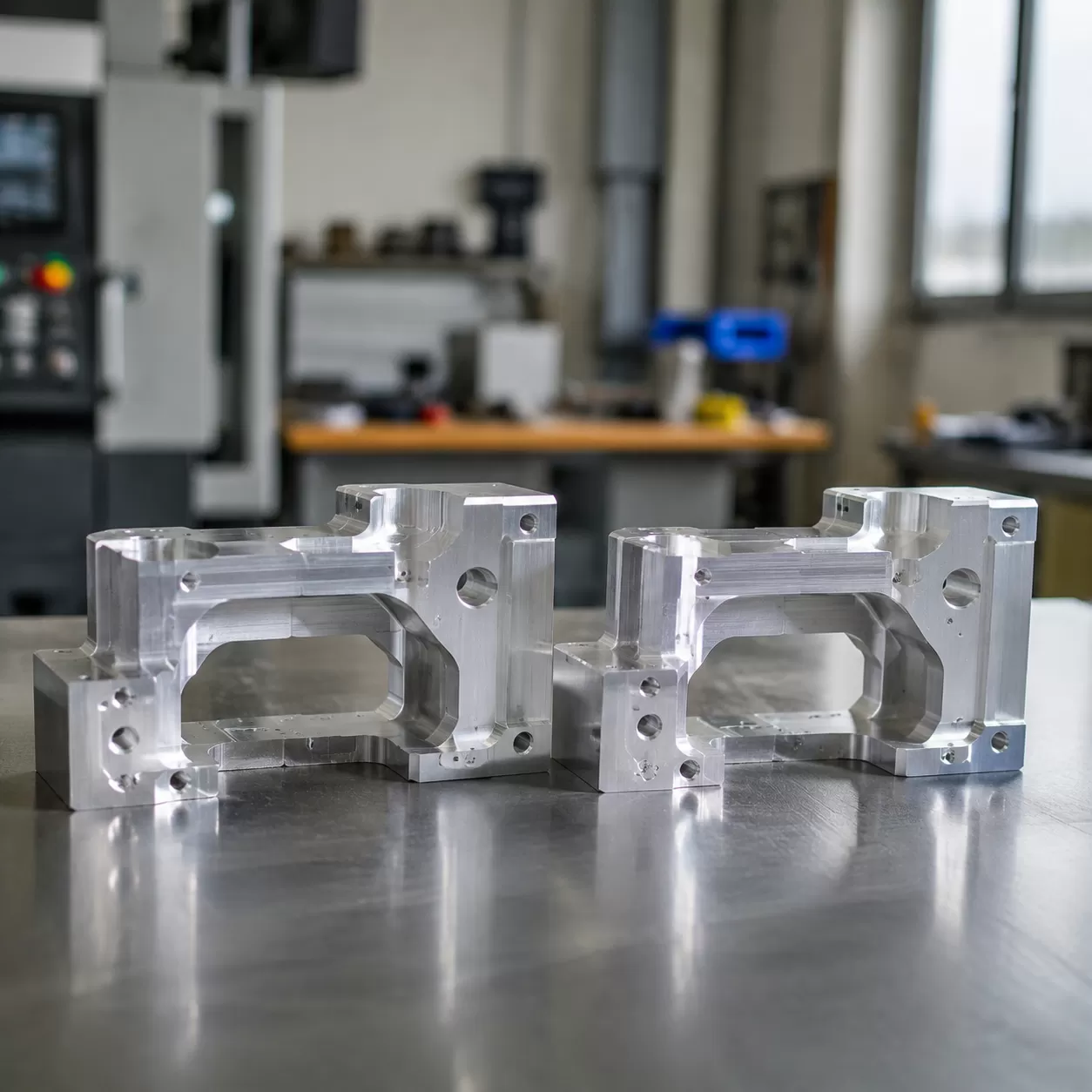
How Residual Stress Affects CNC Parts
When you rough out a complex component from standard aluminum, you are releasing a cage of trapped energy. During the rapid cooling phase of raw material manufacturing, internal stresses lock into the metal.
As a CNC machine cuts away the outer layers, this equilibrium is disrupted. The remaining residual stress forces the material to relax, which manifests as immediate warping, bowing, or twisting. For high-precision parts, even a few thousandths of an inch of deformation can ruin critical tolerances and turn an expensive production run into scrap.
Why T651 Offers Superior Dimensional Stability
To counteract this unpredictable movement, we rely on the 6061-T651 temper. The critical difference lies in the stretching process. After heat treatment, plate stock is placed into a massive hydraulic stretcher and pulled by a controlled amount—usually 1% to 3%.
This mechanical stretching uncoils the locked-in internal stresses and redistributes them uniformly across the grain structure. Because the premium temper eliminates the stored energy, the workpiece remains perfectly flat and stable throughout heavy material removal.
| Feature | 6061-T6 Aluminum | 6061-T651 Aluminum |
|---|---|---|
| Stress Relief Method | None (Quenched only) | Mechanical Stretching (1%-3%) |
| Internal Stresses | High and unpredictable | Negligible and uniform |
| Warping Risk | High during deep milling | Extremely low |
| Best For | Thin profiles, structural parts | High-tolerance precision parts |
Machinability and Distortion Risk After Milling
While both tempers share excellent machinability, their behavior on the machine bed is completely different. Machining standard 6061-T6 often requires multi-step setups, such as roughing, unclamping to let the part warp, and then re-shimming for a final finish pass to combat workpiece deformation.
Using 6061-T651 completely eliminates this guesswork. You can aggressively utilize high-speed aggressive 5-axis CNC machining without the risk of the material lifting or curling off the fixtures. This stability drastically reduces cycle times, minimizes flatness distortion, and guarantees that your finished part matches the exact dimensions of your CAD model.
Application Scenarios for T6 and T651 Tempers
Common Industrial Applications for 6061-T6
Standard 6061-T6 aluminum is the go-to choice for structural components where massive material removal isn't required. Because it is highly available and cost-effective, we regularly use it for high-volume manufacturing runs of rugged, everyday parts.
Typical applications include:
- Structural frames and brackets for automated machinery.
- Bicycle frames and consumer goods hardware.
- Heavy-duty equipment parts that rely on high yield strength but don't require tight geometric flatness tolerances after extensive milling.
Precision CNC Components Requiring 6061-T651
When a project demands tight dimensional stability and strict flatness after heavy machining, we always switch to 6061-T651 aluminum. The stretching process removes the internal residual stress that causes workpiece deformation during high-speed milling.
If you are drafting a checklist for RFQs to CNC suppliers, specifying the premium T651 temper is critical for:
- Aerospace bulkheads and internal structural ribs.
- Semiconductor manufacturing equipment and optical baseplates.
- High-speed automation manifolds and intricate plates requiring deep pocket milling.
When Can 6061-T6 and T6511 Be Interchanged?
Choosing between 6061-T651 vs 6061-T6 aluminum depends entirely on the manufacturing method and the shape of the raw material stock. T651 is typically found in thick plate stock, while T6 is common in standard sheets.
However, you can often interchange T651 with T6511 when dealing with complex extruded shapes. Like T651, the T6511 temper undergoes a controlled stretching process to relieve internal stresses, but it allows for minor straightening after extrusion to fix twisting. If your part is being machined from an extruded bar or custom profile rather than flat plate stock, T6511 provides the same exceptional dimensional stability for CNC parts as T651, preventing warping and maintaining a uniform grain structure throughout production.
Selection Guide: Choosing the Right Temper for Your Project
Key Guidelines for Structural vs. Precision Parts
When choosing between 6061-T6 vs 6061-T651 aluminum for your project, the decision comes down to the balance between structural strength and dimensional stability for CNC parts. For heavy-duty brackets, frames, or structural supports where you are not milling away large amounts of material, standard 6061-T6 is an economical and reliable choice. It provides the necessary yield strength and tensile strength for high-load applications without adding extra material costs.
However, for high-precision components with tight tolerances, thin walls, or complex geometries, 6061-T651 is the premium temper you need. Because the stretching process eliminates internal stresses, choosing T651 prevents common manufacturing issues like warping, twisting, and workpiece deformation during and after aggressive milling.
| Project Requirement | Recommended Temper | Key Benefit |
|---|---|---|
| High-Precision Components | 6061-T651 | Superior flatness, zero warping, and excellent dimensional stability. |
| Heavy Structural Frames | 6061-T6 | High mechanical properties at a lower raw material cost. |
| Complex Thin-Walled Milling | 6061-T651 | Uniform grain structure prevents distortion after material removal. |
How to Specify Aluminum Tempers in CNC Quotes
To avoid unexpected part deformation and ensure high-quality manufacturing, you must explicitly state your material selection on your engineering drawings and CNC quotes. Simply writing "6061 Aluminum" leaves the choice up to the supplier, which often results in receiving standard T6 extrusion or plate stock that might warp during machining.
When requesting a quote for tight tolerance machining precision, clearly designate the required heat treatment in your BOM (Bill of Materials). Write out the full specification, such as Alloy 6061-T651, to ensure the machine shop uses stress-relieved plate stock. If your design permits a uniform grain structure alternative like T6511 for extruded profiles, note that as an acceptable substitute to optimize both lead times and total production costs.
Frequently Asked Questions About 6061 Aluminum Tempers
Does the T651 Temper Affect Bending and Forming?
Yes, the T651 temper significantly impacts how the material behaves during bending and forming operations. Because 6061-T651 undergoes a stretching process to eliminate residual stress, it reduces the material's residual elongation capacity.
If you attempt severe bending or forming on a T651 workpiece, it is much more prone to cracking along the bend radius compared to softer tempers. For parts that require extensive forming, it is often better to shape the material in a annealed state and heat-treat it to the desired strength afterward. However, if your project demands tight tolerances through heavy milling first, utilizing T651 ensures the required flatness and prevents warping during material removal. For complex geometries, utilizing specialized 5-axis CNC machining services for complex aluminum parts allows you to machine precision features directly, bypassing the need for risky post-machining bending.
What is the Operating Temperature Range for 6061 Alloys?
6061 aluminum alloys perform exceptionally well in a wide range of environments, but they have distinct thermal limits that affect their mechanical properties:
- Optimal Range: -200°C to 100°C (-328°F to 212°F). At cryogenic temperatures, the material actually gains tensile strength without losing toughness.
- Maximum Continuous Exposure: 120°C to 150°C (248°F to 302°F).
- Strength Degradation: Once temperatures exceed 150°C (302°F), the artificial aging process effectively restarts. This alters the uniform grain structure, leading to a substantial drop in yield strength and hardness.
| Temperature Range | Effect on 6061-T6 / T651 Properties |
|---|---|
| Cryogenic to 25°C | Excellent stability, slight increase in strength. |
| 100°C to 150°C | Safe for short durations; prolonged exposure reduces hardness. |
| Above 200°C | Rapid loss of mechanical properties; alloy becomes annealed. |
Understanding these thermal limits ensures you choose the right temper and material profile for your specific operating environment.
 English
  German
  Dutch
Dutch  Russian
  Czech
Czech  French
  Japanese
  Spanish
  Portuguese
  Korean