

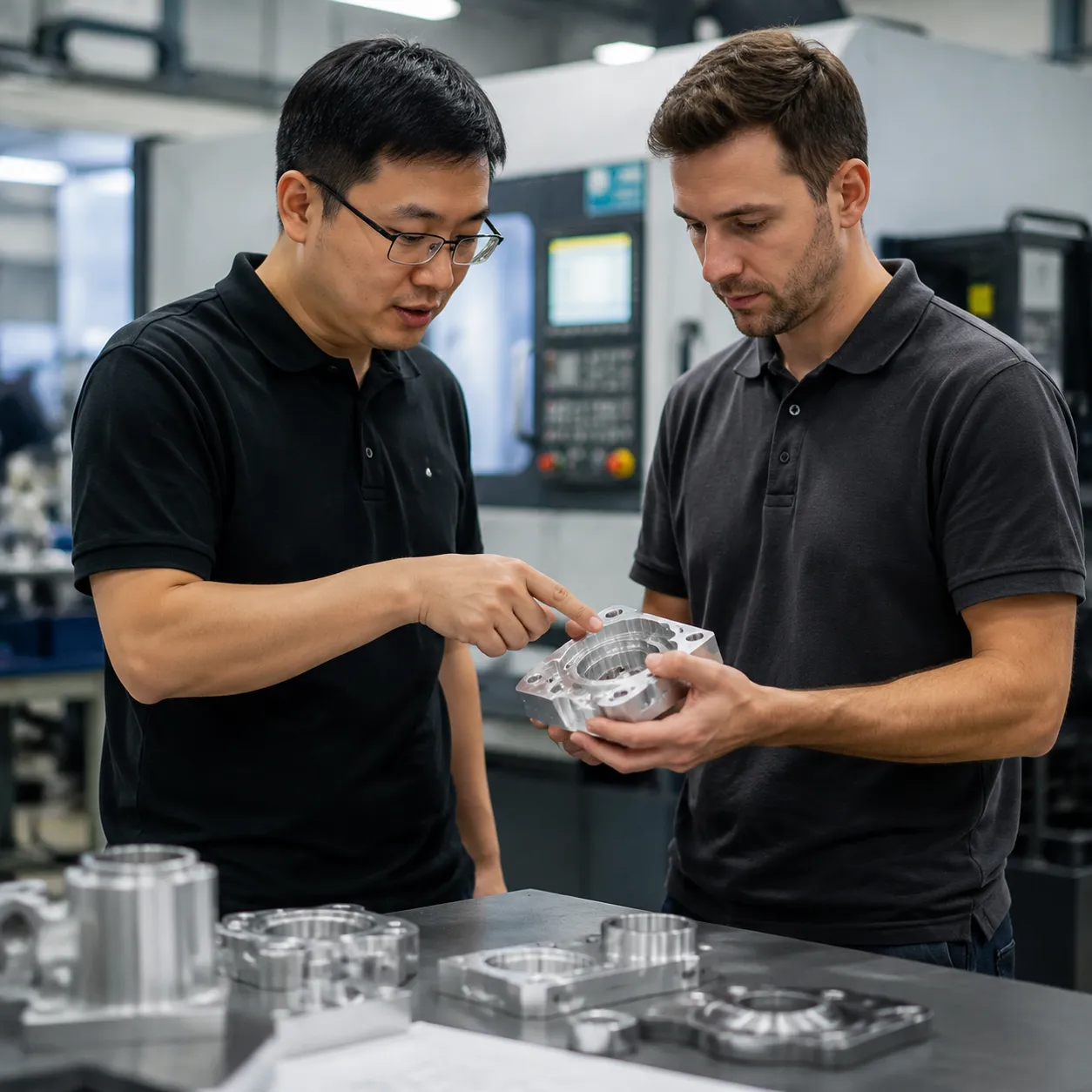
Introduction to 6061 Aluminum Alloy for CNC Machining
What is 6061 Aluminum Alloy?
6061 aluminum alloy is a magnesium and silicon-alloyed structural material widely recognized as the workhorse of the manufacturing industry. It belongs to the 6000 series of alpha-beta alloys, meaning it is highly responsive to heat treatment, specifically the T6 tempering process. As a staple in precision engineering, this material provides a balanced combination of lightweight properties, high structural integrity, and exceptional environmental durability, making it the premier choice for custom machined components globally.
Key Material Properties and Mechanical Characteristics
The widespread adoption of 6061 aluminum is rooted in its versatile mechanical profile. It bridges the gap between lightweight performance and robust durability:
-
- Mechanical Strength: Offers a tensile strength of 310 MPa and a yield strength of 276 MPa when heat-treated to the T6 temper.
- Corrosion Resistance: Features excellent atmospheric corrosion resistance and good sub-sea durability due to its protective natural oxide layer.
- Weldability and Formability: Can be readily welded using standard industrial methods and retains structural integrity after jointing.
- Thermal and Electrical Conductivity: Provides high thermal dissipation capabilities, which is ideal for heat sinks and electronics enclosures.
| Property | Value (6061-T6) |
|---|---|
| Density | 2.70 g/cm³ |
| Melting Point | 582 – 652 °C |
| Modulus of Elasticity | 68.9 GPa |
| Hardness (Brinell) | 95 |
Why 6061 is the Most Used Grade in CNC Machining
6061 aluminum dominates the CNC milling and turning landscape due to its superior machinability and cost-effectiveness. The alloy exhibits excellent cutability, allowing high-speed CNC tools to shear through the material cleanly without causing excessive tool wear or deformation.
Key advantages for CNC machining infrastructure include:
Chip Control: It forms predictable, manageable chips during high-velocity milling, preventing machine clogging and downtime.
Surface Finish Quality: Achieves exceptional post-machining surface finishes right off the mill, reducing the need for aggressive secondary operations.
Tight Tolerances: Demonstrates excellent dimensional stability, enabling manufacturers to hold strict precision tolerances on complex geometries.
Economic Efficiency: Strikes the perfect balance between raw material cost and processing speed, maximizing manufacturing throughput for global supply chains.
Surface Finishing Options for Custom 6061 Aluminum Parts
Choosing a manufacturer for CNC machining 6061 aluminum alloy requires looking closely at their post-processing expertise. Raw machined parts often need specific surface treatments to improve wear resistance, aesthetics, or environmental protection. We offer a comprehensive suite of surface finishing services tailored to your exact application needs.
As-Machined and Bead Blasting
-
- As-Machined (Raw): Parts are left exactly as they come off the CNC mill or lathe. This finish features visible tool marks and is the most cost-effective option for internal structural brackets or hidden components where aesthetics do not matter.
- Bead Blasting: We utilize fine glass beads or abrasive media sprayed at high pressure to remove tool lines. This process creates a uniform, matte, satin-like finish that cuts down reflectivity and hides minor surface imperfections.
Anodizing (Clear, Color, and Hard Anodizing)
Anodizing is an electrochemical process that converts the aluminum surface into a durable, corrosion-resistant oxide layer. It is the most popular treatment for 6061 aluminum alloy due to its excellent bonding properties.
We provide two distinct levels of anodizing protection:
Type II (Standard/Color Anodizing): Adds a thin decorative layer that offers reliable corrosion resistance. It can be left clear or dyed in various colors like black, red, blue, or gold for branding and identification.
Type III (Hardcoat Anodizing): Creates a thick, highly dense ceramic layer designed for extreme wear applications, aerospace components, and heavy-duty industrial engineering.
For a deeper dive into specifying layer thicknesses and picking the right process for your design, check out our comprehensive aluminum anodizing guide for CNC parts.
Powder Coating and Chrome Plating
| Finishing Method | Key Benefits | Typical Applications |
|---|---|---|
| Powder Coating | Provides a thick, impact-resistant protective barrier. Available in hundreds of colors, gloss levels, and custom textures. Excellent for hiding minor metal defects. | Industrial machinery housings, outdoor enclosures, automotive structural parts. |
| Chrome Plating | Delivers high mirror-like reflectivity, exceptional hardness, and low friction. Drastically improves the surface wear resistance of the aluminum alloy. | Custom automotive trim, high-wear mechanical assemblies, medical components. |
Design Guidelines and Tolerance Control for 6061 Aluminum Parts
When you choose a manufacturer for CNC machining 6061 aluminum alloy, evaluating their design guidelines and tolerance control capabilities is essential. Proper design optimization ensures that your parts meet performance requirements while remaining cost-effective to produce.
Achievable Machining Tolerances for Precision Parts
6061 aluminum alloy offers excellent dimensional stability during machining. Our facility delivers tight tolerances to meet the demanding requirements of automation, aerospace, and medical applications:
-
- Standard Machining Tolerances: Typically ±0.125 mm (±0.005 inches) for general features.
- Precision Tolerances: We routinely achieve ±0.025 mm (±0.001 inches) on critical dimensions.
- Tight Tolerances: For complex geometries, we maintain strict standard tolerances for 5-axis parts down to ±0.01 mm under controlled environments.
Design Tips for Wall Thickness, Threads, and Deep Pockets
Optimizing your CAD models for 6061 aluminum prevents tool breakage and part deformation. Implementing these key design and material tips helps streamline the manufacturing process:
-
- Wall Thickness: Maintain a minimum wall thickness of 0.8 mm for structural integrity, though 1.5 mm is preferred to prevent warping during milling.
- Thread Design: Limit thread depth to 2 to 3 times the hole diameter. Deeper threads do not add significant holding power but increase the risk of tap breakage.
- Pocket Depth: Keep the depth-to-width ratio of pockets below 4:1. Deep pockets require long cutting tools, which can cause tool deflection and surface finish issues.
DFM Review to Reduce Cycle Times and Manufacturing Costs
Before production begins, our engineering team performs a comprehensive Design for Manufacturability (DFM) review. This step is critical when you choose a manufacturer for CNC machining 6061 aluminum alloy, as it directly impacts your final budget and timeline.
-
- Toolpath Optimization: We analyze part geometry to minimize tool changes and optimize cutting paths.
- Setup Reduction: Designing parts that can be machined in fewer setups lowers labor costs and improves dimensional consistency.
- Standardization: We suggest minor design adjustments to utilize standard tooling sizes, eliminating the need for expensive custom cutters.
Technical Challenges and Solutions in Machining 6061 Aluminum
Machining 6061-T6 aluminum alloy requires deep technical expertise to overcome common issues like material deformation, tool wear, and heat buildup. When evaluating how do you choose a manufacturer for CNC machining 6061 aluminum alloy, their ability to address these technical challenges is a key indicator of their production quality.
Optimizing Cutting Parameters, Speeds, and Feeds
To achieve high-quality surface finishing and maintain tight tolerances, cutting parameters must be carefully balanced. High spindle speeds combined with optimized feed rates prevent the material from melting or gumming up.
| Operation Type | Spindle Speed (RPM) | Feed Rate (mm/min) | Cut Depth (mm) |
|---|---|---|---|
| Rough Milling | 8,000 – 12,000 | 1,500 – 3,000 | 1.5 – 3.0 |
| Finish Milling | 10,000 – 15,000 | 800 – 1,500 | 0.1 – 0.5 |
| Drilling | 3,000 – 5,000 | 200 – 500 | N/A |
Tool Selection to Avoid Built-Up Edge (BUE)
The high ductility of 6061 aluminum can cause material to stick to the cutting tool, forming a Built-Up Edge (BUE). This ruins the surface finish and shortens tool life.
-
- Polished Carbide Tools: Uncoated carbide tools with polished flutes reduce friction and prevent adhesion.
- Specialized Coatings: ZrN (Zirconium Nitride) or DLC (Diamond-Like Carbon) coatings improve wear resistance and machinability.
- Flood Coolant: High-pressure coolant delivery is critical to flush chips away instantly and lower cutting temperatures.
If you are looking for a reliable aluminum CNC machining supplier in China, verifying their tooling standards and cooling setups is essential for ensuring consistent part quality.
Controlling Deformation and Managing Thin-Wall Risks
Thin-walled parts made from 6061-T6 are prone to warping due to residual stress release during CNC milling.
-
- Symmetrical Machining: Removing material evenly from both sides balances internal stresses.
- Multi-pass Roughing: Implementing stress-relief steps between roughing and finishing passes prevents physical distortion.
- Custom Fixturing: Utilizing vacuum chucks or soft jaws distributes clamping force evenly to avoid part deformation.
Material Comparison: 6061 vs. Other Aluminum Alloys
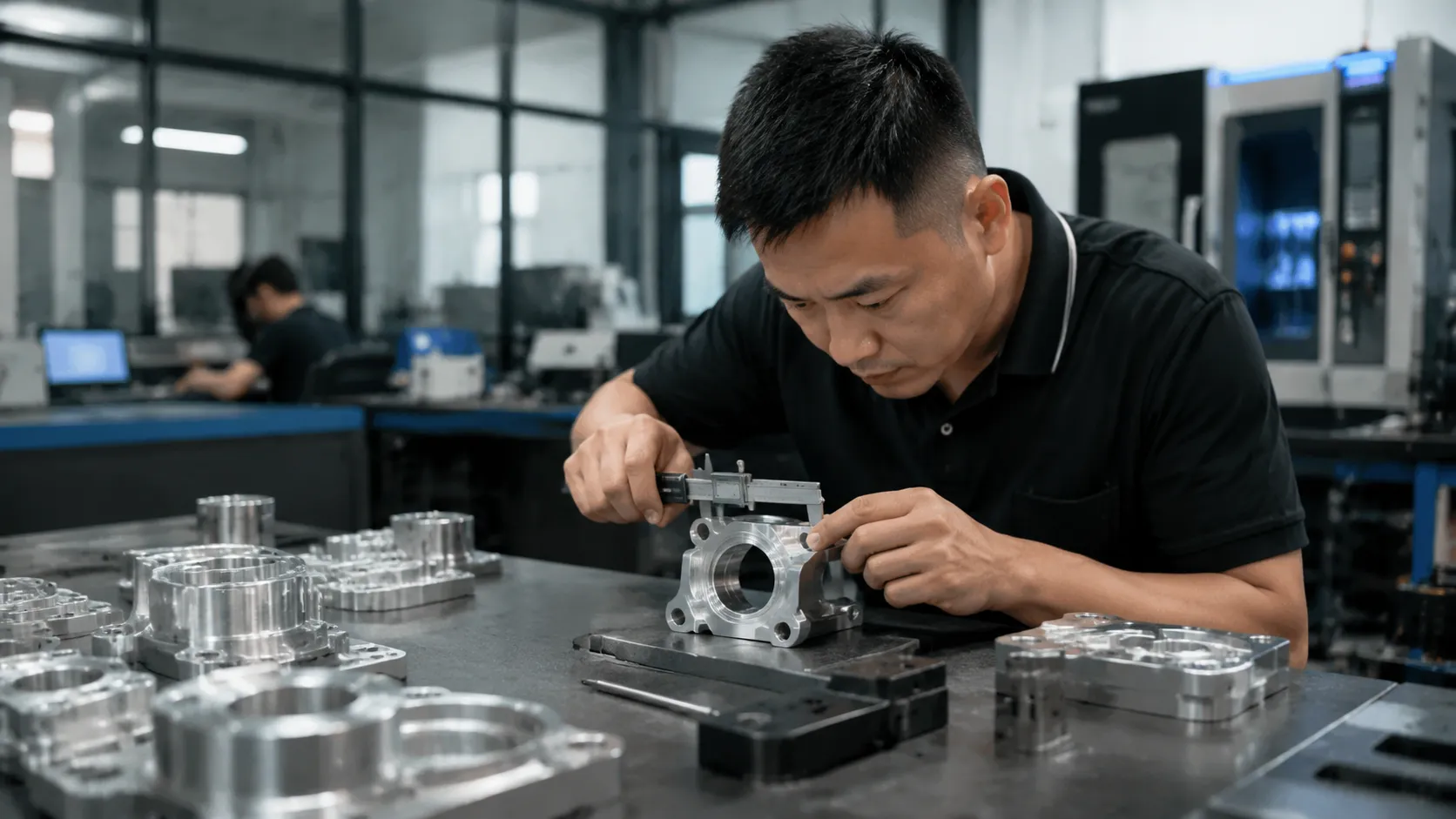
When choosing a manufacturer for CNC machining 6061 aluminum alloy, it helps to understand how this material stacks up against other common grades. While 6061 is our go-to versatile workhorse, certain applications demand different material characteristics.
6061 vs. 7075: Strength vs. Machinability
For high-stress applications, comparing 6061 vs. 7075 aluminum is a standard industry practice.
-
- 6061-T6 Aluminum: Offers excellent corrosion resistance, superior weldability, and highly predictable cutability. It is the most cost-effective choice for general structural components.
- 7075 Aluminum: Features significantly higher mechanical strength, approaching that of some steels. However, it is more brittle, harder on CNC milling tools, and carries a higher material cost.
| Property | 6061-T6 Aluminum | 7075-T6 Aluminum |
|---|---|---|
| Tensile Strength | Moderate (~310 MPa) | Very High (~570 MPa) |
| Machinability | Excellent | Good |
| Corrosion Resistance | High | Moderate |
| Relative Cost | Economical | Premium |
6061 vs. 6063: Machined Parts vs. Extrusions
Choosing between these two grades depends heavily on your manufacturing process and geometric requirements.
-
- 6061 Aluminum: Formulated specifically for robust mechanical performance. It is the ideal choice for custom precision milling and turning where tight tolerances must be maintained.
- 6063 Aluminum: Features higher formability and a smoother surface finish out of the gate. It is primarily used for complex architectural extrusions and custom conduits rather than heavy CNC material removal.
6061 vs. 5052: Precision Milling vs. Sheet Metal
The choice between 6061 and 5052 typically comes down to whether your component is machined from solid block or formed from flat stock.
-
- 6061 Alloy: Optimized for chip formation, making it perfect for complex 3D geometries, deep pockets, and tapped threads.
- 5052 Alloy: Possesses exceptional bendability and salt-water corrosion resistance. It is the industry standard for sheet metal fabrication, regular bending, and stamping, but it is gummy and difficult to clean-cut during intensive CNC milling operations.
Industrial Applications of Custom 6061 Aluminum Components
Aerospace and Automotive Structural Parts
The incredible strength-to-weight ratio and excellent corrosion resistance of 6061-T6 make it an industry standard for demanding transportation sectors. We manufacture high-precision brackets, engine components, and chassis fittings that endure high stress without adding unnecessary weight. For high-performance demands, our specialized CNC machining services for EU automotive components and motorsport parts deliver the exact tolerances and mechanical strength required to pass strict safety and performance regulations.
Robotics, Automation, and Electronics Enclosures
In the automation sector, structural rigidity and low mass are critical for reducing inertia and power consumption. We produce custom 6061 aluminum robotic arms, framing components, and heat-dissipating electronics enclosures. Our advanced manufacturing setup provides tailored custom CNC machining for automation and robotics parts in Europe, ensuring rapid cycle times, seamless fitment, and superb anodizing readiness for industrial environments.
Medical Devices and Component Engineering
Medical equipment demands flawless precision, cleanability, and structural integrity. We utilize 6061 aluminum to machine surgical device housings, ventilator parts, and laboratory equipment frames. The material’s excellent formability and machinability allow us to achieve complex geometries and ultra-smooth surface finishes that meet the strict hygienic and dimensional requirements of the global healthcare market.
Quality Control and Inspection for 6061 Machined Parts
Choosing a manufacturer for CNC machining 6061 aluminum alloy requires a strict focus on how they verify and protect your parts. Our facility enforces rigorous inspection protocols at every stage of production to ensure your components meet exact engineering specifications.
Dimensional Inspection and Post-Processing Quality Assurance
We utilize advanced metrology equipment, including Coordinate Measuring Machines (CMM), digital micrometers, and optical comparators, to verify that every 6061-T6 aluminum part matches your 2D and 3D CAD files.
-
- In-Process Inspection: Real-time dimension tracking during CNC milling and turning to prevent tolerance drift.
- Surface Roughness Testing: Verification of surface finishing quality, ensuring bead-blasted or anodized surfaces meet specific Ra roughness requirements.
- Functional Testing: Thread-go/no-go gauge checks and fitment testing for complex assemblies.
ISO 9001 Certified Quality Standards
Our manufacturing processes are fully standardized under an ISO 9001 certified quality management system. This framework guarantees strict material traceability, detailed inspection reports (MTRs), and full compliance with global manufacturing standards. When navigating supply chain variables, following an established 2026 manufacturing guide for cost and quality control ensures that risk mitigation and high machinability standards are systematically maintained from raw material sourcing to final validation.
Protective Packaging and Shipment Planning
Because 6061 aluminum parts can be prone to scratching or denting after cosmetic treatments like clear or color anodizing, our logistics team implements heavy-duty protective packaging.
| Packaging Layer | Material Used | Purpose |
|---|---|---|
| Primary Layer | Custom anti-static bubble wrap / PE foam sleeves | Prevents part-on-part friction and preserves cosmetic surfaces |
| Secondary Layer | Heavy-duty compartmentalized boxes | Restricts component movement during transit |
| Outer Layer | Sealed pallets with moisture-barrier wrapping | Protects global shipments against environmental exposure |
Every order includes comprehensive inspection documentation, material certifications, and custom labeling to ensure a seamless receiving process at your facility.
Frequently Asked Questions About 6061 Aluminum CNC Machining
When you look to choose a manufacturer for CNC machining 6061 aluminum alloy, getting clear answers to common technical questions helps streamline production and prevent costly miscommunications.
What is the difference between 6061 and 6061-T6?
The main difference lies in the heat treatment, which directly impacts mechanical strength, hardness, and machinability. While 6061 represents the base aluminum alloy composition, “T6” indicates a specific temper achieved through solution heat-treating and artificial aging.
| Feature | 6061 (Annealed/O Temper) | 6061-T6 (Heat Treated) |
|---|---|---|
| Yield Strength | Low (approx. 55 MPa / 8,000 psi) | High (approx. 276 MPa / 40,000 psi) |
| Hardness (Brinell) | Around 30 HB | Around 95 HB |
| Machinability | Gummy, prone to built-up edge | Excellent, clean chip formation |
| Best Used For | Severe forming or deep drawing | Structural parts, precision milling |
Does anodizing affect the dimensions of 6061 aluminum parts?
Yes, anodizing changes the final dimensions of your parts because it is a conversion coating that grows both into and out of the aluminum surface. This surface finishing layer must be accounted for during the design phase to maintain strict tolerances on critical mating features.
-
- Type II Anodizing (Decorative/Clear/Color): Typically adds 0.005 mm to 0.025 mm (0.0002″ to 0.001″) per side. Half of this thickness penetrates the metal, while the other half builds up on the surface.
- Type III Anodizing (Hardcoat): Adds 0.050 mm (0.002″) or more per side. It offers superior corrosion resistance and wear protection but requires careful tolerance planning for tight slip fits or threaded holes.
What files and data are required to get a custom machining quote?
To receive an accurate and fast manufacturing quote, you need to provide complete digital design data. The more detail you provide upfront, the easier it is to optimize the manufacturing process and control production costs.
-
- 3D CAD Files: Provide formats like STEP (.stp/.step) or IGES (.igs). These files are essential for programming our advanced 5-axis aluminum machining equipment and calculating exact cycle times.
- 2D Engineering Drawings: Provide PDF formats detailing critical tolerances, surface roughness requirements, thread specifications, and tapped hole depths.
- Material and Temper: Clearly specify 6061-T6 or other required alloy variants.
- Surface Finishing: Indicate if the parts require bead blasting, specific anodizing types, or powder coating.
- Order Quantity: State your required volume, whether you need rapid prototyping or high-volume production.
 English
  German
  Dutch
Dutch  Russian
  Czech
Czech  French
  Japanese
  Spanish
  Portuguese
  Korean
Reviews
There are no reviews yet.