

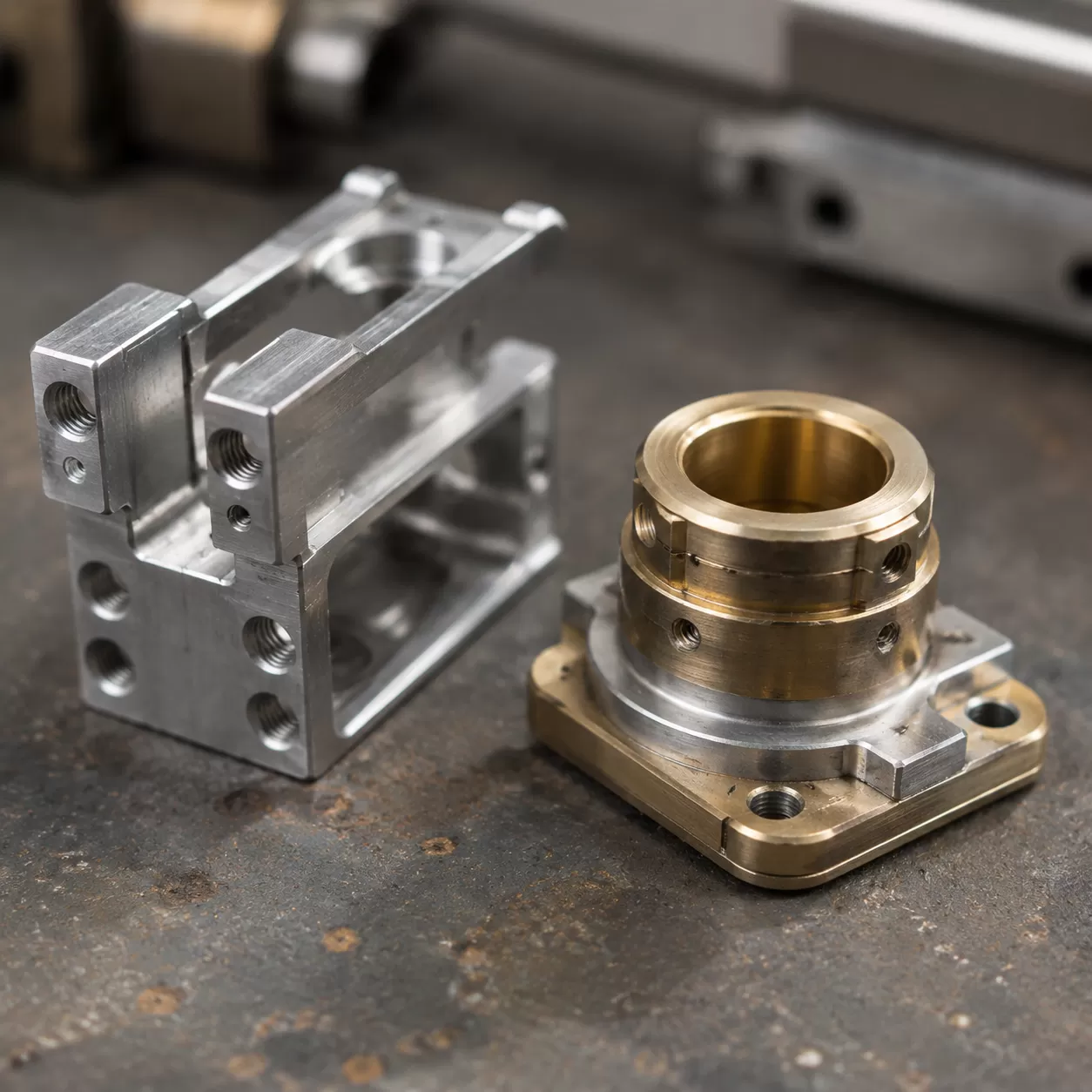
Understanding Mixed Brass and Aluminum Assemblies
The Engineering Challenge of Combining Brass and Aluminum
Combining brass and aluminum in a single mechanical assembly presents a unique set of engineering challenges. While this pairing allows designers to leverage the lightweight properties of aluminum alongside the excellent wear resistance and lubricity of brass, it introduces significant risks. The primary challenge stems from electrochemical incompatibility. When these dissimilar metals come into contact in the presence of an electrolyte, a natural battery is created, leading to accelerated material degradation. Navigating this balance requires precise CNC machining strategies and a proactive approach to surface engineering.
Material Compatibility and the Galvanic Series
Material compatibility is dictated by the galvanic series, which ranks metals based on their electrochemical potential measured in volts (V). The further apart two metals are on this scale, the greater the potential difference, and the faster the less noble metal will corrode.
Aluminum acts as an active anode, while brass (a copper alloy) acts as a noble cathode. The table below highlights the standard electrical potentials that drive this reaction:
| Metal Group / Alloy | Anodic Index (V) | Role in Mixed Assembly | Relative Nobility |
|---|---|---|---|
| Aluminum Alloys (e.g., 6061, 7075) | -0.90V to -0.75V | Anode (Corrodes) | Active / Less Noble |
| Stainless Steel (300 Series reference) | -0.55V to -0.50V | Neutral Reference | Moderately Noble |
| Brass & Copper Alloys | -0.45V to -0.40V | Cathode (Protected) | Noble / Passive |
Key Differences in Material Properties and Performance
To optimize CNC machining and ensure structural integrity, engineers must balance the distinct physical and mechanical characteristics of both materials.
- Thermal Expansion: Aluminum expands and contracts at a significantly higher rate than brass. This thermal mismatch can induce stress on tight-tolerance CNC machined joints during thermal cycling.
- Weight vs. Strength: Aluminum offers an exceptional strength-to-weight ratio for structural components, while brass provides heavy-duty durability and low friction for moving parts.
- Machinability: Aluminum requires high spindle speeds and sharp tools to prevent gummy chip buildup, whereas free-cutting brass allows for rapid material removal with minimal tool wear but requires precise chip control.
The Mechanics of Galvanic Corrosion in Mixed Metal Pairs
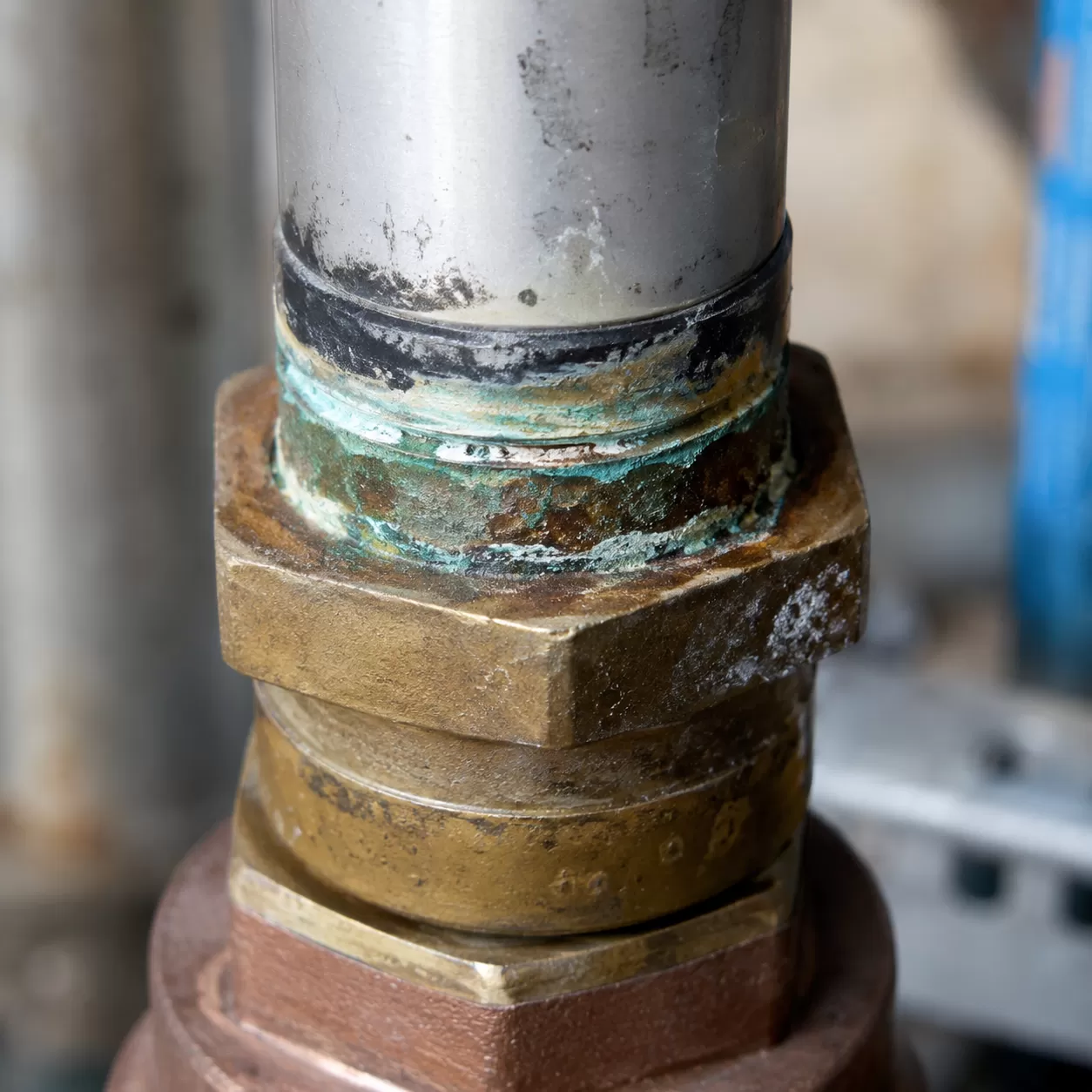
What Causes Galvanic Corrosion?
Galvanic corrosion happens when two dissimilar metals make electrical contact in the presence of an electrolyte, like moisture or humidity. This creates a natural battery cells setup. Electrons flow from the more active metal to the more noble one, causing the active metal to degrade at an accelerated rate. For engineers and buyers utilizing aluminum rapid prototyping, understanding this electrical current breakdown is vital before sending designs to production.
The Anode-Cathode Relationship Between Aluminum and Brass
In mixed brass and aluminum assemblies, these two materials play very different roles due to their electrochemical potential:
- Aluminum (The Anode): Holds a lower potential on the galvanic series. It acts as the sacrificial anode, meaning it will corrode.
- Brass (The Cathode): As one of the heavy copper alloys, brass has a higher potential. It acts as the cathode and remains protected while drawing electrons away from the aluminum.
Because the potential difference between them typically exceeds 0.40 V, this pairing triggers aggressive galvanic corrosion if left unprotected.
The Impact of Environmental Factors and Moisture
The speed of the corrosion depends heavily on the environment. Clean, dry air keeps the risk low. However, the introduction of an electrolyte accelerates the damage:
| Environment Type | Risk Level | Impact on Assemblies |
|---|---|---|
| Dry Indoor | Low | Minimal electron transfer occurs. |
| High Humidity / Coastal | High | Saltwater and moisture create a highly conductive path. |
| Fluid Cooling Systems | Critical | Continuous exposure to uninhibited water or coolant causes rapid pitting. |
Corrosion Seizure: Why Mixed Assemblies Fuse Together
When aluminum corrodes, the resulting aluminum oxide takes up far more physical space than the original raw metal. In tight, precision-machined threads or joints, this oxidation expands rapidly. The crust creates immense pressure within the assembly, locking the components together. This is known as galvanic seizure, and it makes it nearly impossible to disassemble or service the parts without destroying the brass or aluminum components entirely.
CNC Machining Considerations for Brass and Aluminum
When tackling mixed brass and aluminum assemblies, your choice of machining strategy directly impacts both your bottom line and part quality. Machining these two materials together or sequentially requires a solid grasp of how they interact with your cutting tools, machine setups, and coolant systems. To get up to speed on the core fundamentals before diving in, check out our comprehensive CNC machining basics guides.
Machinability Differences and CNC Tool Wear
Brass and aluminum behave differently under the cutting edge. Aluminum is highly ductile and prone to built-up edge (BUE), where the material welds itself to the tool. Brass, on the other hand, fractures easily and produces short, brittle chips, but its zinc content can cause abrasive tool wear over long production runs.
| Feature | Aluminum (e.g., 6061-T6) | Brass (e.g., C360) |
|---|---|---|
| Machinability Rating | High (Approx. 70-80%) | Excellent (100% Benchmark) |
| Chip Control | Long, stringy (Requires chip breakers) | Short, brittle flakes |
| Tool Wear Type | Built-up edge (BUE) and adhesion | Abrasive wear from zinc content |
| Preferred Tooling | Uncoated carbide or DLC coatings | Micro-grain carbide with sharp edges |
Achieving Surface Finish and Tight Tolerances
Achieving matching surface finishes on mixed brass and aluminum assemblies requires dialing in distinct speeds and feeds for each component. Aluminum needs high spindle speeds and aggressive feeds to fling chips away and avoid heat buildup, while brass thrives with moderate speeds and precise control to prevent burring.
- Coolant Strategy: Use a high-quality water-soluble oil to lubricate the aluminum and wash away brass dust. Mixed brass chips can act as an abrasive if recycled through the coolant line.
- Rigidity: Keep workpiece clamping tight. Brass is dense and heavy, meaning it absorbs vibrations differently than lightweight aluminum during high-speed passes.
- Deburring: Aluminum leaves heavy burrs that require mechanical removal, whereas brass burrs are thin but sharp. Plan separate automated deburring cycles to maintain precise fits.
Threading and Assembly Torque Strategies
Threading is where the physical reality of combining these two materials becomes critical. Because brass is significantly harder and heavier than aluminum, stripping threads during assembly is a constant risk.
- Thread Engagement: When mating a brass bolt into an aluminum tapped hole, ensure a minimum thread engagement of 2x the nominal diameter to prevent stripping the softer aluminum.
- Torque Control: Use calibrated torque wrenches. Aluminum threads deform easily under the high torque values that a brass fastener can comfortably handle.
- Galvanic Protection: Apply non-conductive anti-seize compounds during the threading process to prevent fluid or moisture from acting as an electrolyte between the dissimilar metals.
Managing Scrap Value and Material Costs
A clean shop floor is a profitable shop floor, especially when running mixed brass and aluminum assemblies. Brass scrap commands a significantly higher market price than aluminum scrap, but only if it remains uncontaminated.
Pro Tip: Keep your chip conveyors and collection bins completely separate. Mixing aluminum and brass turnings ruins the recycle value of both metals, turning a profitable scrap stream into low-value mixed waste.
Plan your production scheduling to run all aluminum components first, clean the machine thoroughly, and then switch over to the brass run to maximize material cost recovery.
Design for Manufacturability (DFM) to Prevent Corrosion
When handling mixed brass and aluminum assemblies, smart upfront engineering is the best defense against hardware failure. Incorporating Design for Manufacturability (DFM) practices during the initial prototyping stage ensures that parts remain structurally sound while staying cost-effective to produce on CNC machinery.
The 0.15 V Rule in Material Selection
The 0.15 V rule is a fundamental guideline in hardware design when dealing with dissimilar metals. In harsh or outdoor environments, the electrochemical potential difference between two connected metals should not exceed 0.15 volts.
When pairing aluminum with copper alloys like brass, the potential difference often exceeds this threshold, pushing the assembly into a high-risk zone for galvanic breakdown. If an environment is strictly controlled and dry, this rule can scale up to 0.50 V, but for standard industrial applications, keeping the electrical potential delta as tight as possible is critical.
Designing to Avoid Water Traps and Crevices
Galvanic corrosion cannot happen without an electrolyte—usually moisture or trapped fluid. If water pools at the junction where aluminum meets brass, the corrosion process accelerates rapidly.
- Implement Drain Holes: Ensure any pocket or recess has a natural exit pathway for liquids.
- Smooth Transitions: Eliminate sharp internal corners that collect condensation.
- Use Sloped Surfaces: Design self-draining geometries on exterior faces to prevent standing water.
- Crevice Elimination: Ensure tight, uniform mating faces to prevent capillary action from pulling moisture into the joints.
For intricate mechanical components, balancing these anti-corrosion geometries with complex internal channels requires specialized machining expertise. For instance, engineering complex channel paths mirrors the technical precision needed when resolving the design and CNC machining challenges of adjustable jump rope locking mechanisms, where tight tolerances and environmental exposure intersect.
Optimizing Surface Area Ratios of Connected Metals
The relative physical size of the interacting metals dictates how fast the assembly degrades. The golden rule of galvanic design is to maintain a large anode and a small cathode.
| Metal Role | Relative Surface Area | Corrosion Rate Impact |
|---|---|---|
| Aluminum (Anode) | Large | Slow & Manageable: Current density is spread out over a wide area. |
| Brass (Cathode) | Small | Safe: The small cathode limits the overall galvanic current. |
| Aluminum (Anode) | Small | Catastrophic: High current density causes rapid pitting and early failure. |
Never use an aluminum rivet, screw, or small fastener on a large brass housing. The small aluminum anode will sacrifice itself rapidly, leading to mechanical failure. Instead, use brass fasteners on large aluminum structures to minimize localized material degradation.
Mitigation Strategies and Surface Treatments
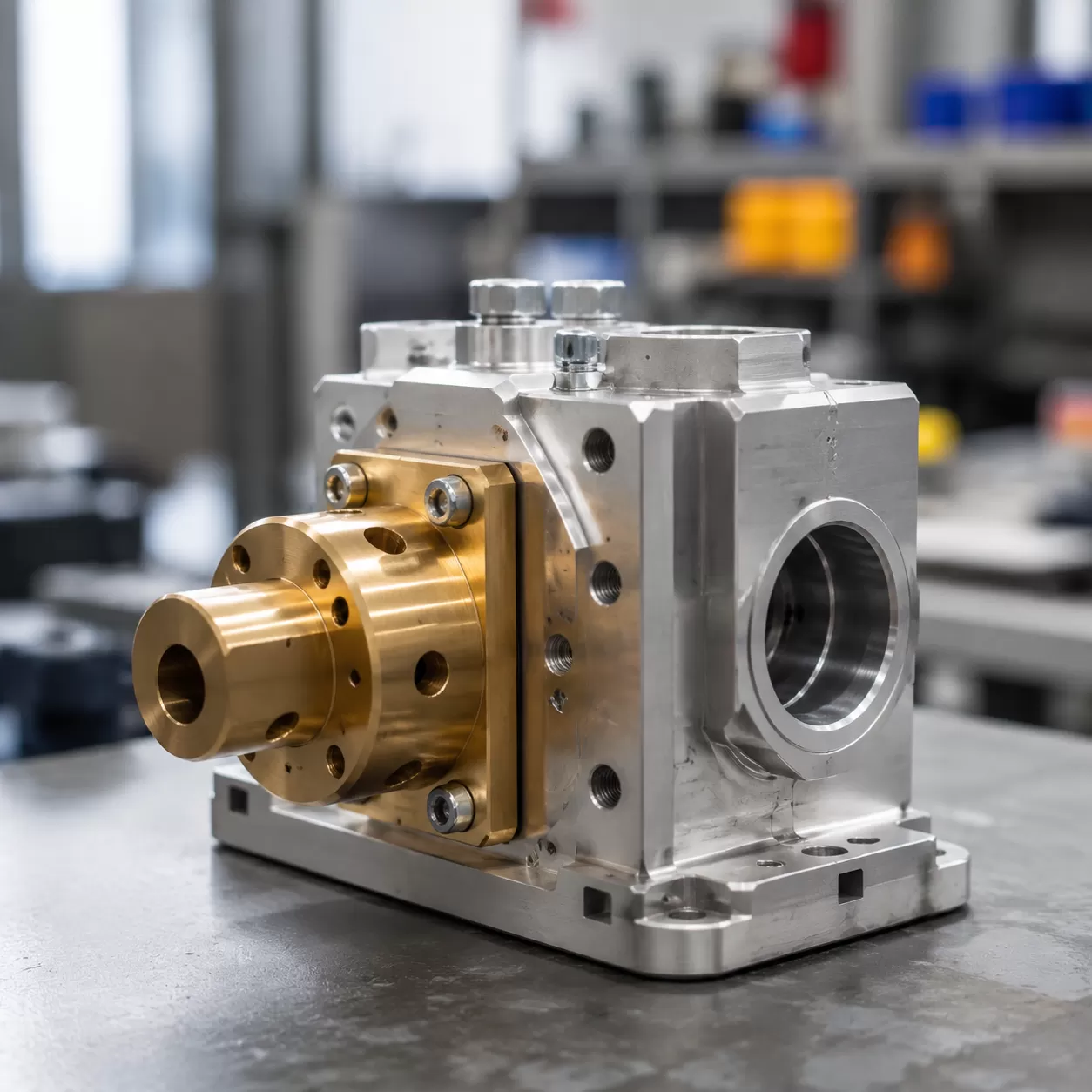
When designing mixed brass and aluminum assemblies, CNC machining precision is only half the battle. To stop galvanic corrosion from destroying your components, you must implement reliable surface treatments and isolation strategies during the design and assembly phases.
Using Electrical Isolation and Barrier Materials
The most effective way to prevent galvanic corrosion in mixed brass and aluminum assemblies is to break the electrical circuit between the two dissimilar metals.
- Non-Conductive Washers: Use non-metallic washers (like nylon, PTFE, or Delrin) to physically separate brass fasteners from aluminum plates.
- Isolation Sleeves: Insert plastic or composite sleeves around bolt shanks to prevent direct contact inside the machined holes.
- Gaskets: Deploy elastomeric or fiberglass-reinforced gaskets to seal joint interfaces completely, keeping moisture out.
Anodizing Aluminum vs. Plating Brass for Protection
Modifying the surface chemistry of the metals changes their electrochemical potential, bringing them closer together on the galvanic series.
| Treatment Type | Target Metal | Mechanism | Best Use Case |
|---|---|---|---|
| Type III Hardcoat Anodizing | Aluminum | Creates a thick, non-conductive oxide layer that blocks electrical currents. | Heavy-duty industrial parts, outdoor enclosures. |
| Nickel Plating | Brass | Seals the copper alloy beneath a layer of nickel, reducing the potential voltage gap with aluminum. | Precision electronic hardware, fluid connectors. |
If you are working on high-performance parts, pairing aluminum 6082 CNC machining with a Type III anodize coating provides an incredibly durable shield against harsh environments.
The Role of Sacrificial Fasteners and Inserts
If electrical isolation is impossible due to grounding requirements or structural constraints, you can introduce a third “sacrificial” metal into the assembly.
- Zinc-Plated Steel Inserts: Installing a zinc-plated helical insert into the aluminum threads before driving in a brass bolt helps protect the aluminum structure.
- Sacrificial Anodes: Adding a small, easily replaceable zinc or magnesium component nearby ensures that the corrosion attacks the sacrificial element rather than your critical CNC-machined parts.
Applying Corrosion-Resistant Coatings and Sealants
For complete peace of mind, physical barrier coatings should be applied during the final assembly of your mixed brass and aluminum components.
- Chromate Conversion Coatings: Excellent for aluminum components that require a balance of corrosion resistance and mild electrical conductivity.
- Anti-Seize Pastes: Specially formulated, non-conductive anti-seize compounds prevent moisture from wicking into threads and stop the parts from fusing together.
- Epoxy Primers and Paints: Liquid or powder coatings applied over the assembled joint provide a final, seamless barrier against external moisture and environmental electrolytes.
Application Scenarios for Brass-Aluminum Assemblies: CNC Machining and Galvanic Corrosion Considerations
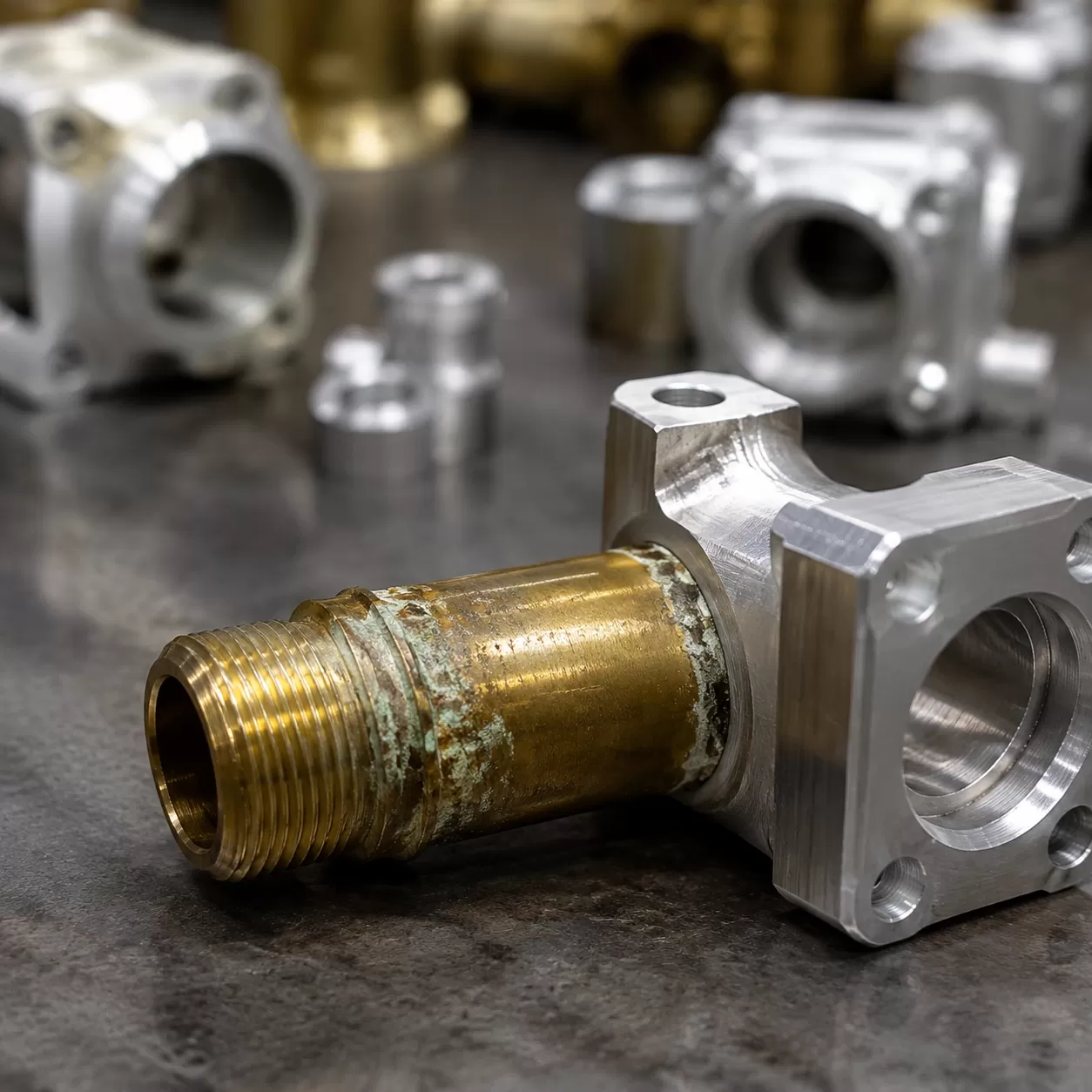
Liquid Cooling Systems and Fluid Valves
In high-performance fluid cooling loops, we frequently combine copper alloys like brass with lightweight aluminum to balance thermal efficiency, weight, and cost. Brass offers excellent machinability and corrosion resistance in raw water, while aluminum keeps the overall manifold assembly lightweight.
However, because these two dissimilar metals sit far apart on the galvanic series, introducing an aqueous electrolyte creates a high risk of galvanic corrosion. Without proper engineering insulation, the aluminum housing acts as a sacrificial anode and degrades rapidly, compromising the seals of fluid valves and causing system leaks. We mitigate this by utilizing specialized surface treatments on the CNC machined components or opting for stainless steel components when the environment proves too aggressive for treated aluminum.
Aerospace and Defense Considerations
Weight reduction drives every engineering decision in aerospace design. Aluminum is the industry standard for structural integrity without the weight penalty, while brass is frequently selected for heavy-duty bushings, landing gear wear pads, and RF connector housings due to its low friction and excellent electrical conductivity.
When CNC machining these mixed brass and aluminum assemblies for defense applications, strict adherence to military standards is mandatory. We ensure that all interface zones feature robust barrier materials, such as non-conductive primers or cadmium-free platings, to completely prevent moisture from bridging the gap between the two metals during high-altitude operations or marine deployments.
Medical Devices and High-End Electronic Hardware
For advanced diagnostic equipment and semiconductor manufacturing tools, material purity and precise grounding are critical performance metrics. We often utilize high-precision CNC machining for semiconductor equipment to create dense electronic enclosures where brass grounding blocks mount directly to anodized aluminum chassis.
While these high-end electronic hardware systems operate in climate-controlled environments, atmospheric moisture and routine chemical wipe-downs can still trigger localized galvanic reactions over time. To ensure long-term reliability and maintain strict cosmetic standards, we tightly control the surface area ratios of the connected metals and apply precise torque strategies during assembly to prevent micro-cracking of the protective anodic layer on the aluminum.
Maintenance, Inspection, and Procurement Best Practices
Monitoring Patina and Corrosion Over Time
When dealing with mixed brass and aluminum assemblies, regular visual checks are your first line of defense. A normal, protective copper patina is dark and stable, but you need to watch out for the warning signs of galvanic corrosion. Look for a chalky white powder (aluminum oxide) forming right where the two metals meet. If you spot pitting or flaking near the joint, the galvanic reaction is already compromising the aluminum component.
Quality Inspection Notes to Reduce Risk
To catch issues before they cause field failures, implement a strict inspection routine for these mixed-metal pairs.
- Electrical Isolation Checks: Use a multimeter to verify there is zero electrical continuity between the brass and aluminum parts after installing isolation washers or coatings.
- Torque Audits: Check fastener joints regularly. Because aluminum yields more easily than brass, thermal cycling can loosen the joint, allowing an active electrolyte to creep in.
- Nondestructive Testing (NDT): Use eddy current testing on critical fluid cooling blocks to find subsurface galvanic pitting around internal brass inserts.
Common Procurement Mistakes and Cost Traps
Buying mixed brass and aluminum assemblies without clear surface treatment specifications is a major financial risk. A common procurement trap is sourcing raw aluminum components alongside bare brass fittings to save on upfront costs, which inevitably leads to early field failures.
When ordering custom components, make sure your supplier applies the correct anodizing or plating treatments during the initial manufacturing run. If you are sourcing parts globally, working with a certified custom CNC machining supplier ensures that critical design for manufacturability (DFM) rules—like proper plating thickness and thread tolerances—are strictly followed to eliminate unexpected rework expenses.
How to Safely Un-Fuse Corroded Assemblies
When a mixed assembly suffers from corrosion seizure, forcing the parts apart will strip the soft aluminum threads. To safely un-fuse the components, follow this procedure:
| Step | Action | Mechanism |
|---|---|---|
| 1 | Apply Penetrating Oil | Use a low-viscosity, capillary-action chemical to dissolve the white aluminum oxide crust. |
| 2 | Apply Localized Heat | Use a heat gun on the outer component. Aluminum expands faster than brass, breaking the corrosive bond. |
| 3 | Use Impact, Not Leverage | Tap the assembly gently with a dead-blow mallet to shatter the microscopic galvanic welds without distorting the CNC-machined geometry. |
 English
  German
  Dutch
Dutch  Russian
  Czech
Czech  French
  Japanese
  Spanish
  Portuguese
  Korean
Reviews
There are no reviews yet.