

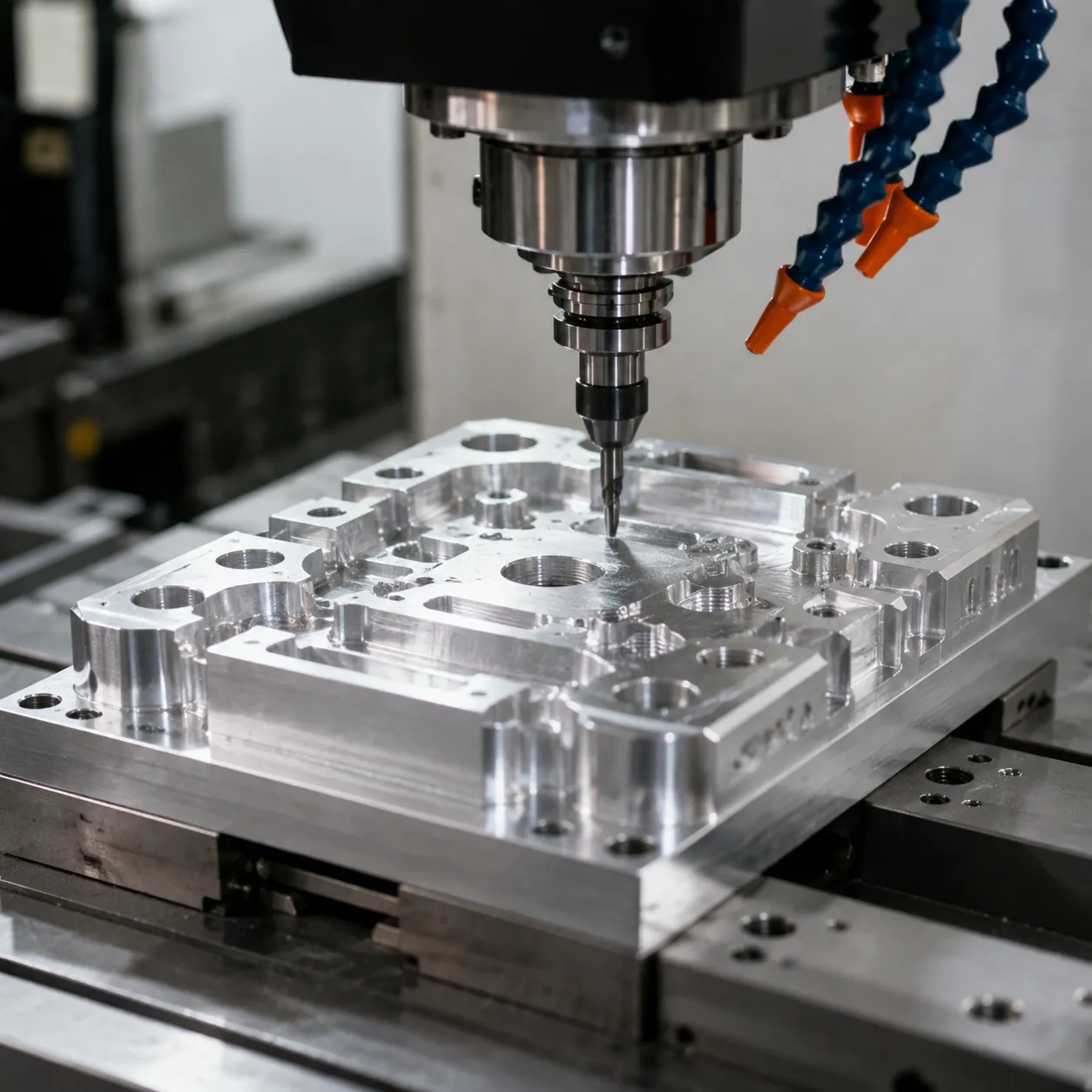
Introduction to Aluminum MIC-6 Precision Tooling Plate
In high-precision engineering, selecting the right base material dictates the success of the entire manufacturing process. For industries requiring absolute flatness and structural integrity, Aluminum MIC-6 precision tooling plate CNC machining for jigs and fixtures stands out as the premier choice. It eliminates the hidden costs of material warping and extensive rework.
What is MIC-6 Aluminum?
MIC-6 is a continuous-cast aluminum plate specifically engineered for dimensional stability and consistency. Unlike rolled alloys, this advanced cast aluminum plate undergoes a unique casting process that relieves internal stresses.
-
- Manufacturing Process: Cast continuously to a specific thickness to ensure uniform grain structure.
- Surface Quality: Delivered with a precision milled blanks finish protected by plastic PVC sheeting.
- Stress Profile: Possesses virtually low residual stress, ensuring it won’t warp during high-speed CNC machining operations.
Importance of MIC-6 in Precision Manufacturing
Precision manufacturing relies heavily on repeatable accuracy. MIC-6 aluminum serves as the backbone for critical workholding setups, inspection tools, and automated machinery parts.
-
- Minimal Distortion: Machining deep pockets or complex patterns will not cause the material to twist or bow.
- Superior Flatness: Perfect for manufacturing base plates and reference surfaces that require micrometer-level precision.
- Time Savings: Eliminates the need for pre-machining rough cuts or secondary flattening operations, optimizing your production timeline.
MIC-6 vs. Standard Aluminum Alloys (e.g., 6061-T6)
While standard alloys like 6061-T6 are excellent for structural components, they fall short when applied to precision tooling. The differences in internal stability significantly impact final machining outcomes.
| Feature | MIC-6 Cast Aluminum Plate | 6061-T6 Rolled Aluminum |
|---|---|---|
| Internal Stress | Extremely low residual stress; internal stability is maintained. | High residual stress from rolling; prone to warping. |
| Flatness Tolerance | Exceptional, industry-leading flat surface right out of the box. | Requires face milling to achieve tight flatness tolerances. |
| Machinability | Perfect for custom parts with intricate geometric profiles. | Excellent strength, but warps when asymmetrical material is removed. |
| Primary Application | High-precision jigs, fixtures, gauges, and optical tables. | Structural frames, automotive components, and brackets. |
Key Properties and Technical Specifications of MIC-6
Excellent Dimensional Stability and Flatness
MIC-6 is a premier cast aluminum plate renowned for its low residual stress and exceptional internal stability. Unlike rolled alloys, its continuous cast granular structure eliminates the internal locked-in stresses that cause warping during material removal.
When executing Aluminum MIC-6 precision tooling plate CNC machining for jigs and fixtures, this means the material stays perfectly flat. It delivers maximum dimensional stability even during deep pocketing or complex milling, making it the go-to choice for high-precision components that cannot tolerate post-machining distortion.
Mechanical and Thermal Properties
MIC-6 offers a balanced mix of physical and thermal characteristics optimized for stable, long-term performance in production environments.
| Property | Typical Value |
|---|---|
| Density | 2.80 g/cm³ (0.101 lb/in³) |
| Tensile Strength | 165 MPa (24 ksi) |
| Yield Strength | 105 MPa (15 ksi) |
| Thermal Conductivity | 142 W/m·K |
| Coefficient of Thermal Expansion (CTE) | 23.6 µm/m·°C |
Tolerances and Thickness Variations
As a standard, MIC-6 features a superior machined surface straight from the mill. These precision milled blanks arrive with a highly flat surface, reducing the need for preliminary fly cutting or surface preparation.
-
- Thickness Tolerance: ±0.127 mm (±0.005 in)
- Flatness Tolerance: Maintained within 0.127 mm (0.005 in) for thicker plates, ensuring reliable accuracy for setups demanding tight tolerances for five-axis parts and intricate coordinate positioning.
- Surface Roughness: Typically 0.5 µm (20 micro-inches) Ra or better, providing an excellent base plates foundation out of the box.
Advantages of Using MIC-6 for Jigs and Fixtures
Superior Flatness for High-Precision Setup
When we design custom jigs, fixtures, and gauges, starting with a perfectly flat surface is non-negotiable. Aluminum MIC-6 precision tooling plate CNC machining provides an exceptional flatness tolerance right out of the box, often within +/- 0.127 mm. This eliminates the need for extensive face milling before you even begin machining your actual part geometry. By utilizing these precision milled blanks as your foundation, you guarantee that your workholding setup remains perfectly parallel to the machine spindle, ensuring the tight tolerances required for high-end component manufacturing.
Stress-Relieved Structure to Prevent Distortion
Standard extruded alloys frequently warp during heavy milling due to internal residual stresses. MIC-6 is a cast aluminum plate that features an entirely stress-relieved structure, meaning it possesses excellent internal stability. When you pocket, drill, or profile this material, it exhibits minimal distortion. This level of dimensional stability is a game-changer for complex, multi-axis setups. If your project demands high structural strength alongside stability, you might also consider comparing these traits with stress-relieved Aluminum 6061-T651 CNC machining to choose the optimal material behavior for your specific application.
Cost-Effectiveness in Tooling Solutions
Using MIC-6 for base plates and manufacturing setups saves significant time and labor. Because the raw cast plates arrive pre-machined to a brilliant surface finish, your CNC routers and mills spend less time prepping raw stock and more time cutting final features.
| Feature | MIC-6 Cast Plate | Standard 6061-T6 Extrusion |
|---|---|---|
| Pre-Milled Flatness | Excellent (Ready to use) | Poor (Requires facing) |
| Residual Stress | Extremely Low | Moderate to High |
| Risk of Warping | Minimal | High during heavy pocketing |
| Preparation Time | Zero | High (Setup & fly-cutting) |
This reduction in cycle time translates directly into lower overall tooling costs. You spend less money on labor and scrap material, making it one of the most cost-effective solutions for short-run custom parts and long-term production fixtures alike.
CNC Machining Guidelines for Aluminum MIC-6
Best Practices for Machining Cast Tooling Plate
Machining MIC-6 precision tooling plate requires a different approach than standard extruded stocks. Because it is a cast aluminum plate with low residual stress, it won’t warp or twist when you cut into it. To maintain this excellent dimensional stability during CNC machining for jigs and fixtures, always use sharp, carbide-tipped tools with high rake angles to reduce cutting heat. Secure the material using vacuum chucks or low-profile clamps to avoid introducing mechanical stress, ensuring the precision milled blanks remain perfectly flat throughout the operation.
Recommended Cutting Speeds and Feeds
MIC-6 behaves like a free-cutting alloy, producing small, manageable chips rather than long strings. You can run high spindle speeds alongside aggressive feed rates without risking tool gumming.
| Operation | Cutting Speed (SFM) | Feed Rate (IPT) | Tooling Type |
|---|---|---|---|
| Roughing | 1,200 – 2,500 | 0.005 – 0.010 | 2-Flute Carbide End Mill |
| Finishing | 2,500 – 4,000 | 0.002 – 0.005 | 3-Flute High-Rake End Mill |
| Drilling | 300 – 500 | 0.004 – 0.012 | Carbide Twist Drill |
Using a generous flow of flood coolant keeps the workpiece cool, flushes out chips immediately, and helps achieve the tight tolerances required for complex custom parts. For more advanced setups, reviewing aluminum CNC machining tolerances for packaging and automation equipment can provide excellent benchmarks for managing thermal expansion during high-speed runs.
Surface Finishes and Post-Processing Capabilities
Every MIC-6 plate comes pre-machined with a standard surface finish of 65 micro-inches or better on both faces, meaning you rarely need to face-mill the top or bottom. When adding custom pockets or features, CNC machining easily delivers a pristine machined surface that requires minimal post-processing. While it does not respond well to heavy decorative anodizing due to its cast structure, it accepts technical coatings like hard anodizing or electroless nickel plating exceptionally well when you need extra surface hardness and wear resistance for industrial environment applications.
Limitations and Challenges in Machining MIC-6
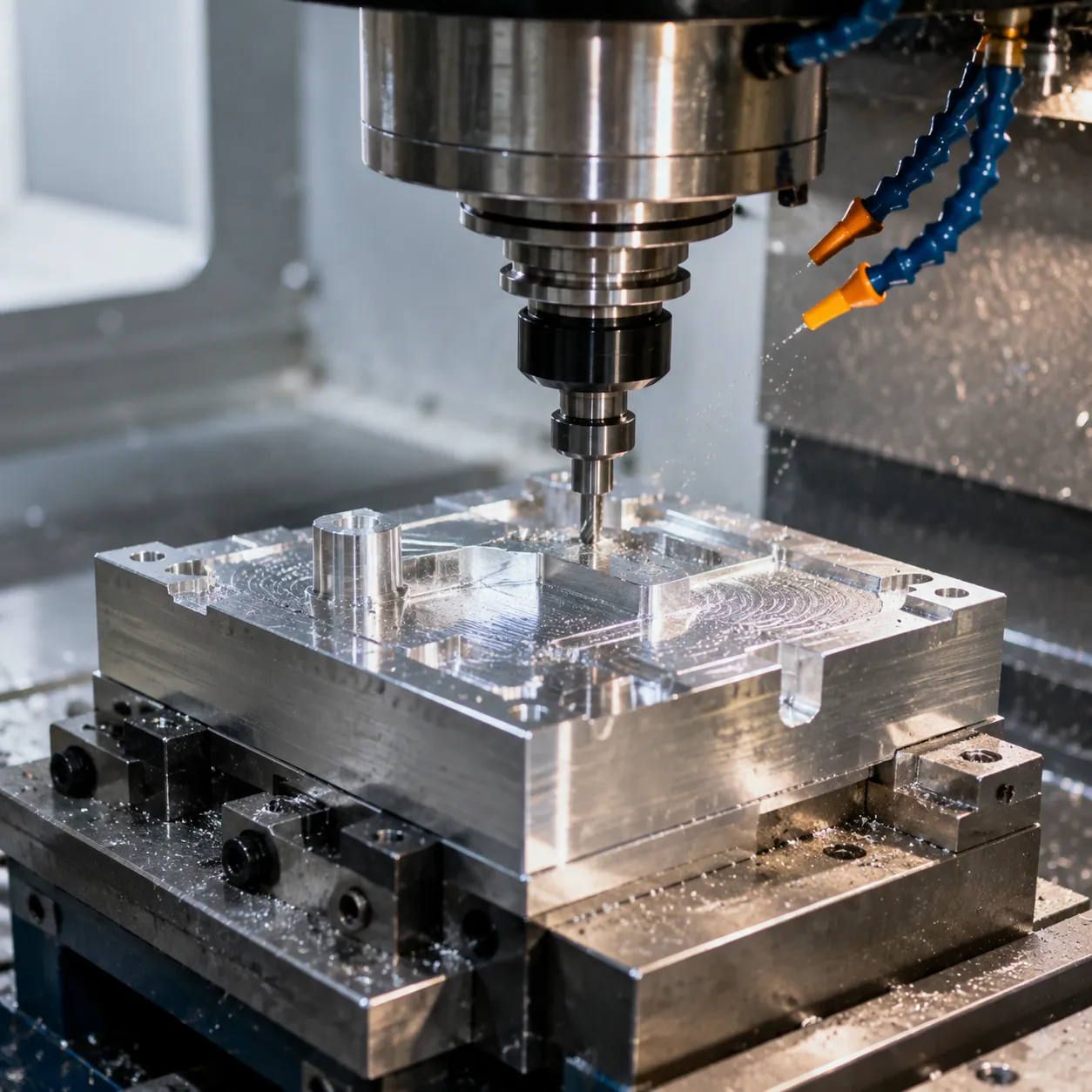
While MIC-6 is the go-to choice for stability, it isn’t a one-size-fits-all solution. When utilizing Aluminum MIC-6 precision tooling plate CNC machining for jigs and fixtures, understanding its mechanical boundaries ensures you don’t push the material past its limits during design and production.
Structural Load and Strength Constraints
MIC-6 is a cast aluminum plate, meaning its grain structure differs significantly from rolled alloys like 6061-T6. It features excellent internal stability and low residual stress, but it sacrifices raw tensile and yield strength to get there.
-
- Lower Load Capacity: It cannot handle high-stress structural loads or heavy impacts.
- Thread Stripping: Tapped holes in MIC-6 strip more easily under high torque compared to wrought alloys.
- Alternative Choices: For high-strength, high-load applications, opting for robust wrought materials or specialized 5083 aluminum CNC machining for marine and offshore structural components offers far better structural integrity.
Welding and Joining Challenges
Welding MIC-6 presents distinct hurdles due to its specific cast chemical composition.
-
- Crack Sensitivity: The material is highly prone to thermal cracking when exposed to standard welding processes.
- Porosity Risks: As a cast product, welding can introduce gas porosity into the joint, severely weakening the connection.
- Best Practice: Mechanical fastening using inserts or dowels is strongly recommended over welding when assembling base plates and custom parts.
Anodizing and Surface Treatment Limitations
Achieving a flawless cosmetic finish via post-processing can be tricky with this cast material.
-
- Aesthetic Inconsistency: Standard decorative anodizing often results in a dull, gray, or mottled machined surface due to the silicon content in the cast matrix.
- Functional Coating Only: While hard-coat anodizing works well for wear resistance, it will not yield a uniform, visually striking color finish.
- Protection Tips: Stick to functional coatings or light chemical films if the primary goal is protecting your precision milled blanks from environmental wear without worrying about cosmetic perfection.
Common Applications of MIC-6 Precision Tooling Plates
Custom Jigs, Fixtures, and Gauges
In high-precision manufacturing, maintaining a flawless reference surface is everything. We rely heavily on Aluminum MIC-6 precision tooling plate CNC machining for jigs and fixtures because the material arrives as precision milled blanks with an unmatched flat surface. Because it is a cast aluminum plate, it features exceptionally low residual stress. When we CNC machine complex pockets, slots, or alignment holes into custom jigs and gauges, the plate stays completely flat without warping. This internal stability ensures that repeatable, tight tolerances are maintained over thousands of production cycles, making it our go-to choice for manufacturing base plates and workholding setups.
3D Printing Build Plates and Vacuum Chambers
The excellent dimensional stability of MIC-6 makes it a top-tier choice for industrial 3D printing build plates and vacuum chamber components. Thermal cycling can cause standard extruded alloys to bow or twist, ruining part adhesion or breaking airtight seals. MIC-6 handles temperature shifts with minimal distortion, ensuring a perfectly flat foundation for successive printing layers or high-vacuum environments. Its machined surface provides a clean, uniform start right out of the box, saving valuable machining time when fabricating specialized semiconductor housing or custom parts.
Aerospace and Automotive Inspection Fixtures
Aerospace and automotive quality control demands absolute accuracy, where even a micron of deflection can fail a part inspection. We use MIC-6 to build highly accurate inspection fixtures and CMM (Coordinate Measuring Machine) plates. Its unique stress-relieved structure ensures that large-scale checking fixtures do not distort over time or change shape due to ambient workshop temperature fluctuations. For operations utilizing advanced automation, integrating these stable plates alongside high-tolerance components—such as those produced through specialized Swiss machining vs CNC lathe processes—guarantees that the entire assembly delivers reliable, uncompromising precision.
Frequently Asked Questions About MIC-6 CNC Machining
Can MIC-6 Aluminum Be Easily Machined and Drilled?
Yes, it machines beautifully. Because it is a cast aluminum plate, it has low residual stress, meaning it won’t warp or twist during aggressive cutting. When performing Aluminum MIC-6 precision tooling plate CNC machining for jigs and fixtures, you get clean, consistent chips.
-
- Drilling & Tapping: Excellent thread quality, but use sharp carbide tools to prevent any tearing.
- Distortion: Virtual minimal distortion allows you to hit tight tolerances easily.
- Surface: It comes as a machined surface protected with plastic PVC sheeting, so you usually only need to machine the pockets, holes, and profiles for your custom parts.
What is the Difference Between MIC-6 and 5000/7000 Series Cast Plates?
The choice comes down to a trade-off between dimensional stability and raw mechanical strength. MIC-6 is an Al-Zn-Mg alloy optimized for stress-free stability rather than high load-bearing capacity.
| Property / Feature | MIC-6 Cast Plate | 5000 Series Cast Plate | 7000 Series Cast Plate |
|---|---|---|---|
| Primary Benefit | Maximum internal stability | Good corrosion resistance | Higher tensile strength |
| Stress Relief | Superior (zero bowing) | Moderate | Moderate to low |
| Best Used For | Base plates, jigs, fixtures | Marine & chemical parts | High-stress structural parts |
If you are unsure which material fits your layout, consulting a reliable aluminum CNC machining supplier can help you balance material costs and performance specs.
How Do You Prevent Surface Wear and Maintain MIC-6 Fixtures?
MIC-6 is softer than standard 6061-T6 or 7075 alloys. To keep your precision milled blanks and fixtures in top shape over long production runs, follow these maintenance rules:
-
- Use Hardened Inserts: Press-fit steel or carbide bushings into high-wear drill holes and locating pin sites.
- Apply Hardcoat Anodizing: While standard anodizing can be tricky due to the cast structure, a technical hardcoat protects the surface from scratches.
- Proper Storage: Clean off chips and coolant residue after use, and apply a light film of protective oil to prevent surface oxidation.
 English
  German
  Dutch
Dutch  Russian
  Czech
Czech  French
  Japanese
  Spanish
  Portuguese
  Korean
Reviews
There are no reviews yet.