

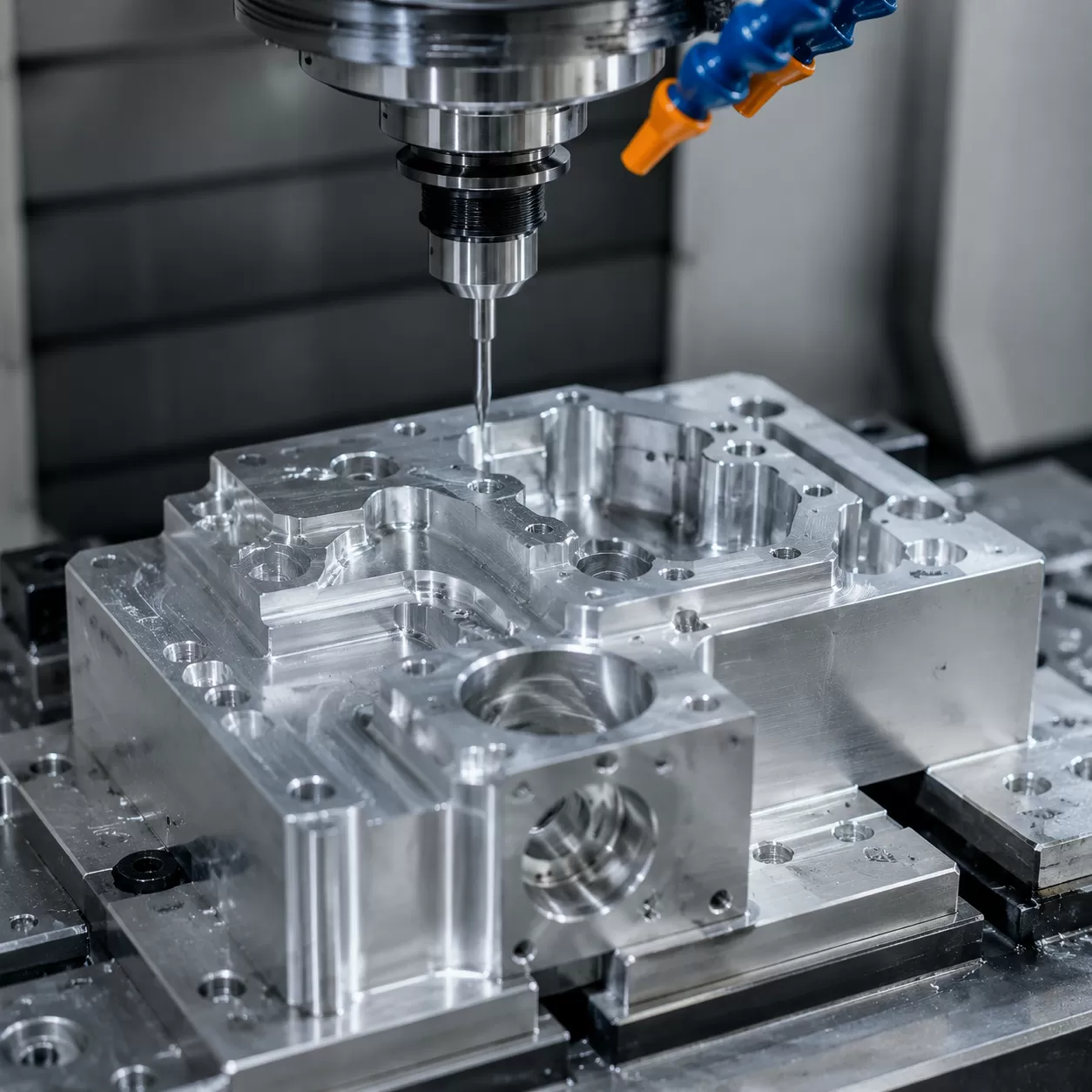
Introduction to Aluminum 6061-T651 for Precision CNC Machining
Aluminum 6061 is the workhorse of the manufacturing world, celebrated for its excellent strength-to-weight ratio and corrosion resistance. However, for high-end precision CNC machining, the base alloy isn’t enough; the “T651” temper is what transforms this metal into a reliable substrate for complex engineering.
What is Aluminum 6061 and the T651 Temper?
Aluminum 6061-T651 is a precipitation-hardened alloy that has undergone a specific thermal and mechanical process. While the “T6” indicates solution heat-treating and artificial aging for maximum hardness, the “51” suffix denotes a critical secondary step: stress relieving by stretching. This process ensures the material remains inert during aggressive metal removal.
- T6: Solution heat-treated and artificially aged.
- 51: Stress relieved by stretching a controlled amount (typically 1.5% to 3%).
The Role of the Temper Designation System
The temper designation system provides a standardized roadmap of a metal’s mechanical history. For custom manufacturing, understanding these codes is the difference between a part that holds its tolerance and one that fails.
- Consistency: Ensures repeatable mechanical properties across different batches.
- Predictability: Helps engineers calculate tool deflection and machinability before the spindle even turns.
- Quality Control: Guarantees the alloy meets the rigorous standards required for aerospace components and contract manufacturing.
Why Stress Relief Matters in Precision Engineering
In the world of CNC production, residual internal stresses are the enemy of accuracy. Standard T6 aluminum often contains “locked-in” stresses from the quenching process. When you mill away material, these stresses are released, causing the part to warp or “potato chip.”
Key benefits of stress-relieved 6061-T651 include:
- Warping Prevention: Minimal movement after the clamps are released.
- Dimensional Stability: Maintains tight tolerances even in thin-walled or high-aspect-ratio designs.
- Reduced Scrap: Lower risk of part distortion means higher yields for low volume production.
- Surface Integrity: Better results during precision turning and milling operations.
Key Differences: Aluminum 6061-T6 vs. 6061-T651 vs. 6061-T6511
When sourcing material for Aluminum 6061-T651 stress-relieved CNC machining for precision parts, understanding the exact temper variation is critical. While they share the same base chemical composition, the way they are processed alters their internal stress and how they behave on a CNC mill.
Manufacturing Processes and Stress-Relief Methods
The core difference lies in how these aluminum alloys are stabilized after heat treatment.
- 6061-T6: Solution heat-treated and artificially aged. It is often water-quenched, which locks in high levels of internal residual stress.
- 6061-T651: Standard T6 plate material that undergoes a specific stress-relief process. We mechanically stretch the plate by 1.5% to 3% to pull out and redistribute those internal stresses.
- 6061-T6511: This applies specifically to extrusions. The material is stretched for stress relief and then minor straightening is allowed to hit final dimensional tolerances.
Residual Stress and Dimensional Stability During Machining
Residual stress is the enemy of tight tolerances. When you mill a standard T6 plate, removing material releases locked-in stresses, causing the part to twist or bow.
Using Aluminum 6061-T651 stress-relieved CNC machining for precision parts prevents this warping prevention issue entirely. Because the internal stresses are already neutralized via stretching, the material maintains its dimensional stability even during heavy milling or deep pocketing.
| Material Temper | Stress Level | Warp Risk During Milling | Ideal For |
|---|---|---|---|
| 6061-T6 | High | High | Simple parts, minimal machining |
| 6061-T651 | Near Zero | Very Low | Complex, flat, or high-precision parts |
| 6061-T6511 | Low to Medium | Moderate | Extruded profiles, brackets |
Mechanical Properties and Material Composition
All three tempers feature the exact same chemical makeup, relying on magnesium and silicon as primary alloying elements. Their basic mechanical properties—like tensile strength, yield strength, and corrosion resistance—remain virtually identical. The stretching process does not degrade the strength of the metal; it simply balances the internal molecular structure to optimize machinability and prevent tool deflection.
Cost, Availability, and Stock Forms
- 6061-T6 is the most common and economical option, typically sold as standard sheet metal or small bar stock.
- 6061-T651 is the industry standard for high-quality aluminum plates. While it carries a slight price premium due to the stretching process, it drastically lowers your overall contract manufacturing costs by eliminating scrap parts caused by part distortion.
- 6061-T6511 is widely available as extruded bars, tubes, and custom profiles, making it a go-to choice for structural robotics frames and custom brackets that require light machining.
Advantages of Using 6061-T651 in Precision CNC Machining
When it comes to high-volume manufacturing, choosing Aluminum 6061-T651 stress-relieved CNC machining for precision parts offers massive advantages over standard alloys. The controlled stretching process locks the material’s grain structure in place, eliminating the internal stresses that typically plague raw metal stock during aggressive cutting operations.
Enhanced Dimensional Stability and Warp Resistance
The biggest headache in precision turning and milling is material warping. Standard aluminum holds internal tension from the cooling process; when you shave off material, those forces unleash, causing the part to twist or bow.
- Warping Prevention: The T651 stretching process pre-relieves these internal forces.
- Zero Distortion: Your parts stay perfectly flat and true to your CAD model, even after heavy pocketing.
- Lower Scrap Rates: Less material distortion means fewer wasted parts and predictable low-volume production runs.
Superior Tooling and High-Speed Machining Behavior
+———————————–+———————————–+
| Machining Challenge | 6061-T651 Performance Benefit |
+———————————–+———————————–+
| Tool Deflection | Minimized due to uniform hardness |
| — | — |
| Chip Evacuation | Clean, crisp chips break easily |
| Cycle Times | Faster feeds and speeds possible |
+———————————–+———————————–+
Our high-speed CNC production setups thrive on predictability. 6061-T651 delivers excellent machinability, allowing tools to slice through the metal smoothly without catching or chewing. This uniform behavior prevents sudden tool deflection, keeps temperature control managed at the cutting edge, and significantly extends the life of your expensive end mills.
Consistency in Post-Machining Flatness and Tolerance
Achieving a tight dimensional stability target on paper is one thing; keeping it after the part leaves the fixture is another. 6061-T651 ensures that once a component is uncamped, it holds its exact shape.
This consistency is critical for contract manufacturing jobs where flatness and parallelism are non-negotiable. Whether the part moves directly to assembly or requires a secondary surface finishing step, you can trust that the critical dimensions will remain well within your specified tolerances.
Design for Manufacturability (DFM) with 6061-T651
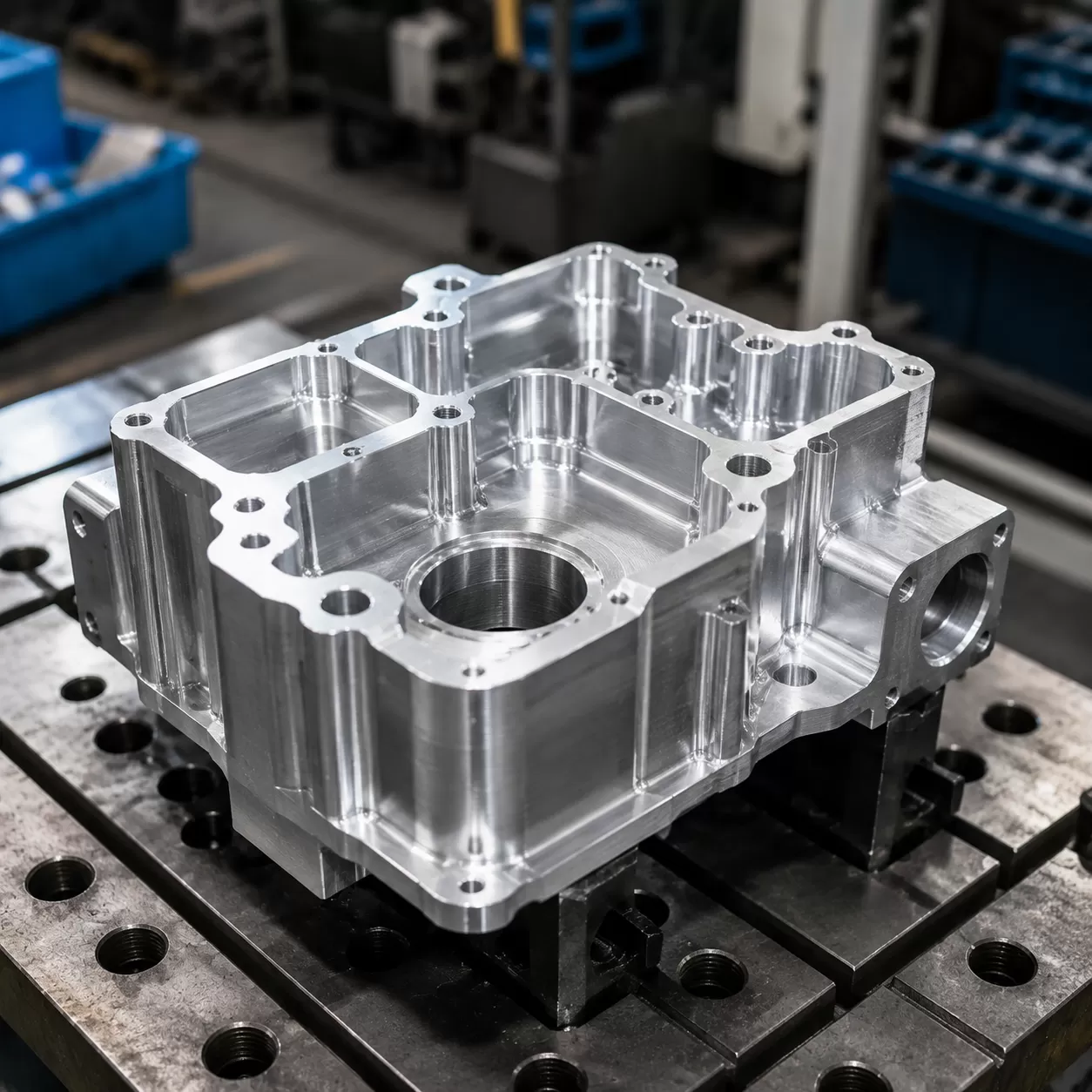
Designing for Aluminum 6061-T651 stress-relieved CNC machining requires a balance between aggressive material removal and geometric stability. Because the T651 temper removes internal tension through controlled stretching, we can push the limits of design without the constant fear of the part “moving” or “springing” during the milling process.
Optimizing Speeds and Feeds for Stress-Relieved Aluminum
To get the most out of 6061-T651, we focus on maximizing the machinability of the alloy. High-speed machining (HSM) techniques work best here because the material chips cleanly without gummy buildup on the tool.
| Parameter | Recommended Approach | Benefit |
|---|---|---|
| Cutting Speed | High (800 – 3000+ SFM) | Reduces heat transfer to the part |
| Feed Rate | Moderate to High | Ensures efficient chip evacuation |
| Tool Path | Trochoidal Milling | Minimizes tool deflection and vibration |
| Coolant | High-pressure flood | Prevents chip re-cutting and preserves finish |
Managing Distortion in Thin-Walled Precision Parts
Even with stress-relieved stock, thin-walled designs require a strategic approach. When we handle precision CNC machining for automation and robotics, we utilize specific clamping and sequencing to maintain integrity.
- Symmetrical Material Removal: Always machine both sides of a thin plate to balance any remaining surface tension.
- Step-Down Milling: Use smaller axial depths of cut to prevent the “oil-can” effect on thin floors.
- Fixture Design: Use vacuum fixtures or soft jaws to distribute clamping pressure evenly, preventing physical deformation during the cycle.
Surface Finishing Options for 6061-T651 Machined Parts
The fine grain structure of 6061-T651 makes it an ideal candidate for various secondary processes. It takes finishes exceptionally well, ensuring corrosion resistance and aesthetic appeal for high-end industrial components.
- Type II/III Anodizing: Provides a hard, wear-resistant layer; T651 ensures the dimensions stay within industrial-grade CNC machining accuracy standards after the chemical bath.
- Bead Blasting: Creates a uniform matte texture that hides tool marks.
- Chemical Film (Chem-Film): Excellent for electrical conductivity and basic protection.
- Electropolishing: Used frequently for medical and cleanroom applications to create a burr-free, ultra-smooth surface.
Common Application Scenarios for 6061-T651 Precision Parts
When manufacturing high-end components, material stability directly dictates the quality of the final product. Aluminum 6061-T651 stress-relieved CNC machining for precision parts has become our go-to standard across industries where even a micron of warping causes catastrophic failure. By eliminating internal residual stress, this alloy guarantees that complex milling won’t distort the finished piece.
Aerospace and Aviation Components
Aerospace manufacturing demands low weight paired with absolute structural integrity. We rely on 6061-T651 for structural brackets, instrumentation housings, and internal valve bodies. During deep pocket milling, standard aluminum alloys flex and warp due to released internal stresses, ruining the part’s tight tolerances. The controlled stretching in T651 temper eliminates this issue, ensuring critical aerospace components maintain their aerodynamic profiles and exact fastening dimensions under extreme altitude and temperature shifts.
Semiconductor and Automation Equipment Plates
The semiconductor industry runs on precision, where processing equipment requires perfectly flat, stable foundational plates. We use 6061-T651 to machine large vacuum chambers, robot arms, and precision matrix plates.
- No Post-Machining Twist: Large plates stay perfectly flat after extensive pocketing.
- High Vacuum Compatibility: Excellent surface finishing allows for cleanroom-grade anodizing.
- Perfect Integration: Essential for constructing precise industrial automation equipment.
| Feature | 6061-T651 Benefit in Automation |
|---|---|
| Flatness Retention | Prevents sensor misalignment over long production cycles. |
| Thread Strength | Holds tapped inserts securely without stripping under cyclic loads. |
| Machining Speed | Supports high-speed milling without tool deflection. |
High-Precision Automotive and Racing Components
In professional racing and high-performance automotive manufacturing, components face brutal cyclic stress and vibration. We machine suspension links, engine blocks, brake calipers, and custom valve covers from 6061-T651. The uniform mechanical properties throughout the material ensure that high-stress racing parts do not harbor hidden weak spots, giving drivers and engineers complete predictability on the track.
Medical Device and Instruments Manufacturing
Medical hardware requires precise dimensional stability combined with biocompatible surface finishing capabilities. This alloy is the backbone for surgical tools, diagnostic equipment frames, and orthopedic implants prototyping.
- Strict Geometry: Ensures moving parts inside surgical instruments do not bind.
- Anodizing Ready: Achieves a flawless finish that withstands harsh chemical sterilization cycles.
- Reliability: Delivers consistent tool paths and part-to-part uniformity during low volume production runs.
Material Selection Guide: When to Choose 6061-T651
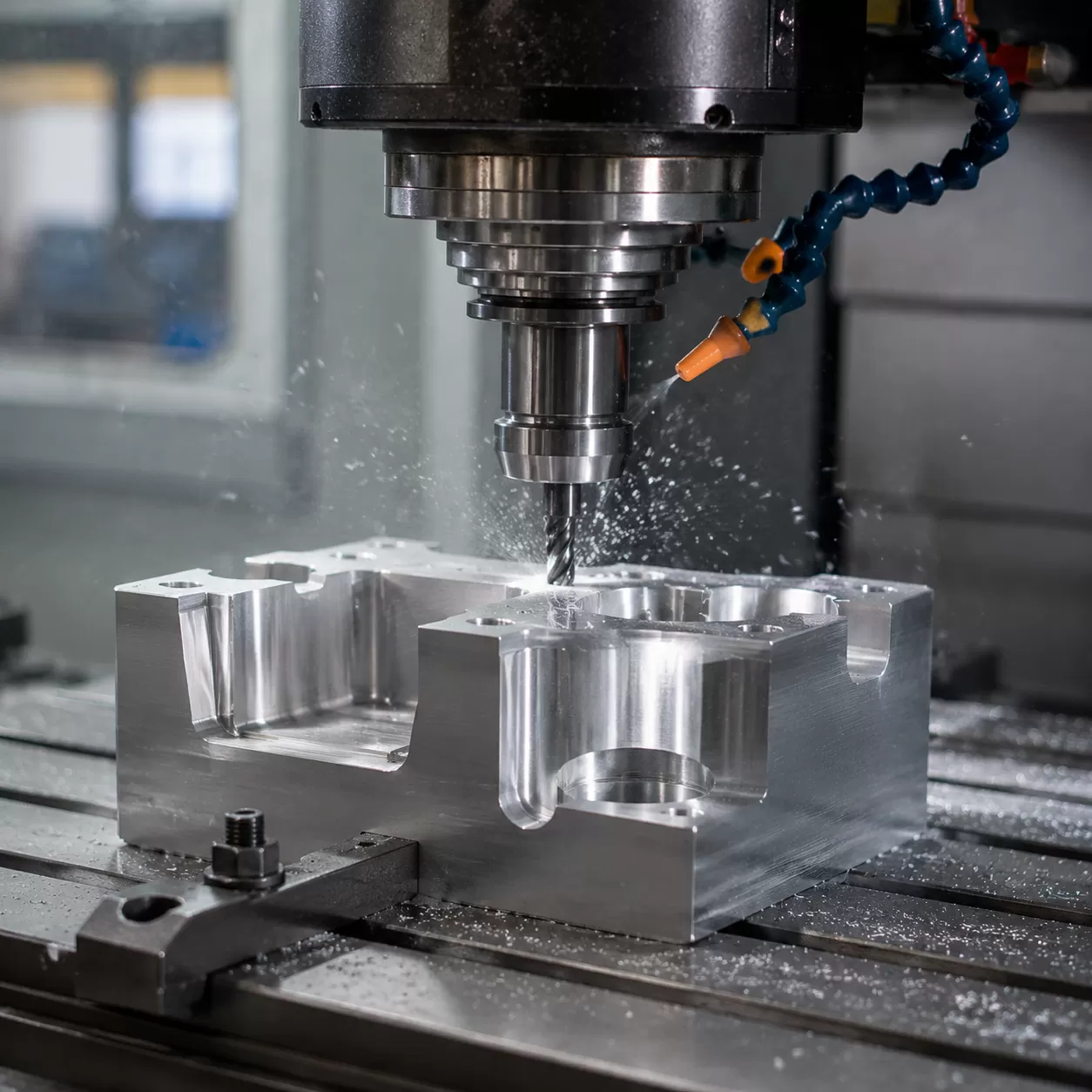
Choosing 6061-T651 for Heavy Milling and Flatness Requirements
When a project demands extensive metal removal, standard aluminum plates will warp as internal stresses release. We recommend specifying Aluminum 6061-T651 stress-relieved CNC machining for precision parts whenever part flatness is a non-negotiable requirement. Because the T651 temper undergoes a controlled stretching process after heat treatment, the residual stresses are neutralized. This allows our team to perform heavy milling, deep pocketing, and complex slotting without the material twisting or bowing during production.
When to Opt for 6061-T6 or 6061-T6511 Extrusions
Choosing the right material form saves both time and budget. Standard 6061-T6 is highly cost-effective for simple geometries or parts with minimal machining, where internal stress won’t trigger major part distortion. For extruded profiles, 6061-T6511 is the go-to choice; it receives a minor straightening stretch after extrusion, offering better dimensional stability than standard T6 while keeping production costs down for high-volume custom manufacturing.
Comparing 6061-T651 with 7075-T651 for High-Stress Applications
While 6061-T651 delivers excellent machinability and corrosion resistance, certain high-performance environments require different mechanical properties. When structural load and extreme strength are the priority, switching to 7075-T651 is necessary.
| Material Property | 6061-T651 Aluminum | 7075-T651 Aluminum |
|---|---|---|
| Yield Strength | ~276 MPa | ~503 MPa |
| Corrosion Resistance | Excellent | Moderate |
| Machinability | High | Good |
| Anodizing Quality | Superior | Good |
| Best Used For | Flat plates, brackets, semiconductor frames | Aerospace structures, high-stress racing parts |
For projects requiring strict structural integrity alongside excellent surface finishes, utilizing a trusted custom aluminum CNC machining parts supplier ensures the correct alloy grade and temper are selected to prevent tool deflection and ensure tight tolerances.
Frequently Asked Questions About 6061-T651 CNC Machining
Does the T651 stretching process reduce material strength?
No, the T651 stretching process does not reduce the material strength of the alloy. In fact, it maintains the excellent mechanical properties of standard T6 temper while introducing superior dimensional stability.
During this process, the aluminum is stress-relieved by stretching it by a controlled 1% to 3% after heat treatment. This permanently pulls out the internal residual stresses without sacrificing hardness or tensile strength. For heavy milling and high-speed machining behavior, it ensures the metal remains strong, reliable, and predictable.
How does 6061-T651 compare to MIC-6 cast tooling plate?
Choosing between 6061-T651 plate and MIC-6 cast aluminum depends entirely on your specific contract manufacturing requirements:
| Feature | Aluminum 6061-T651 | MIC-6 Cast Plate |
|---|---|---|
| Material Type | Wrought aluminum alloy | Cast aluminum plate |
| Tensile Strength | High (Great for structural parts) | Low (Poor for structural loads) |
| Machining Stability | Excellent (Stress-relieved by stretching) | Superior (Stress-free granular structure) |
| Thread Strength | Strong, durable tapped threads | Weak threads (Often requires inserts) |
| Best Used For | Aerospace components, precision brackets | Semiconductor vacuum chambers, fixtures |
While MIC-6 offers extreme flatness straight out of the box, it lacks the structural integrity needed for high-stress applications. We highly recommend checking out our comprehensive material selection guide for precise CNC machining to evaluate strength versus stability for your specific project.
Why do CNC machined parts warp if they are not stress-relieved?
When raw aluminum blocks are quenched during the heat treatment process, massive internal forces get trapped inside the metal. If you machine a standard un-stretched block, cutting away material unleashes these uneven forces.
This imbalance triggers immediate part distortion and warping. Utilizing Aluminum 6061-T651 stress-relieved CNC machining for precision parts is the most effective method for warping prevention. It ensures that your tight tolerances stay perfectly intact from the first cut to final quality control inspection.

 English
  German
  Dutch
Dutch  Russian
  Czech
Czech  French
  Japanese
  Spanish
  Portuguese
  Korean
Reviews
There are no reviews yet.