

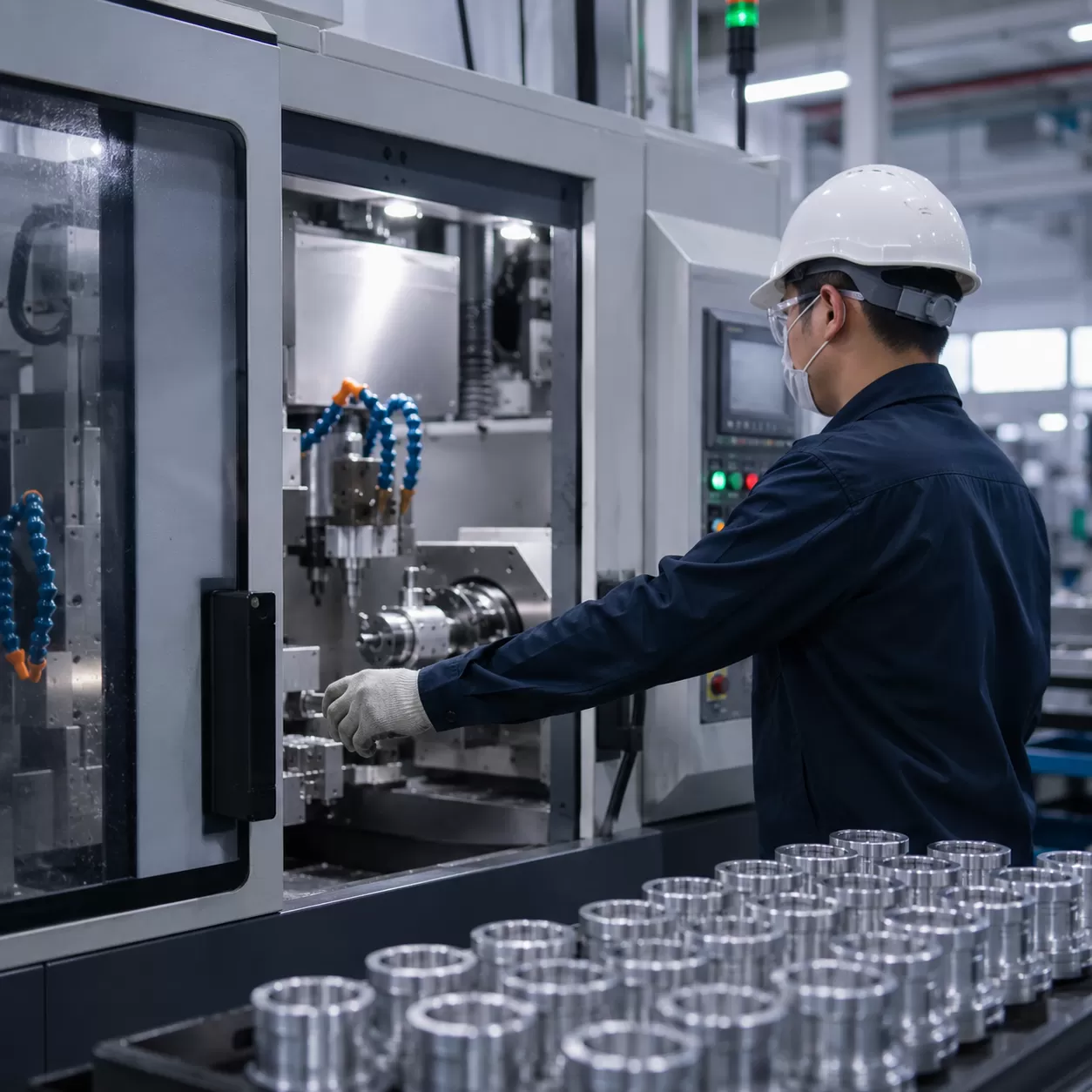
Introduction to Aluminum 2011 for High-Speed Screw Machining
What is Aluminum 2011 Alloy?
Aluminum 2011 is a premier free-machining aluminum alloy engineered specifically for high-volume, automated production. Often designated as AA2011-T3, this material stands out because of its unique alloying elements, notably bismuth and lead.
These additions allow the material to break into short chips during machining, drastically reducing tool wear and friction. For global manufacturers looking to replace heavier metals like brass or copper parts, Aluminum 2011 delivers excellent structural integrity at a fraction of the weight.
The Role of Aluminum 2011 in High-Speed Automatic Screw Machines
In high-volume manufacturing, machine downtime equals lost revenue. Aluminum 2011 is the optimal choice for a Davenport screw machine, Swiss-type automatic screw machines, and multi-spindle turning centers.
- Zero Chip Tangles: The free-cutting alloy produces finely broken chips that easily clear the work zone, eliminating bird-nesting around high-speed steel tooling.
- Maximized Cutting Speeds: It allows spindles to run at maximum RPM, accelerating cycle times for complex custom parts.
- Superior Surface Finish: Machining this alloy consistently yields exceptionally smooth, burnish-free surfaces directly off the machine, reducing the need for secondary polishing.
Key Material Specifications and Technical Properties
To achieve tight dimensional tolerances in mass production, understanding the mechanical baseline of AA2011 is essential. Below are the core technical specifications for our Aluminum 2011 precision components:
| Property | Value / Specification | Benefit for CNC Machining |
|---|---|---|
| Machinability Rating | 100% (A-Rated) | Standard baseline for maximum cutting speeds |
| Tensile Strength | 310 MPa (45,000 psi) | High structural durability for micro-fasteners |
| Yield Strength | 230 MPa (33,000 psi) | Resists deformation under high mechanical stress |
| Hardness (Brinell) | 95 | Perfect balance between tool longevity and part strength |
| 主要合金元素 (Alloying) | Al-Cu-Bi-Pb | Ensures rapid chip breakage and low tool friction |
Our high-speed precision machining services leverage these properties to guarantee consistent quality across millions of units, catering directly to the strict demands of the global supply chain.
Key Features and Advantages of Aluminum 2011 CNC Machining
Excellent Machinability and Rapid Chip Formation
When it comes to high-volume production, Aluminum 2011 CNC machining for high-speed automatic screw machine parts stands out because of its legendary machinability. Often called a premier free-machining aluminum alloy, AA2011-T3 allows us to push cutting speeds to the absolute limit.
Unlike softer aluminum grades that gummy up your tools, this free-cutting alloy creates incredibly short chips that break away instantly.
- No Tool Tangling: Short chips prevent bird-nesting around the spindle.
- Continuous Operation: Eliminates frequent stops to clear out debris.
- Reduced Tool Wear: Less friction means your high-speed steel tooling lasts significantly longer.
High-Speed Production and Cost Efficiency
Time is money on the shop floor. By leveraging Aluminum 2011, we drastically cut down cycle times compared to working with brass or copper parts. Its excellent thermal conductivity and low resistance mean we can run our automatic screw machines at maximum RPM without overheating the material.
| Efficiency Metric | Aluminum 2011 Advantage | Cost Impact |
|---|---|---|
| Machinability Rating | 100% (The standard for aluminum) | Base standard for fastest cycles |
| Cycle Times | Reduced by up to 40% vs. harder alloys | Lower labor costs per part |
| Tooling Lifespan | Extended due to low cutting resistance | Fewer replacements and lower overhead |
| Production Volume | Ideal for ultra-high-volume runs | Massive economies of scale |
This incredible efficiency translates directly to high-speed production and cost efficiency, making it the most economical choice for massive production runs.
Tight Tolerances and High Precision Finishing
Speed doesn’t mean sacrificing quality. Aluminum 2011 allows our machining centers to hold tight dimensional tolerances consistently, even across production runs spanning tens of thousands of units. Because the material cuts so cleanly, it leaves a brilliant, smooth surface finish straight off the machine without requiring aggressive secondary polishing.
Whether we are utilizing advanced multi-axis setups or standard high-speed turning, the dimensional stability of this alloy ensures that every micro-component fits perfectly into your final assembly. To achieve this level of precision across different geometries, complex setups like 5-axis CNC machining can be utilized to handle intricate features without losing part accuracy.
Types of CNC Machining Processes for Aluminum 2011
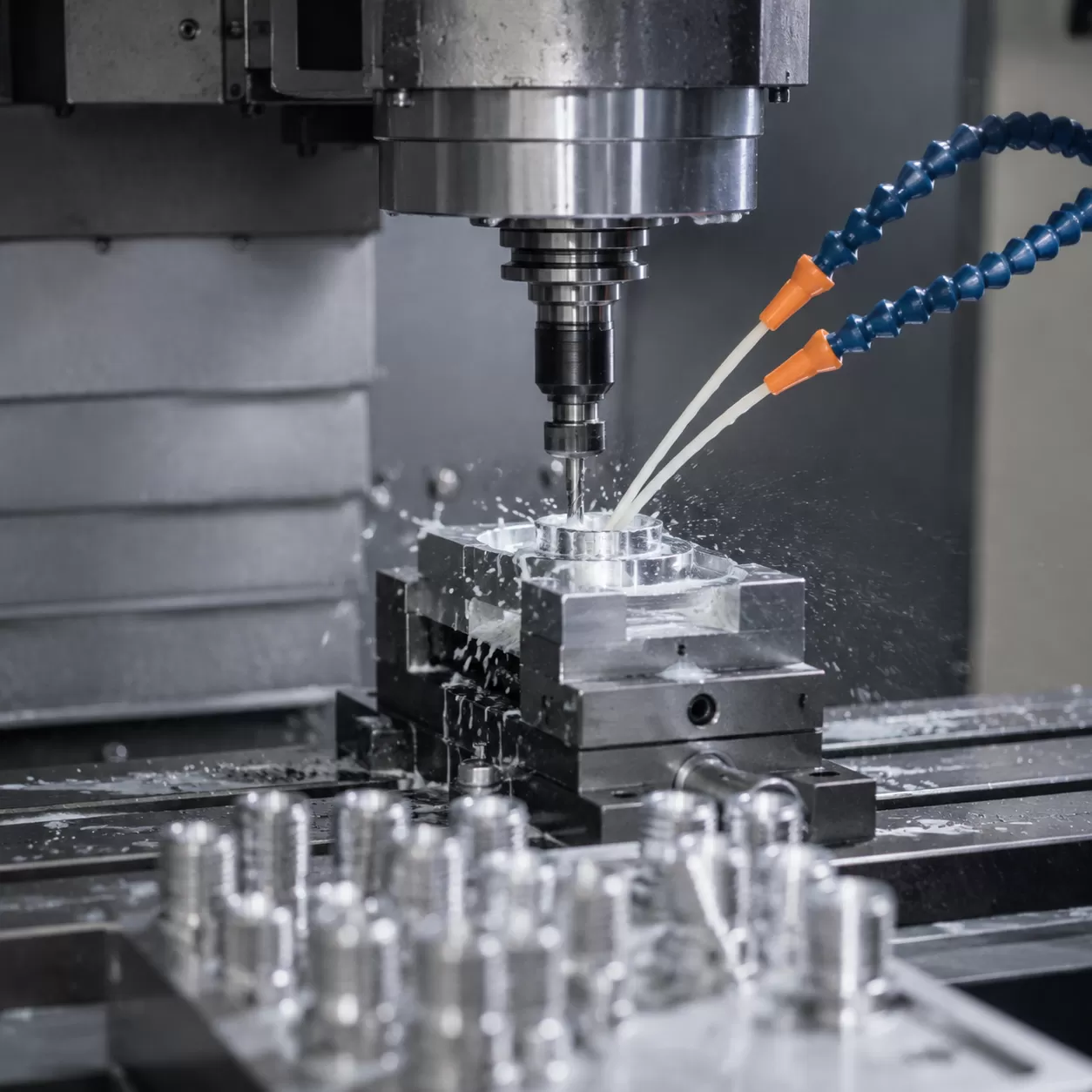
Automatic Screw Machining and Multi-Spindle Turning
When it comes to high-volume production capabilities, we rely heavily on automatic screw machining to process Aluminum 2011 CNC machining for high-speed automatic screw machine parts. Multi-spindle turning equipment allows us to cycle through operations simultaneously, cutting down production time significantly compared to single-spindle setups. Using a Davenport screw machine or similar high-speed equipment, we rapidly turn out multiple spindle turned parts with incredible consistency. This process maximizes the free-cutting alloy attributes of AA2011-T3, ensuring that high-speed steel tooling cuts cleanly without frequent downtime for tool adjustments.
CNC Swiss Machining for Small Diameter Parts
For ultra-precise, long, or thin components, our Swiss turning centers provide the necessary stability. CNC Swiss machining supports the raw stock right next to the cutting tool, which eliminates deflection and allows us to hold exceptionally tight dimensional tolerances. This method is the go-to choice for intricate, small diameter Swiss-type automatic screw parts. The excellent chip-breaking characteristics of this free-machining aluminum alloy mean that small-diameter custom parts are produced with an immaculate surface finish, completely free of the long, stringy birds-nests that plague softer metals.
CNC Milling and Lathe Operations
Beyond traditional turning, our facility utilizes advanced CNC milling services and lathe operations to add complex geometries to our precision aluminum components. While screw machines handle the bulk of round high-speed production, secondary CNC milling allows us to add flats, slots, and cross-holes to the machined blanks.
| Process Type | Best For | Production Volume | Primary Advantage with Aluminum 2011 |
|---|---|---|---|
| Multi-Spindle Turning | High-volume round parts | Very High (10,000+ pcs) | Lowest per-part cost, blazing fast cycle times |
| CNC Swiss Machining | Slender, small diameter parts | Medium to High | Tightest tolerances, eliminates material deflection |
| CNC Milling & Lathes | Complex shapes, brackets, facets | Low to High | Maximum geometric flexibility, precise secondary features |
Common Custom Parts and Variants
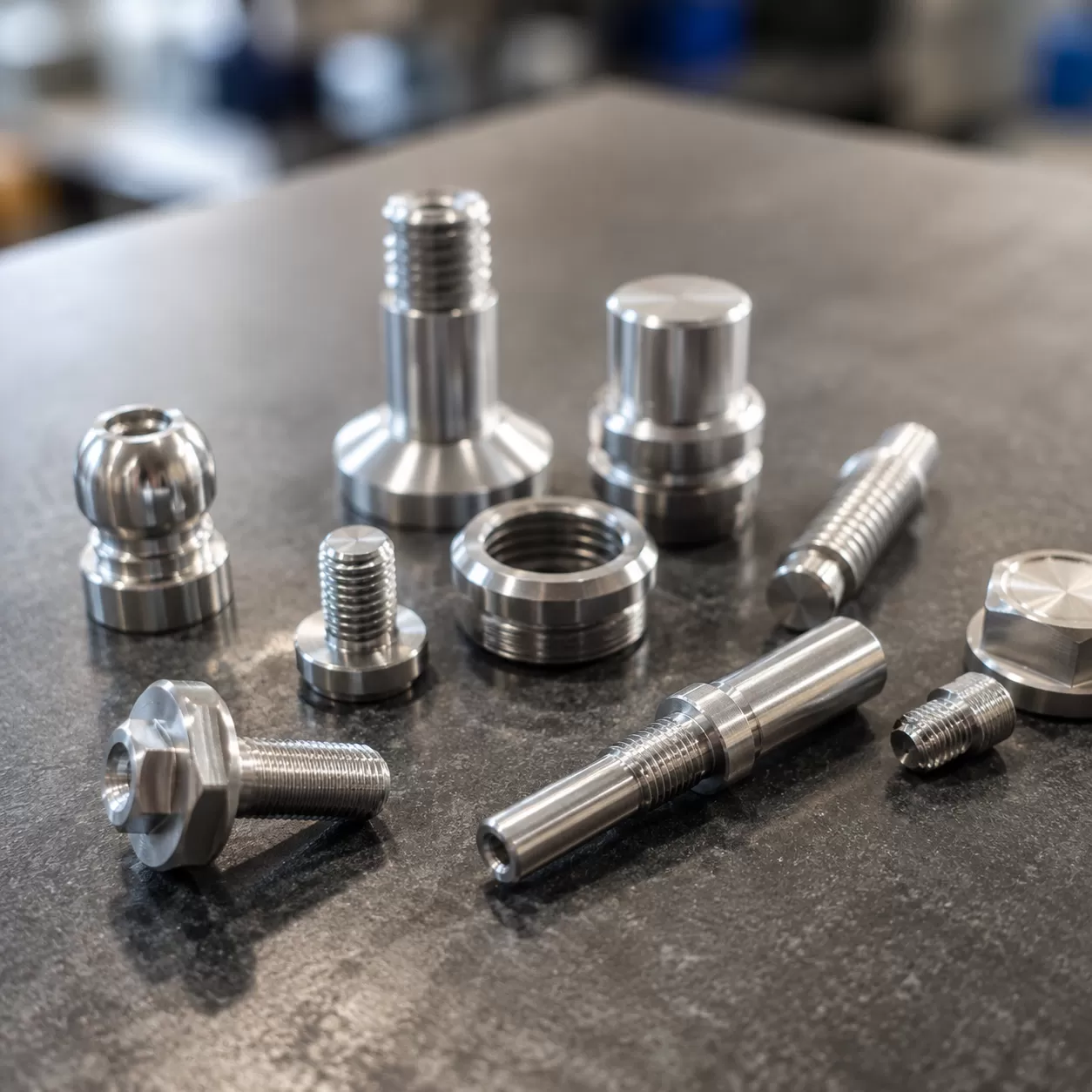
Our high-speed automatic screw machine setup allows us to manufacture an array of custom parts using the free-machining aluminum alloy AA2011-T3. Because this material breaks into short chips so easily, we can maintain relentless production speeds on complex, high-volume components without sacrificing precision.
Threaded Standoffs, Spacers, and Fasteners
We produce millions of high-quality threaded standoffs, hex spacers, and custom fasteners every year. The excellent chip-breaking properties of Aluminum 2011 prevent long, tangled nests of metal from wrapping around our tooling. This ensures perfectly formed, clean internal and external threads for hardware used heavily in the electronics and assembly industries.
Precision Pins, Dowels, and Shafts
When it comes to solid alignment components like precision pins, dowels, and miniature drive shafts, tight dimensional tolerances are mandatory. Utilizing specialized Swiss turning centers, we hold exceptionally tight margins on long, thin cylindrical parts. The inherent stability of Aluminum 2011 ensures these shafts remain perfectly straight and smooth right off the machine.
Electrical Connector Pins and Inserts
Electrical hardware requires exceptional cosmetic finishes and zero burrs. We utilize our high-volume production capabilities to manufacture precision components like:
- Male and female connector pins
- Coaxial cable inserts
- Terminal blocks and binding posts
Because Aluminum 2011 machines so cleanly, it serves as a highly efficient, cost-effective substitute for brass or copper parts in applications where weight reduction is a priority.
Fittings, Adaptors, and Custom Components
From fluid pneumatic fittings to complex custom adapters, we regularly adapt our multiple spindle turned parts to meet diverse industrial needs. Our Davenport screw machine infrastructure makes quick work of complex geometries, delivering fluid ports, knurled bands, and custom O-ring grooves with flawless accuracy. If you are new to sourcing these types of custom components, checking out a comprehensive CNC machining 101 guide can help clarify how we optimize tool paths to keep your piece price down.
Industrial Applications of Aluminum 2011 Machined Parts
Automotive and Transportation Components
The automotive industry relies heavily on high-volume production capabilities to keep assembly lines moving efficiently. We utilize Aluminum 2011 to manufacture critical components that demand extreme precision and rapid turnaround times. Thanks to its excellent machinability, this alloy is the go-to choice for mass-producing complex fuel system parts, automatic transmission valves, and specialized hydraulic fittings.
By utilizing advanced Davenport screw machine setups, we deliver lightweight automotive components that reduce overall vehicle weight without compromising on dimensional accuracy.
Electronics and Electrical Hardware
In the electronics sector, high conductivity and precise dimensions are non-negotiable. Aluminum 2011 serves as an excellent, cost-effective alternative to traditional brass copper parts for various hardware applications. We regularly produce intricate components designed to fit seamlessly into complex electrical assemblies.
- Key Electronic Parts:
- Instrument control knobs and faceplate hardware.
- Internal shielding enclosures and structural brackets.
- Grounding blocks and terminal posts.
For specialized applications requiring complex internal valving or fluid control within electronic housing units, our precision machining processes ensure exact compatibility with high-end systems, similar to the standards used for specialized brass instrument components.
Aerospace and Defense Applications
Aerospace and defense manufacturing demands strict adherence to tight dimensional tolerances. While heavy structural aerospace parts often require different alloys, Aluminum 2011 is highly valued for commercial aircraft cabin hardware, instrumentation fasteners, and defense-related locking pins.
Our Swiss turning centers allow us to run high-speed operations that produce flawless small-diameter components. These parts offer the perfect balance of lightweight properties and exceptional finish quality required for non-structural aerospace and military hardware applications.
Commercial and Industrial Equipment
Commercial machinery operates under continuous stress, requiring durable, high-precision replacement parts and OEM components. Aluminum 2011 is widely used across industrial manufacturing for everything from pneumatic valve bodies to heavy-duty regulatory hardware.
| Industrial Equipment Component | Primary Benefit of Aluminum 2011 |
|---|---|
| Gears & Timing Pulleys | Smooth operation due to excellent surface finish |
| Pneumatic Manifolds | Deep drilling efficiency with short chips |
| Bushings & Spacers | Rapid production via high-speed steel tooling |
| Metal Brackets | High strength-to-weight ratio and cost efficiency |
Our production lines optimize the unique properties of this free-cutting alloy to ensure that commercial equipment manufacturers receive reliable, burr-free components that drop directly into their assembly processes with zero downtime.
Secondary Operations and Surface Finishing
Anodizing and Surface Coating Options
While aluminum 2011 offers unmatched machinability for high-speed automatic screw machine parts, adding the right surface finish maximizes its performance. We provide post-machining treatments to boost corrosion resistance, wear protection, and cosmetic appeal.
- Type II Anodizing: Adds a thin, protective oxide layer that resists corrosion and can be dyed in various colors.
- Type III Hardcoat Anodizing: Creates a thick, wear-resistant surface ideal for heavy-duty industrial applications. For advanced wear requirements, explore our specialized aluminum anodizing for CNC machined parts.
- Chemical Conversion Film (Chromate Coating): Maintains electrical conductivity while offering basic corrosion defense.
Thread Ultrasonic Cleaning and Deburring
High-speed production on a Davenport screw machine or Swiss turning centers can leave behind microscopic burrs and cutting fluids. We use advanced finishing techniques to guarantee pristine, ready-to-assemble components:
- Ultrasonic Cleaning: Removes all traces of lubricants, oils, and metal particles from intricate internal threads and deep holes.
- Automated Deburring: Clears loose edge material without changing the tight dimensional tolerances of the custom parts.
- Tumbling & Polishing: Smooths sharp edges and refines the overall surface finish of the machined metal pieces.
Quality Controls and Precision Testing Standards
We back our high-volume production capabilities with rigorous inspection protocols. Every batch of free-machining aluminum alloy AA2011-T3 precision components undergoes strict testing to meet exact client blueprints.
| Inspection Type | Equipment Used | Target Met |
|---|---|---|
| Dimensional Accuracy | CMM (Coordinate Measuring Machines) | Verifies tight tolerances on multi-spindle turned parts. |
| Thread Precision | Go/No-Go Gauges & Thread Micro | Ensures flawless fitment on threaded standoffs and fasteners. |
| Surface Roughness | Profilometers | Confirms the exact Ra smoothness required for high-speed parts. |
| Material Integrity | Spectrometer Analysis | Validates chemical composition and alloy authenticity. |
Selecting the Right CNC Machining Partner for Aluminum 2011
Choosing a manufacturing partner for Aluminum 2011 CNC machining for high-speed automatic screw machine parts requires a careful look at capacity, precision, and efficiency. The right supplier turns raw free-machining aluminum alloy AA2011-T3 into flawless high-volume production runs without breaking your budget.
Evaluating High-Volume Production Capabilities
When you need thousands of precision components, your partner must have the right machinery to keep cycle times low and quality high.
- Advanced Machinery: Look for shops running multiple spindle turned parts setups and high-speed Davenport screw machine equipment.
- Swiss Turning Centers: Essential for small diameter, intricate workpieces requiring tight dimensional tolerances.
- Tooling Optimization: Partners using high speed steel tooling or specialized carbide matrix tools ensure clean, short chips and an exceptional surface finish.
Certifications and Quality Standards Compliance
High-speed automatic screw metal brackets, connectors, and fasteners demand absolute consistency. We back our manufacturing with rigorous quality controls to ensure every batch matches your print.
- Traceability: Complete material certifications for every lot of aluminum, brass, or copper parts.
- Standards: Strict adherence to ISO 9001 and industry-specific compliance to eliminate defects before they ship.
- Inspection: In-line vision systems and automated digital gauging to check tight tolerances in real time.
Requesting a Quote for Custom Aluminum 2011 Parts
Getting an accurate quote quickly helps keep your project on schedule. When you partner with us for precision machining services, we streamline the onboarding process to get your high-speed production lines moving.
To expedite your request, please provide:
- CAD Files: STEP, IGES, or SolidWorks files paired with PDF prints detailing critical dimensions.
- Volume Requirements: Mention if you need initial prototypes or immediate high-volume production capabilities.
- Finishing Needs: Specify any secondary operations like anodizing, custom plating, or specialized cleaning.
For broader insights into how we optimize high-volume manufacturing across different sectors, explore our specialized industrial applications to see our capabilities in action.

 English
  German
  Dutch
Dutch  Russian
  Czech
Czech  French
  Japanese
  Spanish
  Portuguese
  Korean
Reviews
There are no reviews yet.