

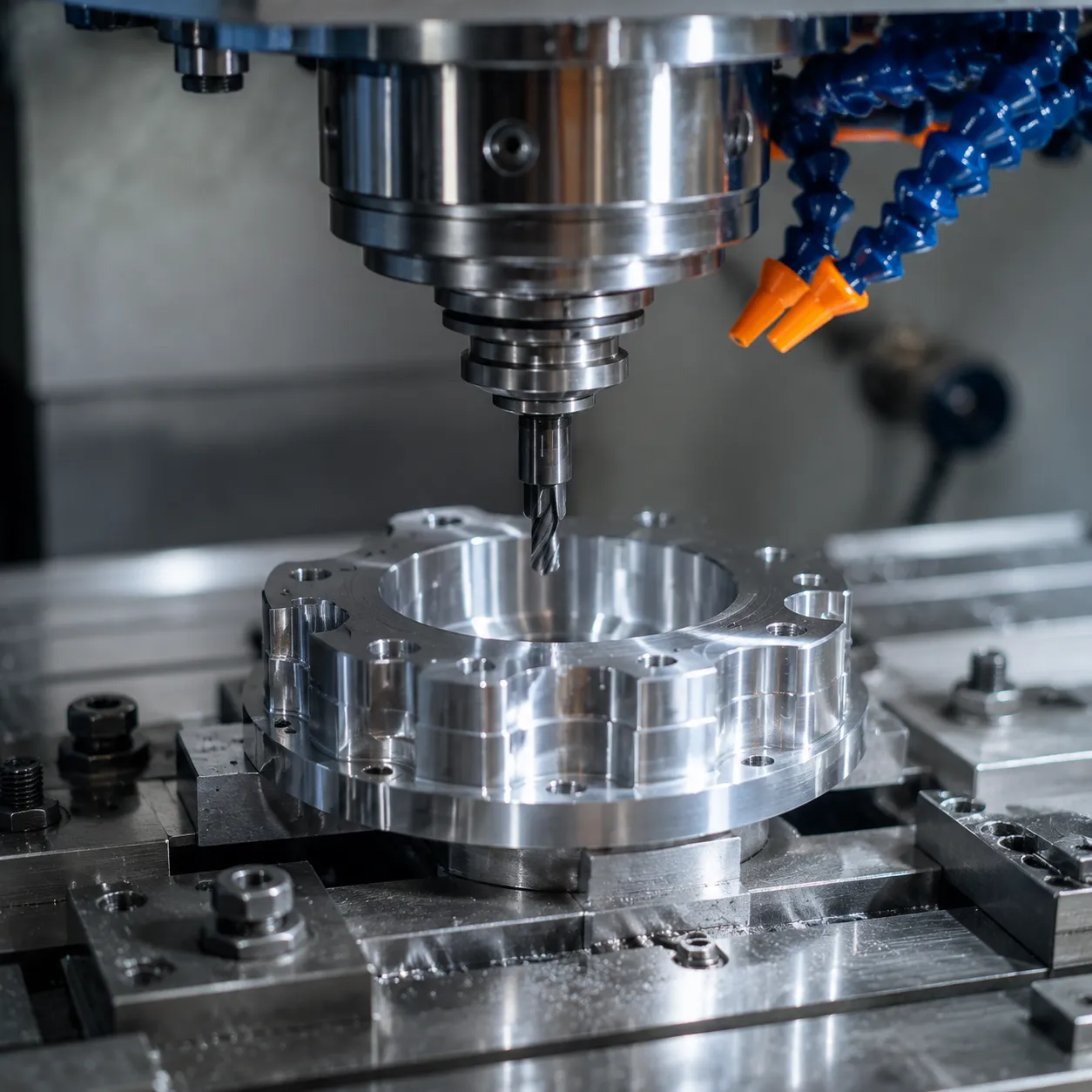
Introduction to Precision Stainless Steel Parts CNC Machining
What is Precision Stainless Steel CNC Machining?
Precision stainless steel CNC machining is a subtractive manufacturing process that uses computer-programmed software to control high-speed cutting tools. This technology cuts raw stainless steel stock into exact geometries based on 3D CAD models.
By automating the milling, turning, and drilling processes, CNC machining achieves extreme dimensional accuracy and consistency. It allows manufacturers to handle complex geometries that manual machining cannot replicate. This process is highly critical for specialized tasks like processing of precision stainless steel parts, where deviations of a few microns can cause component failure.
Key Benefits of Using Stainless Steel for Machined Parts
Stainless steel is an alloy steel valued for its excellent mechanical properties. Selecting it for custom parts provides clear functional advantages:
| Benefit | Description | Impact on Machined Parts |
|---|---|---|
| Corrosion Resistance | Chromium content forms a passive self-healing oxide layer. | Prolongs part lifespan in harsh, wet, or chemical environments. |
| High Tensile Strength | Retains structural integrity under extreme stress and high temperatures. | Allows for thinner, lighter, yet structurally sound component designs. |
| Excellent Machinability | Compatible with advanced 304 stainless steel CNC processing techniques. | Enables tight tolerances and smooth surface finishes. |
| Hygiene and Sterility | Non-porous surface resists bacterial growth and chemical cleaning. | Essential for applications requiring strict sanitation protocols. |
Where Stainless Steel Fits in High-Precision Manufacturing
Stainless steel is the baseline material for industries that cannot compromise on part longevity or structural safety. While aluminum is chosen for weight and plastics for cost, stainless steel is utilized when components must survive high load, friction, or corrosive atmospheres.
Advanced facilities deploy multi-axis CNC machines and rigid setups to counter the material’s natural tendency to work-harden. This ensures that demanding projects—such as 316 stainless steel part processing—meet exact drawing specifications with zero distortion, making it irreplaceable in high-precision global supply chains.
Core Material Selection: 304 vs 316 Stainless Steel
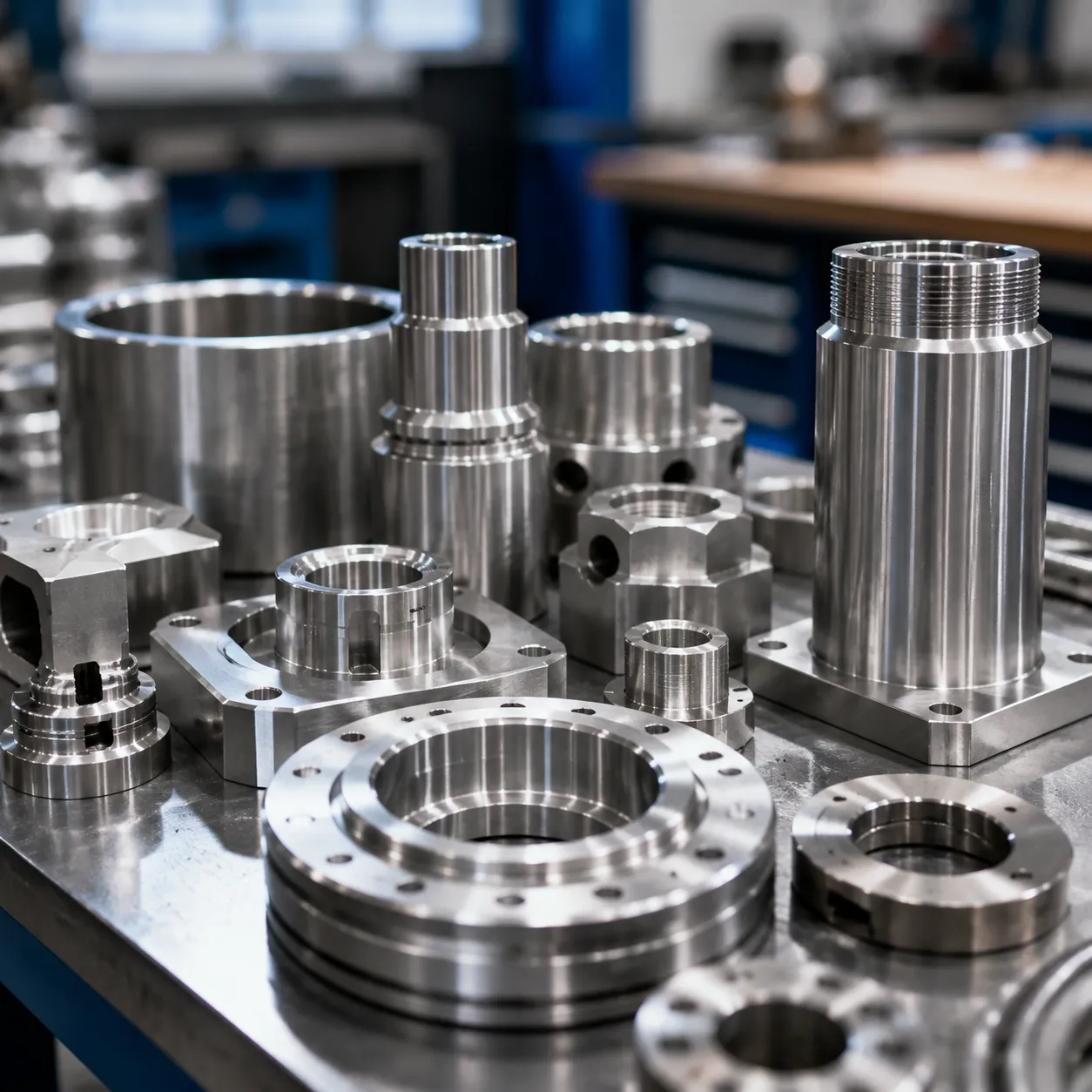
When handling the processing of precision stainless steel parts, picking the right grade is the first step to a successful project. While both 304 and 316 are staples in modern manufacturing, they behave differently under the cutting tool and in the field.
Choosing the wrong material can drive up your manufacturing costs or cause parts to fail prematurely in harsh environments. To help you make the right choice, you can review our guide on aluminum vs brass vs stainless steel to see how these metals compare to other options.
Chemical Composition and Mechanical Properties Comparison
The primary difference between these two grades comes down to one element: molybdenum. 316 stainless steel contains molybdenum, whereas 304 does not. This single addition completely changes how the material handles corrosive environments.
| Property / Element | 304 Stainless Steel | 316 Stainless Steel |
|---|---|---|
| Chromium (Cr) | 18% – 20% | 16% – 18% |
| Nickel (Ni) | 8% – 10.5% | 10% – 14% |
| Molybdenum (Mo) | 0% | 2% – 3% |
| Tensile Strength | 515 MPa | 515 MPa |
| Yield Strength | 205 MPa | 205 MPa |
| Machinability Rating | ~45% (Compared to B1112 steel) | ~40% (Compared to B1112 steel) |
304 Stainless Steel: Features and Best Use Cases
For the vast majority of projects, 304 stainless steel CNC processing is the go-to standard. It offers an excellent balance of strength, formability, and cost-effectiveness.
-
- High Ductility: Excellent for parts requiring extensive forming or deep drawing.
- Good Thermal Properties: Holds up well under fluctuating temperatures.
- Typical Uses: Kitchen equipment, architectural trim, consumer products, and automotive brackets.
Because it lacks molybdenum, it is slightly easier to cut than 316, making it the most economical choice for general-purpose high-precision components.
316 and 316L Stainless Steel: Superior Corrosion Resistance
When your project demands survivability in brutal environments, 316 stainless steel part processing becomes necessary. The “L” in 316L stands for low carbon, which helps prevent carbide precipitation during welding and keeps the material stable.
-
- Pitting Resistance: The added molybdenum protects against pitting caused by chlorides and industrial solvents.
- Acid Resistance: Highly resilient against acetic, sulfuric, and phosphoric acids.
- Typical Uses: Marine hardware, chemical processing valves, medical implants, and pharmaceutical manifolds.
Material Cost Analysis and Decision-Making Model
To optimize your production budget, use this straightforward decision-making model before finalizing your raw stainless steel material orders:
-
- Choose 304 Stainless Steel if: The part is used indoors or in mild outdoor environments, does not come into contact with salt water or harsh acids, and keeping production costs low is a primary target.
- Choose 316/316L Stainless Steel if: The part faces marine environments, high-chloride chemical exposure, medical sterilization routines, or strict food-grade regulations where rust is absolutely unacceptable.
Expect a 20% to 30% raw material cost premium for 316 over 304, along with slightly longer cycle times during milling and turning due to its tougher mechanical nature.
Common Capabilities and CNC Processes for Stainless Steel
Precision CNC Milling and Turning Services
We utilize advanced precision CNC milling and turning services to shape tough alloys into highly accurate components. CNC milling works best for complex geometries, brackets, and blocks, using multi-axis setups to cut away material efficiently. For cylindrical components, our CNC turning centers rotate the material against stationary cutting tools, ensuring perfect concentricity. By matching the right process to your part geometry, we achieve the precise dimensions required for high-performance applications.
Multi-Spindle and Swiss Machining for Complex Parts
When dealing with high-volume production or extremely intricate designs, standard methods aren’t enough. We deploy multi-spindle and Swiss machining configurations specifically for tiny, complex stainless steel components. Swiss-type lathes support the workpiece right next to the cutting tool, which eliminates deflection and allows us to machine long, slender parts with extreme accuracy. This capability is essential for delicate medical pins, custom fasteners, and micro-valves where structural rigidity must be maintained throughout the cut.
Design for Manufacturing (DFM) Guidelines and Tolerances
Optimizing your designs for stainless steel machining saves production time and lowers overall tooling costs. Because stainless steel is rigid and prone to work hardening, implementing smart https://zscncparts.com/aluminum-6061-machinability-design-for-manufacturing-dfm-cnc-turning-cnc-](https://zscncparts.com/aluminum-6061-machinability-design-for-manufacturing-dfm-cnc-turning-cnc-)milling-tooling-costs-tight-tolerances-rightsize-stock-material-wastage-design-optimization-](https://zscncparts.com/aluminum-6061-machinability-design-for-manufacturing-dfm-cnc-turning-cnc-milling-tooling-costs-tight-tolerances-rightsize-stock-material-wastage-design-optimization-)https://zscncparts.com/aluminum-6061-machinability-design-for-manufacturing-dfm-cnc-turning-cnc-milling-tooling-costs-tight-tolerances-rightsize-stock-material-wastage-design-optimization-scrap-control-cnc-machining-prices/”>design for manufacturing (DFM) optimization steps prevents premature tool failure and scrap.
-
- Internal Radii: Avoid sharp 90-degree internal corners. Ensure internal corner radii are at least 10% larger than the cutting tool radius to prevent tool chatter.
- Wall Thickness: Maintain a minimum wall thickness of 1.0 mm for machined parts to prevent deformation under cutting pressure.
- Thread Depths: Limit tapped hole depths to 2 to 3 times the hole diameter. Deeper holes significantly increase the risk of tap breakage.
- Achievable Tolerances: Our standard machining setups comfortably hold linear tolerances of ±0.05 mm, while our high-precision configurations regularly hit tight tolerances of ±0.01 mm for critical fits.
Challenges and Solutions in Stainless Steel Machining
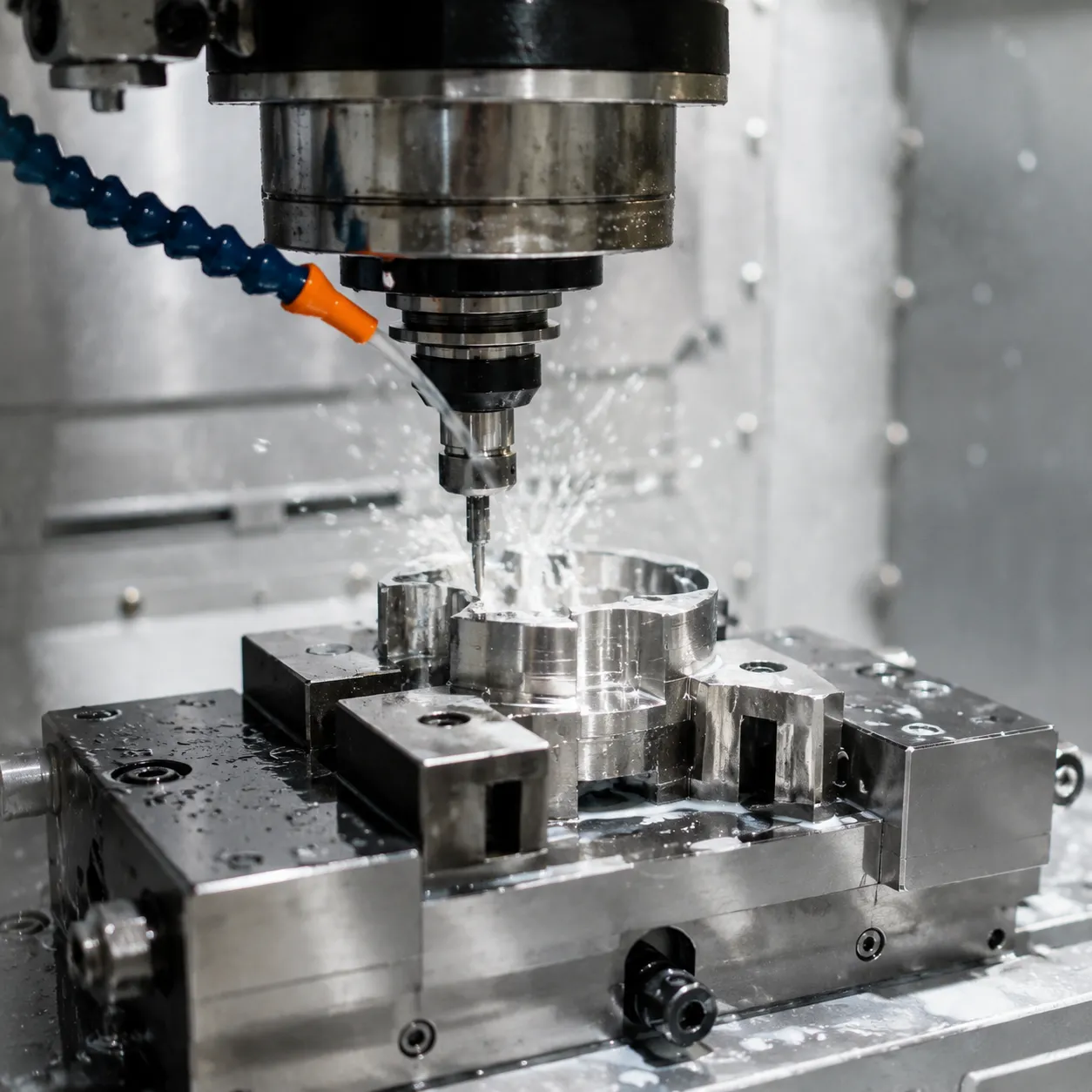
Processing of precision stainless steel parts comes with distinct mechanical challenges. Because stainless steel is notoriously tough and gummy, mastering thermal control, tool life, and chip evacuation is critical to maintaining tight tolerances.
Overcoming Work Hardening and Thermal Management
Stainless steel grades like 304 and 316 suffer from rapid work hardening, where the material becomes locally harder and more brittle when subjected to friction and stress. If a cutting tool rubs against the workspace instead of cleanly cutting it, the surface hardens instantly, destroying subsequent tools.
To prevent work hardening:
Maintain positive feed rates: Ensure the cutting edge constantly penetrates below the work-hardened zone from the previous pass.
Optimize thermal management: Stainless steel has low thermal conductivity, meaning heat builds up at the tool edge rather than escaping through the chips. High-pressure through-spindle coolant is required to flush heat from the cutting zone immediately.
Reducing Tool Wear and Optimizing Cutting Parameters
304 stainless steel CNC processing and 316 stainless steel part processing demand highly stable cutting parameters and rigid tooling setups to combat premature tool wear. Utilizing multi-axis equipment, such as advanced 5-axis machining services for complex parts, enhances rigidity and allows for optimal tool positioning to distribute wear evenly.
| Machining Parameter | Strategy for 304/316 Stainless Steel | Impact on Tool Life |
|---|---|---|
| Cutting Speed ($V_c$) | Moderate to low speeds to prevent heat spikes | Prevents thermal cracking and built-up edge (BUE) |
| Feed Rate ($f$) | High, consistent engagement; avoid dwelling | Bypasses the work-hardened surface layer |
| Tooling Material | Sub-micron carbide tools with AlTiN or TiAlN coatings | Increases abrasion resistance and hot-hardness |
Effective Chip Control and Lubrication Strategies
Long, stringy chips are a major hazard in 316 stainless steel part processing. If chips bird-nest around the spindle or tool holder, they scratch the surface finish and cause catastrophic tool failure.
Implementing chip breakers on carbide inserts forces the material to fracture into short, manageable segments. For deep-hole drilling or intricate milling, water-soluble coolants with high-pressure delivery systems provide both vital lubrication to reduce friction and the mechanical force needed to clear chips out of deep cavities instantly.
Surface Finishing and Post-Processing for Stainless Steel Parts
As-Machined, Brushed, and Polished Finishes
The surface texture of processing of precision stainless steel parts directly dictates both aesthetic value and mechanical function. Depending on your application, we offer three primary surface options:
-
- As-Machined: This finish leaves the natural tool marks from 304 stainless steel CNC processing or 316 milling. It features a micro-roughness suitable for industrial brackets or hidden structural custom parts where cosmetic appeal is secondary.
- Brushed Finish: Achieved using abrasive belts or scotch-brite wheels. It creates a unidirectional, satin texture that masks fingerprints and minor scratches, making it ideal for architectural trim and consumer appliances.
- Polished Finish: A multi-step mechanical buffing process that removes surface imperfections to achieve a mirror-like sheen. This high-gloss surface minimizes friction and prevents bacterial adhesion on critical components.
Passivation and Electropolishing for Corrosion Protection
While stainless steel naturally resists rust, the heat and pressure of turning and 5-axis machining can degrade its protective chromium oxide layer. To restore maximum corrosion resistance, we deploy two essential chemical treatments:
-
- Passivation: A chemical bath (typically citric or nitric acid) that strips free iron particles deposited by carbide tools during machining. This leaves a clean, chromium-rich surface layer that naturally self-passivates in the air.
- Electropolishing: An electrochemical process that removes a microscopic layer of material from the part. It strips away peaks, burrs, and micro-cracks, leaving a pristine, ultra-smooth surface. This treatment is highly recommended for medical device components and food processing equipment. To understand how these finishes pair with tight tolerance requirements, explore our comprehensive guide on CNC machining for medical devices.
Preventing Post-Machining Contamination Risks
Maintaining material purity during 316 stainless steel part processing is vital for preventing premature component failure. Cross-contamination occurs easily if the same workshop environment transitions rapidly between carbon steel and stainless steel jobs.
To eliminate cross-contamination and micro-rusting risks, we enforce strict shop-floor protocols:
1. Dedicated Tooling: We isolate carbide tools, grinding wheels, and deburring brushes strictly for stainless steel workflows.
2. Controlled Workspaces: Cross-contamination is blocked by utilizing separate fixtures and synthetic, sulfur-free cutting fluids that prevent carbon migration.
3. Thorough Cleaning: Every part undergoes ultrasonic cleaning prior to packaging to ensure no iron dust or oily residue compromises the finished product.
Key Application Scenarios for Precision Stainless Steel Parts
Medical Grade Instruments and Devices
Medical manufacturing demands extreme component reliability and biostocompatibility. Our processing of precision stainless steel parts fulfills these strict requirements by delivering components with flawless surface finishes and microscopic tolerances. We regularly produce surgical instruments, orthopedic implants, and diagnostic equipment components from specialized alloys. These parts withstand repeated sterilization cycles without degrading, ensuring total patient safety and clinical performance.
Food Processing and Pharmaceutical Equipment
Hygiene and sanitation are non-negotiable in food and drug production. We utilize specialized CNC machining services for packaging and food processing equipment to fabricate components that prevent bacterial growth and resist harsh chemical washdowns.
304 stainless steel CNC processing is standard for general food contact surfaces, mixing blades, and housing units.
316 stainless steel part processing is reserved for high-acid food handling and aggressive pharmaceutical compounding environments where pitting corrosion is a constant risk.
Marine and High-Chloride Chemical Environments
Standard steels fail rapidly when exposed to salt water and volatile chemicals. For marine hardware, underwater sensors, and chemical processing valves, we rely heavily on 316 stainless steel. The addition of molybdenum in 316 grade provides the necessary defense against chloride attack, preventing catastrophic stress corrosion cracking in offshore and industrial chemical applications.
Aerospace and High-Strength Industrial Component Fabrication
Aerospace and heavy industry require parts that handle immense structural loads and extreme thermal shifts. We manufacture high-strength fasteners, fuel system manifolds, and actuator components designed to operate under severe pressure. Our advanced multi-axis machining capabilities ensure that even the most complex, thin-walled geometries retain their structural integrity, delivering durable parts that meet rigid aerospace certification standards.
FAQ: Precision Stainless Steel CNC Machining
Is 304 stainless steel easily machinable?
Not compared to standard carbon steels or aluminum, but it is highly manageable with the right setup. The main challenge during 304 stainless steel CNC processing is its tendency to work harden quickly. If the cutting tool dwells too long in one spot, the material becomes incredibly tough to cut. We prevent this by using rigid workholding, sharp carbide tools, and maintaining constant, aggressive feed rates. Proper cooling is also critical to move heat away from the cutting zone before the metal hardens.
Is 316L easier to machine than 304?
No, 316L is typically more difficult to machine than 304 stainless steel. The addition of molybdenum gives 316L superior corrosion resistance, but it also increases the alloy’s toughness and thermal resistance. This means it generates more friction and heat during milling and turning operations. Machining 316L requires a reduction in cutting speed by about 10% to 15% compared to 304, along with high-pressure lubrication to keep tool wear under control.
What factors affect the manufacturing cost of stainless steel parts?
Several variables dictate the bottom line when manufacturing custom components:
-
- Material Selection: 316 stainless steel carries a higher raw material premium over 304 due to its nickel and molybdenum content.
- Cycle Times: Stainless steel requires slower cutting speeds to prevent tool breakage, increasing overall machine runtime.
- Geometry Complexity: Highly intricate designs require specialized equipment like multi-spindle setups or 5-axis machining to avoid multiple setups.
- Tooling Overhead: The abrasive nature of these alloys wears down cutting edges quickly, meaning frequent tool replacements add to the production cost.
How do you ensure quality and consistency in precision parts?
Consistency in the processing of precision stainless steel parts relies entirely on strict process control and calibration. We monitor tool wear in real time to catch degradation before it impacts dimensional accuracy. Every production batch undergoes automated CMM (Coordinate Measuring Machine) inspections to verify tight tolerances. For sensitive industries, we implement standardized finishing routines like chemical passivation to remove trace iron contaminants, ensuring the finished surface meets the high standards required for custom medical devices and high-chloride industrial applications.
 English
  German
  Dutch
Dutch  Russian
  Czech
Czech  French
  Japanese
  Spanish
  Portuguese
  Korean
Reviews
There are no reviews yet.