

What Is Aluminum Rapid Prototyping?
Aluminum rapid prototyping is the accelerated manufacturing of functional metal parts using advanced subtractive fabrication techniques. This process allows engineers and product designers to quickly transform 3D CAD models into physical components, compressing product development cycles from months to days. By utilizing computer-controlled equipment, European hardware projects can secure high-precision, end-use quality parts without the long lead times traditionally associated with metal manufacturing.
The Basics of CNC Prototype Machining
CNC (Computer Numerical Control) prototype machining is a subtractive manufacturing process that carves the desired shape out of a solid block of material. High-speed cutting tools automatically move along multiple axes to remove material with extreme precision.
- The Digital Workflow: It begins with a 3D CAD model, which is converted into G-code—the programming language that dictates machine movements, tool paths, and spindle speeds.
- Precision and Speed: Modern 3-axis, 4-axis, and 5-axis CNC milling centers operate at high RPMs, ensuring tight tolerances up to ±0.01 mm while completing complex geometries in a single setup.
- Material Consistency: Unlike additive methods, CNC machining preserves the raw internal structure of the metal, avoiding porosity or weak layers.
Why Aluminum is the Preferred Material for Rapid Prototypes
Aluminum is the industry benchmark for rapid prototyping due to its unique balance of physical properties and financial efficiency. For quick-turn European manufacturing services, it represents the ideal middle ground between cost, speed, and performance.
| Property | Benefit to Rapid Prototyping |
|---|---|
| High Machinability | Cuts cleaner and faster than steel or titanium, reducing machine wear and cycle times. |
| Cost-Effectiveness | Lower material cost and shorter machining hours yield highly competitive prototype pricing. |
| Material Diversity | Available in numerous distinct alloys tailored for specific mechanical demands. |
| Post-Processing Ease | Readily accepts functional and cosmetic surface finishes, from bead blasting to anodizing. |
Rapid Prototyping vs. Traditional Production Methods
Understanding how quick-turn CNC machining compares to conventional production techniques highlights its value for fast-turn EU engineering projects.
- No Tooling Investment: Traditional injection molding or die casting requires expensive, time-consuming steel molds. CNC rapid prototyping cuts parts directly from stock material, eliminating upfront tooling costs entirely.
- Design Flexibility: If a design fails a functional test, updating the prototype only requires modifying the digital CAD file. Traditional methods would require scrapping an expensive mold tool.
- Uncompromised Material Properties: While 3D printing offers rapid geometric modeling, plastic components or sintered metal parts often lack the structural integrity, thermal conductivity, and tensile strength of a genuine CNC-machined aluminum alloy part.
Why Choose Aluminum CNC Prototyping for EU Engineering Projects?
When you are managing tight European R&D timelines, your choice of prototyping material makes or breaks your launch schedule. Aluminum CNC prototyping is the go-to standard for EU engineering projects because it perfectly bridges the gap between raw speed and production-grade performance. Unlike 3D printing, which can lack structural integrity, precision engineering with aluminum delivers real-world mechanical testing data instantly.
Exceptional Machinability and Precision Tolerances
Aluminum cuts much faster than stainless steel or titanium, reducing machine cycle times. This incredible machinability allows us to achieve incredibly tight precision tolerances—often down to ±0.01 —without risking tool breakage or part deformation.
| Metric / Feature | CNC Aluminum Capability | Engineering Benefit |
|---|---|---|
| Standard Tolerances | Down to±0.01 | Perfect fitment for multi-part assemblies |
| Machining Speed | High cutting feed rates | Reduces turnaround times to 1–3 days |
| Feature Complexity | Thin walls, deep pockets, threaded holes | Replicates final cast or forged production parts |
Optimal Strength-to-Weight Ratio for Functional Testing
For aerospace, automotive, and industrial automation projects across Europe, weight is a critical factor. Aluminum offers a remarkable strength-to-weight ratio. It provides the structural integrity needed to survive rigorous functional prototypes testing without adding unnecessary mass to your assemblies.
- Weight Reduction: Roughly one-third the weight of steel, making it ideal for moving components.
- Structural Integrity: Withstands high mechanical stress during physical stress and load testing.
- Thermal Performance: Excellent heat dissipation, which is vital for electric vehicle (EV) components and electronic enclosures.
Excellent Surface Finishing and Corrosion Resistance
European engineering standards demand both high functionality and flawless aesthetics. Raw aluminum naturally forms a protective oxide layer that resists environmental degradation. Furthermore, it serves as an ideal canvas for a variety of post-processing treatments.
Whether your project requires clear anodizing for wear resistance or bead blasting for a matte industrial look, aluminum adapts beautifully. For long-term projects, understanding how post-processing fits into your workflow is essential, and you can review our purchase order terms and conditions to see how surface finish requirements integrate seamlessly into our quick-turn delivery guarantees.
How to Get CNC Aluminum Prototypes in 1–3 Days
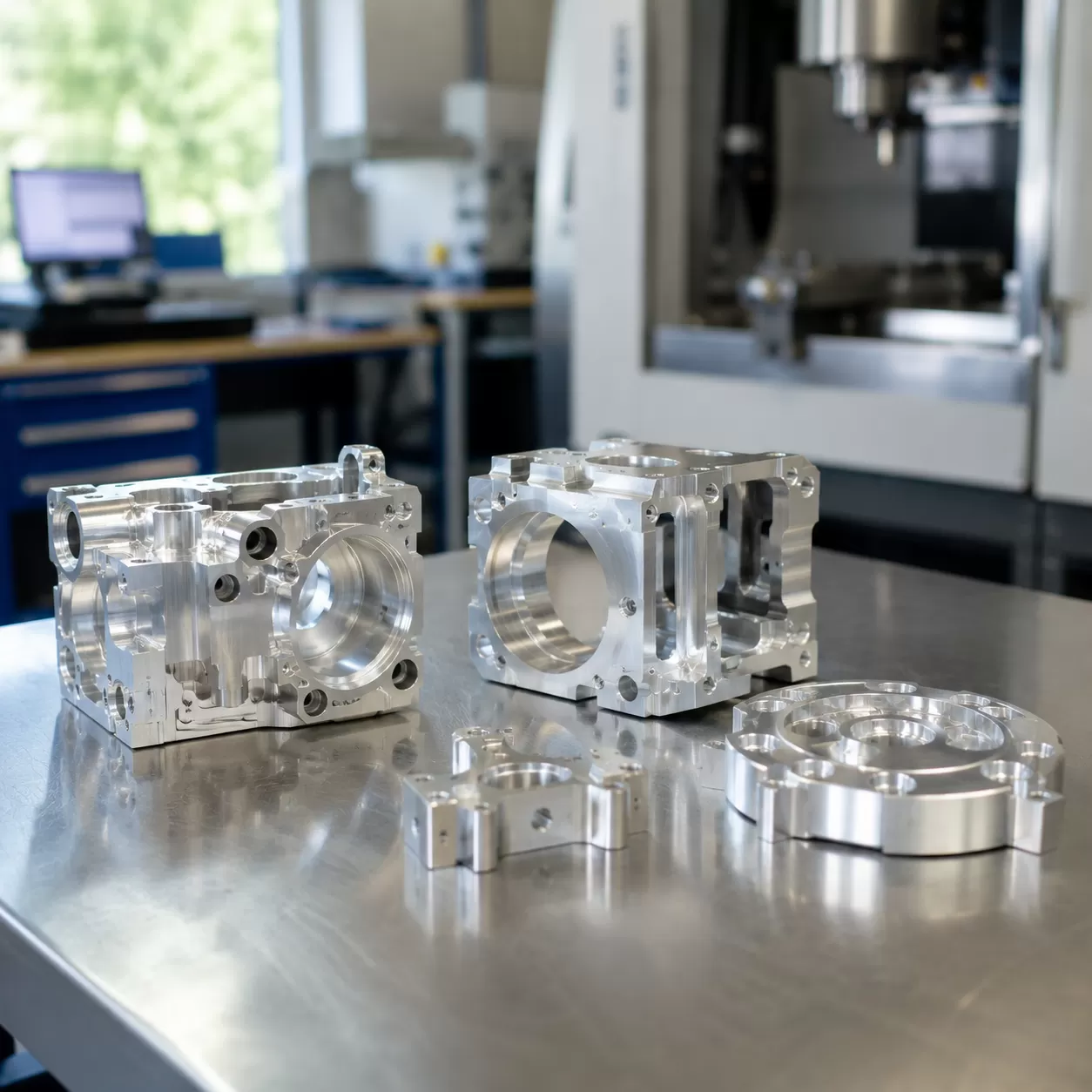
Securing a 1–3 day turnaround for aluminum rapid prototyping in the EU requires a streamlined approach that eliminates engineering bottlenecks and shipping delays. By syncing your design process with rapid manufacturing workflows, you can cut days off the standard lead times.
Optimizing Your CAD Drawings for Express Manufacturing
Speed starts in the design phase. To hit a strict 1–3 day manufacturing window, your 3D CAD models must be optimized for fast machining:
- Standardize Radii: Use internal corner radii that match standard end mill sizes to avoid custom tooling setups.
- Minimize Deep Pockets: Keep cavity depths within four times the tool diameter to prevent tool deflection and slow machining speeds.
- Simplify Tolerances: Apply tight tolerances only to critical functional surfaces. Over-specifying tolerances forces machinists to run slower, high-precision passes that destroy fast turnaround timelines.
- Threaded Holes: Clearly define standard thread sizes to ensure rapid tapping without manual intervention.
Leveraging Instant Quoting and Digital Manufacturing Platforms
Waiting days for a quote is the fastest way to miss an EU project deadline. Modern digital manufacturing platforms utilize automated Design for Manufacturing (DFM) analysis to instantly evaluate your CAD files.
When you upload your files, our system instantly flags geometry issues, estimates machining time, and generates a firm price. This automation bridges the gap between design and production, allowing your job to hit our advanced CNC mill-turn services floor minutes after order confirmation rather than days.
Understanding Setup Times and Part Production Speed
The secret to 24-to-72-hour delivery lies in minimizing machine setup time. Every time a part requires a new orientation, the machine must be stopped, refixtured, and recalibrated.
| Production Factor | Impact on Speed | Optimization Strategy |
|---|---|---|
| Setup & Fixturing | High Delay | Design parts that can be machined in a single setup or require minimal rotations. |
| Tool Changes | Moderate Delay | Limit the variety of hole sizes and radii to reduce the need for constant tool swapping. |
| Material Removal Volume | Low-Moderate Delay | Optimize raw stock selection to minimize the amount of aluminum that needs to be milled away. |
By designing parts that use standard fixtures and require fewer setups, we can move your functional prototypes straight from CAM programming to the CNC machine, ensuring expedited shipping across Europe within your tight target window.
Key Aluminum Alloys Used in CNC Rapid Prototyping
Choosing the right grade of material is a critical step in aluminum rapid prototyping. The specific alloy you select directly dictates how your functional prototypes perform during structural, thermal, or mechanical stress tests.
We utilize three primary aluminum alloys for our quick-turn European manufacturing projects, balancing machinability, strength, and cost. If you are debating between these options and other metals, you can read our guide on how to choose the right CNC material to match your exact project parameters.
Aluminum 6061: The Ultimate All-Rounder Alloy
Aluminum 6061 is the most widely used material in CNC machining due to its versatility, balanced mechanical properties, and excellent economic value. It is the default choice for the vast majority of our fast-turn physical prototypes.
- Key Benefits: Excellent weldability, high corrosion resistance, and great response to anodizing.
- Best For: Structural frames, electronic enclosures, brackets, and general precision engineering components.
- Turnaround Impact: Highly predictable machining speeds keep production cycles well within our 1–3 day express window.
Aluminum 7075: High Strength for Aerospace and Automotive Applications
When your functional prototypes require maximum mechanical performance without added weight, Aluminum 7075 is the ideal solution. Blended primarily with zinc, it offers a strength profile that rivals many steel alloys.
- Key Benefits: Exceptional fatigue resistance, high strength-to-weight ratio, and excellent dimensional stability under high stress.
- Best For: High-stress aerospace components, defense engineering, automotive racing parts, and specialized structural gear.
- Machining Note: While tougher on cutting tools than 6061, our advanced CNC milling centers process 7075 rapidly to meet strict lead times.
For production-ready high-strength components beyond prototyping, see our custom 7075 aluminum CNC machining service.
Aluminum 5052: Excellent Formability and Sheet Metal Integration
Aluminum 5052 stands out for its exceptional workability and resistance to marine environments. While often used in sheet metal fabrication, it is frequently integrated into hybrid CNC projects that require both milled and formed metal parts.
| Feature | Aluminum 6061 | Aluminum 7075 | Aluminum 5052 |
|---|---|---|---|
| Primary Attribute | All-purpose versatility | Ultra-high strength | Superior formability |
| Machinability | Excellent | Fair to Good | Fair |
| Corrosion Resistance | High | Moderate | Exceptional (Marine Grade) |
| Common Use Case | Enclosures & Brackets | Aerospace & Racing | Tanks & Sheet Assemblies |
Using these distinct aluminum alloys, we tailor our on-demand production setups to match your exact engineering requirements, ensuring your EU project stays on schedule.
Common Industrial Applications for Fast-Turn Aluminum Prototypes
When European engineering teams face tight project deadlines, aluminum rapid prototyping bridges the gap between design and physical validation. Getting high-quality parts quickly is essential across several demanding industries.
Automotive and Transportation Components
The European automotive sector moves fast, especially with the shift toward electric vehicles (EVs) and lightweight structures. Teams use fast-turn aluminum parts for engine blocks, suspension components, and lightweight structural brackets.
- Speed to Market: Validating engine or chassis components early prevents costly tooling changes later.
- Localized Testing: For engineering hubs in Germany and the Benelux region, getting functional metal parts in hand quickly accelerates aerodynamic and mechanical stress tests. To optimize your development cycle, you can leverage specialized best practices for CNC machining automotive prototypes for German and Benelux markets to meet strict regional standards.
When prototypes move into vehicle testing or production, our automotive aluminum CNC machining services support custom parts in 6061, 6082 and 7075.
Aerospace and Defense Engineering
Aerospace projects require maximum reliability and minimal weight. Fast-turn milling and turning allow engineers to test housing assemblies, brackets, and structural fixtures under real-world conditions.
| Aerospace Component Type | Primary Material Choice | Key Testing Requirement |
|---|---|---|
| Avionics Enclosures | Aluminum 6061 / 7075 | EMI shielding and thermal dissipation |
| Mounting Brackets | Aluminum 7075 | High strength-to-weight ratio under stress |
| Sensor Housings | Aluminum 6061 | Precise dimensional tolerances and environmental sealing |
Medical Devices and Smart Hardware Startups
For medical tech and IoT hardware startups across the EU, speed is everything when securing funding or regulatory approval. Aluminum rapid prototyping delivers the professional look and structural integrity needed for functional testing and investor demos.
- Surgical Instrumentation: Creating ergonomic handles and specialized guides that require strict sterilization capabilities.
- Enclosures and Chassis: Developing robust casings for sensitive electronics, medical monitors, and smart hub devices.
- Low-Volume Validation: Producing small batches of 10 to 50 parts to clear compliance audits before committing to hard tooling.
Surface Finishes That Affect Aluminum Prototype Delivery Times
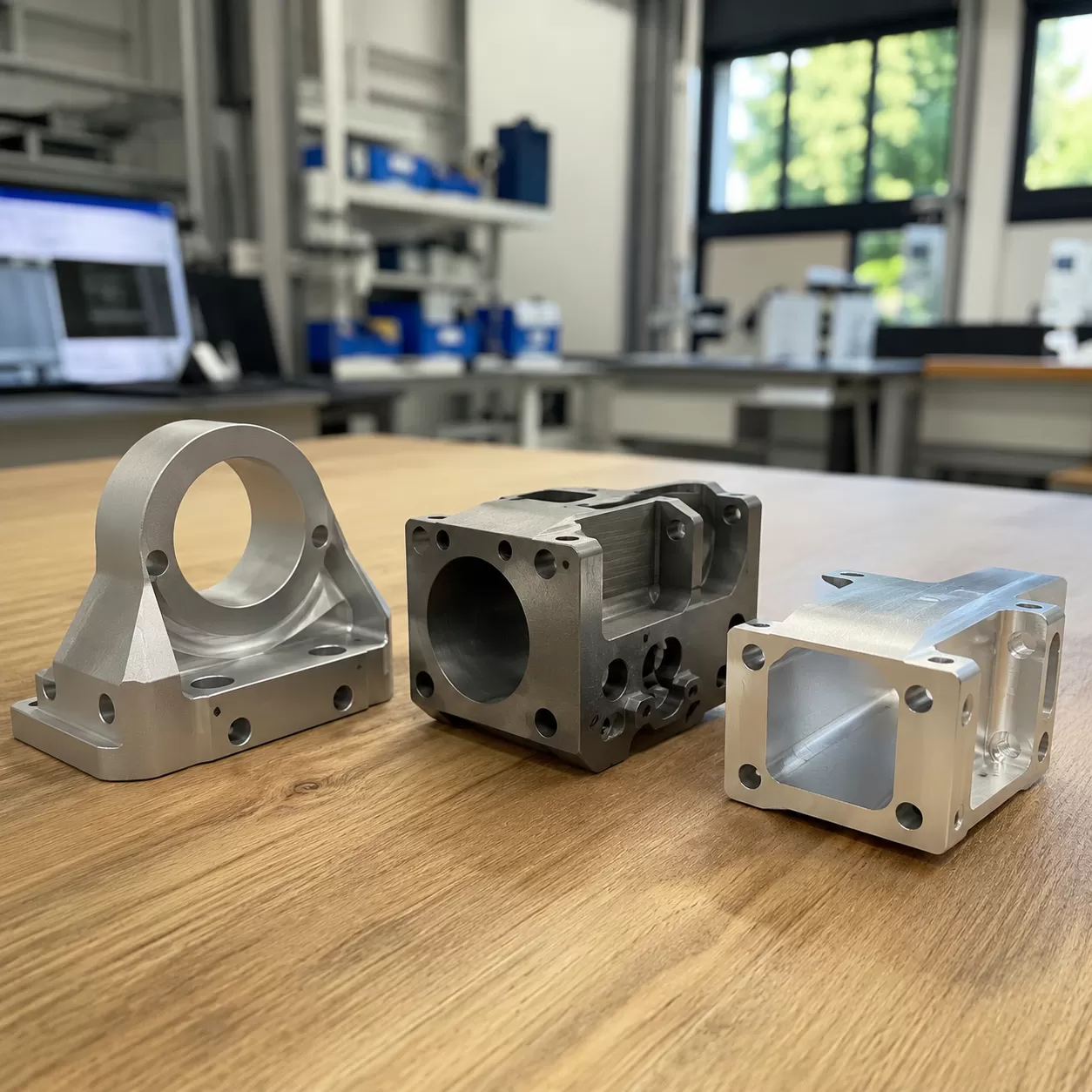
When you need an aluminum rapid prototyping turnaround in 1 to 3 days for EU projects, the surface finish you choose plays a massive role in meeting that deadline. While secondary operations enhance aesthetics and performance, they add processing time and logistics steps that can impact expedited shipping schedules.
As-Machined vs. Bead Blasted Finishes
Choosing the right initial finish is the easiest way to guarantee a fast turnaround.
- As-Machined Finish: This is the fastest option for your functional prototypes. The part is delivered straight from our CNC mills with standard tool marks (typically 3.2 μm Ra, which can be improved to 1.6 μm Ra or finer upon request). Because it requires zero post-processing, it maximizes your chances of hitting a strict 1-day delivery window.
- Bead Blasted Finish: We use high-pressure air to stream fine glass beads against the metal part. This removes tool marks and creates a uniform, matte satin appearance. While it adds a manual step, our in-house blasting equipment keeps delays to a minimum, usually adding only a few hours to the manufacturing services timeline.
Anodizing (Type II & Type III) for Protection and Color
Anodizing is an electrochemical process that converts the aluminum surface into a durable, corrosion-resistant oxide layer. However, this process requires chemical bath setups that can extend your lead times.
| Anodizing Type | Typical Thickness | Main Benefits | Impact on 1–3 Day Delivery |
|---|---|---|---|
| Type II (Decorative) | 5–25 μm | Corrosion resistance, color options (black, clear, blue, red) | Adds 1–2 days to production schedules due to batch processing. |
| Type III (Hardcoat) | 25–100 μm | Extreme wear resistance, high surface hardness for functional testing | Requires precise temperature control and longer tank times; usually pushes delivery past the 3-day mark. |
Pro Tip for EU Engineers: If your project requires an urgent DFM analysis for moving parts, sticking to an as-machined finish for the initial fit-check can save you crucial days. For specialized finishing needs later in the development cycle, you can explore our tailored aluminum CNC milling service to balance cosmetics with precision engineering requirements.
Powder Coating and Chemical Conversion Coatings
For advanced environmental protection or specific industrial applications, heavy-duty coatings are available, though they alter the timeline for fast-turn aluminum prototypes.
- Powder Coating: We electrostatically apply a dry powder and cure it under heat to create a thick, impact-resistant layer. It is excellent for industrial components but adds mask preparation, spraying, and baking times to the workflow.
- Chemical Conversion Coatings (Alodine/Chromate): This chemical dip provides good corrosion resistance and maintains electrical conductivity without significantly changing part dimensions. Since it requires less curing time than paint or powder, it is a faster option for quick-turn electronics housings and aerospace brackets.
To guarantee on-demand production within a tight 48-to-72 hour window for European manufacturing markets, we highly recommend selecting as-machined or standard bead-blasted finishes for your initial prototype development phase.
How to Choose the Right European Rapid Prototyping Partner
Selecting the right partner for your aluminum rapid prototyping determines whether your project launches on time or gets stuck in customs. For EU-based engineering teams, proximity, speed, and clear technical communication are non-negotiable.
Evaluating Lead Times and EU Shipping Logistics
When a project demands a 1–3 day turnaround, shipping logistics are just as critical as machining speeds. Choosing a partner within the EU single market eliminates customs clearance delays and unexpected import duties.
- Express Couriers: Partner with shops utilizing DHL Express, FedEx, or TNT for guaranteed next-day delivery across major European industrial hubs.
- Time-Zone Alignment: Real-time communication during standard European working hours ensures production begins the same day you submit files.
- Local Supply Chains: Partners with immediate access to right-sized European stock material reduce material prep time to zero.
Quality Certifications and Design for Manufacturing (DFM) Support
Speed means nothing if the part arrives out of specification. Reliable rapid prototyping partners bridge the gap between speed and precision with automated and engineer-led feedback. Look for facilities operating under ISO 9001 or IATF 16949 quality management systems to guarantee component reliability.
A robust design for manufacturing (DFM) analysis should occur before cutting metal. This digital evaluation catches unmachinable features, tight internal radii, or overly deep pockets that slow down CNC milling centers. Identifying these bottlenecks early preserves the integrity of your functional prototypes and avoids costly tool breakages.
Avoiding Hidden Costs in CNC Turning and Milling Quotes
Transparent pricing keeps development budgets on track. Fast-turn quotes often contain overlooked surcharges that inflate the final invoice.
| Cost Component | What to Look For | How to Minimize It |
|---|---|---|
| Expedited Fees | Premium charges for 24–72 hour production windows. | Optimize CAD models to eliminate complex setups that require manual intervention. |
| Tooling & Setup Costs | Flat fees for programming and machine configuration. | Design parts using standard tooling sizes and consolidate features to a single setup. |
| Post-Processing Premium | Added costs for bead blasting, anodizing, or custom finishes. | Stick to "as-machined" finishes if the part is solely for rapid mechanical fitment testing. |
| Material Wastage Fees | Charges for raw stock block sizes rather than the finished part volume. | Work with partners who optimize raw material nesting to lower overall CNC machining prices. |
Review your turning and milling quotes item by item to ensure the expedited shipping, raw materials, and precision tolerances are bundled transparently.
Frequently Asked Questions About Quick-Turn Aluminum CNC Services
How can a project achieve a guaranteed 1-3 day delivery in the EU?
Securing a 1–3 day turnaround for aluminum rapid prototyping within the EU requires a fully digitalized workflow. To hit this aggressive timeline, you must submit production-ready CAD files that have already passed automated Design for Manufacturing (DFM) checks. Choosing stock aluminum alloys like 6061 and opting for an "as-machined" surface finish eliminates post-processing delays. Partnering with a manufacturing service that handles express shipping and automated customs clearance ensures your precision parts move from the machine spindle to your European facility without logistics bottlenecks.
What factors can delay the speed of my CNC machining project?
Even with expedited shipping, certain design and setup factors will instantly push back your lead times:
- Complex Part Geometries: Deep pockets, ultra-thin walls, or internal square corners that require specialized tooling.
- Secondary Surface Finishes: Applying Type III hardcoat anodizing, powder coating, or chemical conversion treatments adds several days to production.
- Incomplete Documentation: Missing tolerances, manual drawing mismatches, or unverified threads that require engineering clarification.
To prevent these friction points and keep costs down, review our comprehensive guide on reducing CNC machining costs to streamline your design before submission.
Is rapid injection molding or 3D printing a viable alternative to CNC aluminum?
It depends entirely on your functional testing requirements:
| Prototyping Method | Best Used For | Material Properties | Production Speed |
|---|---|---|---|
| CNC Aluminum Machining | High-precision structural parts, load-bearing components | Genuine metal strength, exact tolerances, excellent thermal conductivity | 1–3 Days |
| 3D Printing (SLM/DMLS) | Highly complex, organic geometries impossible to mill | Layered metal structure, lower structural integrity, rougher surface finish | 2–4 Days |
| Rapid Injection Molding | High-volume plastic components, housing shells | Limited to plastic components, requires rapid tooling setup | 5–10 Days |
While 3D printing handles complex hollow shapes and injection molding suits low-volume plastic production, neither matches the structural integrity, precision, and real-world material performance of true CNC-machined metal parts.
 English
  German
  Dutch
Dutch  Russian
  Czech
Czech  French
  Japanese
  Spanish
  Portuguese
  Korean