

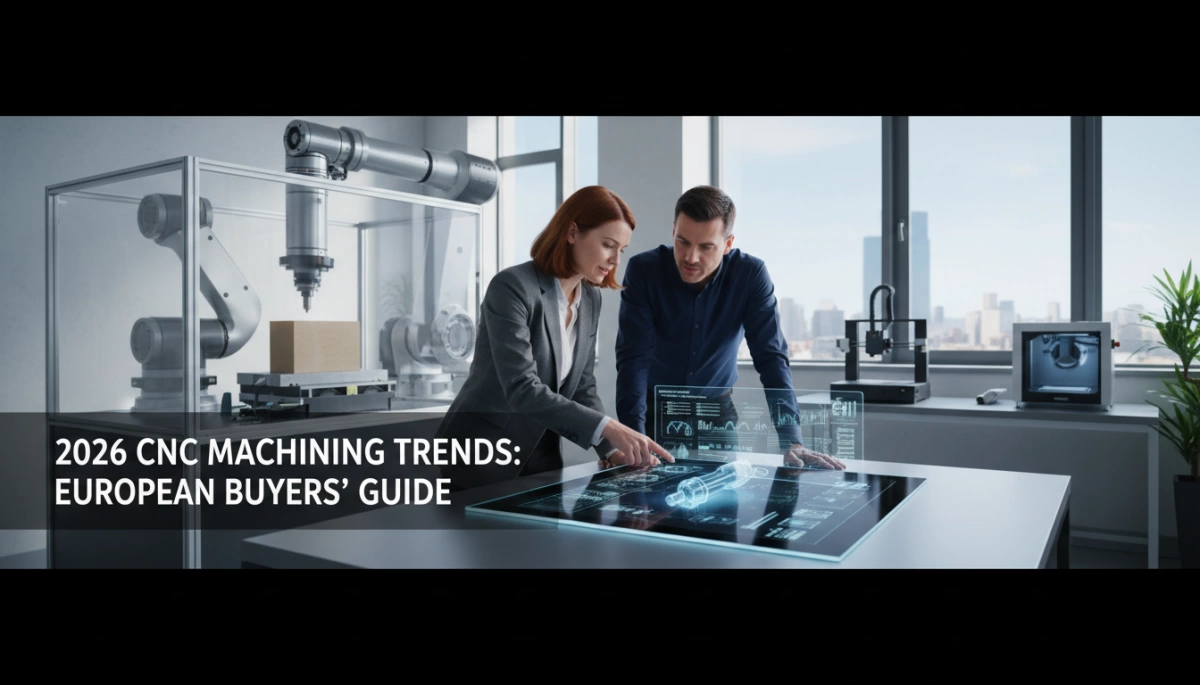
Navigating Green Mandates and CBAM Compliance
As we approach the next regulatory cycle, the most critical 2026 CNC machining trends: what European buyers should know revolve around strict environmental compliance. Sustainability is no longer just a corporate value; it is a financial necessity. The implementation of the Carbon Border Adjustment Mechanism (CBAM) means that European importers will soon face direct costs associated with the carbon emissions embedded in their imported goods. We understand that for you, this transforms carbon footprint data from a "nice-to-have" into a "license-to-operate."
To protect your margins and ensure compliance, we are aggressively adopting sustainable manufacturing practices that minimize waste before the spindle even starts turning. Our strategy focuses on lean machining and near-net-shape manufacturing. By sourcing raw materials that are cast, forged, or printed closer to the final component's geometry, we significantly reduce the volume of material that needs to be removed. This approach directly lowers the energy consumed per part, reducing the carbon tax liability for our EU partners.
Strategies for Reducing Carbon Liability
- Near-Net-Shape Sourcing: Utilizing raw stock that matches final dimensions within tight margins to reduce material removal rates.
- Just-in-Time (JIT) Manufacturing: Aligning production schedules strictly with demand to eliminate energy waste from warehousing and overproduction.
- Material Optimization: improving nesting strategies in cutting to maximize yield from standard sheets and bars.
We are committed to helping you navigate this transition. By optimizing our machining processes today, we ensure that your supply chain remains resilient and cost-effective against the tightening regulations of 2026.
The Shift to 5-Axis Simultaneous Machining
As we look toward 2026, the reliance on 5-axis simultaneous machining is becoming the standard rather than a luxury for European manufacturing. For buyers dealing with complex geometries, the old method of flipping parts across multiple fixtures is simply too risky and slow. By utilizing single-setup processing, we eliminate the cumulative errors that occur when manually repositioning a workpiece. This is how we consistently achieve a CNC tolerance ±0.005mm, ensuring that the final component matches the digital design perfectly.
This shift isn't just about accuracy; it is about speed and versatility. Whether we are running precision CNC turning services or milling intricate aerospace housings, 5-axis capabilities allow us to machine undercuts and complex angles in one go. This efficiency is a game-changer for high-mix low-volume production (HMLV), where setup times usually kill profitability.
Why 5-Axis matters for your supply chain:
- Reduced Lead Times: Fewer setups mean parts get off the machine and onto the shipping dock faster.
- Superior Surface Finishes: Continuous tool movement results in smoother curves without match lines.
- Reliable Precision: Maintaining strict aluminum CNC machining tolerances becomes standard practice rather than a struggle, especially for automation equipment.
- Cost Efficiency: While the machine hourly rate is higher, the massive reduction in labor and fixture costs often lowers the total part price.
The trend of multi-axis and 5 axis adoption is accelerating rapidly. If your current supplier is still relying solely on 3-axis machines for complex parts, you are likely paying for their inefficiencies. We are also seeing this technology integrate seamlessly with precision CNC turning services, allowing for mill-turn capabilities that further streamline the production of cylindrical parts with complex features.
Material Innovations: Machining Advanced Alloys and Plastics
As we approach 2026, European manufacturing demands are shifting aggressively toward materials that offer superior strength-to-weight ratios and biocompatibility. We have optimized our production lines to handle this transition, moving beyond standard fabrication to master difficult-to-cut superalloys and engineering plastics essential for next-generation aerospace and medical technologies.
Mastering Hard Metals
Processing materials like Titanium Grade 5 and Inconel presents significant hurdles due to their high tensile strength and heat generation. We overcome these Titanium machining challenges by utilizing advanced tooling strategies and rigid machine setups that prevent chatter. Our specialized titanium 5-axis machining services enable us to produce complex geometries with minimal tool wear, ensuring that critical aerospace components meet strict ISO standards without surface defects.
The Rise of High-Performance Plastics
Lightweighting initiatives are driving a surge in the use of advanced polymers. We have honed our expertise in PEEK plastic machining, a material favored for its chemical resistance and mechanical strength in medical implants and automotive connectors. Unlike standard plastics, PEEK requires precise thermal management during cutting to maintain tight tolerances, a process we have perfected for low-volume and mass production.
Our Material Capabilities for 2026 Include:
- Aerospace Grade Aluminum 7075: Ideal for high-stress structural components.
- Stainless Steel 304/316: Essential for corrosion-resistant medical and food-grade parts.
- Engineering Plastics: Precision machining of POM, Nylon, and PC alongside PEEK.
By adopting new materials and coatings for tooling, we ensure efficient removal rates even on the toughest alloys, providing European buyers with a reliable path to utilizing advanced materials without excessive costs.
AI-Driven Quoting and Digital Twin Technology
As we move toward 2026 CNC machining trends, the days of waiting 48 hours for a manual spreadsheet quote are effectively over. We are shifting entirely to intelligent, data-driven front ends. For European buyers, this means integrating smart factory automation right from the initial request. Beyond digital quoting systems, manufacturers are also adopting CNC automation solutions to improve efficiency and reduce manual intervention.We utilize instant pricing engines that analyze your CAD geometry in seconds, not days.
Whether you need complex aerospace components or standard custom aluminum CNC machined parts, our systems now break down material costs, machine time, and tooling requirements immediately. This speed allows your procurement teams to make faster decisions without sacrificing accuracy.
Beyond pricing, we are leveraging digital twin technology to eliminate production risks. Before we cut a single piece of metal, we create a virtual replica of the manufacturing process. This digital manufacturing ecosystem allows us to:
- Predict Tool Wear: Simulate cutter paths to prevent breakage on hard alloys.
- Validate Tolerances: Ensure designs meet strict ISO standards virtually before physical setup.
- Detect Collisions: Identify machine interference in a virtual environment to prevent costly downtime.
By adopting predictive modeling, we catch errors before they happen, ensuring that the part you receive matches the digital file exactly. This is the new standard for reliability in the supply chain.
Building Supply Chain Resilience and Smart-Sourcing
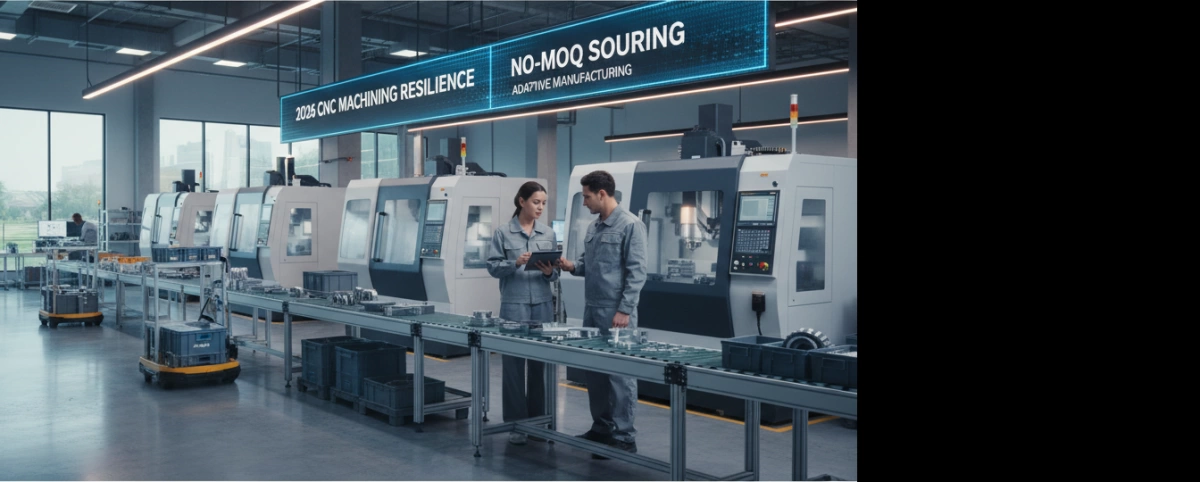
As we analyze 2026 CNC machining trends: what European buyers should know, the focus has shifted from simple cost-cutting to building unbreakable supply chains. European procurement managers are increasingly moving away from rigid, high-volume contracts that tie up capital in inventory. Instead, the market is demanding agility. We support this transition by offering a digital manufacturing ecosystem that combines the cost benefits of global manufacturing with the reliability typically associated with local suppliers.
Embracing High-Mix Low-Volume Production (HMLV)
The era of mass-producing identical parts for warehousing is being replaced by Just-in-Time (JIT) manufacturing. We have optimized our workflow to support High-mix low-volume production (HMLV), which is critical for European companies facing fluctuating market demands. This approach allows you to iterate designs faster and reduce financial risk.
- No Minimum Order Quantity (MOQ): We do not force you to order thousands of units. Whether you need a single complex prototype or a batch of 50, our factory is set up to handle it efficiently.
- Rapid Scalability: You can move from a pilot run to mass production without changing suppliers, ensuring consistent quality across the product lifecycle.
One-Stop Manufacturing for Reduced Logistics Risks
Managing multiple vendors for machining, finishing, and assembly introduces unnecessary delays and quality risks. We function as a comprehensive partner, handling the entire process from raw material procurement to final surface finishing (such as anodizing, plating, or powder coating). This is particularly vital for sectors with strict supply chain requirements. For instance, our CNC machining services for automotive aluminum parts in Germany are designed to meet rigorous European standards while streamlining the logistics of getting finished parts to the assembly line.
Reliability Through ISO Standards
Speed means nothing without control. As an ISO 9001:2015 certified machine shop, we implement strict quality management systems that align with European import standards. This certification provides the assurance that every part—whether it is a simple bracket or involved in custom CNC machining services for machinery and robotics parts—meets the exact specifications of your CAD data. By centralizing production and adhering to global quality standards, we help European buyers mitigate supply chain disruptions while maintaining competitive pricing.
FAQs: Future-Proofing Your CNC Strategy
As 2026 approaches, European buyers need partners who can balance speed with strict regulatory compliance. Here is how we address your critical manufacturing concerns regarding precision, logistics, and quality.
How do you guarantee compliance with EU standards?
We operate as an ISO 9001:2015 certified machine shop, strictly adhering to global quality protocols. From material verification to final inspection, we ensure every component meets precise CNC surface finishing standards and tolerances of +/- 0.01mm. You can rely on our strict quality control system to mitigate risk in your supply chain and ensure parts arrive ready for assembly.
What are your lead times for European markets?
To support Rapid prototyping Europe demands, we deliver prototypes in as little as 3-7 days. Our production scheduling is designed for Just-in-time (JIT) manufacturing, allowing us to ship parts immediately after machining to minimize your inventory overhead and reduce time-to-market.
Do you handle high-mix, low-volume orders?
Yes. We specialize in high-mix low-volume production (HMLV) with no Minimum Order Quantity (MOQ). Whether you need a single complex prototype or a small batch of Aerospace grade aluminum 7075 parts, we provide the same level of precision and DFM support to optimize your costs.
Key Capabilities at a Glance:
- Certification: ISO 9001:2015
- Speed: Quotes in 24 hours, shipping in 3-7 days
- Materials: Advanced Metals (Titanium, Steel) and Plastics (PEEK, Nylon)
- Support: Full Design for Manufacturing (DFM) analysis included
 English
  German
  Dutch
Dutch  Russian
  Czech
Czech  French
  Japanese
  Spanish
  Portuguese
  Korean