

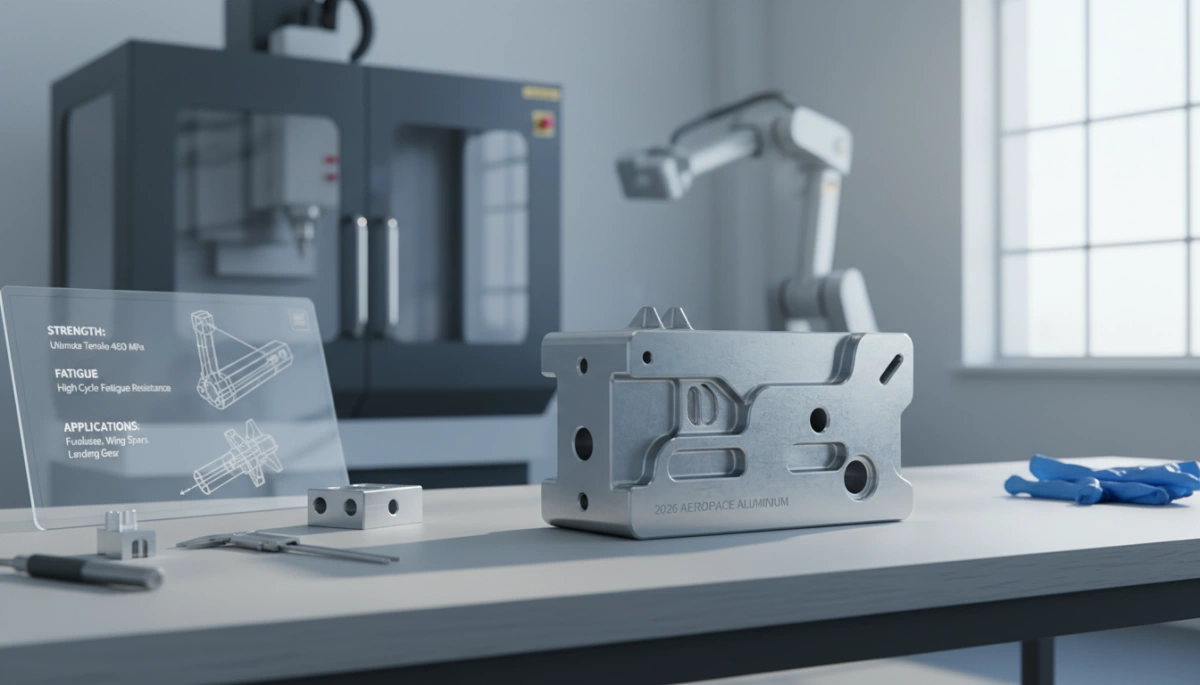
Understanding Aerospace CNC Machining and Aluminum Alloys
Modern flight relies on materials that push the absolute boundaries of physics. In this sector, aerospace aluminum alloys act as the foundational building blocks for everything from the aircraft fuselage to critical landing gear systems. When paired with the flawless execution of precision CNC components, these specialized metals deliver the exact structural integrity required to survive extreme altitudes, temperature fluctuations, and mechanical stress.
The Critical Role of Precision in Aerospace Manufacturing
In aerospace manufacturing, precision is never optional—it is a strict mandate for safety and mission success. Producing flight-ready parts requires ultra-precision engineering capable of satisfying the most rigorous MIL-SPEC requirements.
- Zero Margin for Error: Microscopic deviations in a single component can compromise an entire aircraft's safety and performance.
- Advanced Machining: Utilizing cutting-edge CNC milling and CNC turning guarantees that every physical part matches its digital CAD model with absolute fidelity.
- Uncompromising Repeatability: Precision CNC technology ensures reliable, consistent quality across high-volume production runs of complex geometries.
Evolution of High-Strength Aerospace Aluminum
The escalating demands of commercial and military aviation have driven rapid, continuous innovation in metallurgical science. Early aircraft materials quickly evolved into sophisticated alloys engineered specifically to handle extreme dynamic forces.
- The 2000 Series Breakthrough: The introduction of 2000 series aluminum marked a definitive turning point, utilizing copper as the primary alloying element to achieve massive strength gains.
- Optimizing Weight and Power: These advanced alloys are formulated to deliver exceptionally high specific strength, keeping the aircraft lightweight without sacrificing durability.
- Mastering Cyclic Stress: Today's high-strength aerospace aluminum is the gold standard for load-bearing structures and critical tension members, providing the essential fatigue resistance needed to withstand decades of continuous pressurization and depressurization cycles.
Core Properties of 2026 Aluminum for Aerospace
When discussing 2026 aluminum for aerospace CNC machining: strength, fatigue and typical applications, we are looking at a premium 2000 series aluminum engineered specifically to survive extreme conditions. It is the backbone of modern flight.
Exceptional Tensile Strength and Durability
We rely heavily on 2026 aluminum when designing load-bearing structures. It delivers unmatched high specific strength, meaning it handles massive physical tension without adding dead weight to the aircraft fuselage. To ensure we consistently hit these exact material specs, we rigorously monitor our manufacturing process from the raw material stage to the final cut.
- High Yield Strength: It will not permanently deform under heavy operational loads.
- Lightweight Durability: Provides the necessary toughness while keeping the aircraft's fuel efficiency optimized.
Superior Fatigue Resistance for Structural Integrity
Aerospace parts endure thousands of pressurization and flight cycles. This alloy provides superior fatigue resistance, making it our absolute top choice for fatigue-critical parts like lower wing skins and tension members.
- Slows Crack Growth: Naturally resists the rapid spread of micro-cracks caused by repeated vibrations.
- Long-Term Reliability: Keeps vital aircraft structures intact and safe over decades of commercial and military use.
How Temper Variations Affect Material Performance
The specific aluminum temper directly controls how the metal behaves during CNC milling and CNC turning. By applying different heat treatments, we can dial in the exact performance needed to meet strict MIL-SPEC requirements. If you want to see how we manage these unique material properties on the shop floor, check out our 2026 manufacturing guide for practical strategies on balancing quality and delivery times.
- T3 Temper: Offers an excellent mix of high baseline strength and cold workability.
- T8 Temper: Artificially aged to boost peak strength while significantly improving stress corrosion resistance.
2026 Aluminum for Aerospace CNC Machining vs. Common Alloys
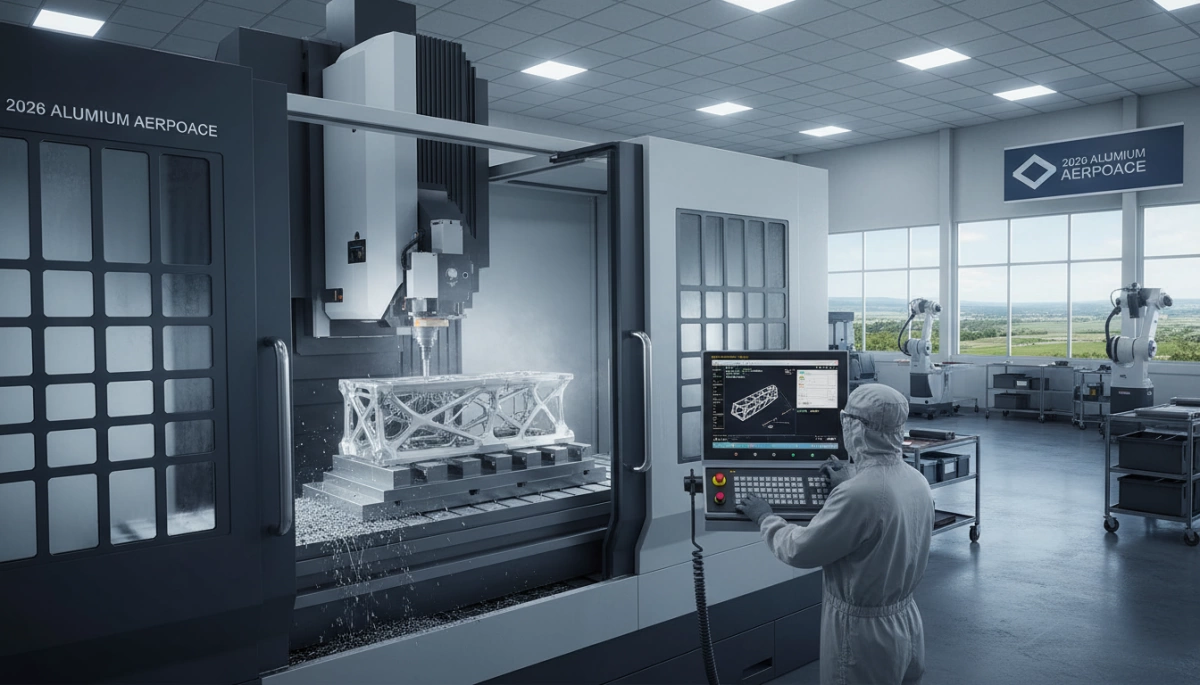
When we produce precision CNC components for the aerospace sector, material selection dictates performance and safety. While many engineers are familiar with standard grades, understanding how 2026 stacks up against other aerospace aluminum alloys is critical for optimizing aircraft structures.
2026 vs. 2026: Advancements in Fatigue Strength
Both of these belong to the copper-alloyed 2000 series aluminum family, but 2026 is the modern, engineered upgrade.
- The Core Difference: 2026 is formulated with tighter controls on impurities, offering significantly higher fatigue resistance and improved toughness over 2026.
- The Verdict: If you are manufacturing tension members, aircraft fuselage skins, or lower wing panels subjected to immense cyclic loading, 2026 outlasts 2026. It is the definitive choice for modern fatigue-critical parts.
2026 vs. 7075: Balancing Strength and Stress Corrosion
7075 is legendary in the industry for its raw tensile strength, but absolute strength isn't everything in the sky.
- The Core Difference: While 7075 boasts higher static strength, it can be prone to stress-corrosion cracking and is more brittle depending on the aluminum temper. 2026 provides a superior, reliable balance of high specific strength and damage tolerance.
- The Verdict: For military grade aluminum applications where catastrophic failure from continuous stress and fatigue is a bigger threat than sheer static overload, 2026 delivers better structural integrity.
2026 vs. 6061: Machinability and General Utility
6061 is the everyday workhorse for general CNC milling and CNC turning, but it simply cannot handle extreme aerospace environments.
- The Core Difference: 6061 wins on basic corrosion resistance, cost, and ease of machining, but its load-bearing capacity is a fraction of what 2026 offers.
- The Verdict: Use 6061 for non-critical interior brackets or light fixtures. For primary load-bearing structures that must meet strict MIL-SPEC requirements, 2026 is non-negotiable.
Aerospace Alloy Quick Reference
| Feature | 2026 Aluminum | 2026 Aluminum | 7075 Aluminum | 6061 Aluminum |
|---|---|---|---|---|
| Primary Strength | Elite fatigue resistance & toughness | Good general aerospace strength | Ultimate tensile strength | High versatility & machinability |
| Ideal Aerospace Use | Fatigue-critical tension members | Legacy aircraft designs | High-stress, static parts | Secondary, non-structural components |
Making the right material choice prevents costly failures down the line. If you are weighing options for your next custom batch, evaluating aluminum against other metals like brass or stainless steel is just as important as selecting the exact alloy grade. We ensure your designs are matched with the exact material properties your project demands.
Key Aspects of CNC Machining 2026 Aluminum
When dealing with 2026 aluminum for aerospace CNC machining: strength, fatigue and typical applications dictate our entire manufacturing approach. Working with this advanced 2000 series aluminum requires a machine shop setup optimized for zero-defect production.
Meeting Extreme Precision and Tolerance Requirements
In aerospace manufacturing, precision is non-negotiable. Whether we are producing heavy load-bearing structures or intricate precision CNC components, we hold incredibly tight tolerances. Ultra-precision engineering ensures that every part mates perfectly into larger assemblies, eliminating stress concentrations.
- Dimensional Accuracy: Essential for seamless, drop-in assembly.
- Material Stability: Controlling internal stresses during rapid material removal.
- Batch Consistency: Delivering the exact same specifications across high-volume runs.
Navigating Strict Quality Standards (AS9100 & NADCAP)
Supplying military grade aluminum and commercial flight hardware means strict adherence to global aerospace standards. We build our entire production workflow around AS9100 guidelines and strict MIL-SPEC requirements. Every single stage requires rigorous documentation. We track full material traceability from the raw metal source to the final inspection report, ensuring the structural integrity of critical aircraft structures is never in question.
Overcoming Machining Challenges for High-Strength Alloys
The impressive tensile strength that makes 2026 ideal for flight also makes it tougher to cut than standard commercial alloys. Heat generation and chip evacuation are constant challenges during CNC milling and CNC turning. We utilize specialized high-performance tooling to manage tool wear and prevent heat buildup, which could otherwise alter the aluminum temper.
Achieving an impeccable surface finish is equally vital. Poor surface quality can introduce micro-cracks, compromising the alloy's inherent strength. Understanding the influence of surface roughness on the performance of parts is a core factor when programming our toolpaths for fatigue-critical parts.
Machining 2026 Aluminum: Process Control
| Machining Challenge | Our CNC Solution | Direct Impact on Part Quality |
|---|---|---|
| Excessive Heat Generation | High-pressure targeted coolant delivery | Prevents material warping and preserves temper |
| Accelerated Tool Wear | Premium carbide and diamond-coated inserts | Maintains strict dimensional accuracy on long runs |
| Surface Irregularities | Optimized feed rates and fine finishing passes | Maximizes the final fatigue resistance |
Typical Applications of 2026 Aluminum in Aerospace
When examining 2026 aluminum for aerospace CNC machining: strength, fatigue and typical applications, we see this specific alloy stepping up where material failure is simply not an option. Its high specific strength and exceptional durability make it our go-to choice for the most demanding flight and ground environments.
Commercial and Military Aircraft Structural Components
Aircraft structures take a constant beating from heavy loads and repeated stress cycles. We rely on this advanced 2000 series aluminum to manufacture the critical framework that keeps both commercial and military aircraft safely in the sky.
- Aircraft Fuselage: Highly effective for lower wing skins and fuselage panels due to its immense fatigue resistance.
- Landing Gear: Perfect for massive load-bearing structures that must absorb extreme impact forces during every touchdown.
- Tension Members: Used extensively in fatigue-critical parts where tension limits and structural integrity are continuously tested.
Missile, Defense, and Munitions Systems
Defense systems require zero compromises. We machine military grade aluminum to guarantee that every tactical component functions flawlessly in the field.
- Tactical Housings: Protects sensitive electronics and guidance systems with superior temperature tolerance.
- Munitions Parts: Demands ultra-precision engineering to ensure reliable and accurate deployment.
- Strict Compliance: Every defense component we produce is strictly aligned with demanding MIL-SPEC requirements.
Ground Support and Aerospace Logistics Equipment
Aerospace operations rely heavily on the infrastructure that stays on the ground. We utilize tough aerospace aluminum alloys to build durable maintenance platforms, transport dollies, and logistics hardware. Frequently, pairing precision CNC components with high-quality sheet metal fabrication delivers the rugged, corrosion-resistant frameworks needed for heavy-duty ground support. This ensures the equipment servicing the aircraft is just as resilient and reliable as the aircraft itself.
Sourcing and Manufacturing Custom Aerospace Parts
Ensuring Material Traceability and Certification
When sourcing materials for aerospace projects, guesswork is never an option. We ensure full material traceability from the mill directly to the finished component. Every batch of 2000 series aluminum must arrive with certified documentation verifying its exact chemical composition and mechanical properties. This rigorous tracking guarantees that the CNC components we produce consistently meet strict MIL-SPEC requirements and global aerospace quality standards.
Design for Manufacturability (DFM) Best Practices
A brilliant design on a screen needs to translate smoothly to the machine shop floor. Our Design for Manufacturability (DFM) process optimizes your CAD files specifically for ultra-precision engineering. By refining your designs early, we keep costs in check while maximizing material performance.
Key DFM focuses include:
- Minimizing complex setups: Simplifying part orientations to reduce overall machining time.
- Optimizing geometry: Adjusting wall thicknesses and corner radii to suit standard CNC tooling.
- Validating designs early: Leveraging professional rapid prototyping to test form, fit, and function before committing to full-scale production.
Applying these steps ensures that the final aircraft structures and load-bearing components are both highly manufacturable and structurally sound.
Selecting a Certified Precision CNC Machining Partner
When fully utilizing 2026 aluminum for aerospace CNC machining: strength, fatigue and typical applications, selecting the right manufacturing partner is your most critical decision. You need a facility properly equipped to handle high specific strength materials and incredibly tight tolerances. We back our manufacturing process with advanced CNC milling and turning capabilities, rigorous quality control, and deep industry expertise, ensuring you receive reliable, flight-ready parts every single time.
 English
  German
  Dutch
Dutch  Russian
  Czech
Czech  French
  Japanese
  Spanish
  Portuguese
  Korean